

Table of Contents
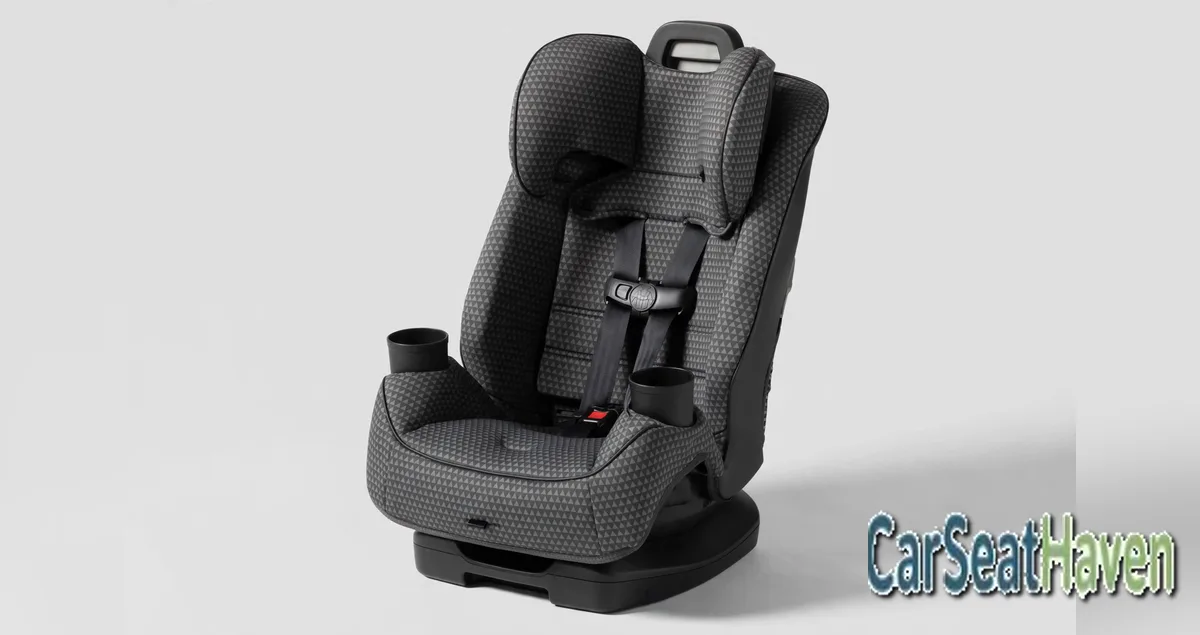
The Cosco Kids Easy Elite Slim All-in-One is a 99 dollar all in one car seat that covers three modes for children weighing 5 to 100 lb. 17 inches wide. That width is the whole story. It fits three seats across the back seat of most cars, and on a plane it is FAA accepted in harness modes. Never in booster mode. If you need one cheap seat for many years, this is real value. If you want thick padding or a tall harness, look elsewhere. Price was checked in November 2026 on the Dorel Juvenile Group product page.
Size limits by mode
Every mode has a weight limit and a height limit. The lower of the two decides when a child moves on.
| Mode | Weight | Height |
| Rear facing | 5 to 40 lb | 19 to 40 in |
| Forward facing with harness | 30 to 65 lb | 34.4 to 49 in |
| Belt positioning booster | 40 to 100 lb | 43.4 to 52 in |
Rear facing limits
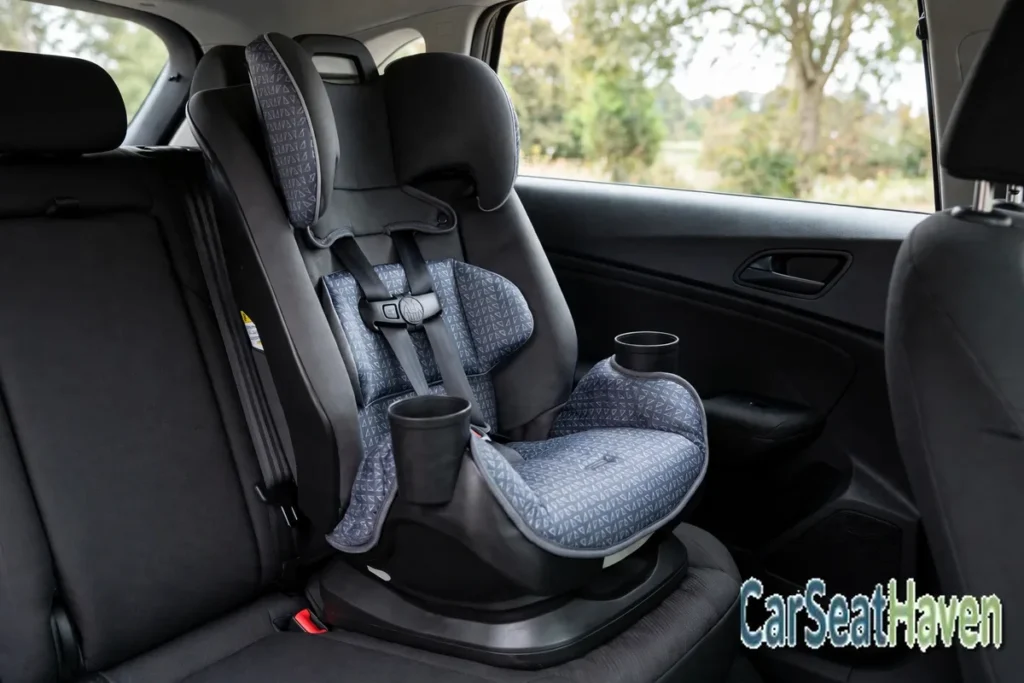
Rear facing covers 5 to 40 lb and 19 to 40 in. Infant head and body support comes with the seat. Still, a baby under 10 lb may sit poorly in the wide flat shell. Whichever limit arrives first ends rear facing use. Watch height as closely as weight. The American Academy of Pediatrics advises rear facing as long as possible, until a child reaches the seat maximum for weight or height.
Forward facing limits
Forward facing with a harness covers 30 to 65 lb and 34.4 to 49 in. This is the mode you will use the longest. It is also the one that works on a plane. Store listings sometimes print 22 lb and 29 in as the starting point. The maker page prints 30 lb with 34.4 in. Follow the maker page and the manual with your seat. A store listing cannot override either one.
Booster mode limits
Booster mode covers 40 to 100 lb and 43.4 to 52 in. Now the vehicle belt does the work, so belt position decides whether a child is ready. Lap belts must lie low on the hips. Shoulder belts must lie flat across the middle of the shoulder. If the belt rides on the belly or slips off the shoulder, the child should wait. Even when the weight looks right. Our guide explains when a booster seat is safe for a three year old, with the age and size checks that matter.
What 17 inches means in a real car
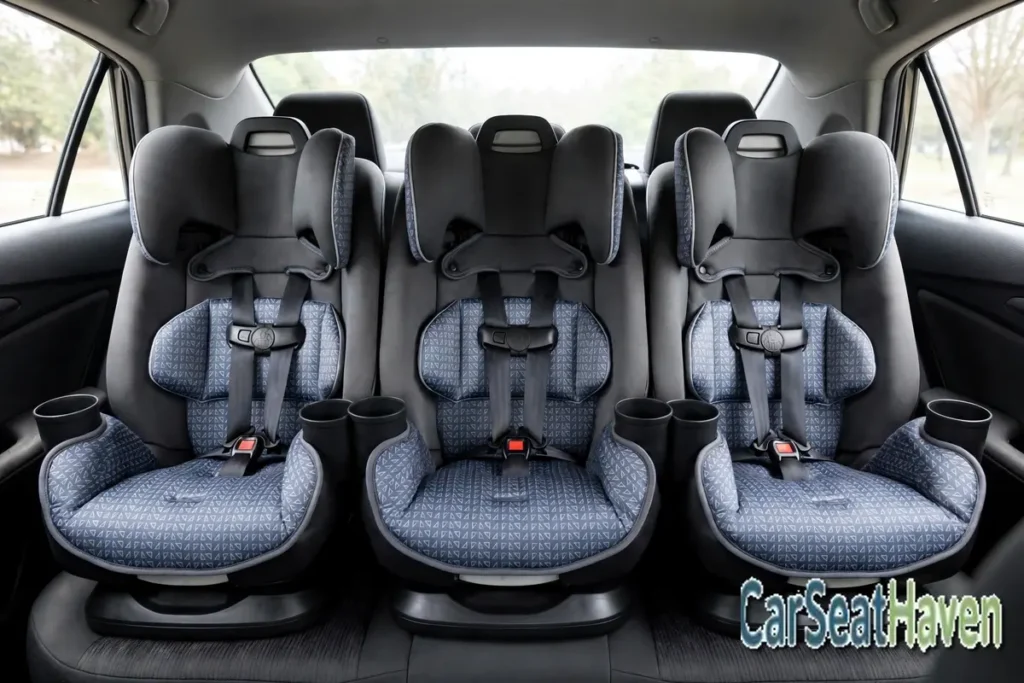
Seventeen inches. That makes this seat about 2 to 3 inches narrower than a standard all in one seat, and that gap is enough for three across in most cars. Large families. Carpool duty. Small cars where every inch counts. Minivans usually take three 17 inch seats without a fight. Midsize sedans and SUVs usually manage the same fit. Compact sedans can fail the test, especially when seat belts overlap or buckles sink into the cushions. Try all three seats in your own car before buying the third one. Only that test gives a sure answer. Easy elite slim three across fit depends on the car, not only on the seat. Our roundup of slim convertible car seats shows more narrow options for small cars and three across setups. Width also helps on a plane, since most United States economy seats measure 17 to 18.5 inches wide.
Harness and headrest
A 5 point harness holds a child at both shoulders, both hips, and between the legs. One hand moves the headrest and the harness together. One move sets both at the right height. Straps never need rethreading through new slots, which removes one common mistake during growth spurts. The headrest has 8 positions on the maker page. One marketplace page prints 5 positions instead. Harness height runs low next to pricier seats. That is why tall children outgrow this seat early. Check shoulder height against the top harness slot before buying. Weight alone will not warn you. Flatten the straps every time you buckle a child in. A twisted strap is easy to miss.
How to install the seat
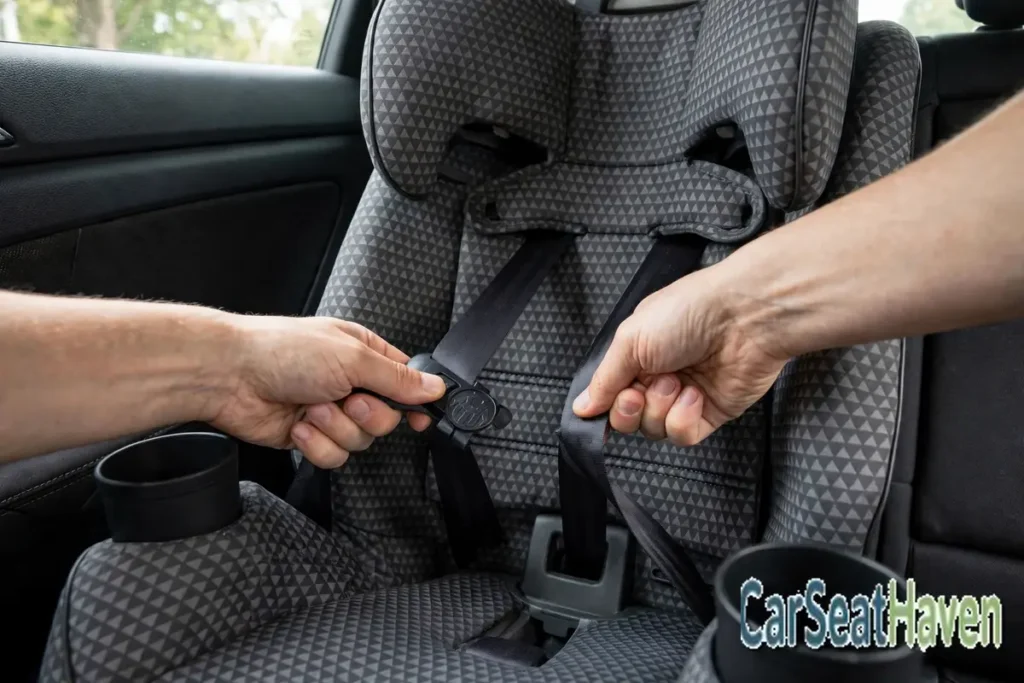
Easy elite slim installation follows the same checks for every car seat. Tight at the belt path. Under one inch of movement. Installation splits parents into two camps. Some call it easy. Others call it a fight. Rear facing takes the most effort. Forward facing goes faster once the recline foot flips.
Rear facing install steps
1. Read the seat manual and your vehicle manual before touching any strap or anchor.
2. Set the recline foot to the rear facing position shown in the manual diagram.
3. Place the seat in the back seat, then route the vehicle belt or lower anchors through the rear facing belt path.
4. Press your knee into the seat cushion. Pull the belt or strap tight until the seat barely moves.
5. Grab the seat at the belt path and push it side to side. Movement must stay under one inch.
6. Check the recline angle on the indicator. Add a rolled towel under the base when the angle reads wrong.
The National Highway Traffic Safety Administration caps LATCH use at a combined 65 lb for child plus seat. Check the label on the shell first. The seat prints its own lower limit of 40 lb of child weight. That limit governs when it sits below the federal cap. Our guide shows how to install a car seat correctly, with the checks that catch a loose install.
Forward facing install steps
1. Flip the recline foot to the forward facing position shown in the manual diagram.
2. Place the seat in the back seat, then route the vehicle belt or lower anchors through the forward facing belt path.
3. Hook the top tether to the anchor in your vehicle and pull it tight until no slack remains.
4. Press your knee into the seat and tighten the belt or strap until the seat barely moves.
5. Test the install at the belt path. Movement over one inch means the install is loose.
Top tethers matter. They limit how far the top of the seat moves forward in a crash. Use the tether on every forward facing trip. The manual requires it without exception.
Booster mode belt fit
Booster mode has no install in the usual sense. The vehicle belt holds the child directly. Route the lap belt low across the upper thighs and the shoulder belt flat across the chest. The National Highway Traffic Safety Administration publishes a booster seat installation guide with the same belt checks. No public booster fit test exists for this exact seat. Check the belt on your own child first.
Plane use
Aircraft use is allowed in rear facing and forward facing harness modes. The label proves the point. The Federal Aviation Administration requires a label stating that the restraint is certified for use in motor vehicles and aircraft, printed in red lettering. Advisory Circular 120-87C, dated September 24, 2015, sets out the labeling and use rules for child restraints on aircraft. The same circular bars booster type restraints during ground movement, takeoff, and landing. Find that label on the left side of the shell, next to an airplane icon, before leaving for the airport. Easy elite slim airplane use starts with the label check described above. Keep the manual inside the kickstand compartment during travel. Rental car counters often need the install steps. Install on the plane with the aircraft lap belt through the belt path for the mode in use. Rear facing install on a plane takes 2 to 3 minutes with practice. A rolled towel can fix a shallow recline. Choose a window seat for the car seat. It must never block another passenger from the aisle. Our guide to the best travel car seat compares lighter options for families who fly often. Families flying with a baby sometimes pack baseless infant car seats for the destination, since those seats skip the base entirely.
Comfort and cleaning
The easy elite slim price of 99 dollars sets the terms for every trade off in this review. Thin padding is the price of a 99 dollar seat. Long rides will expose that trade off. Padding on the back of the seat runs thin, so children may feel the shell on long drives. The seat pad is machine washable and dryer safe. The 2 cup holders come out for the dishwasher. Wash the cover on a gentle cool cycle with mild detergent. No bleach. No fabric softener. Spot clean harness straps with a damp cloth and mild soap only. Soaking can weaken the webbing. Rinse the buckle in warm water only, with no soap, then let every part air dry fully before reassembly. Replacement cup holders are not sold by the maker. Check with the maker before buying a random part.
Safety standards and expiration
Every child restraint sold in the United States must certify to Federal Motor Vehicle Safety Standard 213. The standard sets frontal crash performance, harness strength, flammability limits, and labeling rules. The maker states that this seat meets the federal Side Impact standard. That goes beyond frontal testing alone. A newer rule, FMVSS 213a, adds a 30 mph side impact sled test for seats used by children under 40 lb. Full compliance with that rule falls due on December 5, 2026, under the National Highway Traffic Safety Administration final rule from 2022. No load leg comes with this seat. It does not rotate. Buyers should not expect either feature. The seat expires 10 years from the date of manufacture, and the date is stamped on the back of the seat. Our guide to car seat expiration explains how to read the stamp and what to do when a seat passes its date. After 10 years, stop using the seat, even when it looks fine. Plastic weakens with age. Buying used calls for a date check first, a clear history, no crash, and no missing parts. Model CC405 is the Slim, so check that code on the label before buying used. No recall was found for this exact seat in a search of recall records in November 2026. Register the seat with the maker, so recall notices can reach you if one ever appears.
How the Easy Elite Slim compares
The table in this easy elite slim review compares the Slim with three other seats.
| Seat | Width | Rear facing | Forward facing | Booster | Price |
| Easy Elite Slim | 17 in | 5 to 40 lb, 19 to 40 in | 30 to 65 lb, 34.4 to 49 in | 40 to 100 lb, 43.4 to 52 in | 99 dollars |
| Graco SlimFit3 LX | 16.7 in | 5 to 40 lb, up to 49 in | 26.5 to 65 lb, up to 49 in | 40 to 100 lb, 43 to 57 in | about 299 dollars |
| Evenflo Revolve360 Slim | 16.7 in | 4 to 50 lb, 17 to 48 in | 30 to 65 lb, 35 to 49 in | No booster mode | about 419 dollars |
| Cosco Scenera Extend | Not verified | 5 to 40 lb | 22 to 40 lb | No booster mode | Under 60 dollars |
| Easy Elite | 18 in | 5 to 40 lb, 19 to 40 in | 22 to 50 lb, 29 to 45 in | 40 to 80 lb, 43 to 52 in | Not verified |
The narrowest rival measures 16.7 inches. That beats the Slim by 0.3 inches. The rotating rival turns toward the car door for loading. Yet it stops at 65 lb with no booster mode. The lighter travel rival weighs about 9 lb. Yet it stops at 40 lb forward facing. The older model ends booster mode at 80 lb. The Slim reaches 100 lb in the same mode. Price gaps are wide. The Slim costs 99 dollars and the dearest rival costs about 419 dollars.
Is the Easy Elite Slim right for your family
The Cosco Kids Easy Elite Slim All-in-One suits families who want one cheap seat for birth through booster years. A tight budget and three across needs both point toward this seat. Tall children outgrow the harness early. Families with tall kids should look elsewhere. Long drives call for thicker padding. This seat does not offer that at its price. Rotation and a load leg belong to pricier seats. Buyers who want those features should pay more.
A quick decision matrix
The matrix below turns the review into a yes or no choice for each need.
| Need | Verdict |
| Tight budget | Buy it |
| Three across | Buy it |
| Frequent flying | Buy it |
| Tall child | Look elsewhere |
| Long road trips | Look elsewhere |
Match your top need to a row. One row usually decides the purchase.
Conclusion
The Cosco Kids Easy Elite Slim All-in-One earns its place as a budget slim seat, not as a luxury seat. Ninety nine dollars buys three modes, a 17 inch width, and FAA acceptance in harness modes. Thin padding and a low harness set the limits of that value. Rear facing install takes patience. Measure your child. Measure your car. Then decide with the numbers in this review.
Frequently asked questions
Q.1 Is the Easy Elite Slim approved for airplanes?
Approval covers rear facing and forward facing harness modes. The aircraft label on the shell proves the point. Booster mode has no approval on a plane, since aircraft carry lap belts only.
Q.2 What are the weight limits of the Easy Elite Slim?
The easy elite slim weight limits are 5 to 40 lb rear facing, 30 to 65 lb forward facing, and 40 to 100 lb in booster mode. Height limits matter as much as weight. A child outgrows a mode at whichever limit arrives first.
Q.3 Does the Easy Elite Slim fit three across?
Most cars take three across with this seat. The 17 inch width was built for that fit. Compact sedans can still fail the test. Try all three seats in your own car first.
Q.4 Is the Easy Elite Slim good for tall children?
Tall children face an early exit. The harness height runs low next to pricier seats. Families with tall kids should compare harness heights before choosing any seat.
Q.5 How do you install the Easy Elite Slim rear facing?
Route the vehicle belt or lower anchors through the rear facing belt path, then press down and pull tight. Check movement at the belt path. More than one inch of movement means the install is loose.
Q.6 Does the Easy Elite Slim have a load leg?
The seat ships without a load leg and without rotation. Neither feature fits a 99 dollar seat. Buyers who want those features should look at pricier seats with rotation or a load leg.

Aiden is the founder and editor of CarSeatHaven. He researches NHTSA safety standards, AAP guidance, manufacturer manuals, and recall notices, and turns them into plain-language car seat guides for parents.
