

Table of Contents
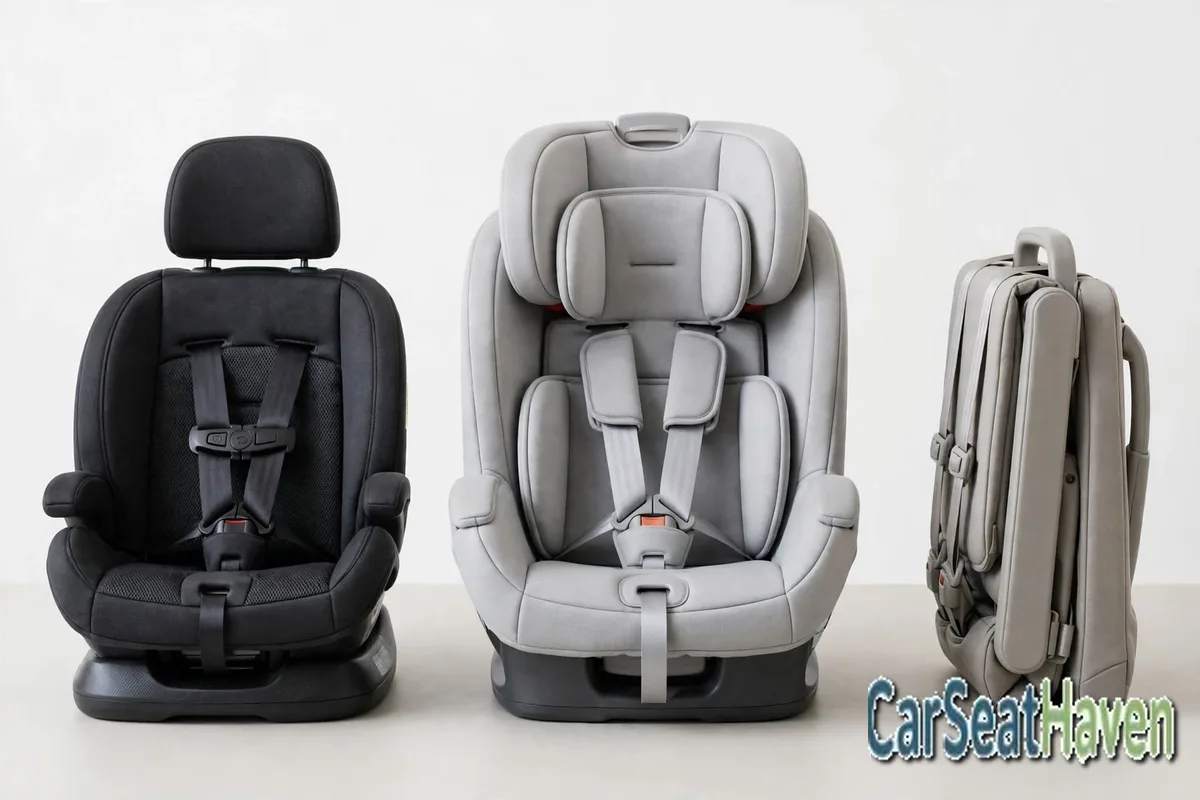
The WAYB Pico travel car seat is an 8 pound forward facing seat that folds small enough to fit in most airplane overhead bins. It is made for a child age 2 or older who meets its weight and height limits, and it is certified for use in cars and aircraft in the United States. The seat costs 499 dollars, and the carry bag costs 99 dollars more, so you pay 598 dollars if you want both. It does not face rearward, it does not recline, and it is not built to be your only everyday car seat. It earns its price only if you fly or take rideshares often with a toddler or a preschooler. For a family that travels once a year, a cheaper seat does the job.
What you need to know first
- The Pico faces forward only, for a child age 2 or older. It can never face rearward.
- The size limits depend on when your seat was made. A seat made before June 30, 2025 starts at 22 pounds and 30 inches. A seat made on or after that date starts at 26.5 pounds and 33.5 inches. Both end at 50 pounds and 45 inches.
- The seat weighs 8 pounds, folds to 11.6 by 14.5 by 18.9 inches, and is 14.5 inches wide in use.
- The seat costs 499 dollars. The Pico Carry Bag is sold separately for 99 dollars. The seat plus bag bundle costs 599 dollars.
- On a plane it installs with the aircraft lap belt only. There is no LATCH on a plane.
- There is no recline, so a child who falls asleep sits upright and the head can drop forward on a long trip.
- The most common complaint is the crotch buckle. It is short, it cannot be adjusted, and it can dig into a larger child.
- A backless booster cannot be used on a plane. The Pico is a harnessed seat, not a booster, and that is what makes it legal for aircraft use.
- The Pico is good for seven years from its date of manufacture, not from the day you buy it. The date is printed on the label on the bottom of the seat.
- A travel bag protects a seat from dirt, scuffs and handling marks, but no bag can prove that a checked seat is undamaged. Always inspect the seat after baggage claim.
WAYB Pico at a glance
The table below uses the figures from the current WAYB page, checked on November 5, 2026. Prices can change, so check the WAYB page again on the day you buy.
| Feature | WAYB Pico |
| Seat weight | 8 pounds |
| Folded size | 11.6 by 14.5 by 18.9 inches |
| Size in use, lowest position | 15.2 by 14.5 by 22.8 inches |
| Size in use, highest position | 15.2 by 14.5 by 27.8 inches |
| Width | 14.5 inches |
| Direction | Forward facing only |
| Harness | Five point harness |
| Age | 2 years and older |
| Weight limit, made before June 30, 2025 | 22 to 50 pounds |
| Weight limit, made on or after June 30, 2025 | 26.5 to 50 pounds |
| Height limit, made before June 30, 2025 | 30 to 45 inches |
| Height limit, made on or after June 30, 2025 | 33.5 to 45 inches |
| Install | LATCH or vehicle seat belt in a car, lap belt only on a plane |
| Aircraft use | Certified for use in motor vehicles and aircraft |
| Standards | FMVSS 213 and FMVSS 302 |
| Frame | AeroWing aluminum alloy |
| Fabric | AstroKnit mesh, breathable, no PU foam |
| Price, seat only | 499 dollars |
| Price, Pico Carry Bag | 99 dollars |
| Price, seat plus bag bundle | 599 dollars |
| Useful life | 7 years from date of manufacture |
| Warranty | 3 year limited warranty, original purchaser only |
| Rating on WAYB page | 4.7 out of 5, based on 540 reviews |
Who the WAYB Pico fits
Age alone is not enough. Your child has to be at least 2 years old and meet the weight and height limits printed on the label of that exact seat. A small 2 year old may meet the age but not the weight or the height minimum, and that is more likely on a newer seat, because the minimums went up on June 30, 2025.
Before that date, a Pico was made for a child from 22 pounds and 30 inches. On or after that date, the same seat design was made for a child from 26.5 pounds and 33.5 inches. The top end did not change. Both versions end at 50 pounds and 45 inches. WAYB says the seat construction stayed the same and the limits changed because the regulations changed, so the label on your own seat is the final word, not a number you saw in a review.
Height usually ends the Pico sooner than weight does. Many children reach 45 inches between age 4 and 5, even when they are still well under 50 pounds. A child who reaches 45 inches has outgrown the Pico, even at 40 pounds. That gives most families about 2 to 3 years of real use, depending on when the child starts and how fast the child grows. A large toddler who is already close to 35 inches at age 2 will have an even shorter window, and that short window is the main reason the price feels high to some parents.
The Pico does not fit a baby, and it does not fit a child who still needs to ride rear facing. Some states require rear facing until age 2, and the Pico cannot rear face at all, so it is never the seat for an infant or a young toddler. A child who is under 2, or under the weight and height minimums, needs a different seat, usually an infant carrier or a convertible seat that can face rearward.
It also does not fit a child who needs a lot of padding or a recline to sleep. The seat holds a child upright, with a breathable mesh seat and a slim frame. That is the trade that makes it light and foldable, and it is also the reason most reviewers say it is not a daily seat. A child who naps on every car ride will notice the upright position on a long flight or a long drive.
WAYB Pico on a plane
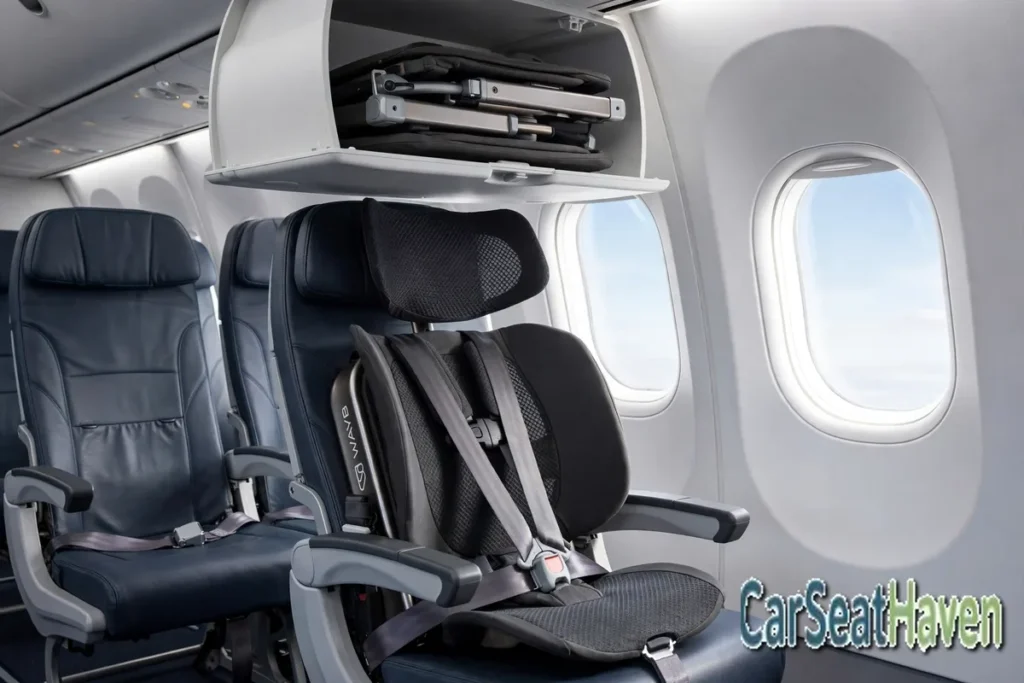
The Pico was built for the plane, and the plane is where it makes the most sense. The seat carries a label in red text on the bottom that says it is certified for use in motor vehicles and aircraft, and that label is what a gate agent or a flight attendant will ask to see if they question the seat. Check your airline child restraint rules before the trip, because the airline can still set its own rules.
Your child needs their own ticketed seat to use any car seat on board. A lap infant fare does not come with a seat to install a car seat in, so the Pico cannot be used on a lap infant ticket. When your child has a seat, the Pico installs forward facing with the aircraft lap belt only. There is no LATCH on a plane, and the top tether does not apply on a plane either.
The folded Pico measures 11.6 by 14.5 by 18.9 inches, and WAYB says that size fits the overhead bin or under the seat in front of you on most commercial planes. Parents who have flown with it report that it fits in a Southwest 737 overhead bin, and that it is smaller than a carry on bag. That matters, because it means you can carry the seat on board instead of checking it, and a seat that rides in the cabin never goes through baggage handling.
If you do check the seat, use a bag, and inspect the seat after baggage claim. A bag can protect the seat from dirt and scuffs, but it cannot prove that the seat is undamaged inside. Look for a cracked shell, bent frame parts, or damaged foam, and if you see damage, do not use the seat until you have checked with WAYB or a certified technician.
One more option for the flight is the CARES harness. It is FAA approved for a child from 22 to 44 pounds, it weighs about 1 pound, and it attaches to the airplane seat back. It is not certified for cars, so you still need a car seat waiting at the other end.
WAYB says the Pico meets United States standards only, and does not recommend it in vehicles outside the United States, except for international flights that depart from the United States. If your trip has a ground part overseas, plan a local seat for that part of the trip, and do not assume the Pico will be legal or accepted in a car abroad.
WAYB Pico in a car, taxi, rental car and rideshare
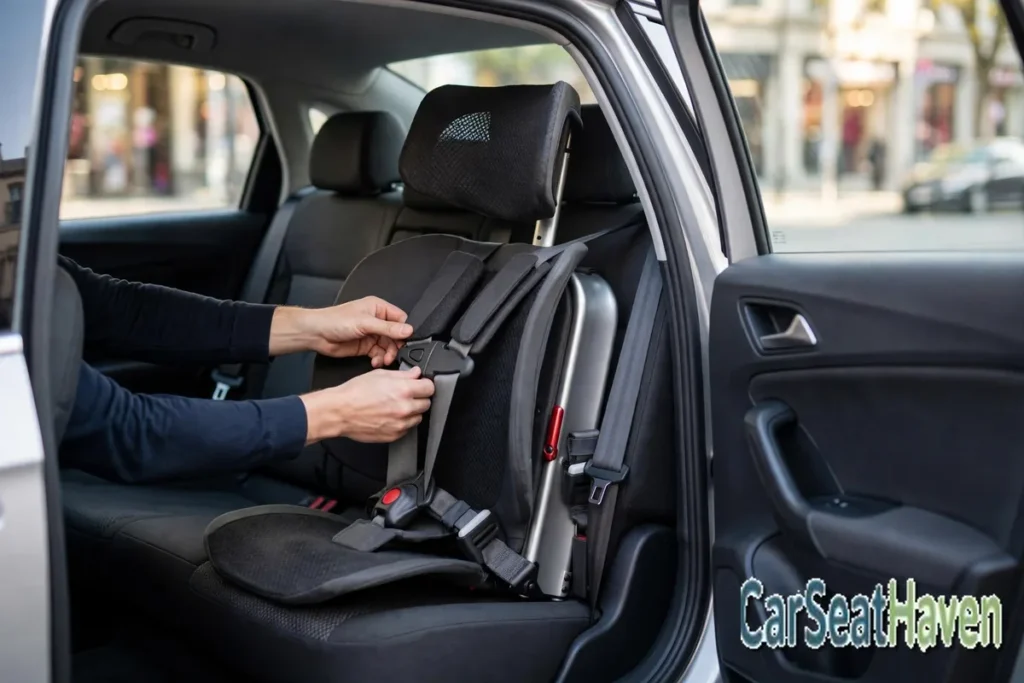
In a car, the Pico installs with LATCH or with a vehicle seat belt, plus a V shaped top tether when a tether anchor is available. Parents who use LATCH describe the install as quick, often under 5 minutes, and some say they can install it in the time it takes a partner to load the suitcases. That speed is the whole point of the seat for city parents who take Ubers and Lyfts often, because a seat that takes 10 minutes to install is a seat you will leave at home.
Seat belt installation is a different story. Several car seat technicians call the Pico tough to install with a vehicle seat belt, and one national review notes that lap belt only installation needs extra care to stop the belt from bunching. In a rental car or a car without easy LATCH anchors, that weakness can slow you down, so practice the seat belt install at home before your first trip, when you are not standing at a curb with a toddler and luggage.
The Pico is 14.5 inches wide, which makes it one of the narrowest car seats you can buy. That width matters in two places. First, it helps the seat fit in a standard airline seat, which is usually 17 to 18 inches wide. Second, it helps with three across in the back row of most vehicles, where full size seats will not fit side by side. Grandparents and babysitters also like that narrow size, because the seat works as a compact backup seat without taking over the back seat.
The Pico is not a good daily seat. The mesh seat and minimal padding are fine for a flight or a taxi ride, but they are not comfortable for a daily commute or a long road trip. The harness strap covers can irritate a sensitive neck, and the upright position means a child who sleeps in the car will not sleep well in the Pico. WAYB itself does not position the seat as a primary daily seat, and most parents who love it are careful to say the same thing. Buy it for travel and for backup use, not as the only seat in your car.
WAYB Pico carry bag, does it come with a bag
The Pico does not come with a bag when you buy the seat alone for 499 dollars. The Pico Carry Bag is a separate purchase for 99 dollars, in Onyx or Lagoon, and the seat plus bag together cost 598 dollars if you add the bag separately. WAYB also sells a Pico and Carry Bag bundle for 599 dollars, which is the same seat and the same bag sold as one package.
That answer matters because some summaries say the Pico has an included travel bag, and the WAYB page itself has mixed wording. The price list on the WAYB page shows the Pico Carry Bag at 99 dollars as a frequently bought together add on, and a detailed 2026 review confirms that the seat ships without a bag. The storage section on the WAYB page mentions an included carry bag, which reads like it refers to the bundle, not to the seat alone. If you order the seat alone, do not expect a bag in the box. If you want the bag, order the bundle or add the bag for 99 dollars.
The bag itself is a backpack style bag, made from recycled polyester, with no PU, EVA or EPS foam. It lets you carry the folded Pico on your back through the airport, with your hands free for luggage and for your child. WAYB says the folded Pico fits most overhead bins with or without the bag, so the bag is about free hands at the airport, not about fitting on board.
A bag also matters if you ever gate check the seat. The 2019 headrest recall traced most breakages to seats that had been handled during air travel, which is one more reason parents carry the Pico on board instead of checking it. If you must check it, a padded bag is better than a thin fabric cover, and a thin cover is better than no bag at all, but none of them can prove the seat is undamaged. Inspect the seat after the flight, every time.
WAYB Pico safety record and the 2019 recall
WAYB states that the Pico meets FMVSS 213, the federal standard for child restraint systems, and FMVSS 302, the standard for flammability of interior materials. The seat is labeled as certified for use in motor vehicles and aircraft. Those are United States standards, and WAYB does not recommend the Pico for use in vehicles outside the United States.
The Pico has one recall on its record. In August 2019, WAYB reported to NHTSA, recall 19C-001, that the headrest aluminum tube frame could break and let the headrest separate from the seat. The original filing covered 4,558 seats made between March 1 and May 12, 2019, after eleven reports of broken headrests, ten of them from owners who had flown with the seat, and no injury claims. WAYB later widened the affected group to model numbers ending in 001, made between February 1 and August 23, 2019, with free replacement headrests. Seats with model numbers ending in 002 use a solid redesigned part and are not affected.
That recall matters most when you buy a used Pico. Every seat in the recall window has now passed its seven year expiration, so a 2019 Pico should not be on your list at all. A used Pico is only worth buying if you can confirm the manufacture date, the model number, the crash history, and that every part and the manual are present. If the seller cannot show you the label on the base or vouch for the seat history, walk away. Register any Pico you buy with WAYB, so that a future recall notice reaches you.
The Pico is good for seven years from its date of manufacture, not from the day you buy it. The date is printed on the sticker at the base of the seat. A Pico made in September 2026 expires in September 2026 plus seven years. The expiration date rarely decides anything for a first owner, because most children outgrow the 45 inch height limit well inside seven years. It matters for a hand me down to a younger sibling, and for a used seat, where a seat that has already spent four years in someone else closet has only three years left, whatever the listing price says. The 3 year limited warranty is shorter than the useful life and covers only the original purchaser.
Honest drawbacks of the WAYB Pico
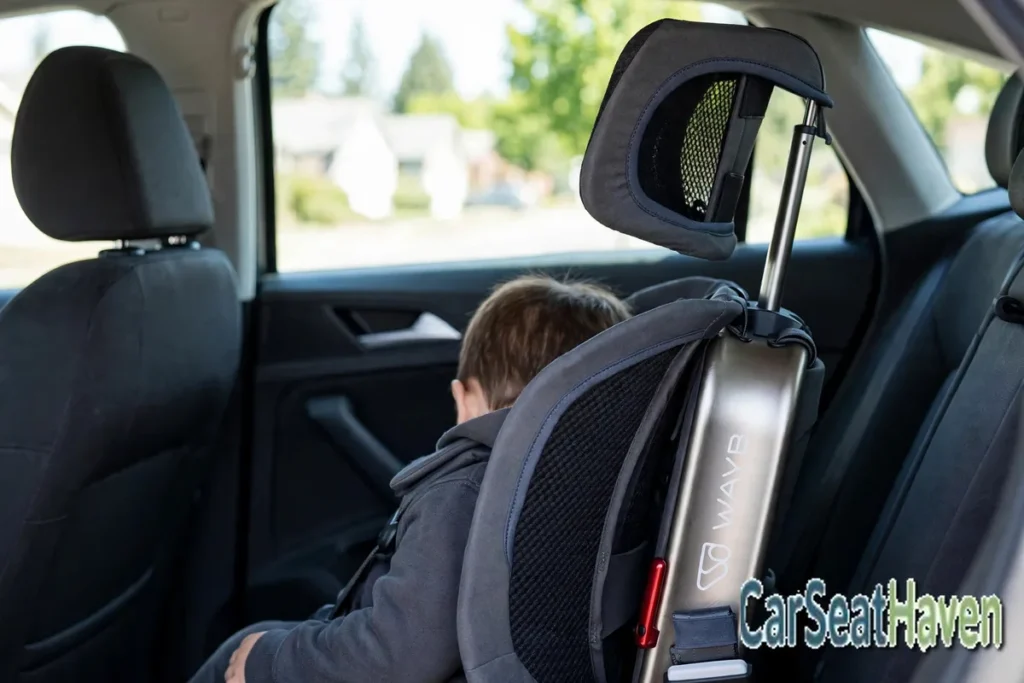
No travel seat is perfect, and the Pico has real drawbacks that parents mention again and again. Read them before you buy, because they are the reason some families return the seat or wish they had bought a cheaper convertible instead.
The crotch buckle is the biggest complaint. Parents and car seat technicians describe it as short, not adjustable, and prone to digging into larger children. One parent wrote that the strap digs into an average sized 3 year old, and a nationally certified technician confirmed the issue when testing with a 4 year old at 46 pounds and 43 inches. A folded shirt between the buckle and the child can help on a longer ride, but that is a workaround, not a fix.
The seat does not recline. The Pico holds a child completely upright, with no recline option. For a short flight or a taxi ride, that is fine. For a longer trip, parents report that the child head drops forward when the child falls asleep. One travel blogger chose a budget Cosco Scenera over the 499 dollar Pico for a road trip specifically because the Pico keeps a child super upright, which is not nap friendly.
Children outgrow the Pico faster than the price suggests. The height limit is 45 inches, which sounds generous until you realize that many children reach 45 inches between age 4 and 5. With a seven year expiration, you might get only 2 to 3 years of actual use, depending on when you start and how fast your child grows. For a large toddler, the usable window shrinks further, and that makes the cost per year feel high.
Seat belt installation is a struggle. Multiple experts flag this, and one certified technician puts it plainly, the Pico is really tough to install with a vehicle seat belt. She recommends using LATCH whenever possible. The review from Car Seats For The Littles noted that lap belt only installation required extra care to prevent belt bunching. In a rental car or a car without LATCH, this can be frustrating.
The seat is not comfortable for daily use. Almost every reviewer who loves the Pico is careful to say, do not use it every day. The mesh and minimal padding are fine for a flight or a taxi, but not for a daily commute or a long road trip. The harness strap covers can irritate sensitive necks. One longtime user said she honestly does not think the Pico works for daily use and could see it being uncomfortable for a long road trip.
Folding and unfolding takes some muscle. The fold mechanism uses an aerospace grade latch that requires real force to engage and release. A certified technician noted that both folding and unfolding took quite a bit of force. It is not difficult once you are used to it, but the first few times can feel like you are going to break something, and that is not ideal when you are wrestling it open at a curb with a screaming toddler.
Best travel car seat alternatives
The Pico is the best travel car seat for a specific kind of family, a family that flies or takes rideshares often with a child age 2 to 5. It is not the best travel car seat for every family. The seats below are the alternatives that travel guides recommend most often, and each one fits a different child and a different budget. Read them as a set, not as a ranking, because the right seat depends on your child age, your child size, and how often you travel.
Cosco Apt 50
The Cosco Apt 50 is the best overall travel convertible in the SafeConvertibleCarSeats guide for 2026, and it is the seat that guide author has used more than any other for air travel. It weighs just 9 pounds and typically costs under 50 dollars, which makes it the lightest and cheapest convertible that still meets every federal safety standard. It fits comfortably in airline seats, installs quickly with a seat belt, and is light enough to carry one handed while you manage a child with the other hand.
The Apt 50 covers rear facing from 5 to 40 pounds and forward facing from 22 to 50 pounds. It is a basic seat, with no no rethread harness and no premium padding, but for travel, basic is a feature, not a limitation. Less bulk means easier carrying and faster installation. The machine washable fabric is a practical bonus for travel messes. If you want a dedicated travel seat that stays packed and ready, and you do not want to spend 499 dollars, the Apt 50 is the first seat to look at.
Evenflo Tribute
The Evenflo Tribute is another featherweight option at just 9 pounds, and it costs under 60 dollars. What sets it apart from the Apt 50 is the side impact tested design, because Evenflo is one of the few brands that submits seats for side impact testing, which goes beyond federal requirements.
The Tribute is FAA approved, seat belt friendly for rental car installation, and compact enough for airline seats. For families who want a dedicated travel seat that stays packed in their luggage, it is hard to beat at this price. It is a simple seat, not a premium seat, and that is the point. It does the travel job, it does not try to do everything else.
Evenflo SureRide
The Evenflo SureRide weighs just 9.8 pounds but offers a 65 pound forward facing limit, which is significantly higher than the ultra light options. If your child is older or larger and you need a travel seat with more forward facing capacity, the SureRide bridges the gap between ultra light travel seats and full featured home seats.
It is FAA approved, installs well with a seat belt, and the extra weight capacity means it works for children up to about age 6 to 7 in forward facing mode. If the Pico top end of 50 pounds feels too low for your child, the SureRide is the travel seat that keeps going longer, without adding much weight.
Cosco Mighty Fit 65
The Cosco Mighty Fit 65 is slightly heavier than the Apt 50, at about 12.5 pounds, but it offers a 65 pound forward facing harness limit for under 100 dollars. If you want a travel seat that can also serve as a capable primary seat at your destination, the Mighty Fit 65 gives you more long term usability than the ultra light options.
It is compact, FAA approved, and installs easily in rental vehicles. The extra few pounds are noticeable compared to a 9 pound seat, but the higher weight limits and better padding make it a reasonable tradeoff if this seat will double as your daily driver while you are away.
Diono Radian 3R
The Diono Radian 3R is the heaviest option on this list at about 23 pounds, but it has a unique travel advantage, it folds flat. The slim profile and fold flat design mean it can be checked in a car seat bag without taking up excessive space, and the steel frame survives airline baggage handling better than plastic shell seats.
The Radian covers rear facing to 45 pounds, forward facing to 65 pounds, and converts to a booster to 100 pounds, which makes it the most versatile travel seat available. If you are traveling for an extended period and need a full featured seat at your destination, not just a minimal travel seat, the Radian is the best choice despite its weight. It is not a light seat to carry through an airport, and that is the tradeoff you accept for the versatility.
Cosco Scenera NEXT
The Cosco Scenera NEXT is the best affordable travel car seat in The Bump test, and it is the seat that parents in The Bump community mention most often for travel. It costs just under 60 dollars, weighs just 7 pounds, and it was the lightest travel car seat in that test, which makes it easy to switch between vehicles or carry across terminals.
The Scenera NEXT covers rear facing from 5 to 40 pounds and forward facing from 22 to 40 pounds, with a height limit of 43 inches, and it is FAA approved for air travel. It has a five point harness, side impact protection, a removable cup holder, and a removable seat pad that is machine washable and dryer safe. It lacks padding compared to a premium seat, and it is a tight squeeze in a smaller car, but for the price, it does most of the travel job that the Pico does, except for the fold and the overhead bin size.
Maxi-Cosi Romi
The Maxi-Cosi Romi is the seat that parents mean when they search for maxi cosi travel car seat in the United States, and it is a different seat from the Maxi-Cosi Nomad sold in the United Kingdom and Canada, so do not mix their figures together. The Romi is a 2 in 1 convertible car seat that weighs just over 9 pounds, which makes it one of the lightest convertible options on the market.
The Romi fits babies and children rear facing from 5 to 40 pounds and 19 to 40 inches, and forward facing from 30 to 50 pounds and 34.4 to 44 inches. It uses a 1 click LATCH system, and it is made with EcoCare fabric, a recycled fabric, and PureCosi fabric and padding made without added fire retardant treatment. Once you arrive, you can attach the top tether to the car seat shell to turn it into a hands free carrying strap that rests over your shoulder.
The Romi is sold on its own and as a bundle with a wheeled travel bag for 269.98 dollars. That bundle is the clearest example of a travel car seat with bag in this group, a seat and a wheeled bag sold as one package, which is different from buying a generic padded bag separately.
Maxi-Cosi Nomad Plus
The Maxi-Cosi Nomad Plus is the travel seat that appears in Canadian and United Kingdom listings under the Maxi-Cosi travel car seat keyword, and it is not the same seat as the United States Romi. The Nomad Plus is a lightweight, foldable forward facing travel car seat, designed for families on the move, and it folds down in seconds and fits neatly into its included travel bag.
The Nomad Plus is made for children from 22 to 40 pounds and 29 to 43 inches tall, with a five point harness and a height adjustable headrest. It weighs 5.55 pounds, measures 15.75 by 14.17 by 23.62 inches when assembled, and installs with a vehicle seat belt or UAS connectors and a top tether, in about 30 seconds. It is listed as airplane ready, and it costs 299.99 Canadian dollars in Canadian listings. If you are shopping in the United States, look for the Romi, not the Nomad Plus, because the names, the limits and the standards are different.
The Maxi-Cosi Nomad XL Plus is a United Kingdom seat, not a United States seat. It covers children from 15 months to 12 years, from 76 to 150 centimeters, and from 9 to 36 kilograms, and it weighs 6 kilograms. It folds into an included travel bag, it is 44 centimeters wide, and it uses R129 i-Size, with G-CELL side impact protection, ISOFIX and a top tether in harness mode, and booster mode after 100 centimeters. Do not use those United Kingdom figures for a United States child, and do not merge the Nomad XL Plus with the United States Romi or the Canadian Nomad Plus. They are three different seats, with different ages, different sizes, and different standards, even though they share a brand name and a travel idea.
Travel car seat with bag, what to buy and what a bag does
A travel car seat with bag can mean three different things, and the price and the protection are different in each case. First, a seat that comes with a bag in the box, like the Nomad Plus, where the bag is part of the seat. Second, a seat and bag bundle sold as one package, like the Romi with a wheeled travel bag for 269.98 dollars, or the Cosco Scenera Extend with a travel bag for 119.99 dollars, or the Safety 1st Ellaris with a travel bag for 159.99 dollars. Third, a seat bought on its own, plus a generic bag bought separately, like the Pico for 499 dollars plus the Pico Carry Bag for 99 dollars.
A bag does three useful things. It keeps dirt, grease and scuffs off the seat. It makes the seat easier to carry, with backpack straps, a carry handle, or wheels. And it gives the seat some protection from baggage handling, especially when the bag is padded. A padded bag is better than a thin fabric cover, and a thin cover is better than no bag at all.
A bag does not do one thing that parents sometimes expect. It does not prove that a checked seat is undamaged, and it does not make a checked seat crash proof. A seat that has been dropped or crushed can have invisible damage to the shell or the foam, even when the outside looks fine. That is why the guides say to use a bag, and to inspect the seat after baggage claim, and to replace the seat if you see a crack, a bent frame part, or damaged foam.
Car seat travel bag, the best options by type
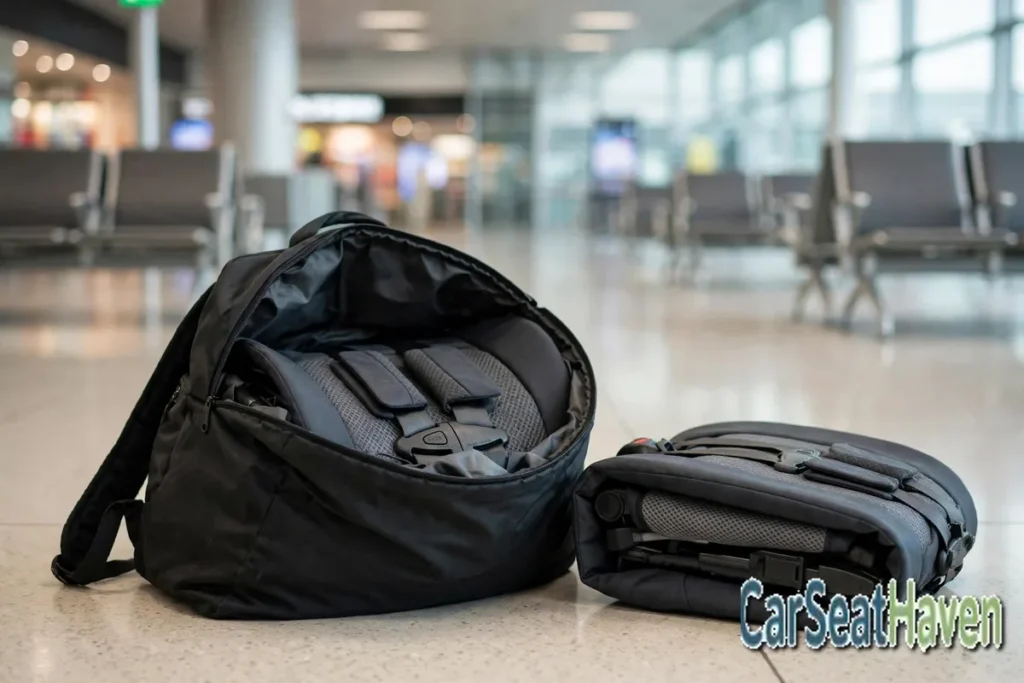
Start with the seat, not the bag. The seat has to fit your child, fit the plane, and fit the car at the other end. The bag has to fit the seat, and that is the step parents skip most often. Measure the seat, check the bag dimensions, and do not assume that a universal fit bag fits every seat. A bag that is too small will not close, and a bag that is too big will let the seat move around inside. Backpack straps are best when you need your hands free in a crowded airport. Wheels are best when the seat is heavy and you are rolling it over a smooth terminal floor. Full padding is worth it when you check the seat as luggage. A thin cover is enough when you gate check the seat for a few minutes.
The list below is from BabyCanTravel, checked on November 5, 2026, with prices from that page. Prices can change, so measure your seat against the bag dimensions before you buy.
J.L. Childress Ultimate Padded Backpack Car Seat Bag
The J.L. Childress Ultimate costs 52.99 dollars, with a sale price of 49.99 dollars on that page. It is fully padded on all sides, with interior wings that help protect the energy managing areas of the seat during airline handling. The harness style backpack straps make airport transfers manageable, and the dual zip opening makes it easier to get a bulky seat in and out. It fits most infant, convertible and booster seats, but measure your seat first.
J.L. Childress Wheelie Car Seat Bag
The J.L. Childress Wheelie costs 62.99 dollars. When a backpack carry is not practical, the solid platform and dual rubber wheels are a smart compromise. It has an interior cinch strap that stabilizes the seat, a detachable shoulder strap, and lockable dual zippers. It is a strong option for heavier convertibles, where rolling is easier than shouldering the seat. It is not fully padded, and the two wheel design needs tilting to roll.
J.L. Childress Gate Check Bag for Car Seats
The J.L. Childress Gate Check Bag costs 19.99 dollars, with a sale price of 14.29 dollars. It is lightweight, it stuffs into its own pouch, and it is sized for most car seats. It is easy to spot at oversized pickup, because it is red. It is a fabric cover, not impact protection, and airlines can still rough handle a checked item. Buy it for a short walk to the jet bridge and for a clean cover, not for crash protection.
J.L. Childress Spinner Wheelie Deluxe Car Seat Bag
The J.L. Childress Spinner Wheelie Deluxe costs 149.99 dollars. It is fully padded, water resistant, and it opens wide from the front so you can set the seat in without wrestling. The raised base helps keep the seat centered while rolling, and the four spinner wheels let you push it upright with one hand through a crowded terminal. It is heavier and pricier than a gate check cover, and it is bulkier to store at your destination.
Britax Car Seat Travel Bag With Wheels
The Britax Car Seat Travel Bag With Wheels costs 87.67 dollars, and it is the best choice if you own a Britax seat. It combines a water resistant shell, a reinforced base, built in wheels, and padded backpack straps. It fits all Britax models and many others, and the wide double zip opening makes loading easier.
YOREPEK Padded Car Seat Travel Backpack
The YOREPEK Padded Car Seat Travel Backpack costs 29.99 dollars, with a sale price of 28.49 dollars. It has generous internal volume, padded shoulder straps, a side pocket, and a reinforced bottom panel. It is a good bag when you want more protection than a thin cover but you do not need a premium brand. The materials feel less premium than J.L. Childress, and the padding is lighter than the Ultimate, but the price is less than half.
Chicco Car Seat Travel Bag
The Chicco Car Seat Travel Bag costs 109.99 dollars, and it is purpose built for Chicco seats. The four wheel spinner design lets you roll upright with one hand, while the reinforced rubberized base, water resistant fabric and backpack straps add versatility. It fits all Chicco car seats and many others.
Who should buy the WAYB Pico and who should skip it
Buy the Pico if you fly three or more times a year with a toddler or a preschooler, and you want a seat that folds small, weighs 8 pounds, and installs fast in a taxi or a rental car. Buy it if you live in a city and take rideshares often, because the Pico turns a stressful decision into a quick install. Buy it if you need a backup seat for grandparents, babysitters, or carpools, because the narrow size and quick install make it perfect as a secondary seat. Buy it if you need three across in the back seat, because at 14.5 inches wide, it is often the seat that makes three across work.
Skip the Pico if you are on a tight budget. A Cosco Scenera NEXT does most of the travel job for a fraction of the price, it is bulkier and it does not fold, but it can be used rear facing, and it costs under 60 dollars. Skip it if your travel is mostly road trips, because no recline means no napping, and a child who sleeps in the car will not sleep well in the Pico. Skip it if your toddler is already large for age, because a child who is already close to 35 inches at age 2 will outgrow the Pico in about 2 years, which makes the cost per year feel high. Skip it if your trips are mostly overseas, because WAYB says the Pico meets United States standards only. Skip it if you are looking for a primary daily car seat, because the minimal padding and upright only position are not meant for every commute.
The price verdict is simple. At 499 dollars, or 598 dollars with the carry bag, the Pico is worth it for families who fly or take rideshares with a 2 to 5 year old several times a year, and it is hard to justify for a once a year trip. Parents who have owned it for 2 to 3 years consistently say they would buy it again, and parents also report that the Pico resells well, which lowers the real cost of ownership, provided you sell it with years left before its seven year expiration. If you travel once a year, buy a budget convertible seat like the Cosco Scenera and put the difference toward the trip itself.
Frequently asked questions
1. Can you use the WAYB Pico on a plane?
Yes. The Pico is labeled as certified for use in motor vehicles and aircraft, with the label printed in red on the bottom of the seat, and it installs with the airplane lap belt. Your child needs their own ticketed seat, and WAYB recommends checking your airline child restraint rules before you fly.
2. Does the WAYB Pico fit in an overhead bin?
WAYB says the folded Pico, at 11.6 by 14.5 by 18.9 inches, fits the overhead bin or under the seat in front of you on most commercial planes, with or without the carry bag. Parents report that it fits in a Southwest 737 overhead bin, and that it is smaller than a carry on bag. Check your airline bin size before you fly, because bin sizes can vary by plane.
3. Does the WAYB Pico come with a carry bag?
No. The seat alone for 499 dollars does not include a bag. The Pico Carry Bag is a separate purchase for 99 dollars, in Onyx or Lagoon. WAYB also sells a seat plus bag bundle for 599 dollars. If you order the seat alone, do not expect a bag in the box.
4. What age and size does the WAYB Pico fit?
The Pico is for children age 2 and older, forward facing only. Seats made before June 30, 2025 fit a child from 22 to 50 pounds and 30 to 45 inches. Seats made on or after that date fit a child from 26.5 to 50 pounds and 33.5 to 45 inches. The label on the bottom of your seat is the final word for that seat.
5. Is the WAYB Pico good as a daily car seat?
Technically yes, but most parents and car seat technicians do not recommend it for daily use. The minimal padding and fully upright position are not comfortable enough for a daily commute or a long drive. It is designed as a travel and backup seat, not as a primary car seat replacement.
6. Is a backless booster allowed on a plane?
No. Backless booster seats are not approved for aircraft use, because an aircraft seat has only a lap belt, and a booster needs a lap and shoulder belt. For the flight, a child who uses a booster at home needs a harnessed seat, or the aircraft lap belt, or a CARES harness for a child from 22 to 44 pounds.
7. Is the Maxi-Cosi Nomad the same as the Maxi-Cosi Romi?
No. The Romi is the United States convertible travel seat, with rear facing from 5 to 40 pounds and forward facing from 30 to 50 pounds, and a wheeled bag bundle for 269.98 dollars. The Nomad Plus is a Canadian forward facing travel seat, from 22 to 40 pounds and 29 to 43 inches, with an included travel bag. The Nomad XL Plus is a United Kingdom seat, from 15 months to 12 years, with different limits and a different standard. They share a brand name, not a seat.
8. How long is the WAYB Pico good for?
The Pico is good for seven years from its date of manufacture, which is printed on the sticker at the base of the seat. Most children outgrow the 45 inch height limit before the seat expires, so the expiration date matters most for a hand me down to a younger sibling, and for a used seat.
9. Is it safe to buy a used WAYB Pico?
Only if you can verify its history. Check the manufacture date on the base, make sure the model number does not end in 001 from the 2019 headrest recall, confirm the seat has never been in more than a minor crash, and inspect the headrest, harness and LATCH connectors. The warranty does not cover seats bought from private sellers, and a 2019 Pico should not be bought at all, because it has passed its seven year expiration.
10. What is the best travel car seat for a baby under 2?
A baby under 2 needs a rear facing seat, and the Pico cannot rear face. For a baby, the best travel options are an infant carrier that is FAA approved, or a light convertible like the Cosco Apt 50 or the Cosco Scenera NEXT, which can face rearward from 5 pounds. The Doona is another option for a baby, because it rear faces and turns into its own stroller, but it costs 550 dollars and it is heavier than a Pico.

Aiden is the founder and editor of CarSeatHaven. He researches NHTSA safety standards, AAP guidance, manufacturer manuals, and recall notices, and turns them into plain-language car seat guides for parents.
