


No, a booster seat is not safe for a 3-year-old. If you are wondering is a booster seat safe for a 3-year-old, the direct answer is no, and the reason is simple: at three, your child belongs in a car seat with a 5-point harness, not a booster. Most 3-year-olds weigh between 26 and 38 pounds, which is well below the 40-pound minimum for any booster seat, and no 3-year-old has the maturity to sit perfectly upright for an entire car ride, which is exactly what a booster demands. Both the American Academy of Pediatrics and the National Highway Traffic Safety Administration agree that children should stay in a forward-facing harness seat until they outgrow it, usually somewhere between ages 5 and 7, before ever moving to a booster. In short, there is no safe booster seat for 3 year old.
That is the short version. But this question comes up constantly, usually for very understandable reasons. Maybe your 3-year-old is big for their age and the convertible seat is getting snug. Maybe an older sibling switched to a booster at some point and now the little one wants to be like them. Maybe a grandparent, a preschool carpool parent, or a well-meaning friend said something like “he is too big for that baby seat now.” All of that is normal. What matters is what the crash data and the pediatricians actually say, because a booster used too early is not just a little less safe. In a crash, it can be dangerously ineffective, and in some cases worse than the harness your child is in right now.
The direct answer, with the facts behind it
Let us be precise about why the answer is no, so you never have to guess again. A booster seat is safe only when three things are all true at the same time: the child meets the minimum size requirements, the vehicle seat belt fits the child correctly while sitting on the booster, and the child is mature enough to sit correctly for the entire ride. A 3-year-old fails on all three counts, and the failure is not even close.
On size: nearly every booster seat on the US market lists a minimum weight of 40 pounds. According to CDC growth charts, the average 3-year-old girl weighs about 26 to 38 pounds and the average 3-year-old boy weighs about 26 to 38 pounds. Read that again. The top of the normal range at age three is still below the minimum for a booster. A small number of 3-year-olds do hit 40 pounds, but as you will see, weight alone is never the whole story.
On fit: a booster does not restrain your child. The vehicle seat belt does all the restraining. The booster just lifts the child up so the adult-sized belt lands on the strong bones of the body, the hips and the collarbone, instead of the soft belly and the neck. A 3-year-old’s torso is short, the belt geometry still does not work, and the child is far more likely to slouch, which instantly ruins the belt fit.
On maturity: this is the one parents underestimate most. A booster has no harness and no straps holding the child in place. Nothing keeps a wiggly 3-year-old from leaning over to pick up a dropped toy, twisting around to look out the back window, sliding down to kick the seat in front, or tucking the shoulder belt behind their back because it feels uncomfortable. Three-year-olds do all of these things constantly. It is developmentally normal. It is also exactly what makes a booster unsafe for them, because a seat belt only protects a body that stays in the correct position.
What the American Academy of Pediatrics says
The American Academy of Pediatrics, the organization of US pediatricians, lays out child passenger safety in clear stages. Their policy, originally issued in 2018 and reaffirmed in February 2025, says that after children outgrow rear-facing seats, all children should use a forward-facing car seat with a harness for as long as possible, up to the highest weight or height allowed by the seat’s manufacturer. Only when the child’s weight or height is above the forward-facing limit should they move to a belt-positioning booster seat, and then they should stay in that booster until the vehicle lap-and-shoulder belt fits properly, which typically happens when they reach 4 feet 9 inches tall and are between 8 and 12 years old.
Notice what the AAP does not say. It does not say “switch to a booster at age 4” or “switch when your child looks big enough.” It says to max out the harness first. There is no safety benefit to moving a child out of a harness early. The harness is a more protective restraint than a booster, so every month your child stays in it is a month of better protection. Modern forward-facing harness seats commonly go up to 65 pounds, and many go higher, which means most children can stay harnessed well past their third birthday, often to age 5, 6, or even 7.
The AAP also reminds parents that all children younger than 13 should ride in the back seat. That part matters here too, because the question about boosters often comes bundled with the question about the front seat. A 3-year-old goes in the back, in a harness, full stop.
What NHTSA recommends for each stage
The National Highway Traffic Safety Administration uses a simple four-stage approach that mirrors the AAP’s guidance: rear-facing as long as possible, then forward-facing with a harness, then a booster seat, then the seat belt alone. NHTSA does not recommend a booster seat for 3 year old. For the booster stage specifically, NHTSA describes it as being for children who have outgrown forward-facing harness seats, generally from about age 4 to at least age 8, between roughly 40 and 80 pounds, and under 4 feet 9 inches tall.
Two things in NHTSA’s framing deserve attention. First, the booster stage starts where the harness stage ends. The stages are sequential, not overlapping choices. You do not pick between a harness and a booster at age three the way you pick between two brands of shoes. Your child is in the harness stage, and they stay there until they genuinely outgrow it.
Second, NHTSA’s guidance, like the AAP’s, is to keep a child in each stage until they reach its top limit rather than moving them on early. Every transition to the next stage is a small step down in protection. Rear-facing protects better than forward-facing, a harness protects better than a booster, and a booster protects better than a seat belt alone. Rushing a transition gives up protection for convenience, and convenience is never worth it here.
Why 3-year-olds are too small: the numbers
It helps to look at actual numbers instead of going by feel, because three-year-olds vary enormously and “big for his age” is one of the most common reasons parents consider an early switch.
Based on CDC growth charts, here is where 3-year-olds typically fall: girls average about 34.5 to 40 inches tall and 26 to 38 pounds, and boys average about 35.5 to 40.5 inches tall and 26 to 38 pounds. An average 3-year-old is around 37 inches tall and 31 to 33 pounds. Compare that to the booster minimums: at least 40 pounds, and tall enough that the seat belt fits correctly, which for most children means at least 40 inches and realistically several inches more.
So the typical 3-year-old is roughly 5 to 10 pounds under the minimum weight for a booster and several inches too short for the belt to fit. Even a 3-year-old at the 95th percentile for weight, the genuinely big kid in the preschool class, is only just brushing against the 40-pound line. And weight is only one requirement. The child still needs the height and, critically, the maturity, which no 3-year-old has.
There is another size issue that rarely gets mentioned: booster seats are designed and crash-tested around the body proportions of school-age children. A toddler’s head is proportionally much larger and heavier relative to their body than an older child’s, and their hip bones are not yet developed enough to keep a lap belt from riding up. This is anatomy, not opinion. A 3-year-old’s skeleton simply is not ready for a restraint system that depends on the belt catching on bony structures.
Why 3-year-olds are too young: the maturity problem
If the size numbers were the only issue, a very large 3-year-old might seem like a borderline case. Maturity is what makes it not borderline at all.
Think about what a booster asks of a child. The seat has no straps, no buckle holding the torso, nothing but the vehicle’s seat belt, which the child must keep positioned correctly for the entire trip. That means sitting upright with their back against the vehicle seat, not leaning, not slouching, not turning sideways, not reaching for things, not falling into the deep relaxed slump that every tired toddler falls into on a long drive. For the whole trip. Every trip.
Now think about what 3-year-olds actually do in cars. They fall asleep and slump sideways or forward. They drop toys and dive after them. They kick the seat in front of them. They twist around to talk to a sibling. They push the shoulder belt off because it rubs their neck. They figure out how to unbuckle things. None of this is misbehavior. It is what three-year-olds do. But in a booster, every one of those normal behaviors moves the seat belt off the strong bones and onto the soft belly or the neck, and a crash does not wait for the child to sit back up.
Child passenger safety technicians have a blunt way of putting it: the best car seat in the world cannot protect a child who is not in the correct position when the crash happens. A 5-point harness solves the maturity problem by removing it. The straps hold the child in the safe position whether they are awake, asleep, wiggly, or mid-tantrum. That is precisely why the harness is the right seat for a 3-year-old and why the booster, which outsources positioning to the child, is not.
What a booster does versus what a harness does
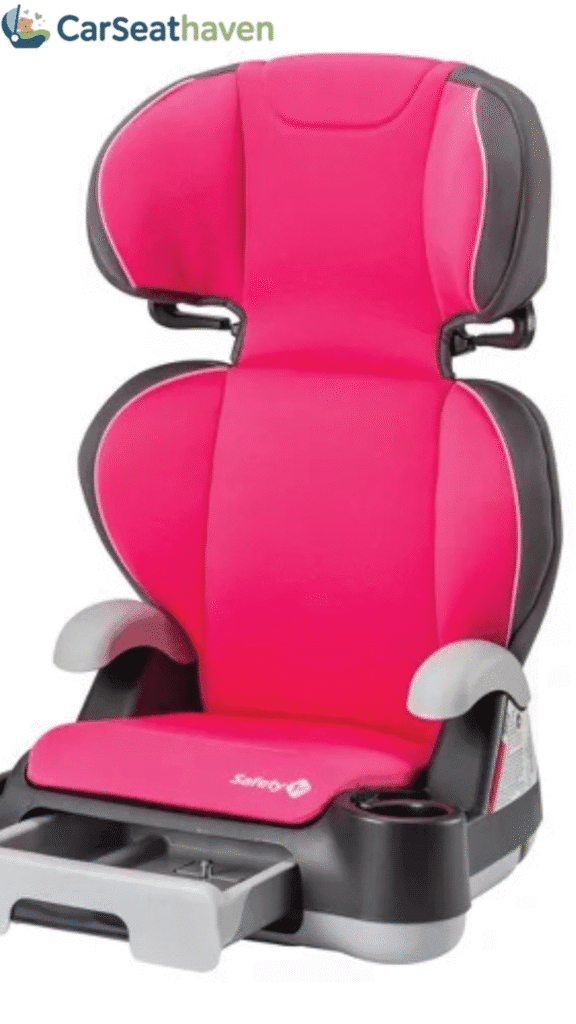
Understanding the mechanical difference between these two restraints makes the whole topic click. They are not two versions of the same thing. They work in fundamentally different ways. A booster seat for 3 year old cannot protect like a harness because the child cannot sit correctly.
| Feature | Forward-facing 5-point harness | Belt-positioning booster |
|---|---|---|
| What restrains the child | The harness straps, built into the car seat | The vehicle’s seat belt |
| What the seat itself does | Holds the child in a crash-tested position | Only lifts the child so the belt fits |
| Contact points on the body | Five: both shoulders, both hips, between the legs | Two: wherever the lap and shoulder belt land |
| Crash force distribution | Spread across the strongest parts of the body | Concentrated where the belt sits |
| Child must sit still | No, the straps do the work | Yes, for the entire ride, every ride |
| Works if child falls asleep | Yes, position is maintained by straps | No, sleeping children slump and the belt shifts |
| Typical minimum size | From about 22 pounds forward-facing (varies by seat) | 40 pounds and about 40 inches minimum |
| Typical age range | About 2 to 7 years | About 4 to 12 years |
The table makes the key point visible: a harness is an active restraint that does its job regardless of what the child is doing, while a booster is a passive positioning device that depends entirely on the child cooperating. A 3-year-old cannot cooperate at that level. That is not a criticism of your child. It is developmental reality.
There is solid crash data behind the staging too. Research published in Pediatrics found that children ages 4 through 8 in belt-positioning boosters had roughly 45 percent lower injury risk than children in seat belts alone. That study is often quoted to show boosters work, and it does show that, for the right age group. But notice the age range: 4 through 8. The data supports boosters for school-age kids, not for toddlers. And the CDC notes the same 45 percent figure for serious injury reduction among 4 to 8-year-olds. For younger children, the harness is the evidence-based choice, which is why the guidelines keep 3-year-olds in it.
What can go wrong when a toddler rides in a booster
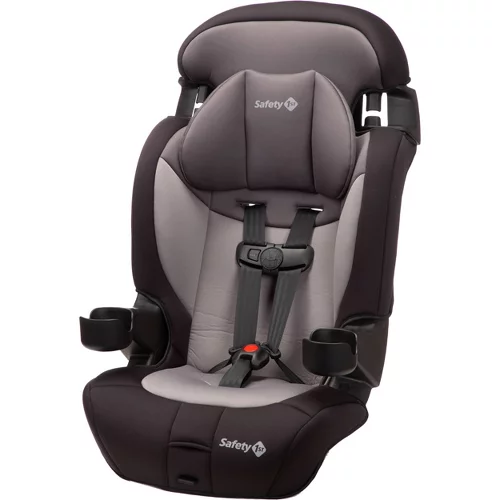
This section is not meant to scare you. It is meant to show you the specific injury mechanisms, because “less safe” is vague and vague does not change behavior. When a small child rides in a booster too early, the failure modes are well documented. Using a booster seat for 3 year old increases the risk of all these injuries.
Seat belt syndrome
This is the term physicians use for a pattern of injuries caused by a lap belt riding up over the soft abdomen instead of staying low on the hip bones. In a crash, a belt across the belly concentrates enormous force on the internal organs and the lumbar spine. The result can be ruptured intestines, damage to the liver or spleen, and spinal injuries, in crashes mild enough that properly restrained occupants walk away. A 2007 study in the Journal of Trauma reviewed child abdominal injuries and found the belt loading directly over the injured organs in exactly this way. A 3-year-old’s underdeveloped hip bones cannot anchor the lap belt the way an older child’s can, so the belt migrates upward, especially when the child slouches, which toddlers do constantly.
Submarining
Submarining is when the child’s body slides forward and down under the lap belt during a crash, so the belt ends up across the abdomen or the child partially ejects from the belt. Small, light children in boosters are at higher risk because there is less body mass and less developed pelvic structure to keep the belt engaged. A 5-point harness prevents submarining by design, with the crotch strap holding the pelvis back.
Neck and head injury from poor shoulder belt fit
On a 3-year-old, the vehicle shoulder belt typically crosses the neck or the face rather than the middle of the chest and collarbone. In a crash, a belt across the neck can cause devastating cervical spine and soft tissue injuries. Children also instinctively tuck a neck-rubbing shoulder belt behind their back or under their arm, which removes upper-body restraint entirely and turns the lap belt into the only thing holding them, setting up the abdominal injuries described above.
Ejection and partial ejection
A harness keeps a child in the seat. A seat belt on a small, wiggly child in a booster does not do nearly as good a job, particularly if the child has squirmed into a bad position before the crash. Ejection remains one of the deadliest outcomes in any crash, and proper restraint is the main thing standing between a child and the door, the window, or the road.
None of these risks exist in the abstract. They are the reason every major safety organization draws the line where it does, and the reason the booster minimums are 40 pounds and roughly age 4 at the absolute earliest, with most safety advocates pushing the practical transition to age 5 or 6.
Where a 3-year-old should actually be sitting
So if not a booster, what exactly? The answer depends on your child’s size and your current seat, and there are really only two correct answers.
Still rear-facing, if the seat allows it
This surprises many parents, but a good number of 3-year-olds still fit rear-facing. The AAP says children should ride rear-facing as long as possible, until they reach the highest weight or height allowed by their seat’s manufacturer, and most modern convertible seats allow rear-facing to 40 or 50 pounds. Rear-facing is the safest way for any young child to ride because it supports the head, neck, and spine and spreads crash forces across the entire back. If your 3-year-old still fits within the rear-facing limits of their convertible seat, keeping them rear-facing is the gold standard. There is no rush to turn them around.
Forward-facing with a 5-point harness
Once a child outgrows the rear-facing limits, the next stage is forward-facing with a 5-point harness, and this is where the vast majority of 3-year-olds belong. The harness should be snug, with straps at or above the shoulders for forward-facing, the chest clip at armpit level, and the seat installed tightly with less than one inch of movement at the belt path. Used this way, the harness will protect your child until it reaches its limits, typically 65 pounds or a seated shoulder height limit, which for most kids means age 5, 6, or 7.
Notice that “booster” appears nowhere in the correct answer for a 3-year-old. It is not the third option alongside these two. It is the stage after them.
When is a child actually ready for a booster?
Since the question behind this article is really “when, then?”, here is the readiness checklist that safety experts use. All four must be true at the same time. Missing even one means the child stays in the harness. A booster seat for 3 year old meets none of these criteria.
1. Age: at least 4, preferably 5 or older
Four years is the absolute minimum age listed on booster seats, and it exists mainly as a floor, not a target. Most child passenger safety technicians recommend waiting until at least age 5, and many say 6 is the sweet spot for most children. The AAP’s guidance to max out the harness first means many children will not need a booster until 6 or 7. Age matters because it tracks with impulse control and the ability to follow a rule, like sitting still, for a sustained period.
2. Weight: at least 40 pounds
This is the hard minimum printed on nearly every booster. Below 40 pounds, the booster was not designed or tested for the child, and the seat belt geometry will not work. Weigh your child. Do not guess. As shown above, the average 3-year-old is nowhere near this number.
3. Height: tall enough for the belt to fit
The child must be tall enough that, sitting on the booster, the lap belt lies low across the upper thighs and the shoulder belt crosses the middle of the chest and collarbone. A rough minimum is about 40 inches, but fit is what counts, not the tape measure. Sit the child in the booster in your actual vehicle and check the belt placement, because vehicle seat shapes vary.
4. Maturity: sits properly for the entire ride
This is the criterion that rules out every 3-year-old and many 4-year-olds. The child must be able to sit upright with their back against the seat, not lean, not slouch, not unbuckle, not put the shoulder belt behind their back, for the whole trip, every trip, including when they are tired, bored, or upset. Ask yourself honestly whether your child can do this. If the answer involves the words “usually” or “mostly,” they are not ready.
High-back versus backless: a note for later
You do not need to buy a booster now, but it helps to know what the options will be when the time comes, so marketing does not rush you. There are two main types.
A high-back booster has a base plus a back panel that supports the child’s head and neck and includes a shoulder belt guide. It works in any vehicle seating position and generally gives better belt fit for younger, smaller booster riders. Most technicians recommend starting with a high-back booster when a child first transitions.
A backless booster is just the base. It is lighter and easier to move between cars, but it provides no head or neck support, so it can only be used where the vehicle itself has a headrest or high seat back reaching at least to the top of the child’s ears. It is generally the better choice for older, taller children who have already spent time in a high-back booster.
Neither type is appropriate for a 3-year-old. This section is here so that when your child is genuinely ready, usually years from now, you already know the difference.
Why parents move kids to boosters too early
Understanding the pressures helps you resist them. These are the most common reasons children end up in boosters before they are ready, and what to do about each one.
“He is too big for the car seat”
Children rarely outgrow a harnessed seat at age three. What usually happens is that the child outgrows the infant bucket seat and the parent confuses the stages. If your convertible seat is getting snug, check the actual limits in the manual: the forward-facing weight limit and the rule for shoulder strap height. Most convertibles harness to 65 pounds. If your child has genuinely outgrown the convertible, the answer is a combination seat, which is a forward-facing harness seat that later converts to a booster, not a booster now.
“Her older sibling switched at this age”
Safety guidance has changed over the years, and what was considered acceptable a decade ago may not match current recommendations. The AAP’s push to keep children harnessed longer reflects newer crash data. Each child should be judged on the current guidelines and their own size and maturity, not on family precedent.
“The other kids in the carpool use boosters”
Social pressure is real, especially once children start noticing what their friends use. But other families’ choices do not change physics. If your child asks why they are still in a “baby seat,” a simple honest answer works: your seat keeps you safer, and you will move up when your body is ready. Children accept matter-of-fact safety rules far better than parents expect.
“Grandma bought a booster for her car”
Grandparents and caregivers often buy boosters because they are cheap, light, and easy to move. Thank them, then explain the guidelines and swap it for an appropriate harnessed seat for their car. A second inexpensive convertible or combination seat for the grandparents’ car costs more than a booster, but it is the only safe option at this age.
“Our state law only requires a car seat until age 4”
State laws set legal minimums, not safety recommendations, and the two are often far apart. Many states require boosters until age 8 or until the child is 4 feet 9 inches tall, but even the strictest state law is a floor. The AAP and NHTSA guidelines describe what is actually safest, and they go well beyond what any law requires. Never treat “it is legal” as “it is safe.”
What to do if your 3-year-old outgrew their convertible seat
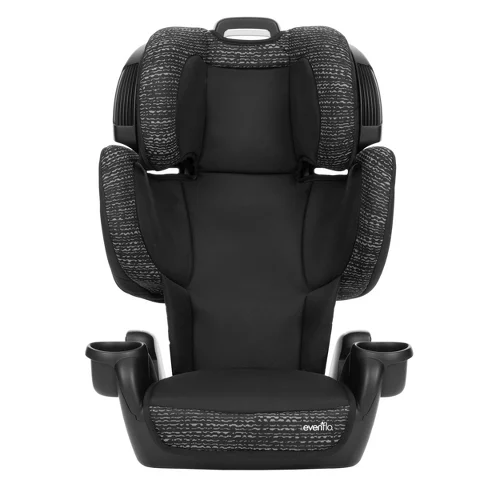
This is the practical question underneath the booster question, and it deserves a practical answer. If your 3-year-old has genuinely outgrown their convertible seat forward-facing, meaning their shoulders are above the top harness slots or they exceed the weight limit, you have good options that do not involve a booster.
The best option is a combination seat. This is a forward-facing-only seat with a 5-point harness that later converts into a belt-positioning booster when the child is truly ready. You buy it once, use the harness now, and convert it years down the road. It solves the “outgrew the convertible” problem without compromising safety.
When shopping, look for a high harness weight limit, 65 pounds is standard and some seats go higher, and tall top harness slots, since torso height is what usually ends the harness stage. Check the seated shoulder height limit in the manual. Also check the expiration date and never use an expired seat, since the materials degrade over time.
What you should not do is buy a booster “to grow into” or move the child into a booster temporarily while you shop for something else. There is no safe temporary exception. If you need a seat today, a combination seat used in harness mode is the answer today.
How to check booster readiness the right way, when the time comes
Years from now, when your child is older, bigger, and calmer in the car, you will want a reliable way to decide about the booster. Safety organizations teach a simple fit check you can do in your own driveway.
With the child sitting on the booster in your vehicle, buckled with the lap-and-shoulder belt, check these points: the child’s back rests flat against the vehicle seat or booster back, the knees bend comfortably at the edge of the seat cushion, the lap belt sits low and snug across the upper thighs and hip bones rather than the belly, the shoulder belt crosses the middle of the chest and collarbone rather than the neck or face, and the child can stay in that position for the entire ride. This is the same logic as the well-known five-step test used to decide when a child can leave the booster entirely, just applied one stage earlier.
If any check fails, the harness stays. Revisit the question in a few months. Children grow in spurts, and maturity develops unevenly, so a child who is not ready in the spring may be ready by the fall. There is no prize for switching early and no penalty for waiting.
Frequently asked questions
Is a booster seat for 3 year old safe if they weigh 40 pounds?
No, not safely. A booster seat for 3 year old is unsafe even at 40 pounds. Weight is only one of four requirements, and the other three, age, height with proper belt fit, and maturity, still rule out a 3-year-old. A 40-pound 3-year-old is a large toddler, but still a toddler: short torso, underdeveloped hip bones, and no ability to sit perfectly still for a whole car ride. The guidelines say to max out the harness first, and a 40-pound 3-year-old fits comfortably in nearly any forward-facing harness seat. Keep them harnessed.
What car seat should a 3-year-old be in?
A 3-year-old should be in either a rear-facing convertible seat, if they still fit within its rear-facing weight and height limits, or a forward-facing seat with a 5-point harness. Rear-facing is the safest option for as long as the seat allows, and many seats allow it to 40 or 50 pounds. Once forward-facing, the harness should stay snug with the chest clip at armpit level until the child outgrows the seat’s limits, usually around age 5 to 7.
Is it illegal to put a 3-year-old in a booster seat?
It depends on your state, but legality is the wrong question. Many states require children under 4 to be in a harnessed car seat, so a booster at age 3 may indeed violate state law where you live. But even in a state where it is technically legal, it is not safe. Safety guidelines from the AAP and NHTSA go well beyond legal minimums. Always follow the safety guidelines, not just the statute.
My 3-year-old is very tall. Does that change anything?
Not really. Height helps with belt fit eventually, but a tall 3-year-old still has a toddler’s maturity, toddler hip development, and a proportionally large head. Tall toddlers also tend to outgrow convertible seats by torso height sooner, which is exactly the situation a combination seat with tall harness slots is made for. Tall does not equal ready.
Can my 3-year-old ride in a booster just for a short trip?
There is no safe short-trip exception. Most crashes happen close to home on routine drives, and a crash does not care whether the trip was five minutes or five hours. The physics of a too-small, too-immature child in a booster are the same on every ride. Use the proper harnessed seat every time.
What is the difference between a high-back booster and a harness seat?
A harness seat, whether convertible or combination, restrains the child with its own built-in 5-point harness straps. A high-back booster has no harness at all; it just positions the child so the vehicle’s seat belt fits. The high back provides head support and belt guides, but all the actual restraining is done by the seat belt. That is why a high-back booster, despite looking more substantial, is still not safe for a 3-year-old.
When can my child move from a harness to a booster?
When all four readiness signs are true at once: at least 4 years old (preferably 5 or older), at least 40 pounds, tall enough that the seat belt fits correctly on the booster, and mature enough to sit properly for the entire ride, every ride. For most children this happens between ages 5 and 7, after they have outgrown their forward-facing harness seat. The AAP’s rule of thumb is simpler: max out the harness first, then switch.
Do booster seats expire?
Yes. Like all car seats, boosters have an expiration date, typically 6 to 10 years from the date of manufacture, which is stamped on the seat. Plastic degrades, standards evolve, and parts become unavailable. Since your 3-year-old will not need a booster for several years, do not buy one now to store; buy it when they are actually ready so you get the full usable life and the most current safety standards.
Is a backless booster ever okay for a young child?
No. A backless booster is for older children who have already used a high-back booster successfully. It offers no head or neck support and demands even more of the child’s posture, since there is no side structure reminding them to sit straight. Safety technicians recommend starting with a high-back booster at the transition and considering backless only later, once the child is bigger and reliably sits well.
Where can I get my car seat checked?
Safe Kids Worldwide coalitions and many local health departments, hospitals, and police or fire departments offer free car seat inspection events staffed by certified child passenger safety technicians. NHTSA also maintains a directory of inspection stations. A technician can check your installation, your harness fit, and whether your child is in the right stage, which is especially useful if you are unsure whether your 3-year-old still fits their current seat.
The bottom line
A booster seat is not safe for a 3-year-old, and the answer does not change with the child’s size, the length of the trip, or what other families are doing. At three, children are too light for the 40-pound booster minimum, too short for the seat belt to fit their bodies, and far too young to sit perfectly still for an entire ride. The 5-point harness exists precisely for this stage of childhood: it holds them in the safe position whether they are awake, asleep, or mid-wiggle.
Keep your 3-year-old rear-facing if the seat still allows it, or forward-facing in a 5-point harness if they have outgrown rear-facing. Max out that harness, which will usually carry them to age 5, 6, or 7. When they genuinely outgrow it by weight or height and show the maturity to sit properly every single ride, then, and only then, is it booster time. That patience is one of the simplest and most effective safety decisions you will ever make as a parent.
Fitting multiple kids? See our myth-busting guide to 3-across car seats.

Aiden is the founder and editor of CarSeatHaven. He researches NHTSA safety standards, AAP guidance, manufacturer manuals, and recall notices, and turns them into plain-language car seat guides for parents.
