

Table of Contents
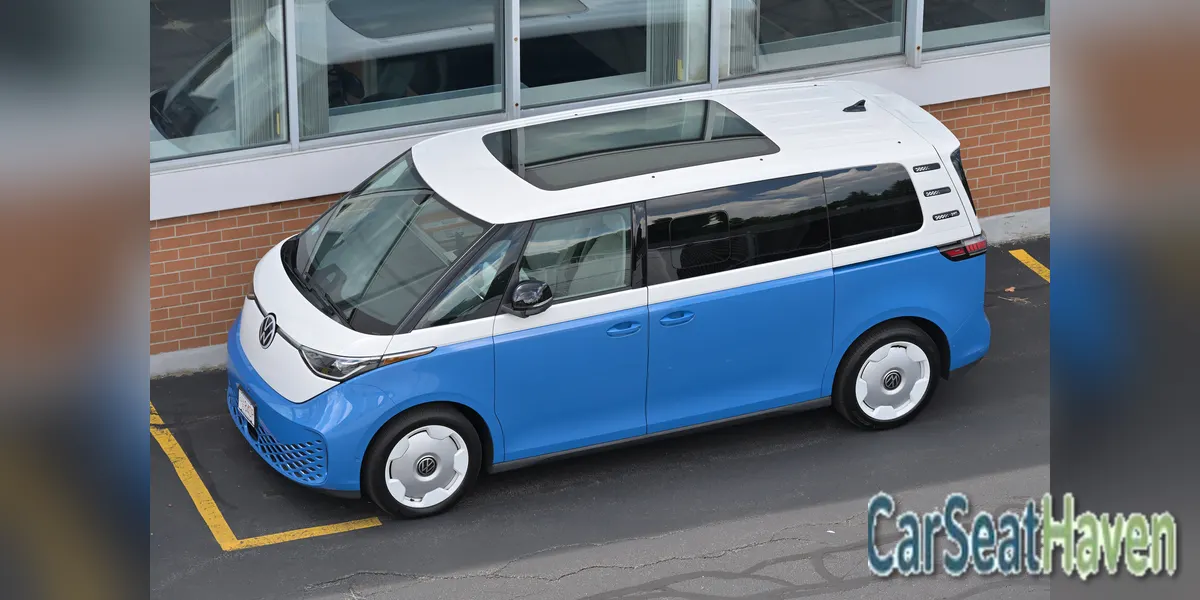
The 2027 Volkswagen ID Buzz is the electric van many families are searching for, but the buying story is not as simple as the name suggests. Volkswagen first said the van would return for the 2027 model year after skipping 2026, then later reports in September 2026 said the return had slipped to a 2028 model year arriving in the first half of 2027. No official United States price, EPA range, or horsepower figure for the new return model has been announced yet. What we do know is the van itself: a long wheelbase, three row electric Microbus revival with seating for six or seven, a 91 kWh battery in the 2025 model, and a new Tourer camping trim. This guide explains what is confirmed, what is still unannounced, and what to check before you buy.
What you need to know first
- Is the 2027 price announced? No. Volkswagen has not announced a United States price for the return model. The prices you see online are mostly the confirmed 2025 prices carried forward.
- When will it arrive? That part is confusing. Volkswagen first pointed to a 2027 return, with arrivals from August 2026 into early 2027. Later reports in September 2026 said the return slipped to a 2028 model year arriving in the first half of 2027. Check the latest Volkswagen dealer listing before you plan around a date.
- How many seats does it have? Six or seven. The United States model has three rows. A second row bench gives seven seats. Second row captain chairs give six seats.
- How far does it go on a charge? In the 2025 model, the EPA range was 234 miles with rear wheel drive and 231 miles with all wheel drive. No new EPA range has been announced for the return model.
- What is the Tourer? The Tourer is a trim, not a separate van. It is built for light camping and overnight sleeping, with a fold out mattress, window blinds, and a table and chairs.
- What is VW IQ Buzz? There is no van called IQ Buzz. IQ.DRIVE is Volkswagen driver assistance technology inside the ID Buzz. People mix the two names together when they search.
- Are all new Volkswagen vans electric? No. In Europe, Volkswagen still sells diesel, plug in hybrid, and fully electric vans. In the United States, the ID Buzz is the electric van in the lineup.
Why the 2027 name is confusing
If you search for the 2027 Volkswagen ID Buzz, you will find two different stories, and both come from real reporting. That is why this article does not pretend the timeline is settled.
In May 2026, Volkswagen announced the ID Buzz would return to the United States for the 2027 model year after skipping 2026. The announcement talked about four trims, a new Tourer trim, updated software, and arrival from August 2026 into early 2027.
Then in September 2026, Carscoops and Electrive reported a different timeline, based on a dealer memo. They said the return had slipped to a 2028 model year, arriving in the first half of 2027, and that it would skip both 2026 and 2027 as model years. That later version was also said to bring the NACS adapter, one pedal driving, the Tourer trim, physical steering wheel buttons, updated software, vehicle to load charging, and a digital key in one package.
So what should a buyer do with this? Think of it this way. The van is the same return van in both stories. The model year label and the exact arrival month are the parts that changed in reporting. Do not order, plan a trade in, or time a road trip around a 2027 label alone. Confirm the model year and the arrival window with Volkswagen or a dealer, in writing, before you pay a deposit.
The reason for the gap year is clearer. Volkswagen skipped 2026 in North America because a large number of 2025 vans were still unsold. Reports put that number at about 2,600 vans, or about 200 days of supply. In plain words, dealers still had last years vans to sell, so there was no need for a new model year right away.
2027 ID Buzz price: what is announced and what is not
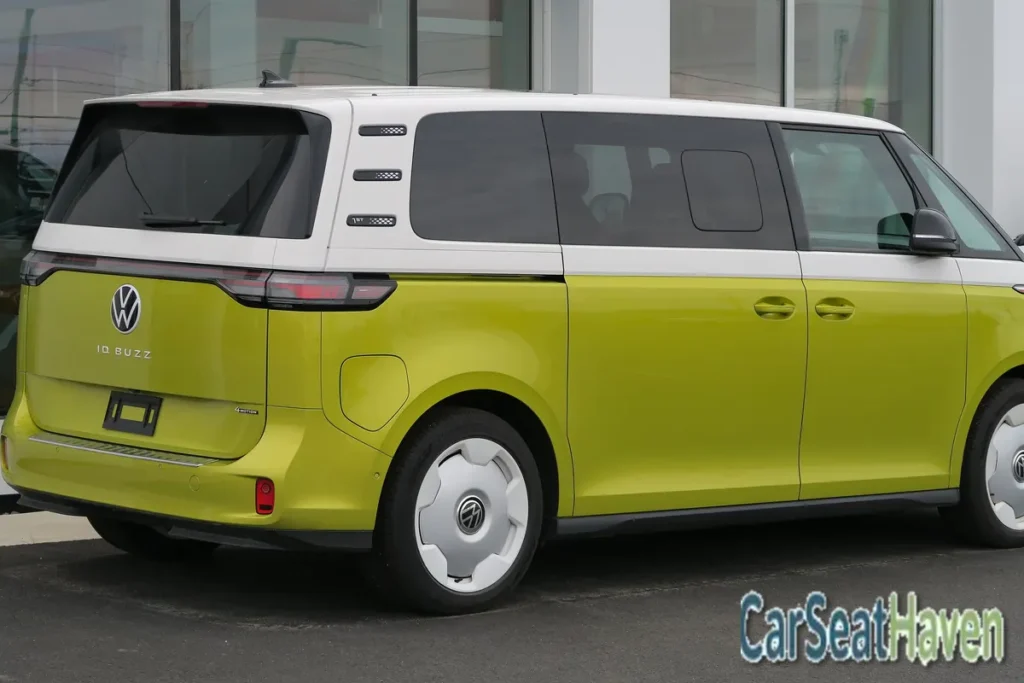
Let us start with the honest answer. No official 2027 price has been announced. No official 2028 price has been announced either, in the sources read for this article. Any website that lists a firm 2027 price is either repeating a 2025 price, sharing a dealer estimate, or guessing.
That does not leave you with nothing. The confirmed 2025 prices give you a realistic starting point, and the real world discounts on leftover 2025 vans tell you what buyers are actually paying.
The confirmed 2025 price baseline
All prices below are 2025 United States prices. The destination charge in 2025 was 1,550 dollars on every model. Some lists show the price before destination. Others show the price with destination included. That is why you will see two different numbers for the same trim. Both can be right, as long as you know which one you are looking at.
- Pro S, rear wheel drive: 59,995 dollars before destination, 61,545 dollars with destination.
- Pro S Plus, rear wheel drive: 65,045 dollars with destination.
- Pro S Plus, all wheel drive: 69,545 dollars with destination.
- 1st Edition, rear wheel drive: 67,045 dollars with destination.
- 1st Edition, all wheel drive: 71,545 dollars with destination.
All wheel drive added about 4,500 dollars in 2025. Second row captain chairs cost 695 dollars on the rear wheel drive Pro S Plus, and were standard on all wheel drive models. A panoramic electrochromic glass roof was a 1,495 dollar option on Pro S Plus. Two tone paint was a 995 dollar option on Pro S Plus.
For the return model, Volkswagen announced four trims: Pro S rear wheel drive, Pro S 4Motion, Tourer 4Motion, and Pro S Plus 4Motion. Notice how all wheel drive now covers most of the lineup. That is a real change from 2025, when all wheel drive was limited to higher trims. But Volkswagen has not yet attached prices to those four new trims.
What buyers are actually paying for leftover 2025 vans
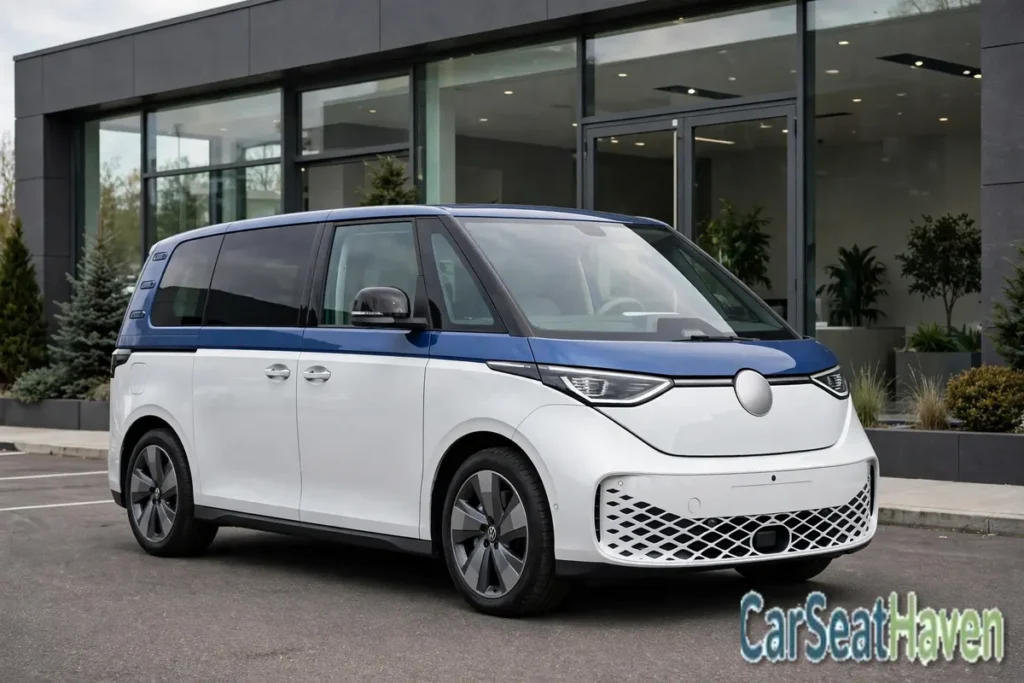
This is the part many price articles skip, and it matters if you are shopping now. Leftover 2025 vans have been heavily discounted. Reports mention a 7,500 dollar Volkswagen retail bonus on 2025 vans, plus dealer discounts, bringing the effective price to around 50,000 dollars in some markets, and into the mid 40,000 dollar range before incentives in some reports.
That is a very different number from a 61,545 dollar sticker. It also explains why waiting is not always the smart move. If you find a leftover 2025 van at a strong discount, and it has the seats, color, and features you want, the savings can be larger than the value of the new software and the Tourer trim in the return model.
One more price point to clear up. The 7,500 dollar federal electric vehicle tax credit ended in fall 2025, and the ID Buzz never qualified for it because it is built in Germany. Do not build your budget around that credit for this van. The 7,500 dollar retail bonus mentioned above was a separate Volkswagen promotion on outgoing inventory, not a tax credit, and it was time limited. Ask the dealer what is live today, not what was live last month.
How expensive is the electric VW bus, really?
In simple terms, this is a 60,000 dollar plus van before discounts, based on 2025 pricing. A well equipped model can reach the high 60,000 dollar range or low 70,000 dollar range with destination included.
What about the Tourer? Estimates online put a fully loaded Tourer camping version at around 75,000 to 80,000 dollars. Those are estimates, not Volkswagen prices. Tourer package pricing had not been finalized in the sources read for this article. Treat any Tourer price you see as a guess until Volkswagen publishes it.
For context, Kelley Blue Book compared the ID Buzz to the 2027 Kia Carnival Hybrid at 43,035 dollars and the regular Carnival at 39,035 dollars. Those are gas and hybrid minivans, not electric vans, so the comparison is not exact. But it shows why the ID Buzz feels expensive. You are paying for an electric, retro styled, three row van, not for the cheapest way to move seven people.
Kelley Blue Book also gave a 5 year cost to own figure of 81,897 dollars for the 2025 model. That number includes more than the sticker price, such as charging, insurance, and upkeep over five years. Use it as a rough planning number, not as a promise.
What changed for the return model
The return van is not a brand new design. Think of it as the same van with useful fixes and a camping trim added on top.
The four trims
- Pro S, rear wheel drive: the entry point in the new lineup.
- Pro S 4Motion: all wheel drive moves down the lineup, so more buyers can get it without jumping to the top trim.
- Tourer 4Motion: the camping trim, built on Pro S 4Motion.
- Pro S Plus 4Motion: the top trim, with more comfort and tech features.
Software, charging, and everyday driving
The return model gets ID.S 6 software, which is Android based. It brings a refreshed navigation home screen, a new vehicle settings page, and an app store with apps such as YouTube and Spotify. Buyers get a one year trial of In Vehicle Premium, which includes premium navigation, premium speech with, premium radio, and a WiFi hotspot. After that trial year, the subscription cost had not been published in the sources read for this article, so ask about it before you assume it stays free.
Two driving changes matter in daily use. One pedal driving is added. That means you can slow the van down mainly by lifting off the accelerator, which many electric vehicle drivers prefer in traffic. The second change is charging access. The return model includes a NACS adapter for Tesla Supercharger access. That is an adapter, not a built in native NACS port, even though a few articles word it loosely. The distinction matters if you plan to use Superchargers often, because an adapter is one more part to carry and use.
Other changes include myQ Connected Garage, AirConsole gaming, What3Words navigation, TravelAssist with assisted lane change, and Emergency Assist with a shoulder maneuver. MotorTrend also reported that hard buttons are back on the steering wheel. That may sound small, but many drivers prefer real buttons over touch only controls while driving.
Colors and wheels
Colors are simplified to two tone only in the return model. The new headline color is Candy White over Cherry Red, with white wheels, as a nod to the old Type 2 Microbus. Optional 21 inch wheels are available on Pro S Plus 4Motion. The Tourer gets 20 inch dark graphite wheels.
This is a van that wants to be noticed. If you prefer a quiet, plain look, the two tone only choice may feel limiting. If you like the retro look, that is exactly the point.
ID Buzz seating: six seats or seven seats
This is the question that decides the van for many families, so let us answer it in plain words.
How many seats does the Volkswagen ID Buzz have? In the United States, it has six or seven seats, depending on the second row you choose. The United States model is long wheelbase only, with three rows. Europe also has a shorter two row, five seat version, but that is not the United States van.
Seven seats means a 2, 3, 2 layout. Two seats in front, three seats in the second row bench, and two seats in the third row.
Six seats means a 2, 2, 2 layout. Two seats in front, two captain chairs in the second row, and two seats in the third row.
In the United States, the seven seat bench version was rear wheel drive only, and the six seat captain chair version was all wheel drive. That lock in matters. You cannot simply pick any seat layout with any drivetrain in the 2025 setup. The return model expands all wheel drive across most trims, so confirm the new seat and drivetrain combinations with Volkswagen before you assume the old rule still applies.
Legroom, headroom, and third row reality
Here are the United States legroom numbers that show up again and again across sources: front row 37.5 inches, second row 39.9 inches, third row 42.4 inches. Yes, you read that right. The third row has more legroom on paper than the second row. That is rare, and it is one reason reviewers call this one of the most usable third rows in an electric vehicle.
Third row headroom is reported at 38.7 inches in one source. That is less generous than the legroom, so tall adults should sit in the third row before buying. Legroom alone does not tell you if your head will clear the roof, especially with the glass roof.
Second row seats slide fore and aft. United States reveal sources put that slide at 7.9 inches, and the bench reclines 16 degrees. Captain chairs are reported to have eight reclining positions on a dealer page. Sliding the second row forward gives the third row even more room, and sliding it back gives second row passengers more stretch room. That flexibility is useful on long family trips, when different passengers want different amounts of space.
Third row access is described as easy in reviews, and the third row is removable. That removal is not light work. Reviewers note the third row seats are heavy, and they roll out on small rollers. Do not plan to take them in and out every day. Think of removal as a weekend job when you need maximum cargo space, not a daily routine.
Cargo space in plain numbers
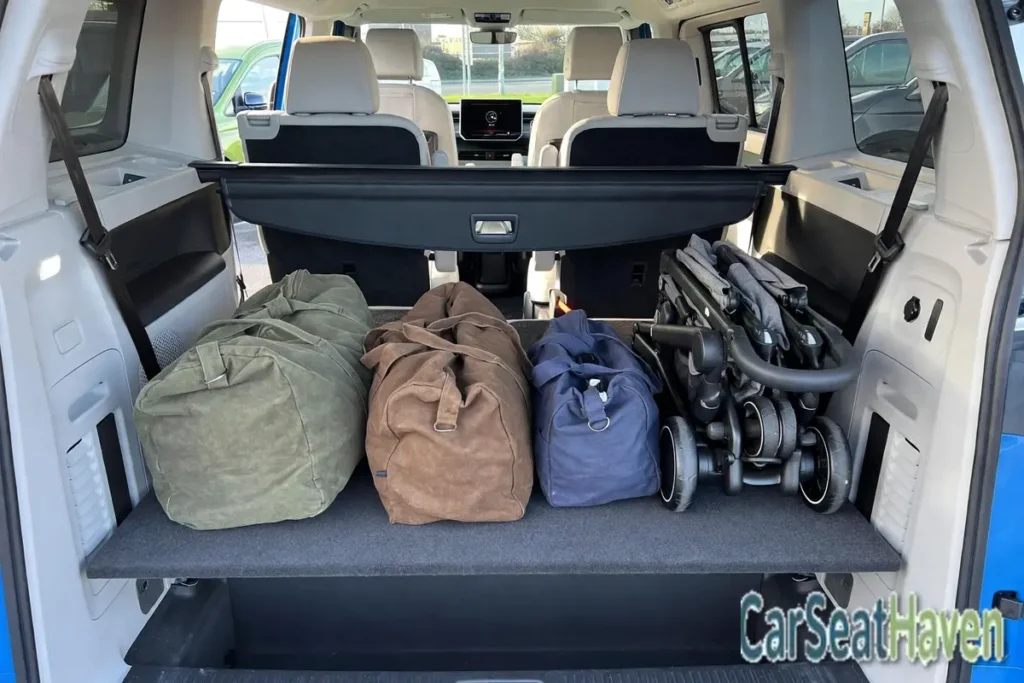
Cargo numbers change a lot depending on which seats are up, folded, or removed. Here is the clear version, based on United States sources:
- Cargo behind the third row, with all seats up: 18.6 cubic feet.
- Cargo behind the second row, with the third row folded but not removed: 48.9 cubic feet, reported by one source.
- Cargo behind the second row, with the third row removed: 75.5 cubic feet.
- Maximum cargo, with seats folded and removed as needed: 145.5 cubic feet.
Passenger volume is 160.1 cubic feet, or 163.7 cubic feet with the glass roof.
What does 18.6 cubic feet behind the third row mean in real life? It is enough for a few soft bags and small items, but it is tight for a large stroller plus luggage for seven people. No source read for this article gave a stroller test for the United States long wheelbase model with all three rows up. Before you buy, take your own stroller to a dealer and test it with all seats up. That one test will tell you more than any cargo number on a spec sheet.
The second row bench slides and folds flat, and the third row folds flat as well, but the battery under the floor means there is no deep well for the third row to drop into. That is why the folded and removed numbers are so different. A removable Flexboard cargo cover on higher trims helps create a flatter load floor.
Child seats: what we know and what we do not know
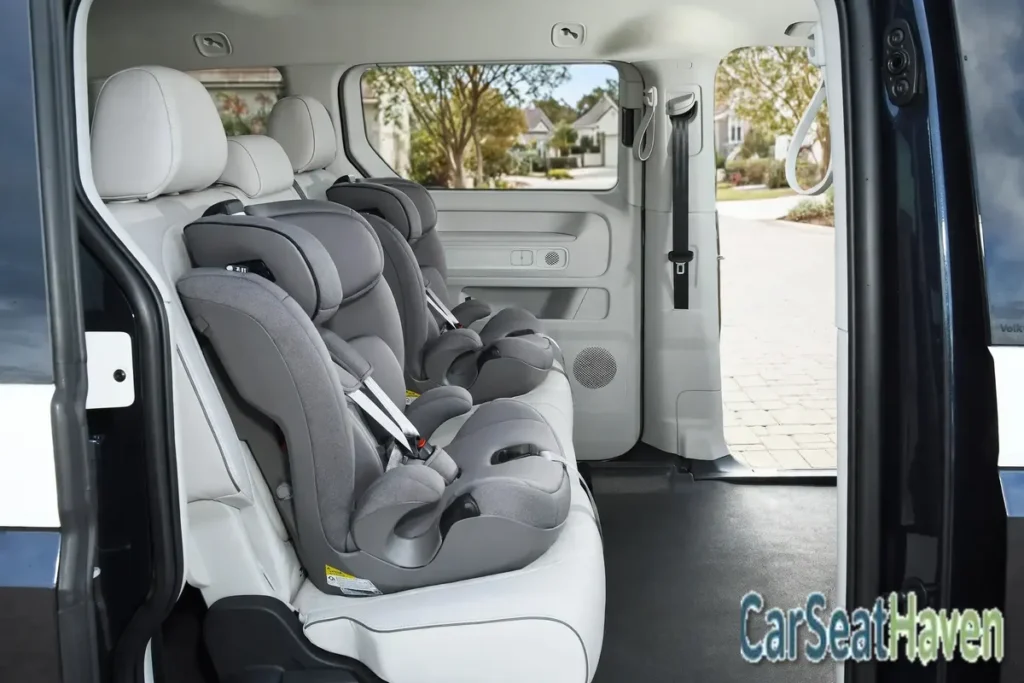
This is where a family focused article has to be honest about gaps, because no top article read for this research gave a full United States three row child seat guide.
What we do know comes mainly from an Australian review of the shorter five seat model. In that model, three child seats fit across the second row. ISOFIX anchors are on the two outer second row seats, and top tether anchorages are on the back of all three second row seatbacks. The second row slides fore and aft, and a 186 centimeter driver could fit in front of a rear facing child seat. The flat second row footwell and electric sliding doors on both sides also help when you are loading children.
What we do not know, from the sources read, is the full third row child seat picture for the United States long wheelbase model. No source clearly listed ISOFIX and top tether positions in the third row, or whether three child seats fit across the long wheelbase second row in the same way. Do not assume the third row is child seat ready just because it has seat belts for two passengers.
If you plan to use the third row for car seats regularly, do this before you buy: sit in the dealer van, find every ISOFIX anchor and top tether anchor yourself, install your own seats, and check third row access with second row child seats already installed. That test answers the questions no article could answer from specs alone.
One more family point: light colored seat materials look great in photos, but one reviewer doubted they would survive family life easily. If you have young children, ask about darker interiors, seat covers, and cleaning, before you fall in love with a light interior in a showroom.
Range, battery, and charging in plain words
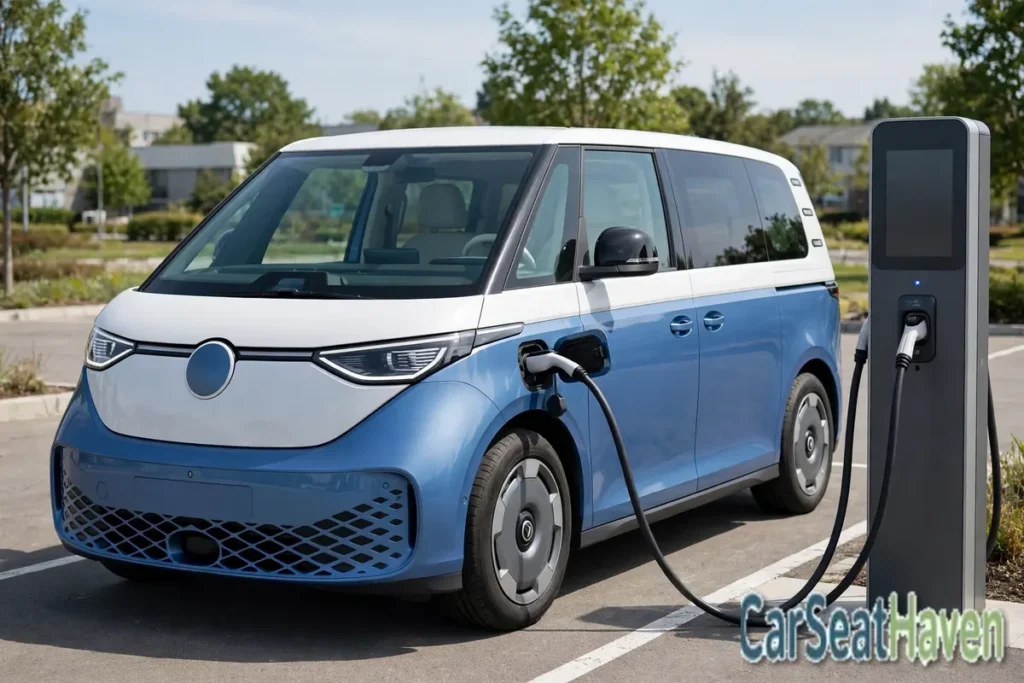
The 2025 United States ID Buzz uses a 91 kWh battery. Rear wheel drive models are rated at 282 horsepower and 234 miles of EPA range. All wheel drive models are rated at 335 horsepower and 231 miles of EPA range.
Those are EPA numbers, which are the United States test numbers. European WLTP numbers are higher, such as 282 miles or 291 miles for some versions. Do not mix those two tests together. A WLTP number is not a United States range promise.
In the real world, range will be lower than the EPA number in cold weather, at highway speed, and with a full load of passengers and luggage. One United Kingdom review of the long wheelbase model claimed 291 miles, but found about 245 miles in real world driving. That is a useful reminder, even though it is not a United States test. Plan road trips around a lower number than the sticker, and plan charging stops with room to spare.
Charging is reported at up to 170 kW on DC fast charging in MotorTrend sources, with a 10 percent to 80 percent charge in about 26 minutes. One other source claimed up to 200 kW. That conflict is not resolved in the sources read, so do not plan around the higher number. Home charging on 240 volt power is reported at about nine hours for a full charge, and AC charging is listed at 11 kW.
The NACS adapter for Tesla Supercharger access helps on road trips, because it opens up a much larger charging network. It does not turn the van into a long range road tripper by itself. With about 231 to 234 miles of EPA range, this van is best for families who charge at home most nights and use fast charging for longer trips, not for families who want to drive 300 miles without stopping.
The Tourer camping trim, explained simply

The Tourer is the most talked about part of the return model, and also the most misunderstood.
First, the Tourer is a trim, not a separate model. It is built on Pro S 4Motion. It is adapted from the European Good Night Package, which Volkswagen already sells in Europe.
What does it include? A fold out mattress with a platform over the folded second and third rows, so two people can sleep in the van. Pillows and linens are included in the package description. Window blinds, or magnetic blackout screens, cover all windows, the windshield, and the panoramic roof. Front window ventilation panels help with airflow. An exterior table and chairs are listed as equipment in most sources, although one source lists them as optional, so confirm that detail before you count on it.
Other Tourer equipment includes second row captain chairs, an electrochromic smart roof, Area View camera, a retractable tow hitch, and 20 inch dark graphite wheels.
Overnight Mode is software that is meant to help with sleeping in the van, but Volkswagen has not published technical details for it in the sources read. Claims about battery drain percentages or 48 hour sleeping times come from third parties, not from Volkswagen, so treat them as unconfirmed.
What the Tourer is not: it is not a full camper van. There is no pop up roof, and there is no kitchen. If you want a kitchen, a bathroom, or a standing height camper, this is not that vehicle. Think of the Tourer as a comfortable overnight van for two people, for weekend trips and road trip naps, not as a replacement for a dedicated camper.
The Tourer is also different from the European ID California Cruise. That is a separate European product, unveiled at Caravan Salon 2026, based on the ID Buzz Pro, with its own pricing in euros and its own vehicle to load details. Do not merge the two products into one. The United States Tourer and the European California Cruise share a camping idea, but they are not the same package.
VW IQ Buzz: a name mix up, not a model
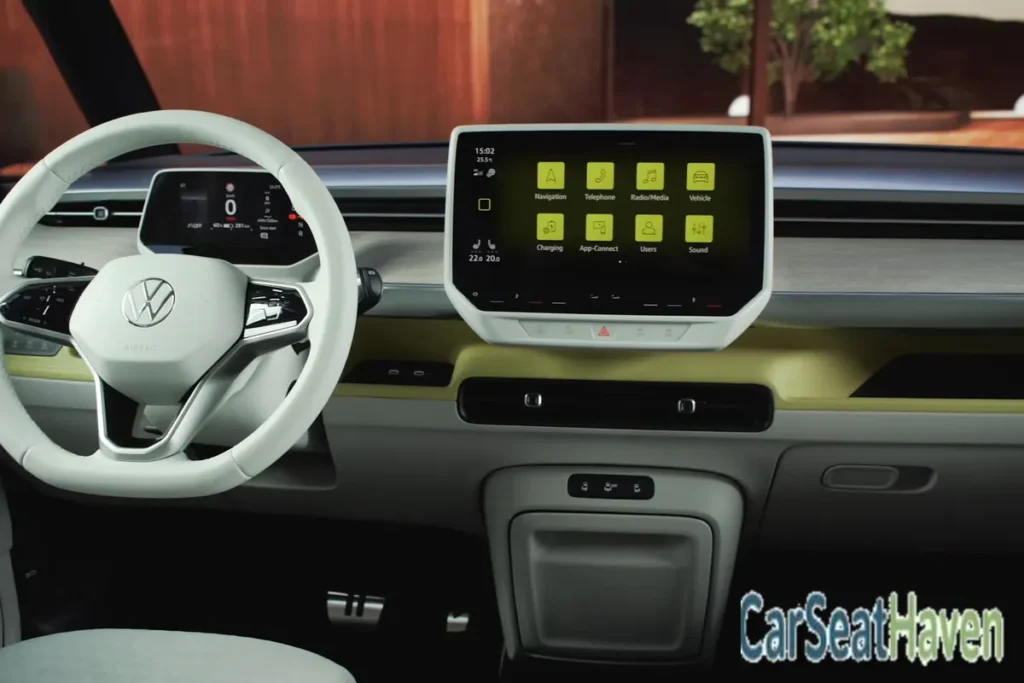
If you search for VW IQ Buzz, you might expect a new model. There is none.
IQ.DRIVE is Volkswagen driver assistance technology. It includes features such as Travel Assist, Emergency Assist Plus, Predictive Adaptive Cruise Control, and Road Experience Management. Road Experience Management is ID Buzz only in some descriptions, and it needs a premium subscription in some reports.
What IQ.DRIVE does not do, based on the sources read, is provide hands free highway driving in the way some other brands advertise. It assists the driver. It does not replace the driver. That honest limit matters, because a search term like IQ Buzz can make it sound like a separate self driving van.
Standard safety and assistance features on the ID Buzz include IQ.DRIVE, six airbags, Park Assist Plus with Memory Parking, and Exit Warning. Front Assist with pedestrian and cyclist detection and Side Assist blind spot monitoring are standard in some descriptions, with Area View 360 camera as an option on lower trims.
Safety ratings are for the 2025 model, not for the return model, because no 2027 or 2028 ratings exist yet. The 2025 ID Buzz earned a 5 star overall rating from NHTSA in the United States. In Europe, Euro NCAP gave it 5 stars as well, with strong adult and child scores in the 2022 test and solid scores again in a 2025 Pro test. The Insurance Institute for Highway Safety gave it a top score in the only crashworthiness category it evaluated, and an Acceptable rating in crash avoidance and mitigation, with top marks for seat belts and child restraints in MotorTrend reporting.
Are the new Volkswagen vans all electric?
No. This is a common misunderstanding, because the ID Buzz gets so much attention.
In Europe, Volkswagen sells a wider van lineup. The seventh generation Transporter comes as a turbodiesel, a plug in hybrid, and a fully electric e Transporter. It was even named Van of the Year 2026 in the United Kingdom. The returning Caravelle comes as an eHybrid plug in hybrid with about 50 miles of electric only driving, plus diesel and gas versions, with an eight seat option in Europe. The Caddy for 2027 also comes as a plug in hybrid with about 119 kilometers of WLTP electric range.
In the United States, the picture is simpler. The ID Buzz is the electric van. There is no short wheelbase ID Buzz and no ID Buzz Cargo van for the United States, according to Volkswagen Group of America CEO Kjell Gruner. He said those versions were not the right thing for the United States market.
So if someone asks, are the new Volkswagen vans all electric, the short answer is no in Europe, and the United States electric van is the ID Buzz.
The same care applies to other markets. Australia announced its own 2027 ID Buzz lineup, with Cargo, Pro, Pro Plus, and GTX versions and Australian dollar pricing. Those prices and trims are not United States prices and trims. Do not use them to plan a United States purchase.
How the ID Buzz compares to rivals
The ID Buzz does not compete on price alone. It competes on character, space, and electric driving. Here is how it stacks up in simple terms.
Against the Kia EV9, the ID Buzz has less range. The EV9 is reported at 304 miles of EPA range with a 99.8 kWh battery, compared with 231 to 234 miles for the 2025 ID Buzz. The EV9 also has more cargo behind the third row in one comparison, at 20.2 cubic feet, compared with 18.6 cubic feet for the ID Buzz. Where the ID Buzz wins is third row legroom and van style space. The EV9 is a three row electric SUV. The ID Buzz is a van, with sliding doors, a flat floor, and a taller, boxier cabin.
Against gas and hybrid minivans such as the Toyota Sienna, Kia Carnival, and Chrysler Pacifica, the ID Buzz is more expensive and has less range, but it offers electric driving, instant torque, and a very different look. In one cargo comparison, the Pacifica offered 32.2 cubic feet behind the third row, 87.5 cubic feet behind the second row, and 140.5 cubic feet maximum. That is more practical cargo space than the ID Buzz in the first two measures, even though the ID Buzz maximum of 145.5 cubic feet is slightly higher. If maximum cargo with all seats up is your top priority, a traditional minivan still wins. If you want electric driving and van character, the ID Buzz is in a class of its own in the United States.
Against the Toyota Sienna Platinum, which some articles mention as a price reference, the ID Buzz is again the more expensive, more distinctive choice. The Sienna wins on fuel range and dealer network for long trips. The ID Buzz wins on electric running, quiet driving, and head turning style.
Should you buy a leftover 2025 or wait for the return model?
This is the decision most readers actually face, so here is a simple way to think about it.
Buy a leftover 2025 if you find a strong discount, you like the seats and color available, and you do not need the Tourer camping trim, one pedal driving, or the newest software right away. The 2025 van already has the same basic battery, range, seating, and safety ratings described in this article. A saving of thousands of dollars can matter more than a software update.
Wait for the return model if you want the Tourer trim, you want all wheel drive without jumping to the top trim, you want one pedal driving and the NACS adapter included, or you want the newest ID.S 6 software from day one. Waiting also makes sense if you do not like the leftover colors or seat layouts on dealer lots.
In either case, check these points before you sign:
- Confirm the model year, price with destination, and arrival date in writing.
- Test your own car seats and your own stroller in the van, with all rows up.
- Sit in the third row yourself, and check headroom, not just legroom.
- Ask about the subscription cost after the one year In Vehicle Premium trial ends.
- Ask about towing before you plan to tow anything, because sources disagree on the rating.
- Ask what discount, bonus, or promotion is live today, not last month.
Towing: a number you should not guess
Towing is one area where sources disagree, so this article will not give you a single number to rely on. Kelley Blue Book and Edmunds list 1,650 pounds for the United States 1st Edition. AutoGuide lists up to 3,500 pounds. A TopSpeed sourced item lists different figures by drivetrain. The Tourer retractable tow hitch rating had not been published by Volkswagen in the sources read.
If towing matters to you, get the rating from the official Volkswagen spec sheet for the exact trim you are buying. Do not use a forum number or a single article number for a trailer decision.
What no top article clearly answers yet
Good research also means saying what is still missing. Here are the gaps that matter most for buyers, and that future updates to this article should fill once Volkswagen publishes the details:
- The official return model price, with destination, for each of the four trims.
- The official return model EPA range, horsepower, and torque.
- The official Tourer package price, and whether the table and chairs are standard or optional.
- The official Tourer tow hitch rating.
- The cost of In Vehicle Premium after the one year trial.
- The full United States child seat guide for the long wheelbase model, including third row ISOFIX and top tether positions.
- Cargo volume with all three rows up for a real stroller test, not just a cubic feet number.
- Real world winter range and highway range for the return model.
- Third row headroom for tall adults, beyond a single reported number.
- Total cost of ownership with current electricity prices and current discounts.
Until those details are published, any article that presents them as facts is guessing. This article prefers to say not announced yet, rather than invent a number that looks confident and turns out wrong.
FAQs
How many seats does the 2027 Volkswagen ID Buzz have?
Six or seven seats. A second row bench gives seven seats in a 2, 3, 2 layout. Second row captain chairs give six seats in a 2, 2, 2 layout. The United States model has three rows and a long wheelbase.
What is the 2027 ID Buzz price?
No official United States price has been announced for the return model. As a reference, the 2025 model started at 59,995 dollars before destination, or 61,545 dollars with destination, and ranged up to 71,545 dollars with destination for the 1st Edition all wheel drive. Tourer price estimates of 75,000 to 80,000 dollars are unconfirmed.
When will the return model arrive?
Volkswagen first pointed to a 2027 return, with arrivals from August 2026 into early 2027. Later reports in September 2026 said the return slipped to a 2028 model year arriving in the first half of 2027. Confirm the model year and date with Volkswagen or a dealer before you plan around it.
Is the Tourer a separate van?
No. The Tourer is a trim built on Pro S 4Motion. It adds camping equipment such as a fold out mattress, window blinds, ventilation panels, and a table and chairs, but it has no kitchen and no pop up roof.
How far can the ID Buzz go on a charge?
In the 2025 model, EPA range was 234 miles with rear wheel drive and 231 miles with all wheel drive, from a 91 kWh battery. No new EPA range has been announced for the return model. Real world range will be lower in cold weather, at highway speed, and with a full load.
Can the ID Buzz tow?
Sources disagree, so do not rely on a single number from this article. United States sources list 1,650 pounds for the 1st Edition in some places, and up to 3,500 pounds in others. The Tourer hitch rating had not been published by Volkswagen in the sources read. Check the official spec sheet for your exact trim.
Is the ID Buzz good for child seats?
It has strong potential, with sliding doors, a flat floor, and a sliding second row. An Australian review of the shorter model found three child seats fit across the second row, with ISOFIX on the outer seats and top tethers on all three second row seatbacks. For the United States long wheelbase model, third row child seat details were not clearly published in the sources read, so test your own seats in the van before buying.
Are all new Volkswagen vans electric?
No. In Europe, Volkswagen still sells diesel, plug in hybrid, and electric vans. In the United States, the ID Buzz is the electric van in the lineup. There is no short wheelbase or Cargo version for the United States.
What does VW IQ Buzz mean?
It is a mix up of two names. IQ.DRIVE is Volkswagen driver assistance technology inside the ID Buzz. There is no separate van called IQ Buzz.
Is the ID Buzz a good family van?
For families who charge at home, want sliding doors and three row space, and love the retro look, yes, it is a strong choice. For families who need maximum cargo behind the third row, the longest possible road trip range, or the lowest price, a gas or hybrid minivan may still fit better. The best test is simple: bring your family, your car seats, and your stroller to a dealer, and try the van the way you will actually use it.

Aiden is the founder and editor of CarSeatHaven. He researches NHTSA safety standards, AAP guidance, manufacturer manuals, and recall notices, and turns them into plain-language car seat guides for parents.
