


Table of Contents
Yes. You can buy a car online in the United States. Millions of people already do at least part of it that way. Browse from your couch. Get preapproved. Compare prices across the country. In a lot of cases, have the car dropped at your driveway. Sounds easy, right? Well, here is the part most guides leave out. Buying entirely online is still rare. Only about 7 percent of buyers in the Cox Automotive 2025 Car Buyer Journey study said they purchased entirely online. The happier buyers were the ones who did at least half the steps online. So do the research, the money stuff and the paperwork online. Then still protect yourself. History check. Inspection. A test drive, or a real return window. That combo is what actually works.
What you need to know first
- Set your budget before you fall in love with a car, and count the total cost, not just the monthly payment.
- Get preapproved for a loan before you shop, so you know your real rate and budget, and you can compare dealer financing honestly.
- Know the two lanes of online buying. Some sites own the car and sell it to you. Other sites only list other sellers cars, and the deal closes with that seller.
- For a used car, a vehicle history report and an independent inspection are not optional extras. They are the whole safety net when you cannot see the car in person first.
- Never skip a test drive, an at home test drive, and a return window all at once. Pick at least one, and use it properly.
- Check the out the door price line by line before you sign, including taxes, fees, delivery charges and add ons.
- At delivery, check the VIN, the odometer and the condition while the driver is still there, then get an independent inspection inside the return window.
- Never pay a private seller by wire transfer, gift card, crypto or a peer to peer app deposit. That is the classic scam pattern, every time.
Set your budget
Okay, boring part first. I get it. But this is the part that saves you real money, so stick with me for a minute.
Work out what you can actually afford each month. Then build everything else around that number. Experian suggests keeping total car expenses, insurance and gas included, below 15 to 20 percent of your take home pay. BestMoney is stricter on the loan payment alone. Under 15 percent of your monthly income. Closer to 10 percent is even better. It also suggests keeping all your debt payments under 36 percent of your monthly income. Guidelines, not laws. But useful. Because they stop you stretching for a car that looks fine as a monthly payment and hurts everywhere else.
Then add the stuff people always forget. Sales tax. Registration. Delivery charges. Some retailers charge based on distance. Others include delivery free within a certain radius. Insurance. Maintenance. Repairs. Fuel. Yearly registration. A bigger down payment helps a lot here. Less borrowed, less interest over the life of the loan. Simple math, painful to ignore.
Got a car to trade in? Find out what it is worth before you start shopping. Not after you have already agreed on a new car price. Otherwise a trade in can quietly eat your discount, and you will not even notice until the paperwork is in front of you.
One more thing, and it matters right now. New car prices are still high. BestMoney notes that 2025 tariffs added roughly 30 billion dollars in costs across the industry, which keeps pressure on both new and used prices. So leave room in your budget for a higher out the door price than the listing price. If the listing price is already your maximum budget, you are over budget before you start. Sorry. That is just how it works.
Get preapproved, then compare loans on total cost, not just rate
Preapproval is not paperwork for the sake of paperwork. It changes how you shop. Completely.
When you are preapproved through a bank, a credit union or an online lender, you walk in knowing your loan size, your rate and your term. You can compare that offer against dealer financing instead of taking whatever the dealer offers in the moment. Engineer Fix notes that a preapproval is often valid for 30 to 60 days. That gives you time to shop without rushing. It also makes you look like a cash buyer to the seller. Which can simplify negotiation. Because the seller cannot raise the car price to make up for a cheap financing offer. Smart, right?
Compare lenders. Not just one. Your bank or credit union is a solid starting point, especially if you already have a relationship there. Online lenders are often quick to quote and worth comparing. Captive finance arms, like Honda Financial or Toyota Financial Services, sometimes offer promotional rates on their own brands. Get quotes from more than one. Then compare total cost, not just the interest rate. A loan with a higher rate but a shorter term can cost less overall than a loan with a lower rate but a much longer term. Online loan calculators help here. Punch in your quote details and you see the monthly payment and the total cost side by side. No guessing.
Watch the fine print too. Avoid loans with prepayment penalties. Those force you to pay the full interest even if you pay early. Check for hidden application, origination or servicing fees. Those can add hundreds of dollars to your final cost. And one practical warning from BestMoney. Entering your details on an auto loan site can open you up to a flood of calls and emails from dealerships and lenders. Uncheck any box agreeing to receive future offers. Read the privacy policy so you know your details will not be shared. Small step. Big peace of mind.
Where to buy a car online in the United States: the two lanes, explained in plain words

This is the distinction that clears up most of the confusion about online car sites. Once you see it, you cannot unsee it. Seriously.
Lane one. Retailers that own the car. Carvana and CarMax are the big examples. They buy the car, list it at a fixed price, handle financing and paperwork on their own site, and deliver it or let you pick it up. Because they own the car, they can offer a return window and stand behind the transaction in a way a listing site cannot. That backing matters when something goes wrong.
Lane two. Marketplaces and aggregators that list other sellers cars. CarGurus, Autotrader, Cars.com, Edmunds and TrueCar sit here in different ways. They help you find inventory, compare prices and narrow down dealers. But the final purchase is with the dealer or private seller behind the listing. Fees, add ons, return rules and warranty coverage come from that seller, not from the marketplace. A great deal badge on a marketplace rates the price, not the car itself. That is a really important difference. A lot of buyers miss it until it is too late. Do not be that buyer.
Then there are automaker websites. Most carmakers let you build, price and often reserve a new vehicle directly on their site, then connect you with a local dealer to finish the sale. And traditional dealerships now have digital storefronts too, with online paperwork, remote financing and home delivery in many cases. So you can complete most of a traditional purchase without visiting the lot. But the deal is still with that dealer, with that dealer’s terms. Keep that in mind.
So before you compare prices, ask one simple question. Who actually owns this car, and who am I actually buying from? That answer tells you who handles problems, what return window you really have, and whose fees are in the final price. Everything else follows from that.
How Leasehackr works, in plain words
Leasehackr is not a car seller, and it is not a dealer. It is a community platform for car leasing and financial literacy, founded in 2015. Think of it as three things in one place. A forum where members share deals, review offers and answer questions. A lease calculator. And a marketplace where dealers and brokers post competitive deals, including Pre Negotiated Deals that the Leasehackr team has vetted, so you do not have to haggle at all. Three tools, one place. That is the appeal.
The calculator is the heart of it, because leasing looks confusing until you see the numbers broken down. You enter the MSRP, which is the price before discounts. You enter the selling price, which is what the dealer is actually selling the car for. Then comes residual value, which is what the lender thinks the car will be worth at the end of the lease. That number is set by the lender, not by you or the dealer, so you cannot negotiate it. Then comes money factor, which is basically the interest rate for a lease. Then term, mileage allowance, taxes and fees. Put those together, and you get a target monthly payment you should be aiming for, before you ever talk to a salesperson. That is powerful. You walk in knowing your number, instead of guessing.
Leasehackr also has a score, and it is simpler than it sounds. The Leasehackr Score is the number of years it would take before the sum of monthly payments exceeds the retail price of the car. Higher is better. Their example is a 30,000 dollar car at 300 dollars a month, which scores 8.3 years, because 300 dollars times 12 months times 8.3 years is about 30,000 dollars. If the score is low even after your best negotiation, you might be better off buying instead of leasing, or choosing a different car altogether. Simple test, useful answer.
If you are leasing, Leasehackr is worth using as a research tool, because it teaches you to negotiate the selling price like a purchase, then confirm the base money factor and residual from reliable sources, before you judge the monthly payment. A low monthly payment can hide a marked up money factor, and that is exactly the trap the calculator helps you spot. If you are buying outright, Leasehackr is less central, but its marketplace and deal structure lessons still help you understand what a good deal actually looks like on paper. Knowledge is knowledge, wherever you get it.
Pick the car, then check it properly: history report, photos, video walkthrough, inspection
This is where online buying either works or goes wrong. And it is mostly about patience. Do not rush this part because you are excited about a listing. Excitement is exactly what a bad listing counts on. Seriously, take a breath here.
Start with the vehicle history report. For any used car, get one from a recognised provider like CARFAX or AutoCheck, using the 17 digit VIN. Most reputable online dealers provide one for free. But if you are buying from a private seller, it is worth paying for it yourself. The report shows title status, accident history, service records, ownership history and odometer inconsistencies. Look first for title brands. A clean title is what you want. Be extremely cautious with titles branded Salvage, Rebuilt, Flood or Lemon, because those cars have had major problems, can be difficult to insure, and can be unsafe. A minor accident might not be a deal breaker. But structural damage or airbag deployment is a major red flag, every time. No debate there.
Then go beyond the listing photos. Ask the seller for high resolution photos of the exterior from multiple angles, the interior, the engine bay, the undercarriage, and a clear odometer reading. Ask for close ups of any scratches, dents or wear the listing does not show. Ask for a live video walkthrough, where the seller walks around the car, opens all doors, shows the trunk, and starts the engine cold, so you can listen for unusual noises. Ask them to show the VIN plate on the dashboard and confirm it matches the listing and the paperwork. A reputable seller will do this happily. A seller who refuses, delays or makes excuses is telling you something, even if they never say it out loud. Listen to that silence. It speaks volumes.
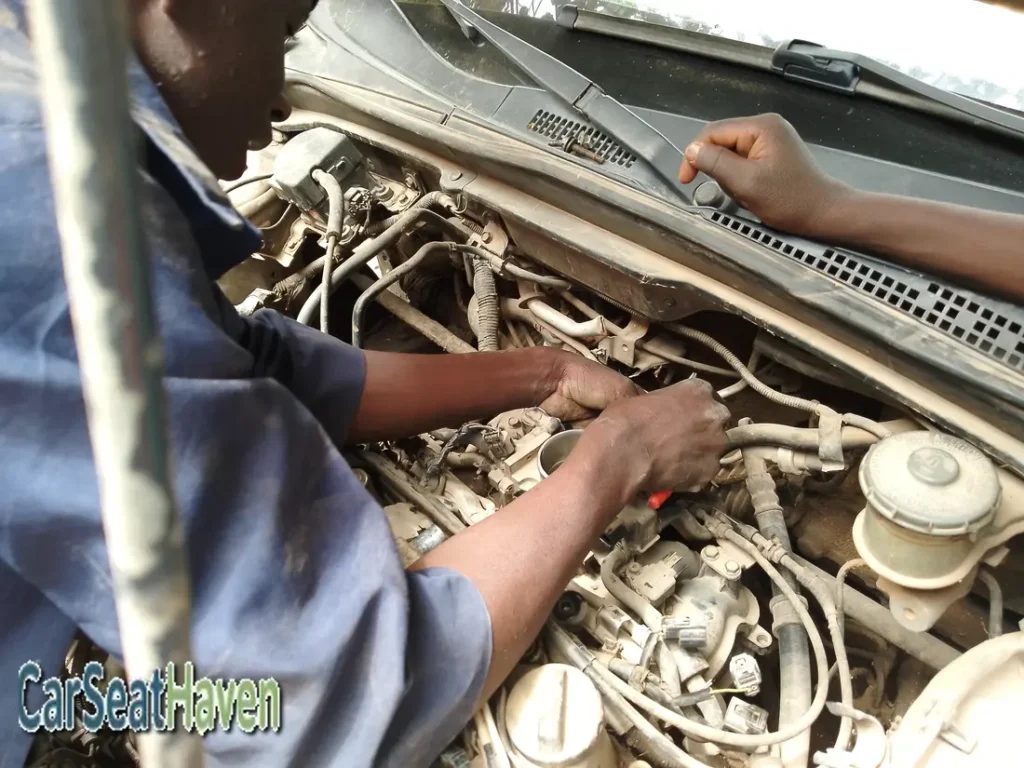
Then get an independent inspection. This is the step people skip. And it is the step that catches what photos cannot. Hire a mobile mechanic or a local shop near the car to do a prepurchase inspection, and ask for photos and a written report. AAA recommended shops are a good starting point in the research. Do not use a mechanic recommended by the seller, because that is not independent. The inspection should cover mechanical condition, tires, brakes, leaks, rust and underbody condition, and anything the history report flagged. If the car is far away, this inspection is even more important, not less, because you cannot check it yourself. Distance makes inspection more necessary, not less. Remember that.
Finally, check the seller, not just the car. For dealers, read recent reviews on Google, Yelp and the Better Business Bureau, and look for patterns, not one angry review. A pattern of complaints about vehicle quality or customer service is a warning. For private sellers, ask for a photo of government ID that matches the title, a clear title or a lien release, and a live video walkthrough as above. And call the dealership main number directly, not the number listed in the ad, and ask if they are really selling that specific vehicle. Scammers impersonate real dealers, and that one phone call catches a lot of them. One call. Five minutes. Could save you thousands.
Test drive, at home test drive, or return window: pick one, never skip all three

A car can look perfect online and feel wrong in real life. Seats can be uncomfortable. Visibility can be worse than photos suggest. Road noise can be louder than you expected. That is why every top guide says the same thing. Do not skip the test drive or inspection on a purchase this large. It is too much money to gamble on photos alone.
If the car is local, schedule a test drive at the dealership and confirm ahead of time that the specific vehicle is in stock. Sit in it. Drive it on roads like the ones you actually use, not just around the block. Check visibility, seat comfort, steering feel, braking feel and how noisy it is at highway speed. Your daily commute is the test, not a quiet side street.
If the car is not local, you still have options. Some online retailers offer at home test drives. Many offer return windows, which act as your test drive period after delivery. Carvana reports a 7 day return window. CarMax reports a 24 hour test drive at participating locations, plus a return policy whose exact length you must check on your contract, for the reason explained earlier. DriveTime reports a 5 day window. Whatever window you get, use it properly. Drive the car every day, on different roads, in different conditions, and get that independent inspection inside the window, not after it closes. A return window you do not use is not protection. It is just a nice sentence on a website. And nice sentences do not fix a bad car.
Best used luxury cars under 40k to start your search, with average prices and a running cost warning
Buying a used luxury car online is one of the smartest ways to use online shopping, because depreciation does a lot of the work for you. A car that was expensive new can fall under 40,000 dollars used, while still feeling like a luxury car inside. But the purchase price is not the whole cost. And that is the warning that has to come with any list like this. Do not skip the warning. It is the most important part.
Here are the top picks from iSeeCars analysis for 2026, based on reliability, resale value and safety, for cars 1 to 6 years old. These are average prices, not a promise that any one listing will match, and they move with mileage, condition and market. Keep that in mind while you browse. Averages are a guide, not a quote.
2021 Lexus RC 350
The best used luxury small and compact car under 40k in the iSeeCars list, with a quality rating of 8.7 and an average used price of 38,208 dollars. Lexus reliability is the reason this one tops the small list, and it is a good fit if you want a coupe that feels special without the running costs of some European rivals. Quiet, well built, dependable. That is the Lexus pitch, and for a lot of buyers it is exactly right.
2022 Mercedes-Benz E-Class
The best used luxury midsize car under 40k in the iSeeCars list, with a quality rating of 8.0. The E-Class is the classic executive choice, comfortable, quiet and well built, but check service history carefully, because maintenance on a German luxury sedan is not priced like maintenance on a mainstream sedan. It is not. And that difference adds up over years, not months.
2021 Audi A7
The best used luxury large car under 40k in the iSeeCars list, with an average price of 37,538 dollars and a score of 7.3. Behind it sit the 2021 Audi A8 L at 39,615 dollars with a score of 7.2, and the 2020 Mercedes-Benz CLS at 36,822 dollars with a score of 7.1. These are large, comfortable cars, and they show how much luxury you can get for under 40k once depreciation has done its work. Big car, big presence, used price. That is the appeal. Just do not forget the running costs that come with the size.
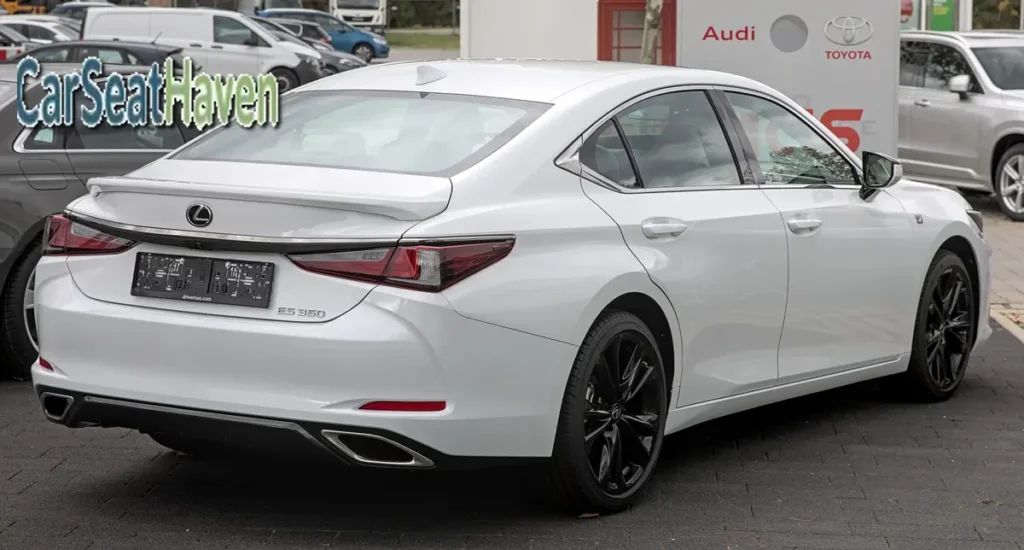
2023 Lexus ES 300h
The best used luxury hybrid car under 40k in the iSeeCars list, with a quality rating of 7.9. If fuel costs matter to you, a hybrid luxury sedan like this one makes a lot more sense than a large V8 luxury car at the same purchase price, because the monthly fuel and maintenance picture is completely different. Same budget to buy. Very different budget to run. That is the calculation most buyers miss.
Now the warning, plainly. A used luxury car can cost you more after purchase than a mainstream car at the same price. Tires can be larger and more expensive. Brakes can be more expensive. Insurance can be higher. Parts and labour at a luxury dealer can be higher. So before you buy a used luxury car online, get insurance quotes for that exact model, check tire and brake costs, and check service history for expensive items that are due soon. A 35,000 dollar luxury car that needs 5,000 dollars of deferred maintenance is not a 35,000 dollar car. It is a 40,000 dollar car with a surprise attached. And surprises are never fun at that price.
Sign the paperwork without missing the traps
You have found the car, checked it, and you are ready to sign. This is where good deals quietly get worse. So slow down here, even if you are excited. Especially if you are excited. Pressure and excitement are a bad combo at signing time.
First, confirm the out the door price, line by line. That means the car price, plus sales tax, plus registration, plus any delivery fee, plus any document fee, plus any add ons. If any line has changed from what you agreed online, stop and ask why. Do not sign a document that is incorrect or unfinished, and do not let anyone rush you past a line you do not understand. PNC makes this point clearly, and it is worth repeating, because pressure at signing is how add ons slip in. They count on you being tired, excited, and ready to just sign. Do not be that person. Read it. All of it.
Watch for last minute add ons in particular. Seat covers, unnecessary insurance products, paint protection, decals, and other extras can appear in a purchase agreement without you noticing, especially when you are signing digitally and scrolling fast. If you did not ask for it, and you do not want it, say so and have it removed before you sign. Same goes for extended warranties. An extended warranty could save you real money on repairs, or it could be money down the drain, depending on the vehicle, its age, its history and your budget. Decide based on the car in front of you, not on a sales pitch in the moment. Sales pitches are designed to make you decide fast. Good decisions are usually slow.
For payment, use secure methods through the retailer’s own checkout portal for retailer purchases. For private sales, using an established escrow service is the safest method in the research, because a neutral third party holds the funds until you confirm receipt and acceptance of the vehicle. Never wire funds until inspections, paperwork and pickup details are locked, and never pay by gift card, crypto or peer to peer app deposit to an individual seller. Those payments are difficult to trace, difficult to reverse, and they are the payment methods scammers prefer, for exactly those reasons. Think about it. Why would a legitimate seller insist on an untraceable payment? They would not. That alone tells you a lot.
Title and registration need the same care. For retailer and dealer purchases, the seller usually handles title transfer and registration, but confirm the timeline so you know when to expect your plates. For private sales, you will likely be responsible for submitting title and registration paperwork yourself, often within 30 days to avoid penalties, so check your state DMV requirements before you pay, not after. Sales tax and registration fees are typically based on your state of residence, even if you buy out of state, so confirm how taxes are collected and who files the title. Keep copies of everything, the purchase agreement, the odometer disclosure, and any power of attorney you sign. You will be glad you did if anything needs correcting later. Paperwork you keep is paperwork that protects you.
Proof of insurance comes before delivery in most cases. Most states require auto insurance before you can legally drive, and most sellers require proof of insurance before completing the sale. If you already have a policy, your coverage may temporarily extend to a new vehicle for 7 to 30 days, depending on your insurer, but do not assume that, check with your insurer in writing. If you are a first time buyer, you will need to purchase a policy before taking delivery, and you can get quotes online using the car’s make, model and year. Get that sorted early. Do not leave insurance to delivery day. Delivery day is busy enough already.
Delivery day checklist, and the first days checklist inside the return window
Delivery day is not the end of the process. It is the start of your final check, and it has two parts. Do not treat it like a celebration and forget the check. Celebrate after the check. That order matters.
Part one, while the driver is still there. Check the VIN on the vehicle against the VIN on the paperwork. Confirm the odometer reading matches the paperwork. Do a quick visual check for any damage not noted in the sales agreement, including scratches, dents, tire condition and interior condition. Take photos of anything you find, with the driver present if possible. If something is wrong, note it in writing before the driver leaves, because after the driver leaves, it becomes your word against a delivery record. And that is a fight you do not want. Get it in writing while you can.
Part two, in the first few days, inside the return window. Schedule a post delivery inspection by an independent, trusted mechanic, and do it as soon as you can. This is your definitive opportunity to identify any major defects and reject the vehicle within the return period if the condition is not as represented. Drive the car daily, listen for noises, check for warning lights, check that all features work, and keep a note of anything unusual. If you find a major problem, contact the seller in writing, inside the window, and keep a copy of that message. A phone call alone is not enough for a return claim, get it in writing. Written beats spoken, every time, when money is involved.
If you bought out of state, shipping adds another layer. Confirm whether transport is open or enclosed, confirm who pays for shipping both ways if you return the car, and confirm the delivery timeline in writing. A return window that starts at delivery, not at purchase, is what you want, so confirm when your window actually starts. That one detail catches people out more often than you would think. Ask it directly. When does my return window start? Get the answer in writing. Done.
Scams to avoid when buying online
Online car buying is safe when you follow the steps above, but scams are real, and they follow patterns. Learn the patterns, and most scams become easy to spot. That is the good news. Scammers are not creative. They repeat the same tricks.
The too good to be true price is the first pattern. If a car is listed far below market value for no clear reason, assume something is wrong until proven otherwise. Compare prices across markets for the same model, year and mileage, and ask why this one is so cheap. A genuine reason, like high mileage or a salvage title, should be stated openly. A vague reason, or no reason at all, is a warning. Trust that instinct. If it feels off, it probably is.
The rushed payment pattern is the second. A seller who pressures you to pay quickly, by wire transfer, gift card, crypto or peer to peer app, before inspection, before paperwork, before you have seen the car, is not a seller in a hurry. That is a scammer in a hurry, because delay gives you time to check. Legitimate sellers accept secure payment methods through their own portal, or escrow for private sales, and they do not need your money before you have verified the car. Pressure to pay fast is a red flag, not a reason to pay fast. Remember that when someone is pushing you.
The impersonation pattern is the third. Scammers copy real dealer listings, real photos and real dealer names, then post them at a lower price with a different contact number. That is why you should call the dealership main number directly, not the number in the ad, and ask if they are selling that specific vehicle. Check that the seller has a physical address that matches their website, and check state motor vehicle records for a dealer license if they claim to be a dealer. A PO box alone, or an address that does not match, is a warning. Real dealers have real addresses. Fake ones have excuses.
The title pattern is the fourth. If the title looks altered, if the seller cannot produce a clear title or a lien release, if the VIN on the title does not match the VIN on the car, or if the seller says the title is in someone else’s name, walk away. Title problems are expensive, slow and sometimes impossible to fix, and they are exactly the kind of problem a history report and a careful paperwork check are meant to catch. Walk away early. It is cheaper than walking away late.
If you encounter fraud, consider filing a complaint with the Internet Crime Complaint Center, and keep copies of every message, listing screenshot and payment record. You may not get your money back, but a report helps stop the same scam hitting the next buyer. And that matters, even if it does not fix your loss. It stops someone else’s.
Frequently asked questions
Q.1 Can I buy a car completely online?
Yes, in most cases with retailers like Carvana, CarMax and DriveTime, because they own the cars they sell. With marketplaces like Autotrader, Cars.com and TrueCar, you find the car online, but the paperwork usually finishes with the dealer behind the listing. Automaker websites let you build and reserve a car online, then connect you with a local dealer to finish the sale.
Q.2 Do I need car insurance before buying a car online?
Usually, yes. Most states require insurance before you can legally drive, and most sellers require proof of insurance before delivery. If you already have a policy, it may extend to a new vehicle for 7 to 30 days, depending on your insurer. First time buyers need to purchase a policy before taking delivery.
Q.3 Is buying a car online safe?
Yes, with the right precautions. Use reputable sellers, secure payment through the seller’s own portal or escrow for private sales, check the vehicle history report, and get an independent inspection. Never pay by wire transfer, gift card or crypto to an individual seller, and verify dealers through reviews, the Better Business Bureau, and a direct call to the dealership main number.
Q.4 Should I still test drive a car I buy online?
Yes. Test drive in person if you can. If that is not possible, use an at home test drive or a seller’s return window, and get an independent inspection inside that window. Do not skip a test drive, an at home test drive, and a return window all at once.
Q.5 Do service advisors make commission?
Pay plans vary by dealer, so there is no single national rule. Some service advisors are paid salary plus a bonus or commission element, others are paid salary only, and some receive a mix of base salary and performance bonus. Judge any recommendation on its own merits, ask for the old parts and a written explanation, and get a second opinion on expensive work.
Q.6 How long does buying a car online take?
It depends on whether the car is local or out of state. Budgeting and preapproval can take a few days, and a retailer purchase can be completed in days once you have chosen the car. A marketplace, private, or out of state purchase takes longer, so do not rush the history check, inspection, and paperwork steps.
Q.7 Can I return a car I bought online?
Only when the seller owns the car and offers a return window, within its exact limits. Carvana reports a 7 day window and DriveTime reports a 5 day window. CarMax is reported as 10 days in one source and 30 days in another, so check your own contract for the exact window, mileage limit, and condition rules. For marketplaces, return rules come from the dealer or seller behind the listing, so confirm the window in writing before you buy, including when it starts and who pays shipping both ways.

Aiden is the founder and editor of CarSeatHaven. He researches NHTSA safety standards, AAP guidance, manufacturer manuals, and recall notices, and turns them into plain-language car seat guides for parents.
