


Table of Contents
The best plug-in hybrid is one fitted to your daily driving needs while providing the convenience of electric power for short distances and gas for long ones. For 2026 and 2027, the list of the most popular plug-in hybrid electric vehicles (PHEV) includes the Toyota Prius Plug-in Hybrid, the retooled Toyota RAV4 Plug-in Hybrid, Kia Sorento Plug-in Hybrid, KIA Sportage Plug-in Hybrid, Lexus NX 450h+, Mercedes-Benz GLC 350e, BMW X5 xDrive50e, and several Volvo plug-in hybrids. However, when selecting the best PHEV, the factors to consider go beyond the vehicle’s electric range. Your commuting patterns, the degree of comfort and space, cost, fuel economy (combined and after the battery runs out), overall cost of ownership, and how frequently you can recharge are vital considerations.
A PHEV is a hybrid electric vehicle that can be charged when plugged into an external power source. A PHEV has a battery that is charged primarily by plugging in but can also be charged by the engine. In contrast to a conventional hybrid, which cannot be charged by plugging in, and a battery-powered vehicle, which cannot continue driving after the battery is depleted, a PHEV has the ability to continue driving after the battery is depleted. According to Edmunds, a PHEV is a hybrid electric vehicle with a larger battery that can be recharged by plugging in the car into an external power source while also being capable of functioning as a hybrid.
What Is the Best Plug-In Hybrid?
There is no single best PHEV for every driver. Different vehicles solve different problems.
For example:
- Toyota Prius PH: A strong choice for buyers focused on efficiency and everyday electric driving.
- Toyota RAV4 PH: A practical option for buyers who want an SUV body style, AWD, more power, and useful electric range.
- Kia Sorento PH: One of the notable choices for families that need three rows and want plug-in capability.
- Kia Sportage PH: A compact SUV alternative with AWD and electric-only capability.
- Lexus NX 450h+: A premium compact SUV PHEV with a 37-mile EPA-estimated electric range for 2026.
- Mercedes-Benz GLC 350e: A luxury compact SUV PHEV with a 54-mile EPA-estimated electric range for 2026.
- BMW X5 xDrive50e: A larger luxury SUV PHEV offering roughly 38-40 miles of electric range depending on BMW’s stated measurement and certification details.
The important point is that these vehicles are not interchangeable. A commuter who drives 25 miles a day has different priorities from a family that regularly carries seven passengers or a driver who takes long highway trips.
What Is a Plug-In Hybrid Vehicle?
A PHV combines two propulsion systems:
- An internal combustion engine, usually gasoline-powered.
- An electric drive system consisting of one or more electric motors and a rechargeable battery.
The battery can be charged by an external charging source. The vehicle can then use the electricity stored in the battery for electric driving before blending electric power with gasoline-engine power, or to a greater degree rely on the engine.
A conventional hybrid also has a gas engine and an electric motor, but the driver generally cannot recharge its traction battery by plugging a cord in his home’s electrical outlets, or at a charging station.
This difference has beneficial implications for the vehicle’s place in the world.
A PHEV can potentially handle a large chunk of your short trips on electricity if you charge the vehicle. When the battery’s range of all electric driving is used up, the vehicle can switch back to being a hybrid and utilize the gas engine.
This makes a PHEV particularly interesting for people who:
- Drive short or medium distances during the week.
- Have access to home charging.
- Want to reduce gasoline consumption without depending entirely on public charging.
- Frequently take road trips.
- Are not ready to move completely to a battery-electric vehicle.
- Need a familiar gasoline backup for longer journeys.
How Does a PHEV Work?
The simplest way to think of a plug-in hybrid is to imagine an electric car that has a gasoline engine or, in the case of hybrids, a much larger battery that can be recharged at a power outlet.
When you plug it in, current from the wall charges the car’s high-voltage battery.
The car’s computer then determines how much of the energy to use to power the car, whether by using the motor alone, the gasoline engine alone, or a combination of the two, depending on the model and the driving setting.
Electric Mode
In electric mode, the battery powers the electric motor.
This can make short drives feel smooth and quiet because the gas engine doesn’t have to power every trip.
The range of the electric mode varies greatly from PHEV to PHEV. Some only have a range of a few tens of miles, while some new models promise to go beyond the traditional PHEV range.
Hybrid Mode
When the battery’s electric driving capability is depleted, the vehicle can utilize its gasoline engine and motor as a hybrid powertrain.
This represents one of the most significant differentiators between a PHEV and an EV.
An EV is purely dependent on stored electricity. A PHEV has gasoline available when the battery’s electric capacity is depleted.
Regenerative Braking
PHEVs also regenerate energy when they use their brakes
Instead of throwing all that energy away as heat into the brake pads, the electric motor can be used to reclaim some of that energy and put it back into the battery, given the right conditions.
Regenerative braking is not a replacement for standard braking systems, nor is it a substitute for charging from another source, but rather a supplement to them
PHEV vs Hybrid vs EV: What’s the Difference?
Understanding the difference between a PHEV, hybrid, and EV is essential before buying.
| Feature | PHEV | Conventional Hybrid | Battery EV |
| Gasoline engine | Yes | Yes | No |
| Electric motor | Yes | Yes | Yes |
| Plug-in charging | Yes | No | Yes |
| Electric-only driving | Yes | Usually limited | Yes |
| Gasoline backup | Yes | Yes | No |
| Public charging dependency | Lower | Very low | Higher |
| Long-distance flexibility | High | High | Depends on charging network |
| Best use case | Mixed electric + gasoline driving | Efficient gasoline driving | Mostly/all-electric driving |
A PHEV sits between the traditional hybrid and battery-electric vehicle.
That does not automatically make it better for everyone. It makes it another tool.
Why Consider a PH?
The biggest advantage of a PHEV is flexibility.
Suppose your daily routine looks like this:
- 8 miles to work
- 8 miles home
- A few errands after work
A PHEV with enough usable electric range could potentially complete much of that routine without starting the gasoline engine, assuming the vehicle is charged and conditions allow.
Then, on Saturday, you could drive several hundred miles without planning the entire trip around charging stations.
That combination is the central appeal of a plug-in hybrid.
Electric Driving for Short Trips
Many PHEV owners can use electric power for routine errands, school runs, commuting, shopping, and local driving.
The usefulness depends heavily on the vehicle’s all-electric range and your actual daily mileage.
A 30-mile electric range can mean something very different to a driver who travels 12 miles per day than to someone who drives 50 miles every day.
Gasoline Flexibility for Road Trips
A PHEV does not need to stop functioning as an efficient vehicle when the battery’s electric range is depleted.
The gasoline engine can take over or work with the electric motor, allowing the vehicle to continue toward its destination without requiring an EV-style charging plan.
Lower Fuel Use When Charged Regularly
The word “regularly” matters.
A PHEV that is rarely plugged in loses much of the practical benefit of its larger battery.
If you buy a PHEV but treat it like a normal gasoline car, you may carry additional battery weight without taking full advantage of the electric system.
Potential Drawbacks of PHEVs
Plug-in hybrids also have compromises.
Higher Complexity
A PHEV contains both gasoline and electric propulsion hardware.
That means more systems to manufacture and maintain than a simple gasoline vehicle.
Higher Purchase Price
PHEVs often cost more than comparable conventional hybrids or gasoline models.
The higher purchase price needs to be considered alongside fuel savings, charging costs, available incentives, insurance, financing, and expected ownership period.
Charging Is Part of the Routine
You do not have to charge a PHEV to keep driving, but charging is important if you want to maximise electric operation.
If you have no convenient place to plug in, a conventional hybrid may make more sense.
Cargo or Packaging Trade-Offs
The battery pack and associated hardware have to fit somewhere inside the vehicle.
Depending on the model, this can influence cargo space, under-floor storage, seating arrangements, or fuel-tank packaging.
This is particularly important for families who need maximum luggage space.
How Much Electric Range Does a PHEV Need?
There is no universal number.
Instead, compare the vehicle’s EPA-estimated electric range with your normal daily driving.
For example:
Daily driving: 20 miles
PHEV electric range: 35 miles
That could provide a useful amount of electric operation for many local trips.
But:
Daily driving: 50 miles
PHEV electric range: 30 miles
You would regularly rely on gasoline or hybrid operation for part of the journey.
Also remember that EPA estimates are not promises of real-world range. Temperature, speed, traffic, terrain, climate control, tire choice, driving style, battery age, and other factors can affect actual results.
Best Plug-In Hybrid Cars to Consider
Rather than copying competitor rankings, it is more useful to organize the current PHEV market by the type of buyer each vehicle can serve.
Toyota Prius Plug-in Hybrid
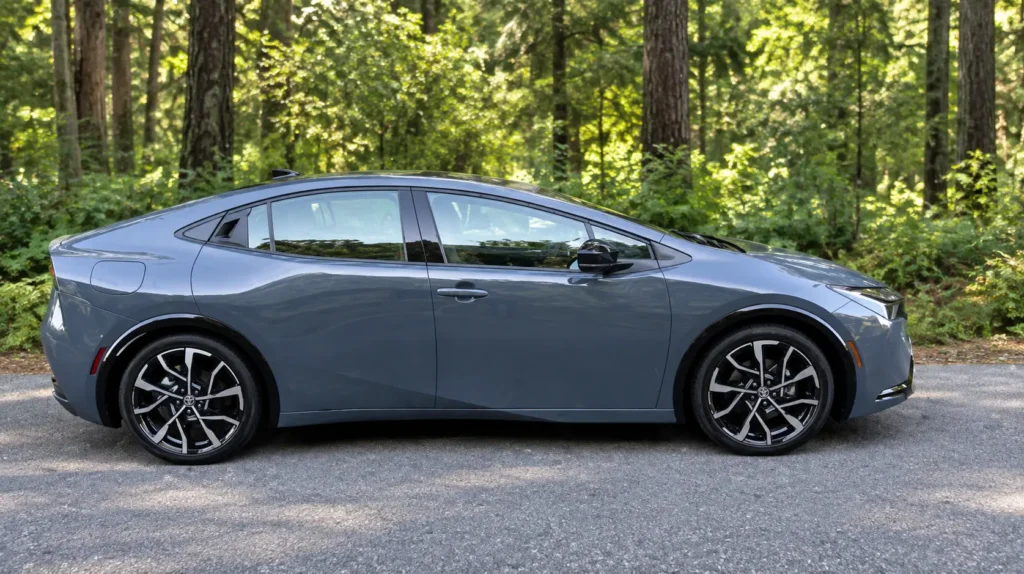
The Toyota Prius Plug-in Hybrid, historically known as the Prius Prime, remains one of the most recognizable efficiency-focused PHEVs.
For the 2027 model year, Toyota lists a starting MSRP of $33,980. Toyota also lists an EPA-estimated 44-mile all-electric range for the SE trim, 220 net combined horsepower, and a 128 combined MPGe rating for the SE.
The Prius is particularly relevant for drivers who prioritize:
- Electric commuting.
- Fuel efficiency.
- A relatively efficient hatchback-style package.
- Long-term familiarity with Toyota’s hybrid system.
- Lower day-to-day gasoline use when charged regularly.
Its shape and packaging may not appeal to someone who wants a large SUV, but buyers who do not need three rows or extensive cargo space should not overlook a sedan/hatchback PHEV simply because SUVs dominate the market.
Edmunds currently lists the 2027 Prius Plug-In Hybrid with a $33,980–$40,675 MSRP range and 48-52 combined MPG, while noting its substantial electric range and efficiency.
Toyota RAV4 Plug-in Hybrid
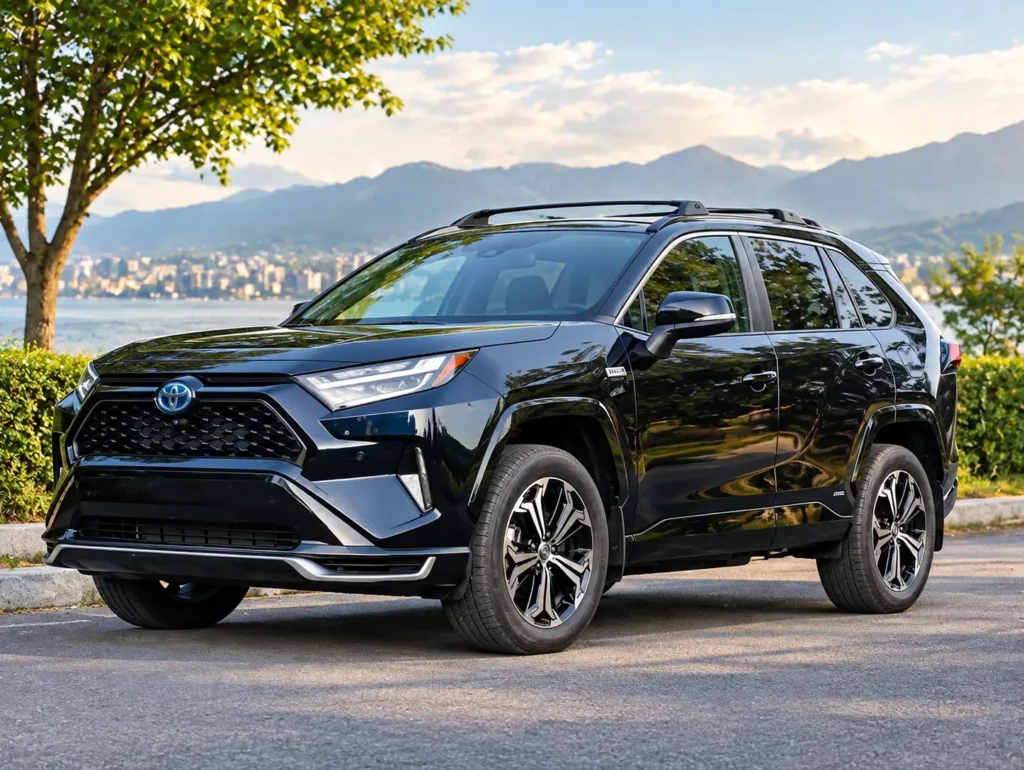
The redesigned Toyota RAV4 Plug-in Hybrid is another major PHEV option for buyers who want SUV practicality.
For 2026, Toyota’s plug-in RAV4 lineup includes multiple configurations, and Toyota lists 324 net combined horsepower and a 5.4-second 0-60 mph manufacturer figure for the model.
Independent vehicle listings report approximately 42 miles of electric range for 2026 configurations, while other current reporting has described manufacturer-estimated ranges that can vary by trim. Specifications should therefore be checked by exact model and trim before purchase.
The RAV4 PHEV is especially relevant to buyers who want:
- SUV seating and cargo flexibility.
- AWD.
- More power than a typical efficiency-focused PHEV.
- Electric driving for shorter trips.
- Gasoline flexibility for longer journeys.
KIA Sorento Plug-in Hybrid
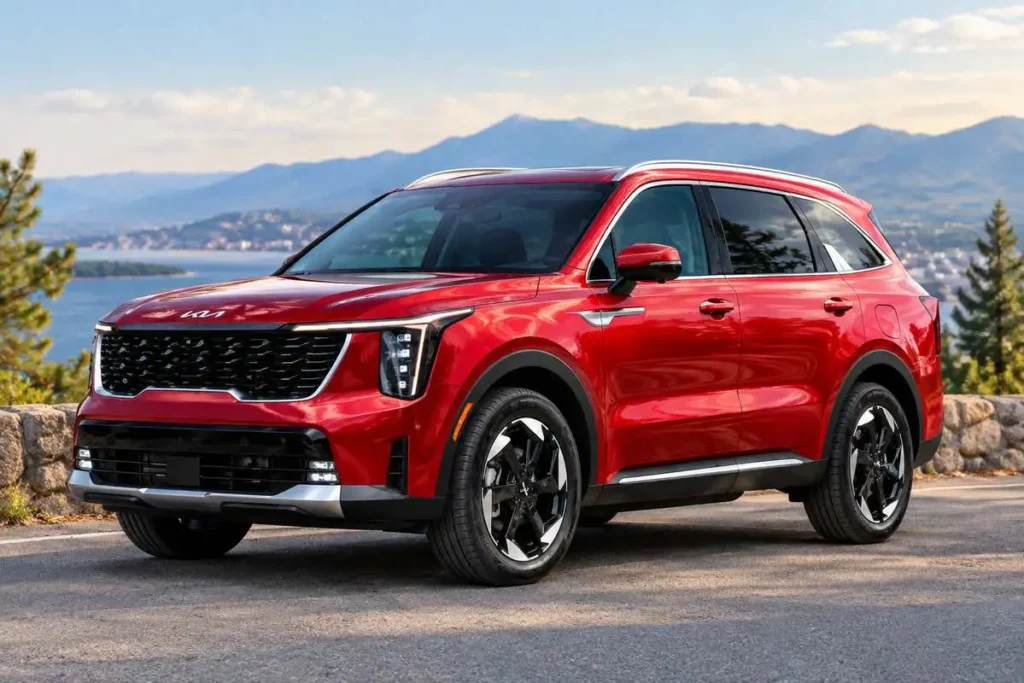
The KIA Sorento PH stands out for family practicality.
Kia lists the 2026 Sorento PHEV with standard three-row seating, standard AWD, 261 horsepower, and an EPA-estimated 31 miles of all-electric range. Kia also lists an estimated total driving range of 440 miles under its stated testing conditions.
The combination matters because many compact PHEVs sacrifice seating capacity for battery packaging.
The Sorento gives shoppers another path: three rows, electric driving for local trips, and gasoline-assisted long-distance flexibility.
Kia also provides charging options including Level 1 and Level 2 charging.
KIA Sportage Plug-in Hybrid
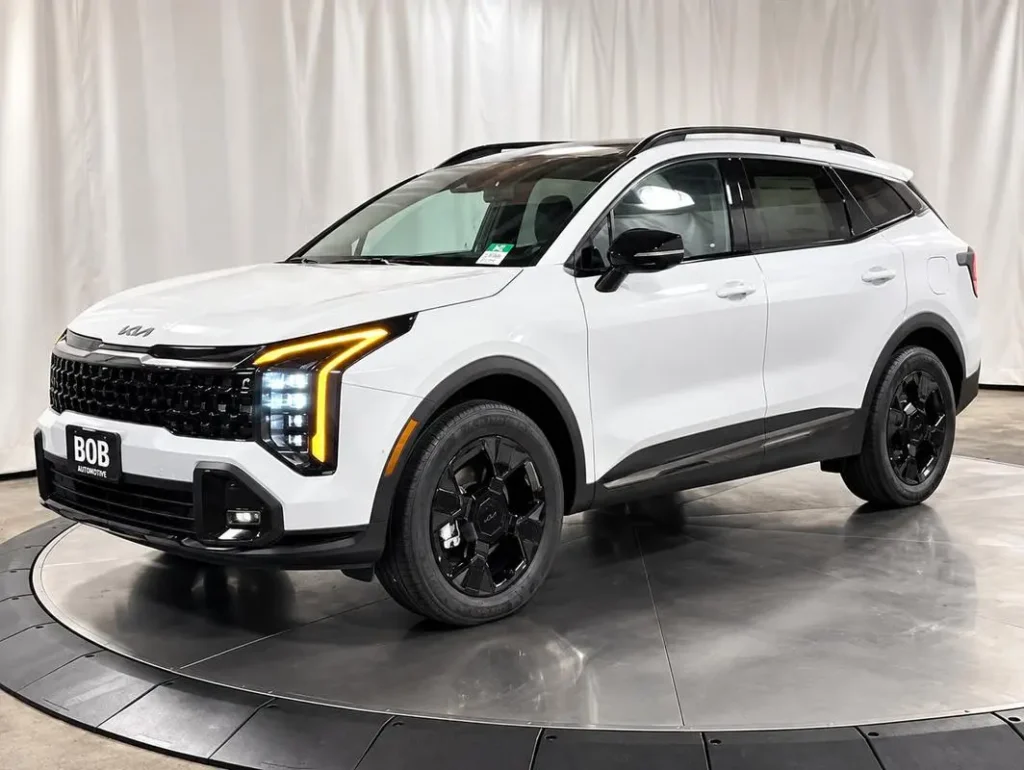
The KIA Sportage Plug-in Hybrid is a compact SUV PHEV.
KIA lists the 2026 Sportage Plug-in Hybrid with a 34-mile EPA-estimated all-electric range and 83 combined MPGe.
It may appeal to buyers who want:
- A smaller SUV footprint.
- Plug-in capability.
- AWD-oriented utility.
- A family-friendly cabin.
- Electric operation for local trips.
The Sportage PHEV also demonstrates why shoppers should compare more than horsepower. Electric range, cargo space, charging equipment, rear-seat room, and price can have a bigger effect on daily usefulness.
Lexus NX 450h+
The Lexus NX 450h+ brings plug-in hybrid technology into a premium compact SUV.
For 2026, Edmunds lists a 37-mile all-electric range, 36 MPG combined when the battery is depleted, all-wheel drive, and an estimated 4.5-hour charging time at 240 volts.
The NX 450h+ makes sense for someone who wants a premium cabin and AWD without moving completely to a battery-electric vehicle.
Its 37-mile electric range is also useful for comparing PHEVs beyond the mainstream market.
Mercedes-Benz GLC 350e
The Mercedes-Benz GLC 350e is one of the more interesting luxury compact PHEVs because its electric range is substantial for the category.
Current 2026 specifications list an EPA-estimated 54-mile electric range, 25 MPG combined when the battery is depleted, and approximately three hours to charge at 240 volts.
It also uses all-wheel drive and a turbocharged gasoline-electric powertrain.
For a buyer whose daily route is close to the vehicle’s electric range, the GLC 350e illustrates how a PHEV can function more like an EV during local driving while retaining gasoline capability for longer trips.
BMW X5 xDrive50e
The BMW X5 xDrive50e targets buyers who want a larger luxury SUV with plug-in capability.
BMW currently lists approximately 40 miles for the X5 xDrive50e on its U.S. PHEV information page, while the company’s detailed guidance notes up to 38 miles under certain stated conditions. BMW also emphasizes that actual electric range varies with factors such as wheels, tires, driving style, traffic, temperature, and charging behavior.
That distinction is important.
When comparing PHEVs, always check whether a number is:
- EPA-certified.
- Manufacturer-estimated.
- Based on preliminary testing.
- Dependent on a particular trim or wheel configuration.
Volvo XC60 Recharge
The Volvo XC60 Recharge name is associated with Volvo’s plug-in hybrid XC60 models.
For current and upcoming model years, Volvo’s PHEV lineup is changing quickly. Recent reporting indicates that Volvo has announced significantly longer-range 2028 XC60 and XC90 plug-in hybrids, with production expected to begin later in 2026 and sales expected around the following period.
That makes model-year verification especially important when researching the XC60 Recharge.
Volvo XC90 Recharge
The Volvo XC90 Recharge has traditionally dominated the larger luxury SUV PHEV class and is of great interest to families desiring more seating space.
However, buyers must differentiate between previous/current XC90 Recharge specs and the newly announced longer-range future variants.
The new XC90 PHEV has been indicated to possess a much larger battery and significantly increased electric range compared to current models, making it easy to confuse figures from differing model years within an article or dealer advertisement.
Other PHEV Names You May Encounter
A PHEV search can also return models such as
- Hyundai Tucson Plug-in Hybrid
- Hyundai Santa Fe Plug-in Hybrid
- Kia Sportage Plug-in Hybrid
- Kia Sorento Plug-in Hybrid
- Ford Escape Plug-in Hybrid
- Ford Kuga Plug-in Hybrid
- Mitsubishi Outlander PHEV
- Jeep Grand Cherokee 4xe
- Jeep Wrangler 4xe
- Chrysler Pacifica Hybrid
- Toyota RAV4 Prime
- Toyota Prius Prime
- Lexus NX 450h+
- BMW X5 xDrive50e
- Mercedes-Benz GLC 350e
- Volvo XC60 Recharge
- Volvo XC90 Recharge
These names should not automatically be treated as current U.S. choices for the same model year.
Some are previous-generation names, some are market-specific, and some have changed branding. Toyota Prius Prime, for example, is the name many shoppers still use when referring to the current Prius plug-in hybrid. Similarly, “Ford Kuga Plug-in Hybrid” is primarily relevant to markets where the Kuga is sold.
For a U.S.-focused buying guide, verify the exact model year, trim, availability, and EPA rating before publishing a specification.
What Makes a PHEV One of the Better Choices?
A useful plug-in hybrid comparison should look beyond a single specification.
1. Electric Range
Electric range is important because it determines how much of your normal driving can potentially be completed without gasoline.
But longer is not automatically better.
If you drive 15 miles per day, a PHEV with 35 miles of electric range may already cover your typical routine.
2. Charging Time
Charging time determines how easily the vehicle fits into your schedule.
A PHEV that can recharge overnight using your home’s available electrical supply may work well even if it does not have extremely fast charging.
3. Fuel Economy After the Battery Is Depleted
This is one of the most overlooked PHEV specifications.
Imagine two PHEVs:
- PHEV A has longer electric range but mediocre hybrid fuel economy.
- PHEV B has shorter electric range but very good fuel economy once the battery is depleted.
A driver who frequently takes long trips may care more about the second number than someone who rarely travels beyond the electric range.
4. Battery Capacity
Battery capacity is normally expressed in kilowatt-hours, or kWh.
A larger battery can support greater electric range, but it can also add weight and influence vehicle packaging and charging requirements.
Battery size should therefore be considered alongside usable range rather than by itself.
5. Charging Equipment
Look at what comes with the vehicle.
Check:
- Charging connector.
- Included charging cable.
- Level 1 capability.
- Level 2 capability.
- Maximum AC charging rate.
- Home charging requirements.
- Public charging compatibility.
6. Passenger and Cargo Space
A family vehicle needs to work as a family vehicle.
Before buying, check:
- Rear-seat legroom.
- Child-seat compatibility.
- Cargo floor height.
- Luggage capacity.
- Third-row usability.
- Cargo space with all seats occupied.
- Roof-rack and towing requirements.
A high electric range does not compensate for a vehicle that cannot carry your family comfortably.
Level 1 vs Level 2 Charging
PHEV charging does not have to be complicated.
Level 1 Charging
Level 1 generally uses a standard household outlet.
It is convenient because it may not require dedicated electrical installation.
The downside is slower charging.
For a PHEV with a relatively small battery, however, slow charging can still be perfectly usable when the vehicle sits overnight.
Level 2 Charging
Level 2 charging uses higher-voltage electrical service and can recharge a PHEV more quickly.
It can be particularly useful when:
- You drive frequently.
- Your PHEV has a larger battery.
- You want to recharge between trips.
- Your household already has suitable electrical infrastructure.
Before installing a home charging station, check the vehicle’s maximum AC charging capability. A more powerful charger does not automatically mean the vehicle will charge faster if the vehicle itself has a lower charging limit.
Home Charging vs Public Charging
For many PHEV owners, home charging is more important than public charging.
A practical routine might be:
- Park at home.
- Plug the car in.
- Leave it charging while parked.
- Start the next day with a replenished battery.
Public charging is still useful, but PHEVs generally have smaller batteries than full EVs and are not designed around the same long-duration fast-charging strategy as many battery-electric vehicles.
This is why the availability of a reliable home outlet can be more important than living near dozens of public charging stations.
What Does It Cost to Charge a PHEV?
A simple calculation can estimate home charging cost:
Charging cost = electricity used × electricity price
For example, if a vehicle consumes 12 kWh from the grid and your electricity rate is $0.20 per kWh:
12 × $0.20 = $2.40
Actual charging cost can be higher than the simple calculation because charging losses occur between the electrical supply and energy stored in the battery.
Your electricity rate may also vary by time of day, location, utility plan, taxes, and fees.
Public charging can cost more or less depending on the provider and pricing structure.
PHEV Fuel Economy: MPG vs MPGe
PHEV fuel economy can be confusing because there are multiple measurements.
MPG refers to miles per gallon of gasoline.
MPGe means miles per gallon equivalent and is used to express energy efficiency for electric operation in a gasoline-equivalent format.
You should not compare a PHEV’s MPGe number directly with its gasoline MPG as though they represented the same operating condition.
Instead, look at both:
- Electric range.
- MPGe.
- Gasoline MPG when operating in hybrid mode.
- Total range.
Toyota, for example, lists the 2027 Prius Plug-in Hybrid SE at an EPA-estimated 128 combined MPGe and 44 miles of electric range.
KIA lists the 2026 Sportage Plug-in Hybrid at 83 combined MPGe and 34 miles of EPA-estimated all-electric range.
Those numbers show why PHEV comparisons should use the complete set of measurements rather than one headline figure.
PHEV vs Hybrid: Which Technology Fits?
A plug-in hybrid vs hybrid decision often comes down to charging access.
Choose a conventional hybrid if:
- You do not have convenient charging.
- You want a simple fueling routine.
- You drive long distances frequently.
- You do not want to think about plugging in.
A PHEV becomes more attractive when:
- You can charge at home.
- Your daily trips are relatively short.
- You want meaningful electric-only driving.
- You still want gasoline backup.
The conventional hybrid does not require external charging because its smaller battery is replenished through regenerative braking and the vehicle’s engine-driven system.
PHEV vs EV: Which Is Different?
A plug-in hybrid vs. electric car comparison is more personal.
An EV has no gasoline engine. Its driving energy comes entirely from the battery.
A PHEV has both systems.
Choose an EV when:
- Most of your driving can be supported by available charging.
- You are comfortable planning longer trips around charging.
- You want a fully electric powertrain.
- You have reliable access to home or workplace charging.
Consider a PHEV when:
- You want electric driving for routine trips.
- You frequently travel beyond your preferred EV charging range.
- You want gasoline backup.
- Your charging situation is useful but not perfect.
Neither powertrain is universally suitable for every driver.
Who Should Buy a Plug-In Hybrid?
A PHEV can be a particularly logical option for someone with a predictable daily routine.
PHEV for Daily Driving
If your commute and errands fit within the vehicle’s electric range, regular charging can allow much of your routine to happen electrically.
PHEV for Families
Families should prioritize:
- Rear-seat space.
- Child-seat installation.
- Cargo room.
- Third-row access if needed.
- AWD requirements.
- Total range.
- Charging convenience.
The Kia Sorento PHEV, for example, combines three-row seating with standard AWD and a 31-mile EPA-estimated electric range for 2026.
PHEV for Long-Distance Driving
A PHEV can be useful for drivers who regularly mix city driving with highway trips.
The electric motor can take over for some driving, while the gas engine gives you another source of power for long drives.
But, if most of your driving is on long road trips, and you rarely plug in, a standard hybrid might be worth considering.
How to Calculate Whether a PHEV Fits Your Routine
Instead of asking whether PHEVs are generally economical, use your own driving pattern.
Step 1: Record Your Daily Mileage
For one or two weeks, note how far you drive each day.
You might discover that your typical day is 18 miles even though you occasionally take 300-mile road trips.
That is exactly the kind of driving pattern that makes the PHEV concept interesting.
Step 2: Check Your Charging Location
Ask:
- Can I park close to an electrical outlet?
- Can I charge overnight?
- Do I rent or own my home?
- Is the electrical circuit appropriate?
- Can I install Level 2 charging if needed?
Step 3: Compare Electric Range
Look at EPA-estimated electric range for the exact trim.
Do not rely on a generic model name if different wheels, configurations, or model years have different ratings.
Step 4: Compare Depleted-Battery MPG
Check how efficiently the vehicle operates once the electric-only portion has been used.
This becomes increasingly important for long-distance drivers.
Step 5: Calculate Total Ownership Cost
Consider:
- Purchase price.
- Financing.
- Insurance.
- Electricity.
- Gasoline.
- Maintenance.
- Tires.
- Charging equipment.
- Registration.
- Expected resale value.
PHEV Maintenance Costs
A PHEV still contains a gasoline engine, so it does not eliminate maintenance associated with combustion vehicles.
Depending on the vehicle, maintenance may include:
- Engine oil and filter service.
- Brake inspection.
- Tire rotation and replacement.
- Cooling-system service.
- Cabin air filters.
- Engine-related maintenance.
- Battery-system inspections.
Regenerative braking can reduce the amount of work demanded from friction brakes under some driving conditions, but brake wear still depends on how the vehicle is driven.
Maintenance schedules vary by manufacturer, so use the owner’s manual and official service schedule for the specific vehicle.
Battery Life and Battery Capacity
A PHEV’s lithium-ion battery is designed for repeated charging and discharging.
Battery capacity can decrease over time, just as rechargeable batteries in other products gradually lose capacity.
That does not mean a PHEV battery suddenly becomes unusable after a certain number of years.
The more useful question is how the manufacturer protects and warranties the battery system.
When shopping, review:
- High-voltage battery warranty.
- Powertrain warranty.
- Battery capacity or degradation provisions, if provided.
- Required maintenance.
- Replacement-part availability.
- Local service capability.
Do not assume every PHEV has the same warranty terms.
PHEV Tax Credits and Incentives
This area requires special attention because federal rules have changed.
As of September 2026, the IRS states that the federal New Clean Vehicle Credit and Previously-Owned Clean Vehicle Credit are not available for vehicles acquired after September 30, 2025. The IRS also explains that qualifying vehicles acquired on or before that date may still be subject to the applicable rules.
Therefore, older articles that advertise a federal PHEV tax credit as though it automatically applies to a vehicle purchased in 2026 can be outdated.
State, local, utility, employer, and other incentives can have separate rules.
Before counting an incentive in your buying budget, verify:
- Purchase date.
- Acquisition date.
- Vehicle eligibility.
- Income requirements.
- Location.
- New vs used status.
- Whether the incentive is still funded.
- Whether the incentive is a tax credit, rebate, or other benefit.
Do not subtract an incentive from the purchase price until you have confirmed that you qualify.
Common PHEV Buying Mistakes
Buying Without a Charging Plan
A PHEV’s main advantage comes from its rechargeable battery.
If charging is inconvenient, you may not use that advantage.
Comparing Only Electric Range
Electric range is important, but it is only one part of the vehicle.
A better comparison includes:
- Electric range.
- Charging time.
- Hybrid MPG.
- Passenger capacity.
- Cargo capacity.
- Purchase price.
- Warranty.
- Maintenance.
- Driving experience.
Assuming EPA Range Equals Real-World Range
EPA estimates provide a standardized reference point, but actual results vary.
Weather is particularly important.
Cold temperatures can affect battery performance and heating demand. High speeds, heavy loads, aggressive acceleration, hills, and climate-control use can also change energy consumption.
Ignoring Battery-Depleted Fuel Economy
If you regularly drive long distances, do not focus exclusively on the electric portion.
Look at how the PHEV behaves after the battery’s electric range has been used.
Paying for Features You Do Not Need
Luxury PHEVs can become expensive quickly.
A driver who mainly wants efficient commuting may not need every premium option.
The best plug-in hybrid for that person may be very different from the best PHEV for a buyer who prioritizes luxury, performance, or towing.
How to Compare PHEVs Properly
Create a simple spreadsheet with these columns:
| Category | PHEV A | PHEV B | PHEV C |
| MSRP | |||
| Electric range | |||
| Combined MPG | |||
| Combined MPGe | |||
| Battery capacity | |||
| Charging time | |||
| Charging connector | |||
| AWD/FWD | |||
| Seating | |||
| Cargo capacity | |||
| Towing capacity | |||
| Warranty | |||
| Maintenance schedule | |||
| Home charging needs |
Then add your own priorities.
For example:
Daily commute: 22 miles
Passengers: 4
Home charging: Yes
Long road trips: 4–5 per year
Preferred body style: SUV
Budget: Set before shopping
That profile immediately eliminates many vehicles that look attractive on a generic “best PHEV” list.
Why the Longest Electric Range Is Not Always the Right Choice
Search results often emphasize the plug-in hybrid with the longest electric range.
That is understandable, but it can lead buyers in the wrong direction.
Imagine a driver who:
- Has a 12-mile commute.
- Charges every night.
- Needs a large family vehicle.
- Takes several road trips each year.
A smaller PHEV with slightly longer electric range may be less practical than a three-row PHEV with somewhat less electric range.
Likewise, a driver with no home charging might get more real-world value from a conventional hybrid.
The best PHEV is therefore the one whose characteristics match the actual use case.
Why PHEV Model Names Can Be Confusing
Automakers have used different naming systems over the years.
You may see:
- Prius Prime
- Prius Plug-in Hybrid
- RAV4 Prime
- RAV4 Plug-in Hybrid
- Recharge
- 4xe
- xDrive50e
- 450h+
- Hybrid E-Hybrid
- Plug-in Hybrid
These labels do not all mean exactly the same engineering configuration.
For research, always identify:
manufacturer + model + model year + trim + market
For example:
2026 Lexus NX 450h+ Premium: U.S.
is much more precise than:
Lexus NX plug-in hybrid.
What About AWD in a PHEV?
All-wheel drive can be valuable for buyers who regularly encounter snow, wet roads, rough terrain, or towing requirements.
But AWD systems differ.
Some PHEVs use a mechanical connection between axles, while others use electric motors to provide propulsion at one axle.
The presence of AWD does not automatically tell you how the system works.
Check the manufacturer’s technical specifications if drivetrain behavior matters to you.
PHEV for Cold Weather
Cold weather can affect electric range.
Battery temperature, cabin heating, road conditions, tire pressure, and increased electrical demand can all influence efficiency.
That does not make PHEVs unsuitable for cold climates. It simply means a driver should not assume the EPA electric range will be identical in every season.
If winter conditions are severe where you live, leave some range margin rather than planning every trip around the exact published number.
PHEV for Highway Driving
PHEVs can be particularly flexible on highways because the gasoline engine can extend the vehicle’s practical travel capability.
However, highway speeds generally increase energy consumption.
If your normal routine is 90% highway driving, compare the vehicle’s highway fuel economy and gasoline-assisted behavior rather than focusing only on its electric range.
If your routine is mostly city driving, electric range and charging convenience may deserve more weight.
How to Use a PHEV Efficiently
A simple routine can help you take advantage of the technology.
Charge Regularly
If practical, plug in after returning home.
Use Electric Mode for Appropriate Trips
Short local trips are often where the electric system can provide the most obvious benefit.
Keep the Battery and Vehicle Maintained
Follow the manufacturer’s service schedule.
Monitor Your Actual Energy Use
Many PHEVs provide displays showing:
- Electric miles.
- Gasoline miles.
- Energy consumption.
- Regenerative braking.
- Charging status.
Use this information to understand how the vehicle fits your routine.
Plan Long Trips Differently
For a long journey, consider fuel stops and charging options according to the vehicle’s capabilities.
Remember that a PHEV does not require the same charging strategy as a battery EV.
Are PHEVs More Environmentally Friendly?
A PHEV can reduce gasoline use when it operates on electricity, but the real-world result depends on how it is charged and driven.
A driver who charges frequently and uses electric power for many local trips can use less gasoline than the same vehicle driven mostly with the gasoline engine.
A driver who rarely charges may not receive the same benefit.
This is why simply calling every PHEV “green” without considering usage can oversimplify the issue.
Energy sources also vary by region, so the environmental impact of electricity and gasoline depends on the broader energy system.
What PHEV Specifications Matter Most?
If you only have time to check ten specifications, focus on these:
- EPA-estimated electric range.
- Gasoline MPG with the battery depleted.
- Combined MPGe.
- Battery capacity.
- Charging time.
- Charging connector.
- Seating capacity.
- Cargo capacity.
- Purchase price.
- Warranty.
Then add towing capacity, AWD, performance, ground clearance, and luxury features if they matter to your use case.
A Practical Shortlist by Buyer Type
Instead of ranking models from first to last, here is a use-case shortlist.
For Efficiency-Focused Drivers
Look closely at the Toyota Prius Plug-in Hybrid.
Toyota’s current 2027 specifications emphasize electric range and efficiency, with 44 miles of EPA-estimated all-electric range on the SE and 128 combined MPGe.
For SUV Buyers
Consider vehicles such as the Toyota RAV4 Plug-in Hybrid, Kia Sportage Plug-in Hybrid, and Lexus NX 450h+.
The RAV4 emphasizes power and SUV versatility, while the Sportage and NX provide different combinations of price, premium features, electric range, and packaging.
For Three-Row Families
The Kia Sorento Plug-in Hybrid is especially relevant because it combines three-row seating, standard AWD, and a 31-mile EPA-estimated electric range for 2026.
For Luxury SUV Buyers
The Mercedes-Benz GLC 350e, BMW X5 xDrive50e, Lexus NX 450h+, and Volvo’s XC60/XC90 plug-in hybrid models represent different approaches to luxury PHEV ownership.
For Long Electric PHEV Range
The 2026 Mercedes-Benz GLC 350e is notable because its current specifications list a 54-mile EPA-estimated electric range.
Volvo’s upcoming longer-range XC60 and XC90 PHEVs are also important to watch because the company has announced substantially larger batteries and much greater electric range for those future models.
What to Check During a Test Drive
Do not spend the entire test drive testing acceleration.
Try to evaluate:
- Seat comfort.
- Rear-seat access.
- Visibility.
- Cargo loading.
- Steering feel.
- Brake-pedal feel.
- Transition between electric and gasoline operation.
- Regenerative braking behavior.
- Ride quality.
- Infotainment usability.
- Charging-port location.
- Parking and turning radius.
If you have children, bring the car seats you actually use when possible and check the installation space.
If you regularly carry luggage, take measurements rather than assuming a vehicle’s advertised cargo volume will match your needs.
Questions to Ask a Dealer
Before signing a purchase agreement, ask:
- What is the exact model year and trim?
- What is the EPA-rated electric range?
- What is the EPA-rated MPG after the battery is depleted?
- What charging cable comes with the vehicle?
- Does it support Level 1 and Level 2 charging?
- What connector does it use?
- What is covered by the battery warranty?
- What maintenance is required?
- Are there current state or local incentives?
- What fees are included in the advertised price?
Get important answers in writing when possible.
PHEV Ownership Cost: The Bigger Picture
Purchase price is only the beginning.
A useful ownership-cost calculation should include:
Purchase price + financing + insurance + fuel + electricity + maintenance + tires + charging equipment – incentives – resale value
You do not need exact numbers to understand the principle.
A more expensive PHEV might save more fuel but still cost more overall.
A cheaper PHEV might have lower purchase costs but less electric range.
A luxury PHEV might provide more performance and features but have higher insurance, tire, maintenance, and depreciation costs.
The best financial choice depends on how long you keep the vehicle and how you use it.
What Makes a PHEV a Good Daily Driver?
A good PHEV for daily driving should fit naturally into your routine.
That means:
- You can charge without significant inconvenience.
- The electric range covers a useful portion of your normal driving.
- The vehicle is comfortable.
- The cargo area meets your needs.
- The gasoline system provides enough flexibility for longer trips.
- The charging process does not become a daily frustration.
The technology should make your routine easier rather than forcing you to reorganize your routine around the car.
Summery
The best plug-in hybrid is not simply the PHEV with the highest horsepower, longest electric range, or most expensive interior. It is the vehicle whose electric range, charging system, hybrid fuel economy, passenger capacity, cargo space, price, and ownership costs match the way you actually drive.
The Toyota Prius Plug-in Hybrid is focused heavily on efficiency. The Toyota RAV4 Plug-in Hybrid brings PHEV technology into a versatile SUV package. The Kia Sorento Plug-in Hybrid addresses the needs of families that want three rows. The Sportage provides a smaller SUV alternative. The Lexus NX 450h+ adds a premium compact-SUV approach, while the Mercedes-Benz GLC 350e and BMW X5 xDrive50e offer luxury-oriented PHEV choices. Current and upcoming Volvo plug-in hybrids show how quickly electric range is changing within this category.
Before buying, calculate your daily mileage, confirm where you will charge, compare EPA electric range and gasoline fuel economy, check passenger and cargo requirements, and verify current incentives rather than relying on an older PHEV buying guide.
For many drivers, that simple process will narrow a large list of best PHEV cars and SUVs into a much smaller group that genuinely fits their lifestyle.
Frequently Asked Questions
What is the best plug-in hybrid car for daily driving?
The best PHEV for daily driving depends on your mileage, charging access, budget and space requirements. The Toyota Prius Plug-in Hybrid is particularly relevant to efficiency-focused commuters, while SUVs such as the Toyota RAV4 Plug-in Hybrid, KIA Sportage Plug-in Hybrid, and Lexus NX 450h+ suit drivers who prefer an SUV format.
Is a plug-in hybrid better than a regular hybrid?
Neither powertrain is universally better. A PHEV can provide meaningful electric-only driving when charged regularly, while a conventional hybrid does not require external charging. Drivers without convenient charging may find a regular hybrid simpler, while drivers with home charging and short daily trips may benefit more from a PHEV’s larger battery.
How far can a plug-in hybrid drive on electricity?
Electric range varies significantly by model and trim. Current examples include approximately 31 miles for the 2026 KIA Sorento PHEV, 34 miles for the 2026 KIA Sportage PHEV, 37 miles for the 2026 Lexus NX 450h+, 44 miles for the 2027 Prius Plug-in Hybrid SE, and 54 miles for the 2026 Mercedes-Benz GLC 350e.
Do PHEVs need to be charged every day?
A PHEV can continue operating using its gasoline engine and hybrid system even when the electric-only battery range has been used. However, regular charging is important if you want to maximize the vehicle’s electric-driving capability and potential fuel savings.
Can you charge a PHEV with a normal household outlet?
Many PHEVs support Level 1 charging from a standard household outlet, although charging speeds vary by vehicle and electrical setup. Kia, for example, lists Level 1 and Level 2 charging options for the 2026 Sorento Plug-in Hybrid.
Are federal PHEV tax credits still available in 2026?
For U.S. consumers, the IRS currently states that the federal New Clean Vehicle Credit and Previously-Owned Clean Vehicle Credit are not available for vehicles acquired after September 30, 2025. State and local incentives can have separate rules, so buyers should verify current eligibility before including an incentive in their budget.
Is a PHEV good for long-distance driving?
A PHEV can be useful for long-distance driving because it combines electric propulsion with a gasoline engine. However, drivers who regularly travel long distances should compare the vehicle’s gasoline MPG after the electric range is depleted, not just its electric range or MPGe rating.
Need more seats? See our best 7-seater SUVs list.

Aiden is the founder and editor of CarSeatHaven. He researches NHTSA safety standards, AAP guidance, manufacturer manuals, and recall notices, and turns them into plain-language car seat guides for parents.
