

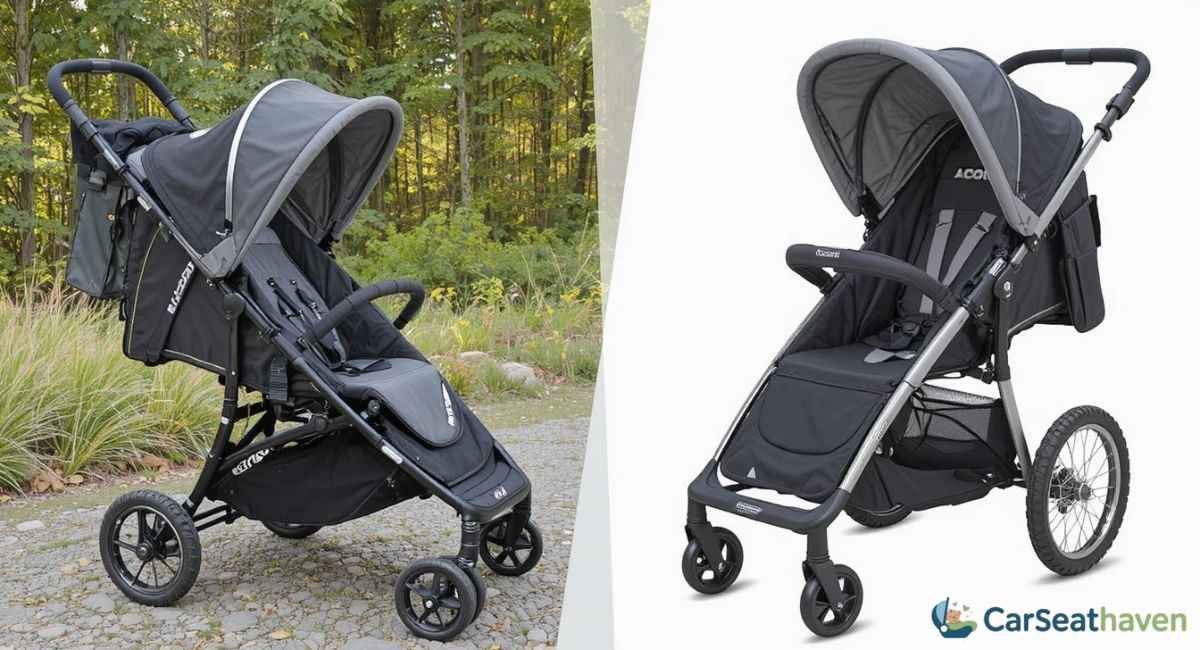
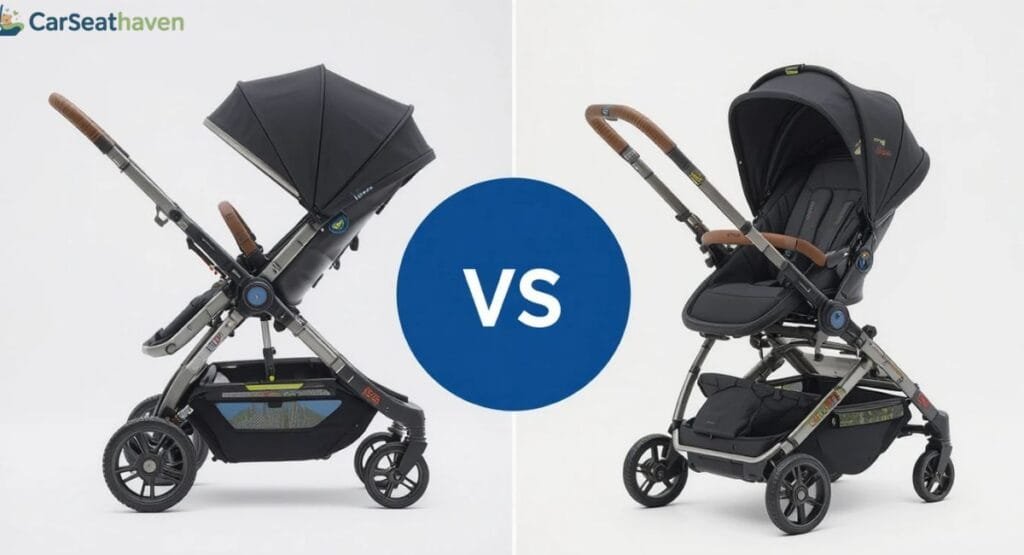
Doona vs Evenflo Shyft is one of the most common head-to-head searches among parents shopping for a car seat stroller combo, and the honest answer is that there is no single winner. After digging through parent reviews on Reddit, Walmart, Amazon, parenting forums, TikTok and YouTube review channels, a clear pattern emerges: the Evenflo Shyft DualRide wins for most families on value, flexibility and newborn fit, while the Doona wins for speed, travel simplicity and one-motion ease. Which one is better for you depends almost entirely on how you move through your day, so keep reading and you will find exactly which one fits your life.
Before we get into the details, here is the important context for this article. This is not a personal hands-on test. Instead, it is a synthesis of what real parents and reviewers have actually said about living with these two products: recurring praise, recurring complaints and the trade-offs that show up again and again. Online reviews skew toward strong opinions, and people who spent hundreds of dollars on one product tend to defend their choice, so I have weighed patterns that appear across many sources more heavily than any single glowing or angry review. Where facts were uncertain, I used ranges and said so plainly.
How This Comparison Was Built
This comparison pulls together sentiment from parenting communities and review sources rather than a single lab test or a brand-sponsored review. Sources include Reddit threads and parenting forums where parents compare the two, verified-purchase reviews on Walmart and Amazon, comparison reviews by child passenger safety technicians (CPSTs) at sites like GoodBuy Gear and TheCarMom, detailed feature breakdowns from Babylist and Getting Stamped, social posts on TikTok and Lemon8, and YouTube review videos.
A few caveats are worth stating up front so you can read everything that follows with the right eyes. First, there is no official national registry of who bought what, so exact sales or satisfaction numbers do not exist; the themes below reflect what comes up repeatedly, not a poll. Second, both products have multiple versions floating around in reviews: the original Doona and the newer Doona+ with upgraded fabrics, the 2026 Doona X with a no-rethread harness and taller handlebar, and Shyft DualRide versions with and without the carryall storage bag. A complaint about one version may not apply to another. Third, parents who love or hate a product are the most likely to post, so the middle ground of quiet satisfaction is underrepresented. With that said, when the same observation appears in a Reddit thread, a Walmart verified review and a CPST write-up, it is worth taking seriously, and those are the patterns this article is built on.
Doona vs Evenflo Shyft at a Glance
Here is the side-by-side snapshot. Both are infant car seat and stroller combinations: the car seat itself transforms into a stroller so you never transfer a sleeping baby between separate pieces of gear. Both are rear-facing only, both meet the same federal safety standards, and both are FAA approved for airplane use.
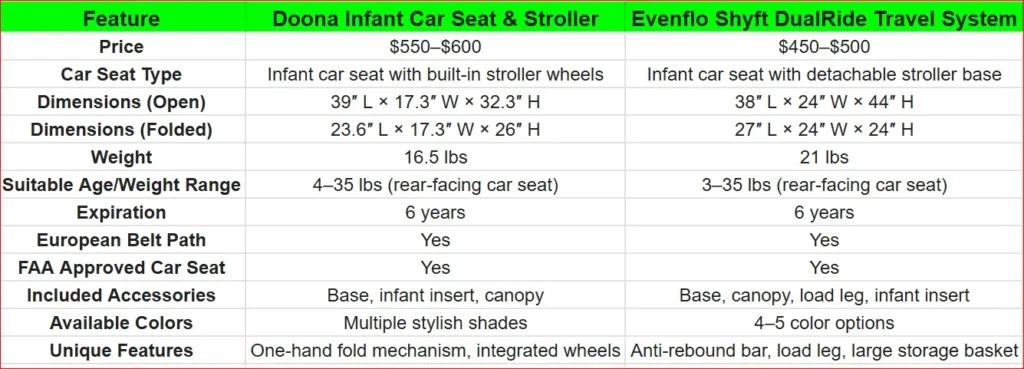
| Feature | Doona (Doona+) | Evenflo Shyft DualRide |
|---|---|---|
| Child weight range | 4 to 35 lbs | 3 to 35 lbs |
| Child height range | Up to 32 inches | 15.7 to 32 inches |
| Carrier weight | About 17.2 lbs (wheels never detach) | About 8 lbs with wheels detached; about 19 to 20 lbs as a stroller unit |
| With car seat base | Base weighs about 9.7 to 10.4 lbs; total about 27 to 28 lbs | Total about 28 to 29 lbs with base |
| Fold mechanism | One-motion fold: wheels tuck under at baby’s feet, very intuitive | Two-button fold: wheels fold at baby’s head end, takes practice |
| Wheels detach? | No, never | Yes, the wheels and frame stay in the base so you can carry just the carrier |
| Harness | Rethread harness (no-rethread on the newer Doona X) | No-rethread, 8 height positions |
| Newborn fit | Lowest harness setting rated from 4 lbs, but parents say it sits high on small babies | Lowest harness slot at 4.5 inches, fits babies down to 3 lbs; better for preemies |
| Handlebar | Adjustable but shorter; frequent complaint from tall parents | About 3.5 inches taller than the Doona’s; better for tall parents |
| Canopy | Smaller canopy; parents often buy an extra sunshade | Larger canopy, with extended-canopy versions available |
| Brakes | Single button locks both rear wheels | Separate brake on each rear wheel; both must be pressed |
| Storage | No basket or carryall included; accessories sold separately | Removable carryall bag included on most bundles; cup holder included |
| Safety extras | Anti-rebound handlebar, 3-layer side impact protection, TUV certified | SensorSafe Bluetooth chest clip alerts, anti-rebound base, LockStrong installation |
| FAA approved for aircraft | Yes; narrow enough to roll down an airplane aisle | Yes; detachable carrier makes airport carrying easier |
| Typical price | About $550 to $650 depending on retailer and color; rarely goes on sale (Doona X about $850) | About $500 to $600 list; base model around $500, bundles around $550 to $580; frequently discounted 20 to 30 percent |
| Cleaning | Fabric removable and washable, must air dry | Pads are dryer safe; wheel wells are removable and washable |
Prices move around a lot, and both products show different prices at different retailers, so treat every price above as a snapshot from 2026 rather than a promise. The pattern that matters is the direction: the Doona holds its price and is rarely discounted, while the Shyft DualRide goes on sale regularly and drops far below list price during promotions.
Head-to-Head: The Differences That Actually Matter
Spec tables only tell you so much. What matters is how these differences feel in daily life, and that is exactly where parent feedback is most useful. These are the eight differences parents argue about the most.
The fold and the detachable carrier
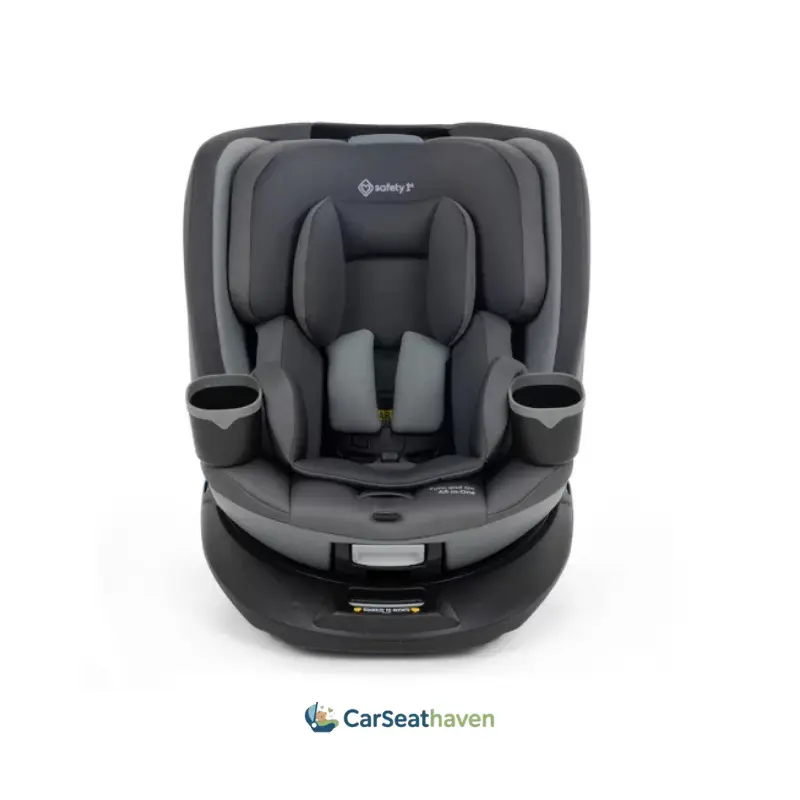
This is the single biggest functional difference between the two products, and it is the reason many parents feel so strongly one way or the other. The Doona is one solid piece. Press a release, the wheels swing down, and you have a stroller. Press again, the wheels tuck up, and you have a car seat. Parents on forums consistently describe the Doona fold as smoother and more intuitive: you do not lift the unit off the ground, and the motion becomes muscle memory fast. One widely echoed sentiment is that nobody has to teach you twice.
The Shyft DualRide folds too, but parents agree it takes practice. It uses a two-button sequence, and the wheels fold at the baby’s head end rather than the feet end, which means you tilt the unit head-down and rock it backward to collapse the wheels. Reviewers at Babylist admitted to mixing up the two buttons even after weeks of use, and a mom who compared both side by side at Getting Stamped called the DualRide fold unwieldy compared to the Doona’s smooth motion. Several Walmart reviewers say the same thing in their own words: it feels awkward at first, then becomes easy once you practice.
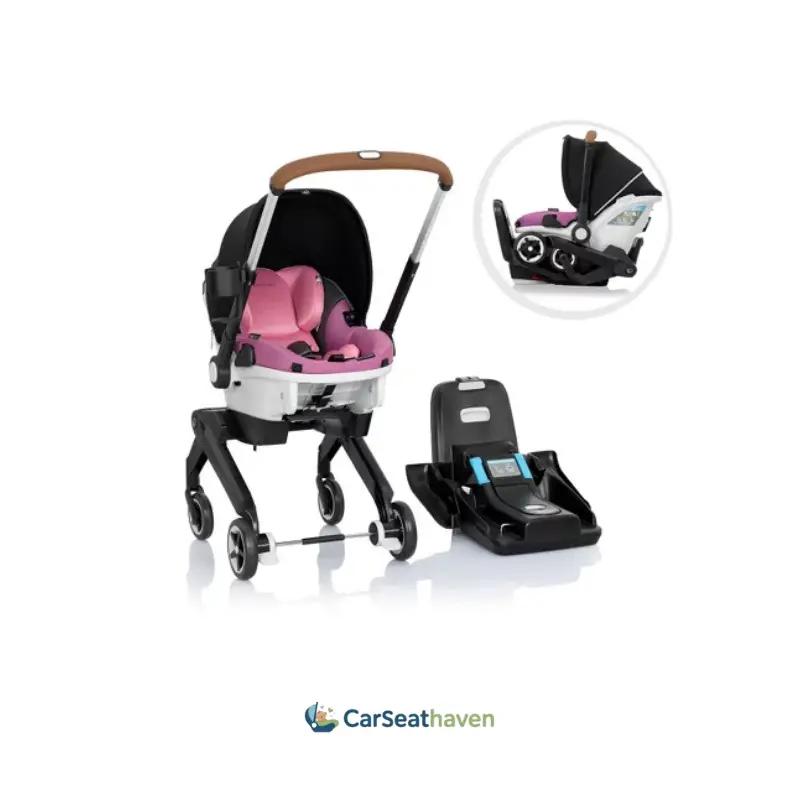
But the Shyft has a trick the Doona can never match. Its infant carrier detaches from the wheeled frame entirely, and the wheels stay nested in the base. That means you can lift out just the carrier, which weighs about 8 pounds, and carry your baby like a traditional infant car seat. Parents call this out as a game changer for stairs, for tight restaurant seating, for setting the carrier down at a friend’s house, and for the grocery store, where the Doona’s always-attached wheels are a genuine frustration. One verified Walmart reviewer who had used a Doona with a previous baby and switched to the Shyft said the detachable wheels sound minor until you are pushing a Doona and a shopping cart at the same time and wishing the car seat could just sit in the cart like a normal carrier. With the Shyft, it can.
So the trade-off is clean. The Doona folds faster and more intuitively. The Shyft folds more awkwardly but gives you a mode the Doona simply does not have. If you mostly go from car to sidewalk and back, the Doona’s simplicity wins. If you ever carry the seat without the wheels, the Shyft wins by a mile.
Weight and how heavy it feels
On paper the numbers look close, but they measure different things, and parents’ experiences reflect that. The Doona’s carrier weighs about 17 pounds, and because the wheels never come off, you are always lifting the full unit. The Shyft’s carrier alone is about 8 pounds, but as a complete stroller unit it weighs about 19 to 20 pounds, and with the base the whole package is about 28 to 29 pounds.
What parents actually report: lifting the Doona in and out of the car is fine for most people because you roll it right up to the trunk and fold the wheels in one motion, and several parents say they never found the lift itself to be a problem. The pain point is stairs. Multiple parents mention that carrying the Doona up a flight of stairs is heavy, and one DC parent on a city forum called it definitively heavy on stairs while rating the everyday lift as no problem at all. The Shyft splits the difference: as one piece it is heavier than the Doona, which matters when you lift the whole stroller into a trunk, but the detachable carrier is dramatically lighter, which matters on stairs, at the pediatrician’s office, and anywhere you are carrying the baby rather than rolling. One reviewer who moved to an upstairs apartment during the Shyft’s lifespan said the stairs were the one thing that finally pushed her to switch to a standard infant seat, which tells you the whole category has limits, but the Shyft’s 8-pound carrier mode is the lightest option either product offers.
Harness adjustment as your baby grows
This is one of the Shyft’s clearest wins and it comes up in nearly every detailed comparison. The Shyft has a no-rethread harness with eight height positions: you squeeze a handle and slide the harness up as your baby grows, which takes seconds. The Doona (the standard Doona and Doona+) has a rethread harness, which means you have to unthread the straps from the back of the seat, move them to higher slots, and rethread them every time your baby has a growth spurt. Parents who have lived with rethread harnesses describe it as one of those chores you keep putting off, and it is easy to run a baby in a harness that is slightly too low because adjusting it feels like a project.
The newer Doona X, released in 2026 at a higher price point around $850, adds a no-rethread harness along with a taller handlebar and more recline positions. If you are comparing the Doona X to the Shyft, the harness gap mostly closes, but at roughly $850 versus a Shyft that frequently sells well under $500, the price gap opens wide instead.
Handlebar height and pushing comfort
Tall parents complain about the Doona’s handlebar a lot. It is adjustable, but its maximum height leaves taller parents stooping, and this is one of the most repeated Doona complaints across Reddit, forums and review sites. The Shyft’s handlebar is about 3.5 inches taller, which is a noticeable difference. The mom at Getting Stamped who compared both is 5 foot 10 with a 6 foot 5 husband, and she reported no handlebar problems with either, which is a useful data point: the Doona works fine for many tall parents, but the Shyft gives more room. If pushing comfort for a tall caregiver is a priority, the Shyft has the edge, and the Doona X’s taller handlebar narrows the gap at a higher price.
On pushing feel itself, the balance tips back toward the Doona. CPST reviewers at GoodBuy Gear note the Doona rolls a bit smoother and quieter over uneven pavement, and several parents describe the Doona as the smoother pusher of the two. Neither product is a jogging stroller or an all-terrain stroller: both have small wheels that can catch on sidewalk cracks, and multiple parents warn that cobblestones, gravel and bumpy city sidewalks are a rough ride in either one. For everyday smooth surfaces, both are fine; for rougher ground, plan on a different stroller.
Canopy size
The Shyft’s canopy is larger, about two inches longer than the Doona’s by one reviewer’s measurement, and Evenflo offers extended-canopy versions on some bundles. Doona parents frequently mention the small canopy as an annoyance, particularly sun getting into the baby’s eyes, and many end up buying a third-party sunshade. This is not a dealbreaker for either product, but if you walk a lot in sunny weather, the Shyft starts ahead. One odd wrinkle from the Getting Stamped comparison: the Shyft’s canopy can be awkward to grab and fully extend because of how it folds when closed, a small usability quirk worth knowing about.
Storage, or the lack of it
Neither product has the big under-seat basket of a traditional stroller, because the wheels are built into the car seat. This is the trade-off of the whole category. The Shyft does better here: most bundles include a removable carryall storage bag and a parent cup holder, and parents mention the carryall as a genuine plus. The Doona includes neither a basket nor a carryall, and its accessories, while more numerous (handlebar covers, insect nets, storage bags, travel bags), are sold separately and add to an already high price. The 2026 Doona X adds a removable storage basket that doubles as a backpack, which addresses the complaint at the top of the price ladder. Either way, plan on carrying a diaper bag. Parents in forums repeat this advice constantly: do not expect either product to replace your storage.
Brakes
A small detail that parents notice daily. The Doona has one brake pedal that locks both rear wheels at once, and reviewers consistently prefer it. The Shyft has a separate brake on each rear wheel, and you have to press both to fully stop the stroller; press only one and it can still pivot. Parents describe this as mildly annoying rather than dangerous, and one reviewer notes the Shyft’s brakes are at least easy to operate barefoot or in sandals. Small thing, but you use the brake every single time you stop, so it adds up.
Price and real-world value
List prices are close: the Doona typically runs about $550 to $650 depending on the retailer, color and version, while the Shyft lists around $500 to $600 with bundles that include the carryall. The real story is what people actually pay. The Doona is famously price-controlled and rarely goes on sale, so almost everyone pays full price. The Shyft goes on sale constantly: 20 to 30 percent off is common, and parent reviews mention buying it for dramatically less during promotions, with one reviewer reporting a super sale price around $220. Even at a modest sale price, the Shyft undercuts the Doona by a hundred dollars or more, and the bundle includes the carryall and cup holder that Doona sells separately.
Value is not only about the sticker price, though. The Doona’s resale market is famously strong; used Doonas hold value well because demand is constant and the price never drops at retail. The Shyft’s frequent sales mean weaker resale, since buyers can often find it new on sale. Over the roughly 12 to 18 months a baby fits in either seat, total cost of ownership can end up closer than the sale prices suggest, especially if you resell. But on upfront cost, the Shyft wins clearly and repeatedly.
Newborn fit, including preemies and small babies
The Shyft is rated from 3 pounds, the Doona from 4 pounds, and that one-pound difference matters more than it sounds. The Shyft’s lowest harness slot sits at about 4.5 inches, and reviewers confirm it fits very small babies properly, including preemies. The Doona’s lowest setting is rated from 4 pounds, but multiple reviewers note the harness sits questionably high on smaller babies even at the minimum setting. If your baby is likely to be small, if you are expecting twins who often arrive early and small, or if you simply want the seat to fit well from day one, parents and reviewers consistently point to the Shyft. This is also one of the CPST-noted advantages: GoodBuy Gear lists the Shyft as the better pick for very small newborns.
What Parents Actually Say: Recurring Themes
Aggregating hundreds of parent comments, a few themes repeat so often they are worth stating as the collective verdict of the parenting internet, with the usual caveat that these are patterns in self-reported reviews, not a scientific survey.
Doona loyalists love the simplicity above all else. The most repeated Doona praise is some version of: it just works, every time, with no thinking. Parents describe the one-motion fold as the feature they use dozens of times a day without a second thought. City parents in walk-up apartments praise how little space it takes. Frequent flyers describe rolling it through the airport and down the airplane aisle as transformative. Parents of toddlers describe it as perfect for school drop-offs and quick errands where unbuckling a baby from a car seat into a stroller would take longer than the errand itself. A recurring line in forums is that the Doona was the one expensive baby item that was unambiguously worth it, even from parents who otherwise buy everything secondhand.
Doona critics focus on the handlebar, the storage and the price. Tall parents stooping over the handlebar is probably the single most repeated Doona complaint. The lack of storage is second. The rethread harness is third, usually mentioned with a sigh by parents who have done it twice. The price stings most when the baby outgrows the seat at around a year: several parents note the math of $600 for 12 to 15 months of use and wish they had known how fast it goes.
Shyft converts praise the detachable carrier and the price they paid. Parents who switched from a Doona to a Shyft, or who researched both and chose the Shyft, keep coming back to two things: carrying just the 8-pound carrier up stairs or into a restaurant, and the sale price. The no-rethread harness and SensorSafe alerts get honorable mentions. The carryall bag gets genuine love from parents who pack for the day. One verified reviewer’s summary captures the mood: she was nervous about choosing the Shyft over the Doona’s luxury reputation, but found Evenflo matched or beat the Doona on features that mattered to her daily life.
Shyft critics focus on the fold and the bulk. The awkward fold is the top complaint by a wide margin: the two-button sequence, the head-end fold direction, the need to lift and rock the unit. Parents say it gets easy with practice, but the learning curve is real, and it is the feature most likely to frustrate a grandparent or occasional caregiver. The second complaint is bulk: as a single piece the Shyft is bigger and heavier than the Doona, and a few parents in four-door sedans found it a tight fit. A small number of reviews are outright negative, including one reviewer who said it strangled her baby (a harness fit complaint) and told others to skip it; single alarming reviews like this deserve a mention but should be weighed against the much larger number of positive verified reviews and the absence of any corresponding safety recall.
The crash-test footnote. One independent testing site that commissions its own crash tests scored the Shyft notably better than the Doona, whose results they described as never impressive, while also noting the Doona was the original product in this category. Independent crash-test scores are not government ratings and test protocols differ, so treat this as one more data point rather than a verdict. Both seats pass the same federal standard, which is the legal safety bar that matters.
Safety: What Both Seats Share and Where They Differ
Both the Doona and the Evenflo Shyft DualRide are certified to the same U.S. federal safety standard for child restraints, FMVSS 213, which covers crash performance, structural integrity and labeling. There is no government star rating for car seats the way there is for cars, so any claim that one is officially safer than the other should be treated with skepticism. Both are also FAA approved, which means either one can be used on an airplane in its car seat mode when you purchase a seat for your baby or when the airline allows it.
The safety extras differ in philosophy. The Doona’s extras are mechanical: an adjustable handlebar that doubles as an anti-rebound bar in the car, three-layer side impact protection, and TUV certification on top of the U.S. standard. The Shyft’s extras are a mix of mechanical and electronic: an anti-rebound base, LockStrong belt-tensioning installation with Quick Connectors, and SensorSafe, a Bluetooth chest-clip sensor that sends phone alerts for four conditions: unexpected chest clip unbuckling, unsafe car temperature, a child left unattended in the car, and a child buckled in for too long. Parents are split on SensorSafe: some call it meaningful peace of mind, others never activate it or find the Bluetooth pairing fussy, and it runs on a replaceable coin-cell battery. It is a backup layer, not a substitute for checking on your baby.
Three safety habits matter regardless of which seat you choose. First, both seats can be installed with the included base or without it using the vehicle seat belt, which is what makes them work in taxis, rideshares and rental cars; practice the baseless install before you need it. Second, follow the two-hour rule: infant car seats position babies at an angle that can affect breathing over long stretches, so pediatric guidance is to limit continuous time in any infant seat and take breaks on long travel days. Third, check for recalls before and after you buy. You can look up any car seat by brand and model on the NHTSA recalls site, and both manufacturers offer registration so you are notified directly. As of 2026, the well-known 2026 recalls in the news have involved other models, but recall status can change, so verify the specific seat you are buying rather than relying on any article.
Which One Wins for Your Situation
This is where the decision gets made. Walk through the scenarios below and find your life.
City life: walk-ups, subways and rideshares
For dense city life, the answer splits by housing. If you live in a walk-up apartment with stairs, the Shyft’s detachable carrier is the standout feature of either product: carrying an 8-pound carrier up three flights beats hauling a 17-pound Doona every single day. If you live in an elevator building and mostly roll from lobby to sidewalk, the Doona’s smaller footprint, smoother one-motion fold and compact storage in a tiny apartment make it the easier daily companion. For rideshares, Ubers and taxis, both shine because both install without a base using the seat belt, and both let you roll straight out of the car onto the sidewalk. Parents in forums specifically praise this Uber-to-sidewalk flow for both products. Edge to the Shyft if stairs are in your daily route; edge to the Doona if your route is flat and space is tight.
Air travel
Both are FAA approved, and both beat the alternative of checking a car seat and gate-checking a stroller as two separate items. The Doona has a famous party trick: it is narrow enough to roll down most airplane aisles, and parents who fly frequently describe going from curb to gate to seat without ever carrying the seat as the reason they bought it. It installs on the plane seat with the belt, and it fits in most overhead bins when folded, though policies vary by airline and aircraft, so confirm before you count on it. The Shyft counters with the detachable carrier: rolling the stroller unit through the terminal, then popping the carrier off to carry the baby while a partner handles luggage, is a genuinely easier airport flow for many families, and the larger canopy helps with naps in bright terminals. For the frequent solo flyer who values minimum pieces and minimum thinking, the Doona wins. For families traveling with luggage and a partner, the Shyft’s flexibility wins. Either way, buy the baby a seat if you can: a car seat only protects on the plane if the baby is actually buckled into it.
Budget
The Shyft wins on budget, and it is not close at street prices. The Doona holds its $550 to $650 price with rare discounts, while the Shyft’s $500 to $600 list price routinely drops 20 to 30 percent or more, and patient shoppers report much deeper sale prices. The Shyft bundle also includes the carryall and cup holder, while comparable Doona accessories are extra. The one budget argument for the Doona is resale: because the retail price never drops, used Doonas hold their value unusually well, so your net cost after reselling can be lower than the sticker suggests. But you have to actually resell it, and most parents do not get around to it.
Twins
Twins change the math for both products. You need two of everything, so cost doubles: two Doonas at full price is a serious outlay, while two Shyfts bought on sale is far more manageable. Twins also often arrive early and small, which favors the Shyft’s 3-pound minimum and lower harness slots. On the other hand, pushing two separate stroller units is awkward regardless of brand, and many twin parents end up with a double stroller for walks and use the car seat strollers mainly for travel and errands. If you go the car seat stroller route with twins, the Shyft’s lower cost and better small-baby fit make it the more practical pick for most families, while the Doona’s airplane-aisle width is a real advantage for flying with two babies and one adult per baby. One honest note from the parent internet: with twins, no infant gear stays convenient for long, so buy for the first year, not for forever.
Grandparents and other caregivers
This scenario favors the Doona. The one-motion fold is dramatically easier to teach a grandparent, a nanny or a babysitter who uses the seat occasionally: press, wheels down, go. The Shyft’s two-button, head-end fold confuses even its owners for the first weeks, and several parents report that occasional users never get comfortable with it. The Shyft fights back with the lighter carrier: an older grandparent carrying just the 8-pound carrier is safer than one hauling a 17-pound Doona up porch steps. And SensorSafe can either reassure or confuse a less tech-comfortable caregiver, so factor in who is actually pushing the seat. If grandparents do occasional full outings, pick the Doona for simplicity. If a grandparent mainly carries the baby in and out of the house while you handle the stroller part, the Shyft’s light carrier mode is kinder.
Cleaning
Babies are messy, and this category gets punished: wheels track dirt, snacks get ground into fabric, and blowouts happen in car seats. The Shyft wins on cleaning. Its seat pads are dryer safe, which parents mention with real gratitude, while the Doona’s fabrics must be removed, washed and hung to air dry. The Shyft’s wheel wells are removable and washable, which keeps road dirt off your car’s back seat; the Doona’s wheels never detach, so you are wiping them down in place. Neither seat is machine-washable as a whole unit, and both manuals have specific cleaning instructions you should follow, but for the weekly reality of crumbs and spit-up, the Shyft is less work.
Who Should Pick Which
If you want the short version after all of that, here it is. Pick the Evenflo Shyft DualRide if you want the best value: frequent sales, a detachable carrier that makes stairs and tight spaces easy, a no-rethread harness, a taller handlebar, a bigger canopy, dryer-safe fabrics and a better fit for small newborns. It asks for patience while you learn the fold, and it takes up more space, but most families get more seat for less money.
Pick the Doona if you want the simplest, fastest experience: a one-motion fold you will never have to think about, a compact one-piece design that is brilliant for travel and quick errands, a smoother push, a single-button brake, and the strongest resale value in the category. You will pay full price, live without built-in storage, rethread the harness as your baby grows (unless you step up to the Doona X), and stoop a little if you are tall. For rideshare-heavy, flight-heavy, in-and-out lifestyles, parents consistently say the premium is worth it.
And the honest third option that parenting communities and CPSTs keep raising: a standard infant car seat plus a lightweight stroller is lighter, cheaper and more flexible for everyday use than either of these. The car seat stroller combo earns its price when the car-to-sidewalk transition is your whole life: city living, frequent travel, constant errands. If most of your days are home-to-car-to-daycare, a conventional travel system may serve you better for less money. Neither the Doona nor the Shyft is the wrong choice; the wrong choice is buying either one for a lifestyle it was not designed around.
Drawbacks Neither One Escapes
It is worth naming what both products share, because marketing for the category can make these look like magic. Both are heavy compared to a standard infant carrier: around 17 to 20 pounds before the baby, versus 8 to 10 pounds for a conventional seat. Both have small wheels that struggle on rough terrain; cobblestones, gravel, grass and cracked sidewalks are nobody’s idea of fun in either one. Neither has meaningful storage without add-ons. Both are outgrown fast, typically between 12 and 18 months when the baby hits 32 inches or 35 pounds, and tall babies can outgrow the height limit first. Both cost several times what a basic safe infant seat costs. And both are rear-facing only with a short lifespan, so you will still buy a convertible seat next. Go in clear-eyed: you are paying for convenience during the hardest months, not for longevity.
Frequently Asked Questions
Is the Evenflo Shyft DualRide better than the Doona?
For most families, parent feedback says yes, mainly because of the detachable carrier, the lower sale prices, the no-rethread harness and the better fit for small newborns. The Doona is better at being simple: its one-motion fold is faster to learn and smoother in daily use, and it is the stronger travel pick for frequent flyers. Neither is officially rated safer than the other, since both meet the same federal standard. Choose based on whether you value flexibility and value (Shyft) or speed and simplicity (Doona).
Can you fly with the Evenflo Shyft DualRide?
Yes. The Shyft DualRide is FAA approved for use on aircraft in car seat mode, just like the Doona. Parents report rolling it through the airport as a stroller and then using the carrier on the plane seat. The detachable carrier is handy in the terminal when you want to carry the baby and have a partner manage luggage. Airline policies on gate checking, overhead bin storage and using car seats on board vary, so confirm with your airline before you fly, and remember that the seat only protects your baby on the plane if the baby is buckled into it in a purchased seat.
Does the Doona fit preemies or small newborns well?
The Doona is rated from 4 pounds, but parent and reviewer feedback consistently says the harness sits high on very small babies even at its lowest setting, making the fit questionable for preemies and small newborns. The Shyft is rated from 3 pounds with a lower harness slot that reviewers confirm fits small babies properly. If your baby is expected to be small, the Shyft is the safer-feeling choice according to the parent consensus. Either way, have the harness checked for fit: the straps should be at or below the baby’s shoulders for a rear-facing seat, with no bulky clothing or blankets under the straps.
How much does the Shyft DualRide weigh compared to the Doona?
It depends on which piece you mean. The Doona is one inseparable unit at about 17.2 pounds, plus a base of about 10 pounds. The Shyft’s carrier alone is about 8 pounds once detached from the wheels, which is dramatically lighter to carry; as a complete stroller unit it is about 19 to 20 pounds, slightly heavier than the Doona; and the whole package with base is about 28 to 29 pounds. In practice: the Doona is lighter as a single lift into the trunk, while the Shyft is lighter when you carry the baby without the wheels, such as on stairs.
Do you need the base for either seat?
No. Both seats include a base for everyday use in your own car, and both can be installed without the base using the vehicle’s seat belt, which is what makes them practical for taxis, rideshares, rental cars and travel. The baseless install is a skill worth practicing at home before your first trip. The Shyft’s base adds an anti-rebound design and LockStrong belt tensioning; the Doona’s handlebar doubles as an anti-rebound bar when the seat is installed.
Can the Shyft DualRide carrier go in a shopping cart like a normal infant seat?
Yes, and parents name this as one of its best real-world advantages. Because the carrier detaches from the wheeled frame, you can set it in the cart’s child seat area the way you would a conventional infant carrier. The Doona cannot do this: its wheels never detach, so you end up pushing both the Doona and the cart, which parents describe as one of the most annoying parts of Doona ownership. Note the usual caution applies to any carrier in a cart: never place an infant carrier on top of the cart’s basket rim or an elevated surface; use the designated child seating area and keep a hand on it.
Are both car seats safe? Do they meet the same standards?
Yes. Both meet FMVSS 213, the U.S. federal safety standard for child restraint systems, which is the legal safety requirement. There is no government crash-test star rating for car seats, so be skeptical of any source claiming one is officially safer. The Doona adds TUV certification and a 3-layer side impact design; the Shyft adds an anti-rebound base and SensorSafe electronic alerts. One independent lab’s commissioned tests scored the Shyft higher than the Doona, but independent protocols differ from federal testing and should be treated as one data point, not a verdict. Correct installation and correct harness use matter more than brand.
How long can a baby use the Doona or the Shyft DualRide?
Both are rated to 35 pounds and 32 inches, and most babies outgrow them on height first, typically between 12 and 18 months. Long, tall babies may outgrow the 32-inch height limit closer to the first birthday; smaller babies may stretch it toward 18 months. Plan and budget for a convertible car seat next either way, since neither of these is usable beyond the infant stage.
Is SensorSafe worth it, and does it need a subscription?
SensorSafe is the Shyft’s Bluetooth chest-clip sensor that sends your phone alerts for an unbuckled chest clip, unsafe car temperature, a child left in the car, or a child buckled in too long. Parents are divided: some describe genuine peace of mind, especially around hot-car anxiety, while others never set it up or find the Bluetooth pairing temperamental. It runs on a replaceable coin-cell battery in the buckle. It does not require a paid subscription for the basic alerts. Treat it as a backup layer, not a replacement for looking at your baby, and know that a less tech-comfortable caregiver may find it more confusing than reassuring.
Should I get the Doona X instead of the standard Doona or the Shyft?
The Doona X, released in 2026 at around $850, addresses the three most common Doona complaints: it adds a no-rethread harness, a taller handlebar and more recline positions, plus a removable storage basket that works as a backpack. If you love the Doona concept but were held back by those specific issues, the X is the Doona to buy. But it costs roughly twice what a Shyft often sells for on sale, and the Shyft still keeps its detachable carrier, which no Doona version offers. For most budgets, a Shyft on sale plus the money saved is the better deal; the Doona X is for buyers who want the Doona experience perfected and are comfortable paying for it.
The Bottom Line
Doona vs Evenflo Shyft comes down to a simple question: do you want the fastest, simplest car-to-sidewalk transition ever made, or do you want the most flexible one for the least money? The Doona is the speed pick: one motion, no thinking, brilliant for travel and errands, at full price with no storage and a harness you will rethread. The Shyft DualRide is the value pick: a carrier that detaches for stairs and shopping carts, a no-rethread harness, safety tech in the buckle, frequent sales that cut the price dramatically, and a learning curve on the fold that every owner says flattens out with practice. The aggregated voice of parents who have lived with both leans toward the Shyft for most families and toward the Doona for travel-heavy, simplicity-first lives. Match the seat to your days, practice the fold and the baseless install before the baby arrives, and either choice will carry you through the infant months well.
Wondering if the Doona is worth it at all? Read our Doona stroller review.

Aiden is the founder and editor of CarSeatHaven. He researches NHTSA safety standards, AAP guidance, manufacturer manuals, and recall notices, and turns them into plain-language car seat guides for parents.
