

Table of Contents
If you want tesla seat covers that look like a factory leather upgrade without the factory price, the short answer is yes: a well fitted nappa style full set, usually priced between about $150 and $350, can genuinely transform a Model 3 or Model Y interior. The trick is knowing which details create the premium look, which materials actually last, and, most importantly, which covers are safe to use with the seat mounted side airbags in your Tesla. This guide compares real 2026 products, explains fitment for the Model 3 Highland and Model Y Juniper, and walks through installation, care, and the safety rules you should never skip.
Tesla sells its cars with a clean, minimalist cabin and a synthetic upholstery that Tesla calls vegan leather. It is durable, but many owners want something softer, more textured, or simply a different color. Factory reupholstering is out of the question for most budgets, so aftermarket seat covers fill the gap. The market has matured a lot: brands like Tesery, EVBASE, TesLaunch, EVAAM, Tesstudio, EV Bandit, TAPTES, and TOPABYTE now sell covers cut specifically for Tesla seat shapes, with airbag compatible stitching, perforation for ventilation, and design touches that borrow from high end interiors.
What Makes Cheap Tesla Seat Covers Look Premium
The difference between a cover that screams “auto parts store” and one that passes for a factory option comes down to five details. Get these right and the price tag stays low while the cabin looks expensive.
Nappa style faux leather
Real nappa leather is a soft, full grain animal leather, and it is far too expensive for a budget cover set. Almost everything marketed as a “nappa” Tesla seat cover is actually nappa style polyurethane (PU) leather: a synthetic surface designed to mimic nappa’s fine grain, smooth hand feel, and subtle sheen. The best versions use a thicker PU face with a lychee grain texture that hides scratches and resists the creasing you get with cheap vinyl. When shoppers say a cover “feels premium,” this is usually what they are reacting to. One honest note: no PU will ever breathe or age exactly like real leather, but at a tenth of the price, the look is remarkably close.
Diamond stitching and quilting
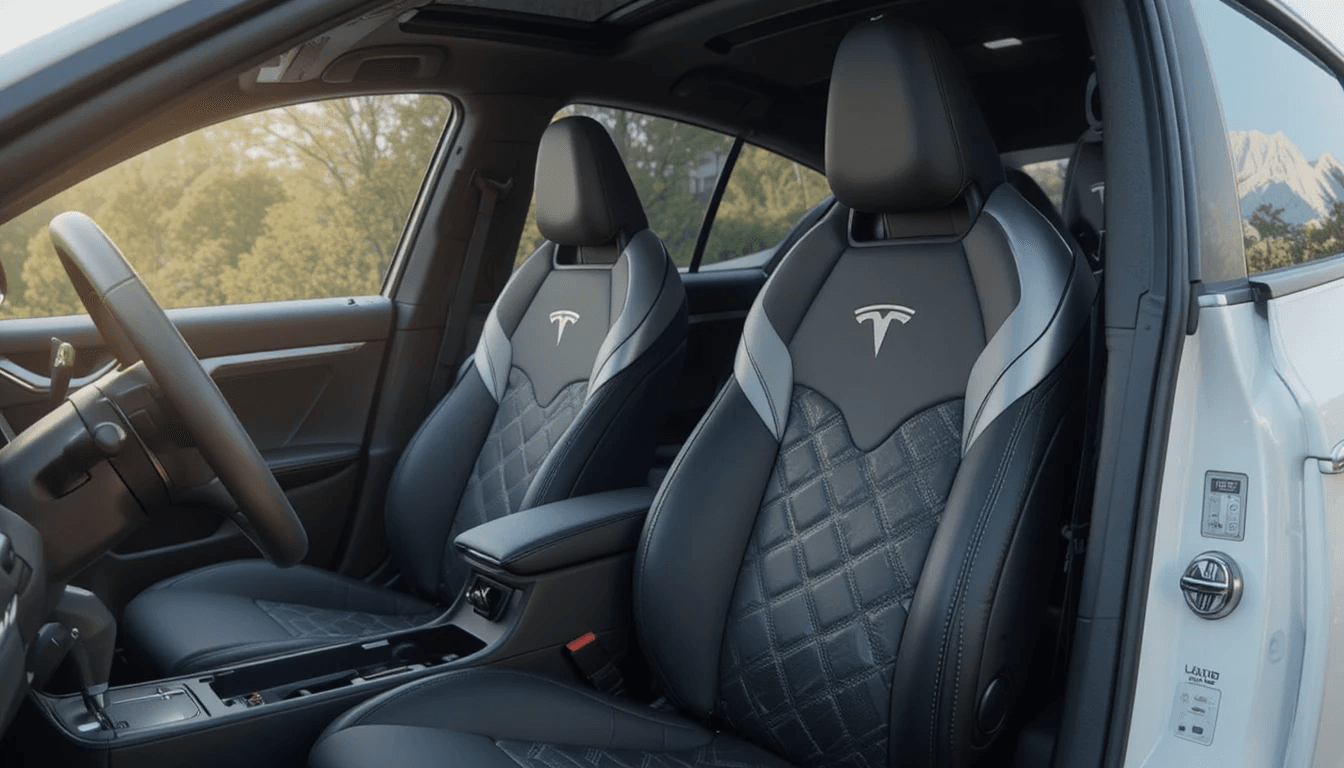
Diamond quilted patterns with raised double stitching are the signature of luxury interiors from brands like Bentley, Mercedes, and Porsche. Budget Tesla covers copy this language directly. The quilting is usually stitched through a foam backing layer (often 3 to 5 millimeters of sponge), which adds a padded, upholstered feel and helps the cover hold its shape. Some brands, such as EVBASE, offer an “insignia” or lined design instead of diamonds if you prefer a cleaner look. Either way, consistent stitching with no loose threads is the visual signal of quality.
Perforation
Small perforated holes across the seat center do two jobs. Visually, they break up the surface and echo performance car upholstery. Functionally, they allow air to pass through so the seat’s heating and, on newer models, ventilation still work. Covers from Tesery, EVBASE, and Tesstudio specifically use micro perforation to preserve these functions. A cover with no perforation can look flat and can also muffle your heated or ventilated seats, which matters more than most buyers realize.
Color matched trims and piping
Premium interiors rarely use a single flat color. Budget covers that look expensive usually add contrast: white stitching on black leather, a red or black and white two tone scheme, or piping along the bolsters. Tesla specific brands now offer two tone sets (black and white, black and red) that echo the look of factory sport interiors. Picking a trim that matches your door panels or center console makes the whole cabin look planned rather than covered up.
Full wrap fit versus slip on
This is the single biggest visual differentiator. A custom full wrap cover is cut to the exact seat pattern, wraps the front, back, and sides of each seat, and fastens underneath with straps, hooks, and retainers. A generic slip on cover drapes over the top and gathers at the sides. Full wrap covers look like upholstery; slip on covers look like a blanket. Every product worth recommending in this guide is a full wrap or custom fit design. Expect to pay more for it, but this is where the money shows.
Materials Explained: PU Leather Grades, Neoprene, and Waterproof Layers
Most confusion around Tesla seat covers comes from material names that sound interchangeable but are not. Here is what each one actually is.
Nappa style PU leather
This is the default for the premium look category. PU (polyurethane) leather is a fabric base coated with polyurethane. The better grades used by brands like Tesery and EVBASE have a finer grain, a softer hand, and better abrasion resistance than budget PVC vinyl. Look for descriptions that mention “lychee grain” texture, a foam or sponge backing, and an odorless or low odor finish. Cheap PU can smell strongly of chemicals for days; reputable Tesla specific brands have largely solved this, but it is worth checking recent buyer reviews before ordering.
PVC vinyl
PVC leather is cheaper to make than PU and feels stiffer and more plasticky. It is common in the very cheapest covers (under about $50 for a set). It is waterproof and easy to wipe clean, which is why pet owners like it, but it creases faster, can feel sticky in summer heat, and rarely achieves the premium look this guide is about. If a listing does not say PU, assume PVC.
Neoprene
Neoprene is the wetsuit material, and a few brands use it for Tesla covers aimed at active lifestyles: surfers, dog owners, parents of toddlers. It is genuinely waterproof, cushioned, and grippy, but it does not look premium in the luxury leather sense. Consider it a separate category: great protection, different aesthetic.
Waterproof layers and TPU coatings
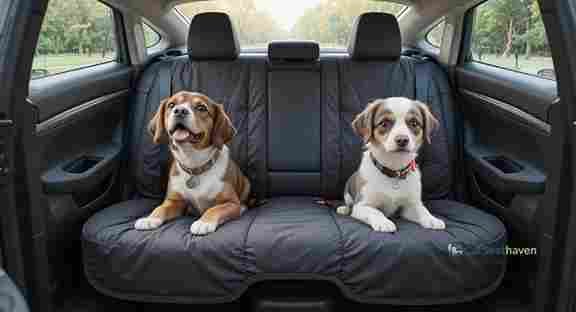
Many nappa style covers add a waterproof membrane, often described as a TPU (thermoplastic polyurethane) layer, between the PU face and the foam backing. This is what makes a spill bead up instead of soaking through. It does not make the cover look any different, but it is the reason these covers are practical for families and pets. Ice silk covers, sold for summer use, skip this layer and trade waterproofing for breathability.
Ice silk and summer covers
Ice silk is a smooth, cool to the touch knit fabric sold as a hot weather option, and brands like TOPABYTE and Tesery sell ice silk sets for the Model 3 and Model Y. They are comfortable in summer and very affordable, but they look like fabric seat covers, not leather. If your priority is the premium look, treat ice silk as a seasonal swap rather than the main event.
Fitment Notes: Model 3 Highland and Model Y Juniper (2026)
Fit is everything with seat covers, and Tesla’s two newest generations changed seat shapes enough that older covers no longer work. Buy the cover for your exact model and production date.
Model 3 Highland (2023.11 and later)
The refreshed Model 3, often called the Highland, arrived in late 2023 with redesigned front seats that include ventilation (cooled seats) for the first time on a Model 3. The seat contours, headrest shape, and rear bench all differ from the 2017 to 2023.10 cars. Every brand in this guide now sells a dedicated Highland pattern, usually an 11 piece set (front seats, rear bench, armrests, sometimes door pads). Covers made for the older Model 3 will be loose and misaligned on a Highland, especially around the bolsters.
Model Y Juniper (2025.03 and later)
The 2025 Model Y refresh, codenamed Juniper, redesigned the seats even more aggressively, moving toward a more contoured, sport bucket architecture with ventilated front seats. Aftermarket brands tested 2024 covers on Juniper seats in 2025 and found they fit “like a loose bag,” with the side bolsters refusing to hold shape. Buy a Juniper specific pattern, usually a 12 piece set. Note the trim split: some brands distinguish between the Juniper Premium trim and the newer Juniper Standard trim introduced in late 2025, so match your trim in the product options.
What does not fit
Performance seats are the main exception. The sport bucket seats in Model 3 Performance and Model Y Performance (including Juniper Performance) have deeper bolsters and different proportions, and most brands explicitly exclude them. The new Model YL six seater also needs its own pattern. If your car has the base “Standard” trim interior, check compatibility carefully: some premium nappa sets are cut only for the standard five seat layout, not the stripped down Standard trim. When in doubt, message the seller with your model, year, and trim before ordering.
Comparison: Budget Tesla Seat Covers That Look Premium
Prices below are ranges from manufacturer and retailer listings seen in 2026. Prices change often with sales and discount codes, so treat these as tiers and check the current price on the product page.
| Product | Set type | Material and look | Price tier | Airbag compatibility claim |
|---|---|---|---|---|
| Tesery Nappa Leather Seat Covers | Full set, 11 pieces (Highland) or 12 pieces (Juniper) | Lychee grain nappa style PU, diamond quilted, perforated, many colors including two tones | About $259 to $359 | Listed as airbag compatible |
| EVBASE Nappa Leather Seat Covers | Full set, custom fit | Nappa style PU, double stitched diamond quilting or lined insignia design, breathable perforations | About $299 to $319 | Airbag cutouts and stitching stated |
| TesLaunch All Inclusive Seat Cover | Full set (front and rear); front only and rear only options | Standard leather look, multiple colors, budget friendly full wrap | About $190 to $310 depending on configuration | Listed as airbag compatible |
| EVAAM Nappa Vegan Leather Full Seat Covers | Full set, or front only, or rear only | Nappa style vegan leather, wide color range (white, red, brown, blue, pink) | About $340 | Listed as airbag compatible |
| Tesstudio All Season Seat Cover | Full 360 degree coverage set | Premium nappa style leather, all season breathable, skin friendly | About $469 | Listed as safe with airbags |
| EV Bandit Highland Nappa Full Set | 9 piece full set including door pads | Premium nappa style leather, white and other colors, Velcro and zipper install | About $450 | Airbag and seat belt function maintained per listing |
| TAPTES Nappa Leather Seat Covers | Full set, custom fit | Nappa style leather, long standing Tesla accessory brand with owner forum reviews | Mid range; check current price | Listed as airbag compatible |
| TOPABYTE Seat Covers | Front, rear, or full set options; ice silk and leather styles | Custom design, all season options, with or without logo | Budget to mid; check current price | Airbag friendly per listings |
| Erivis Nappa Leather Front Seat Covers (Amazon) | 2 piece front set | Nappa style PU, micro perforated, snap buckle install | Budget; check current price | Airbag compatibility claimed on listing |
| Tesery Seasonal Universal Seat Covers | 3 piece full set | Lighter seasonal fabric, quick swap for summer or winter | From about $30 to $160 | Listed as airbag compatible |
The sweet spot for the premium look is the $250 to $350 full set tier: Tesery, EVBASE, TesLaunch, and EVAAM all sit here with real nappa style leather, quilting, and custom patterns. Below that, TAPTES, TOPABYTE, and Amazon brands like Erivis cover the sub $150 front only or lighter sets. Above $400, Tesstudio and EV Bandit push into the top end with thicker materials and more included pieces.
The Airbag Question: Are Tesla Seat Covers Safe?
This is the most important section of this guide, and it is the one you should not skip. Both the Model 3 and Model Y have side airbags mounted inside the front seats, on the outer bolster facing the door. In a side impact, these airbags inflate through a designed tear seam in the factory upholstery. Anything you put over that seat becomes part of the airbag’s deployment path, so the cover must be designed to let it through.
Airbag compatible covers use one of two approaches. The first is a breakaway seam: the stitching along the outer side of the seatback is deliberately weaker, so the inflating airbag rips through it without delay. Manufacturers describe this as OEM style or safe seam technology, often with a 270 degree stitched seam around the airbag zone. The second is a precision cutout or flap: the cover simply leaves an opening, or a Velcro flap, where the airbag exits. EVBASE, for example, advertises precise airbag cutouts on its Juniper and Highland covers.
Here is the honest caveat that safety conscious buyers should hear. A breakaway seam on an aftermarket cover has not been crash tested by the manufacturer the way your factory seat was. Reputable brands engineer the seam to tear and mark it clearly, and owner communities widely use these covers, but no seller can offer the same certification as the original seat. Treat “airbag compatible” as a design claim, not a crash test rating. Tesla itself does not endorse aftermarket seat covers, and Tesla service may ask you to remove covers before performing seat related work.
Practical safety checklist before you buy:
- The listing explicitly says airbag compatible and explains how (breakaway stitching, cutouts, or an SRS flap). Vague silence on airbags is a red flag.
- The cover is cut for your exact model and trim. A loose or shifted cover can move the breakaway seam away from the airbag zone.
- After install, the airbag tag or seam marker on the cover sits on the door facing side of each front seat, aligned with the airbag location. Brands like FH Group instruct buyers to check this alignment specifically.
- No extra straps, hooks, or buckles cross the outer bolster where the airbag deploys.
One more note for parents: this site exists to help families with car seats, and the same caution applies in reverse. If you place a child car seat over a seat cover, make sure the cover’s anti slip backing does not change how the car seat installs. Install the car seat exactly per its manual, check for less than one inch of movement at the belt path, and if the cover makes the install feel unstable, remove it from that seating position. Thick covers can also make it harder to find and access the lower LATCH anchors on the rear bench.
Do Seat Covers Affect Heated and Ventilated Seats?
It depends on the cover’s thickness and perforation. Heated seats push warmth through the upholstery, so any cover adds insulation. Thin micro perforated covers (around 3 millimeters) have minimal effect: the seat still heats, just slightly more slowly. Thick heavily padded covers can noticeably delay or dull the heat.
Ventilated seats are more sensitive. The Model 3 Highland and Model Y Juniper have ventilated front seats that pull air through tiny perforations in the factory upholstery. A cover with no perforation will block most of that airflow. This is why the better Tesla specific covers all use perforated or micro perforated centers: the holes preserve a path for air and heat. When comparing products, perforation is not just a style choice, it is a function choice. If you live in a hot climate and paid for ventilated seats, make perforation a requirement, and check that the cover’s holes actually line up with the ventilated zones of the seat rather than just decorating the edges.
Pet and waterproof covers are the main offenders here: thick neoprene or unperforated waterproof layers protect against messes but insulate the most. If you need waterproofing and ventilation, look for covers that combine a waterproof TPU membrane with perforated panels, which several mid tier nappa sets now do.
Installation: Step by Step and Fitment Tips
Full wrap Tesla seat covers are a DIY job. Most owners finish a full set in 45 to 90 minutes with no tools. The exact steps vary by brand, but the pattern is consistent across Tesery, EVBASE, TesLaunch, and similar kits.
- Remove the headrests. On most Model 3 and Model Y seats, the headrests pull straight up and out. Set them aside; you will cover them separately and reinstall them at the end.
- Slip the seatback cover on from the top. Align the cover’s seams with the seat’s seams. The airbag marker should end up on the door facing side. Smooth it down over the bolsters.
- Secure the back. Route the elastic straps or Velcro through the gap between the seatback and the seat base, and fasten them underneath or to the seat frame. Do not force straps across the outer bolster where the side airbag sits.
- Fit the seat base cover. Slide it over the cushion, tuck the edges into the seams around the sides, and connect the straps or buckles under the seat. Snap buckles, used by brands like Erivis, click together in seconds.
- Use the retainer disks or chucks. Many kits include small plastic disks or foam chucks that you push into the seat seams with a trim tool or the included “small shovel.” These keep the cover from shifting and are the difference between a cover that looks installed and one that looks draped.
- Reinstall the headrests with their covers. Squeeze the foam slightly if the covers are tight, align the seams, and press the headrests back into the seat.
- Do the rear bench. Rear covers usually split for the 60/40 folding seats. Keep the split aligned so the seats still fold. Check that the seat belt buckles and lower anchors are accessible and not buried under fabric.
- Final check. Sit in every seat, adjust the power seat through its full range, fold the rear seats, and confirm nothing binds, bunches, or blocks the airbag side of the front seats.
Fitment tips that make a visible difference:
- Install on a warm day or warm the covers indoors first. PU leather is more pliable when warm and stretches over bolsters more easily.
- New covers arrive rolled or folded and may show creases. Most relax within a few days of use; gentle heat from a hair dryer on low can speed this up.
- Tighten straps gradually and evenly. Overtightening one side pulls the cover off center and creates wrinkles on the other.
- For the Juniper and Highland, confirm you received the correct pattern before you start: the model name is usually printed on the packaging or the install guide.
What to Avoid
- Covers with no airbag statement. If a listing never mentions airbags, assume the cover was not designed for them. This is the number one thing to avoid.
- Universal fit covers on shaped Tesla seats. Generic covers cut for “most cars” will be loose on Tesla’s contoured seats, especially the Juniper’s sport buckets. Loose covers shift, wrinkle, and can move the breakaway seam out of position.
- Wrong model year patterns. Pre Highland covers do not fit the Highland; pre Juniper covers do not fit the Juniper. This is the most common expensive mistake owners report.
- Cheap elastic only fastening. Covers held on by thin elastic straps stretch out within months and start sliding. Look for buckles, hooks, Velcro, and retainer disks in the kit.
- Unperforated covers if you have ventilated seats. Blocking your Highland or Juniper’s ventilated seats defeats a feature you paid for.
- Covers that block seat belts, buckles, or LATCH anchors. During install, verify every buckle receiver and anchor is reachable. Some buyers on owner forums have asked brands like TAPTES for child seat opening adjustments for exactly this reason.
- Strong chemical smell that does not fade. A faint new material smell for a day or two is normal. A harsh smell that persists for weeks suggests low grade PVC and poor quality control.
Care and Cleaning
Nappa style PU covers are low maintenance, which is part of their appeal. For day to day cleaning, wipe with a damp microfiber cloth. For spills, blot first, then wipe; the waterproof layer underneath handles most of what families throw at it. For deeper cleaning, use a pH neutral interior cleaner or a dedicated faux leather cleaner, then wipe dry.
Avoid harsh chemicals: bleach, acetone, and strong all purpose cleaners can discolor or crack the PU surface. Avoid abrasive pads for the same reason. Conditioner is optional; unlike real leather, PU does not dry out and crack from lack of conditioning, but a UV protectant spray helps if your car parks in strong sun all day, since prolonged UV exposure is what eventually fades and stiffens synthetic leather.
Pet owners should vacuum regularly and keep nails trimmed; lychee grain PU resists light scratches well but is not claw proof. Machine washing is generally not recommended for full nappa sets; spot clean instead. Ice silk summer covers are the exception and are usually machine washable.
Warranty Notes
Aftermarket seat covers do not void your Tesla’s vehicle warranty simply by being installed. Under the Magnuson Moss Warranty Act in the United States, a manufacturer must show that the aftermarket part caused the failure before denying a warranty claim. In practice, that means a seat cover cannot void your battery or drivetrain warranty. However, if a seat heater, ventilation fan, or the seat mounted airbag system has a problem, Tesla can reasonably argue the cover contributed, and you may be asked to remove the covers before diagnosis.
On the seller side, most Tesla accessory brands offer a 30 day return window and a 12 month warranty against manufacturing defects. Tesery advertises a 30 day price protection and lifetime customer support. Keep your order confirmation and take photos of any defect before installing, since sellers commonly ask for vehicle details and photos to process returns or replacements. Installing the covers does not affect the warranty as long as nothing is cut or permanently modified; every product in this guide installs without tools or permanent changes, which Tesstudio specifically describes as warranty friendly installation.
Frequently Asked Questions
Do Tesla seat covers interfere with side airbags?
Only if you buy the wrong kind. Covers designed for Teslas use breakaway stitching or precision cutouts on the door facing side of the seatback so the seat mounted side airbag can deploy. Never install a cover that does not explicitly state airbag compatibility, and after install confirm the airbag seam or marker sits on the door side of each front seat.
Will seat covers work with my Model 3 Highland’s ventilated seats?
Yes, if the cover is perforated. Choose a micro perforated nappa style set so airflow can reach the ventilated zones. Unperforated or thick waterproof covers will noticeably reduce ventilation. Heated seats still work through any cover, just a little more slowly with thicker ones.
Do 2024 Model Y seat covers fit the 2025 and 2026 Model Y Juniper?
No. The Juniper’s seats were redesigned with a more contoured sport bucket shape, and aftermarket brands that tested older covers on Juniper seats found they fit loosely and the bolsters would not hold. Buy a Juniper specific pattern and match your trim (Premium or Standard).
How much do good looking Tesla seat covers cost?
The premium look sweet spot is about $250 to $350 for a full nappa style set from brands like Tesery, EVBASE, TesLaunch, or EVAAM. Front only sets and Amazon budget brands run well under $150, and top tier sets from Tesstudio or EV Bandit reach roughly $450 to $470. Prices change with sales, so check the current price on the product page.
Are nappa leather Tesla seat covers real leather?
At budget prices, no. They are nappa style polyurethane (PU) synthetic leather engineered to look and feel like soft nappa grain. Real nappa full sets exist but cost far more. Good PU versions look convincingly premium and are easier to clean.
Can I install Tesla seat covers myself?
Yes. Full sets are designed for tool free DIY installation with straps, buckles, Velcro, and retainer disks. Most owners complete a full set in 45 to 90 minutes following the included guide or a brand install video.
Do seat covers void the Tesla warranty?
No, simply installing removable covers does not void the warranty. But if a seat related component fails, such as a heater or the airbag system, Tesla may ask you to remove the covers before diagnosis and could attribute the issue to them. Use covers that install without cutting or permanent modification.
Can I use child car seats on top of seat covers?
Yes, with care. Make sure the cover does not make the car seat installation unstable: check for less than one inch of movement at the belt path, and confirm the lower anchors and buckles stay accessible. If the cover bunches under the car seat base or makes the install feel loose, remove the cover from that seating position. Thick padded covers change the seating surface more than thin ones, so recheck the install whenever you add or remove a cover.
How do I clean nappa style Tesla seat covers?
Wipe with a damp microfiber cloth for daily cleaning, blot spills promptly, and use a pH neutral interior or faux leather cleaner for deeper dirt. Avoid bleach, acetone, and abrasive pads. A UV protectant helps if the car sits in strong sun.
White or black seat covers for a Tesla?
White looks striking against Tesla’s minimalist interior and is the most popular choice for the premium look, but it shows denim dye transfer and dirt faster. Black hides wear and matches every interior. Two tone sets (black and white, or black with contrast stitching) split the difference and photograph well.
The Bottom Line
Affordable tesla seat covers can absolutely look premium: a custom full wrap nappa style set with diamond quilting, perforation, and contrast trim transforms the cabin for roughly $250 to $350. Match the pattern to your exact model and year (Highland, Juniper, and Performance trims all differ), insist on stated airbag compatibility with the breakaway seam on the door side, and choose perforation if you have ventilated seats. Do that, and the only person who will know you did not pay for a factory leather upgrade is you.
If you’re comparing electrified family cars more broadly, see our plug-in hybrid cars buying guide.

Aiden is the founder and editor of CarSeatHaven. He researches NHTSA safety standards, AAP guidance, manufacturer manuals, and recall notices, and turns them into plain-language car seat guides for parents.
