

Table of Contents
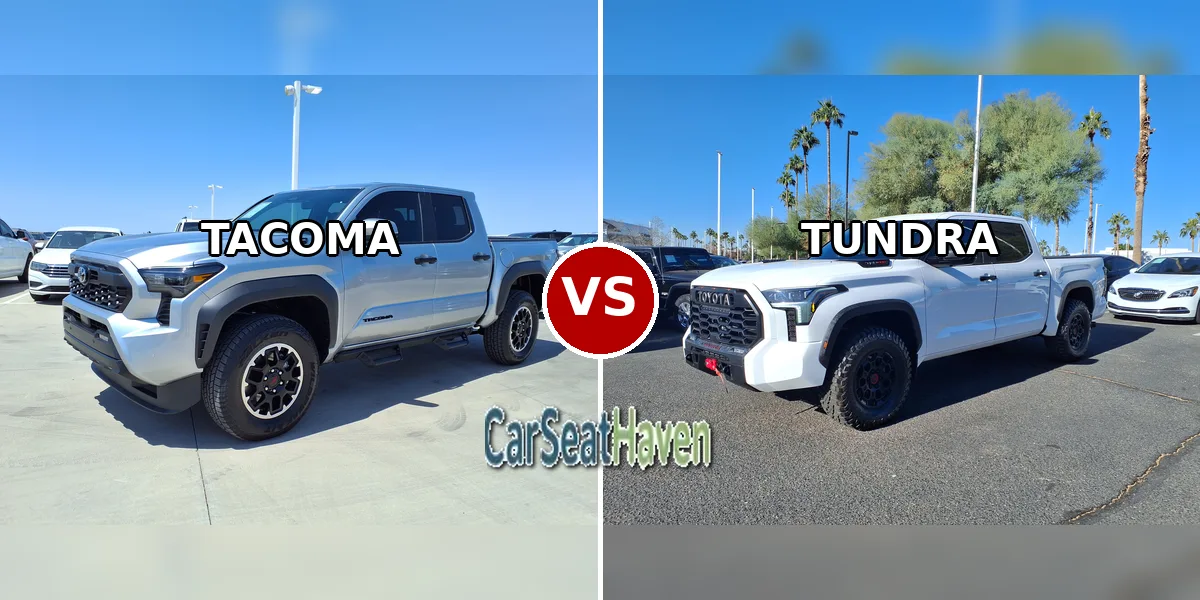
Look, these are not the same truck in two sizes. Not really. The Tacoma is the truck you buy when you want something you can live with every day. You can park it, you can turn it around on a tight street, and it will still tow a small camper and climb a trail on the weekend. The Tundra is a different animal. It is big, it is roomy, and it will tow almost twice as much. But you will feel that size every single morning in traffic and in every parking lot. So the question is not which truck is better. It is, what do you actually tow, who rides with you, and where do you drive? Get those three answers right and the choice gets easy.
What you need to know first
- Tundra is bigger, full stop. Tacoma is around 213 inches long. Tundra goes up to 252.5 inches. That is a lot of truck.
- Tundra tows 12,000 pounds at most. Tacoma tops out at 6,500 pounds. Nearly double.
- Payload is a different story. Tundra maxes at 1,940 pounds, Tacoma at 1,710 pounds. Only 230 pounds apart. Surprising, right?
- Tacoma is cheaper. The 2026 Tacoma starts at 32,445 dollars, the 2026 Tundra at 41,260 dollars. That is about 8,815 dollars before you add anything.
- On a tight trail, Tacoma wins. Its TRD Pro approach angle hits 35.7 degrees. Tundra manages 26.2 degrees.
- In the back seat, Tundra wins by a mile. Rear legroom is 41.6 inches, Tacoma is 33.7 inches. Your adult friends will notice.
- Hybrid sounds like the smart buy. It is not, not for towing. Tacoma hybrid tows 6,000 pounds, less than gas. Tundra hybrid tows 11,450 pounds, less than gas.
- And that 1794 Edition everyone asks about? It is just a Tundra trim. A fancy one, yes. But only a Tundra trim, named after a ranch from 1794 in San Antonio, Texas.
Toyota Tacoma vs Tundra: Comparison
| Feature | Toyota Tacoma | Toyota Tundra |
| Class | Midsize pickup | Full size pickup |
| Length | About 213 inches, up to about 227.4 inches by cab and bed | 233.6 to 252.5 inches |
| Width | 76.9 to 77.9 inches | 80.2 to 81.6 inches |
| Gas engine | 2.4 liter turbo four cylinder, 228 or 278 horsepower | 3.4 liter twin turbo V6, 358 or 389 horsepower |
| Hybrid engine | i-FORCE MAX, 326 horsepower, 465 lb-ft | i-FORCE MAX, 437 horsepower, 583 lb-ft |
| Maximum towing | 6,500 pounds gas, 6,000 pounds hybrid | 12,000 pounds gas, 11,450 pounds hybrid |
| Maximum payload | 1,710 pounds | 1,940 pounds |
| EPA combined | 20 to 23 mpg | 19 to 22 mpg |
| Bed lengths | 5 foot and 6 foot | 5.5 foot, 6.5 foot and 8.1 foot |
| Rear legroom | 33.7 inches | 41.6 inches |
| Approach angle TRD Pro | Up to 35.7 degrees | Up to 26.2 degrees |
| 2026 starting price | 32,445 dollars | 41,260 dollars |
So what is the real difference?
Toyota only sells two pickups in the United States. Think about that for a second. Two. One midsize, one full size. The Tacoma goes up against other midsize trucks. The Tundra goes up against the Ford F-150 and the Ram 1500, the big boys.
Underneath, they are cousins. Both are body on frame trucks on the same TNGA-F platform. Both ditched the old engines. No V8 here, not anymore. Both run turbocharged engines now, and both offer that i-FORCE MAX hybrid. So you are not choosing between two totally different ideas. You are choosing how much truck you want to live with.
Tacoma also sells more. That matters more than people think. More trucks on the road means easier used prices to compare, easier parts, easier everything. Tundra sells fine too, but it has tougher rivals.
Size and cab and bed
Tacoma size
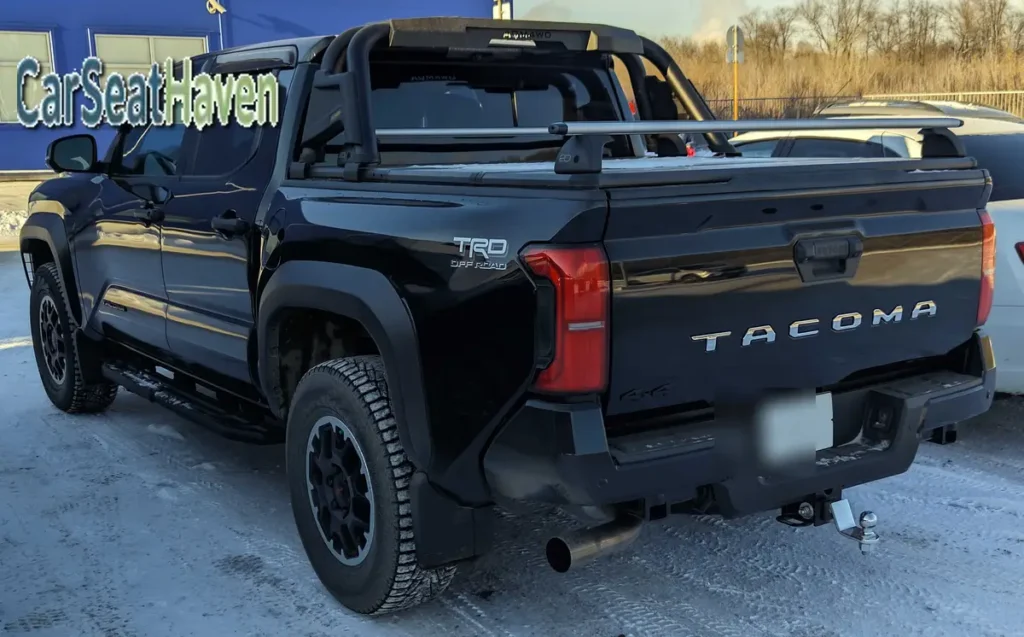
Tacoma is 213 inches long in base form. Width is 76.9 to 77.9 inches, height is 73.9 to 74.6 inches. Wheelbase is 131.9 inches. Different cabs and beds push it to about 227.4 inches, so do not just trust the base number. Check the exact truck you are looking at.
Tundra size
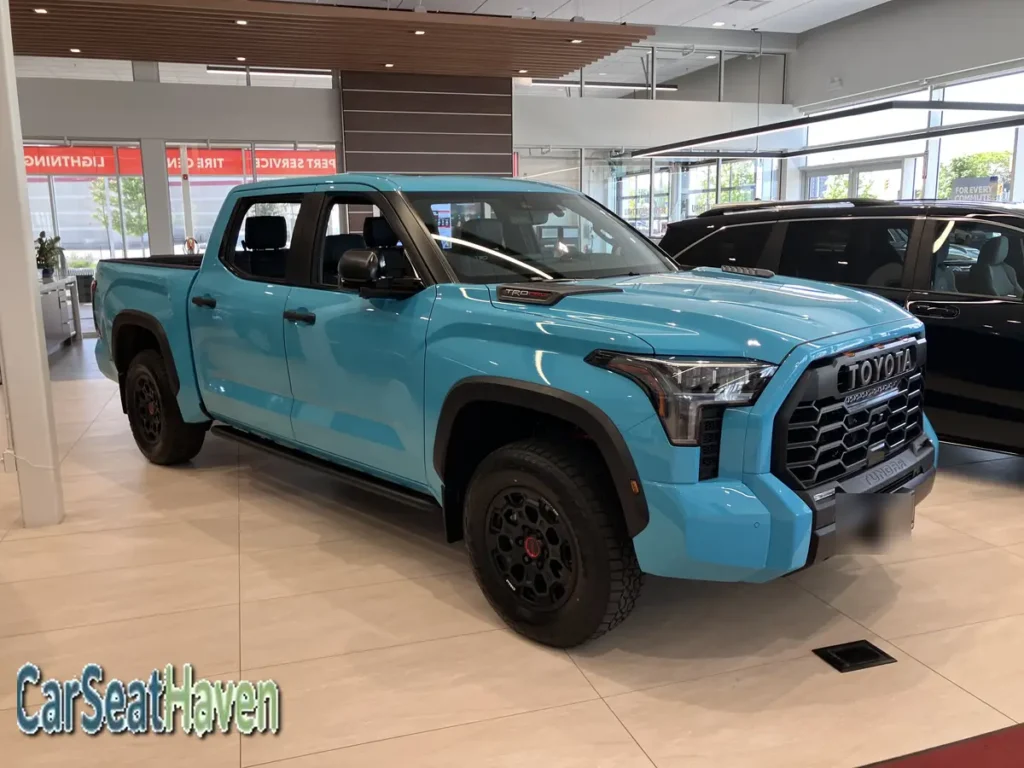
Tundra is 233.6 to 252.5 inches long. Width is 80.2 to 81.6 inches. Height is 78 inches. Wheelbase runs 145.7 to 164.6 inches. In plain English, it is roughly 20 inches longer than Tacoma at the short end, and about 40 inches longer at the long end. Four inches wider too. You feel that width the first time you try to squeeze into a parking spot.
Cab and bed
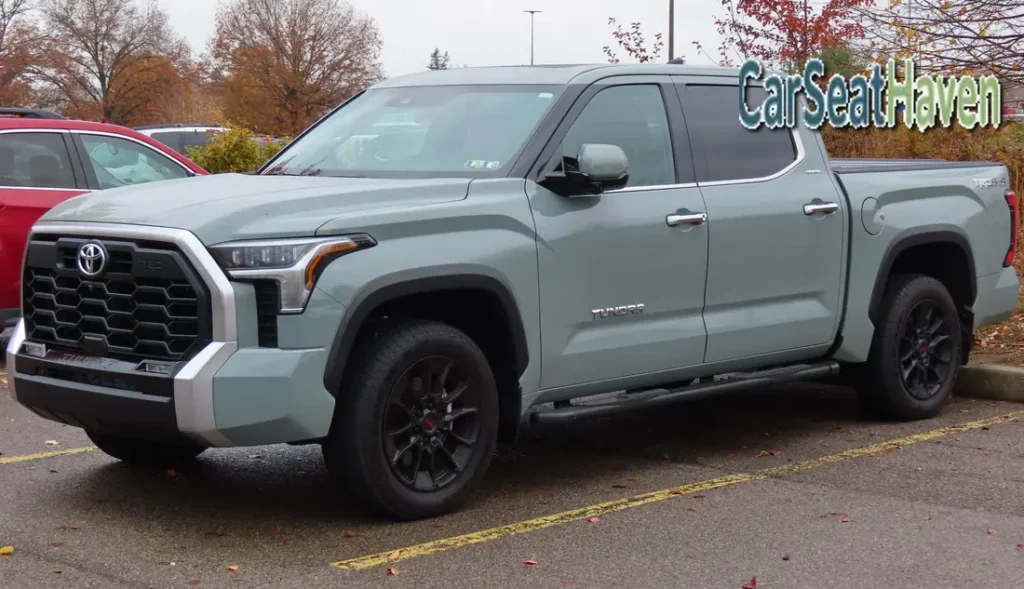
Here is where it gets practical. Tacoma gives you two choices. XtraCab seats two people, two doors, and a 6 foot bed. Double Cab seats five, four doors, and a 5 foot or 6 foot bed. Simple.
Tundra only does four doors. Double Cab comes with a 6.5 foot or 8.1 foot bed. CrewMax, the big back seat one, comes with a 5.5 foot or 6.5 foot bed. If adults ride in the back a lot, CrewMax is the one you want.
Beds? Tundra is 58.7 inches wide between the rails. Tacoma is 53.0 inches. That 5.7 inch gap matters when you load something wide. And that Tundra long bed, just over 8 feet, is more than 20 inches longer than the longest Tacoma bed. Most weekend loads? Tacoma handles them fine. Long lumber, big work gear that has to lie flat? That is Tundra work.
Engines, gas and hybrid
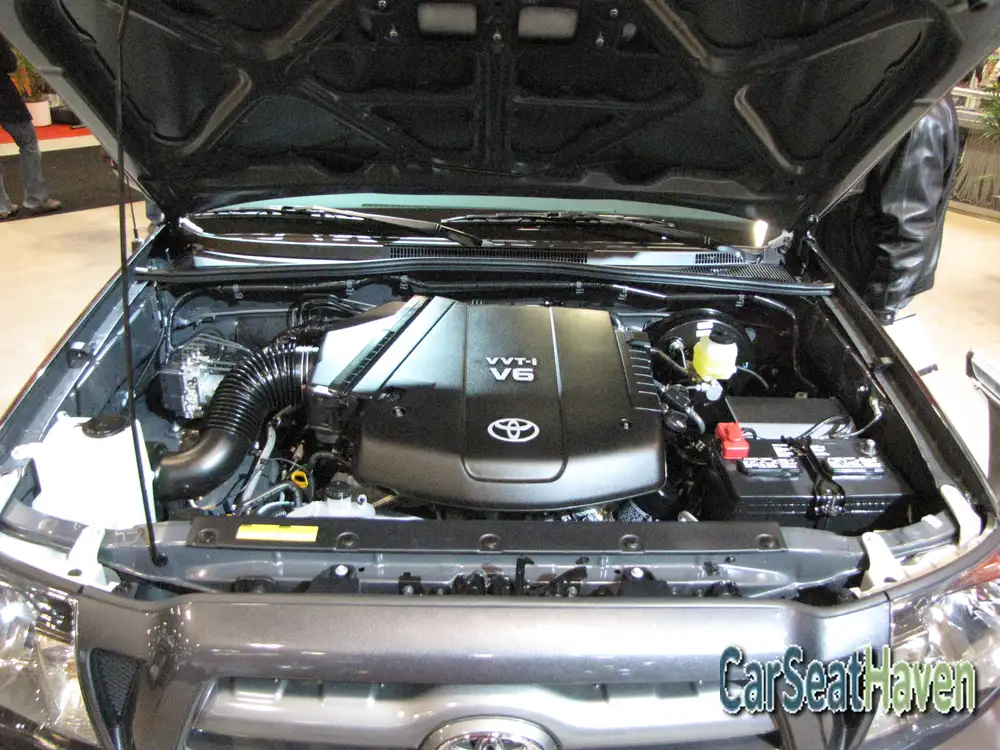
Tacoma engines
Tacoma runs a 2.4 liter turbo four cylinder. Most trims get 278 horsepower and 317 lb-ft of torque. Base SR gets 228 horsepower and 243 lb-ft with an automatic, or 270 horsepower with a manual. Yes, a manual. Only Tacoma offers one here.
The hybrid, i-FORCE MAX, makes 326 horsepower and 465 lb-ft. Most Tacomas use an eight speed automatic.
Tundra engines
Tundra runs a 3.4 liter twin turbo V6. Base SR makes 358 horsepower and 406 lb-ft. Higher gas trims make 389 horsepower and 479 lb-ft. The hybrid makes 437 horsepower and 583 lb-ft. All Tundras use a ten speed automatic. No manual, sorry.
So which engine?
Tundra gas makes 111 horsepower more than the stronger Tacoma gas. Its hybrid makes 111 horsepower more than Tacoma hybrid too. You will feel that pulling a heavy trailer up a hill. No question.
But without a trailer? Tacoma feels fine. It is lighter. It does not need that much power to get around town.
Here is my take, honestly. Buy gas if you want the lowest price and the best towing in each truck. Buy hybrid if you want the fastest pull away and the most torque, and you are okay paying more and towing a little less. Do not buy hybrid thinking you will save a fortune on gas. You will not. That is not what these hybrids are for.
Towing and payload
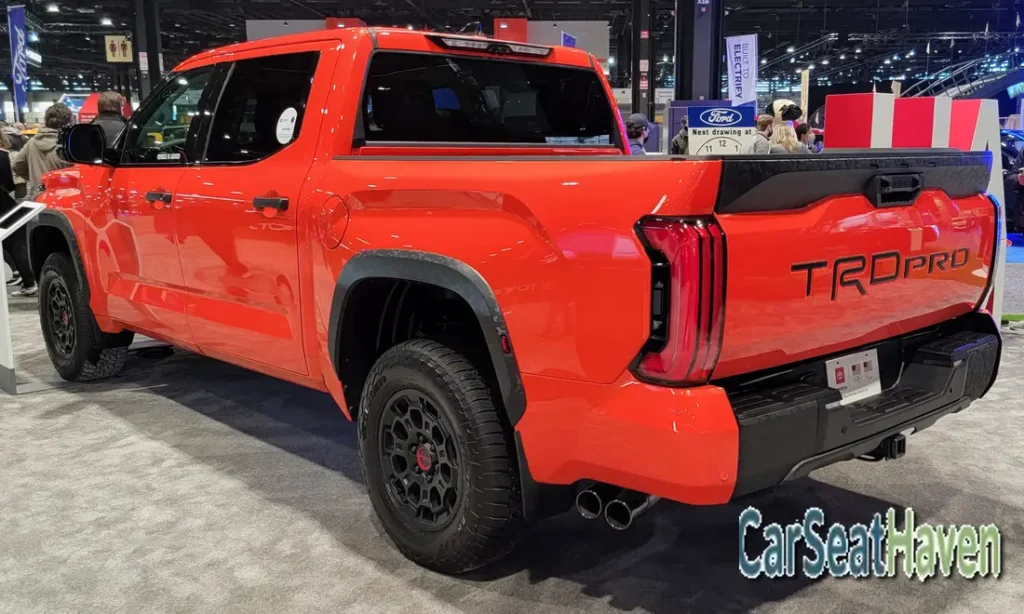
Maximum towing
Tundra max towing is 12,000 pounds. That is a properly equipped SR5 Double Cab, rear wheel drive, standard bed. Tacoma max is 6,500 pounds.
And here is the kicker. Even the weakest Tundra tows 8,300 pounds. That is already more than the best Tacoma. So if your trailer is over 6,500 pounds, stop reading the Tacoma section. It is not for you. If your trailer is under 6,000 pounds, Tacoma is very much in play.
The hybrid towing trap
This trips up a lot of buyers. Hybrid tows less in both trucks. Tacoma hybrid is 6,000 pounds, 500 less than gas. Tundra hybrid is 11,450 pounds, less than gas.
Why? Weight. The hybrid gear adds about 700 pounds to Tacoma and about 400 pounds to Tundra. That weight has to come from somewhere, and it comes off your towing and payload. So the most powerful version is not the best towing version. Weird, but true.
Payload and real loads
Payload is where Tacoma catches up. Tundra max payload is 1,940 pounds. Tacoma max is 1,710 pounds. Close.
But watch out. That Tundra max comes from a 4×2 Double Cab hardly anyone buys. Tacoma max comes from a hybrid four wheel drive Double Cab you might actually buy. So check the exact truck, not the brochure headline.
Think in real loads, not numbers on a page. Small utility trailer, jet skis, a small camper, a boat under 6,000 pounds? Tacoma, easy. Big camper, big boat, heavy work gear over 8,000 pounds? Tundra. No debate.
Gas mileage
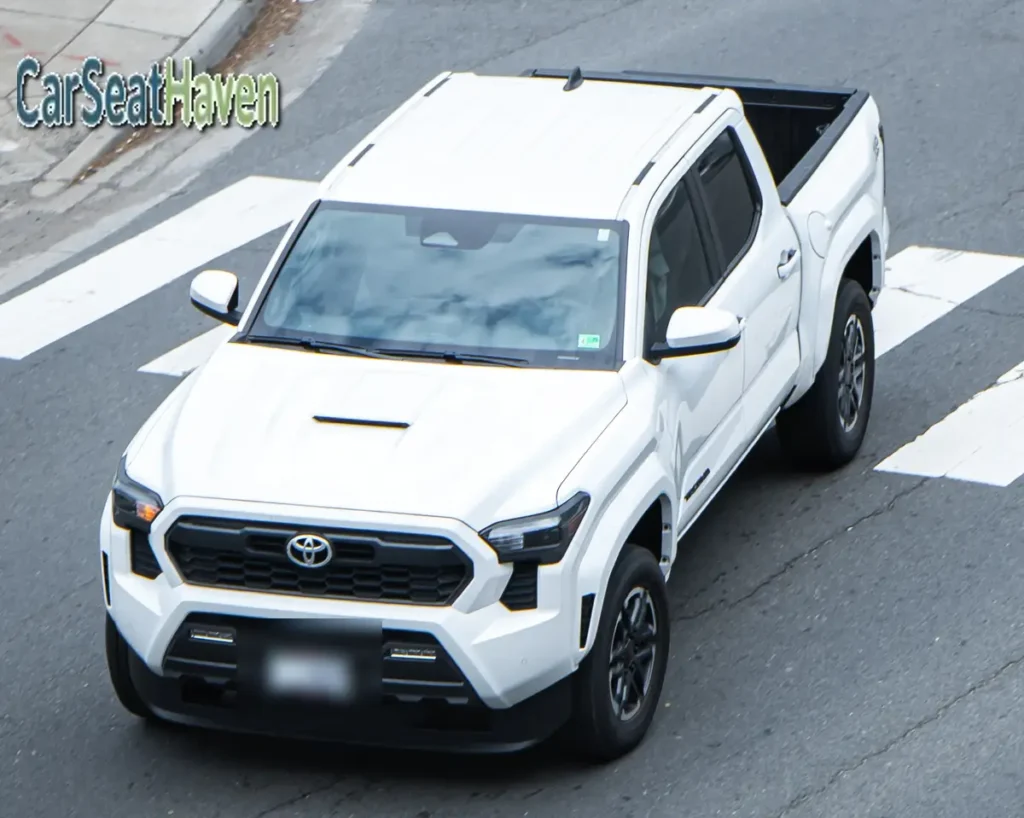
Okay, let us be honest. Tacoma wins on gas, but not by as much as you would think.
Edmunds puts Tacoma at 20 to 23 mpg combined, Tundra at 19 to 22 mpg combined. Best Tacoma is 23 mpg combined. Best Tundra is 22 mpg combined. One mpg apart at the top. That is it.
By drivetrain, it looks like this. Non hybrid Tacoma does 21 city, 26 highway, 23 combined. Hybrid Tacoma does 22 city, 24 highway, 23 combined. Non hybrid Tundra does 18 city, 23 highway, 20 combined. Hybrid Tundra does 20 city, 24 highway, 22 combined.
So Tacoma is better in the city, where its size helps. On the highway, the gap shrinks. And towing? Forget the brochure numbers. Both will drink a lot more with a trailer on the back.
One thing Tundra does have: a huge tank. 32.2 gallons, versus 18.2 gallons for Tacoma. So even though it uses a bit more fuel, it goes further between stops on a long trip. That is actually nice on a long haul.
Interior and daily driving
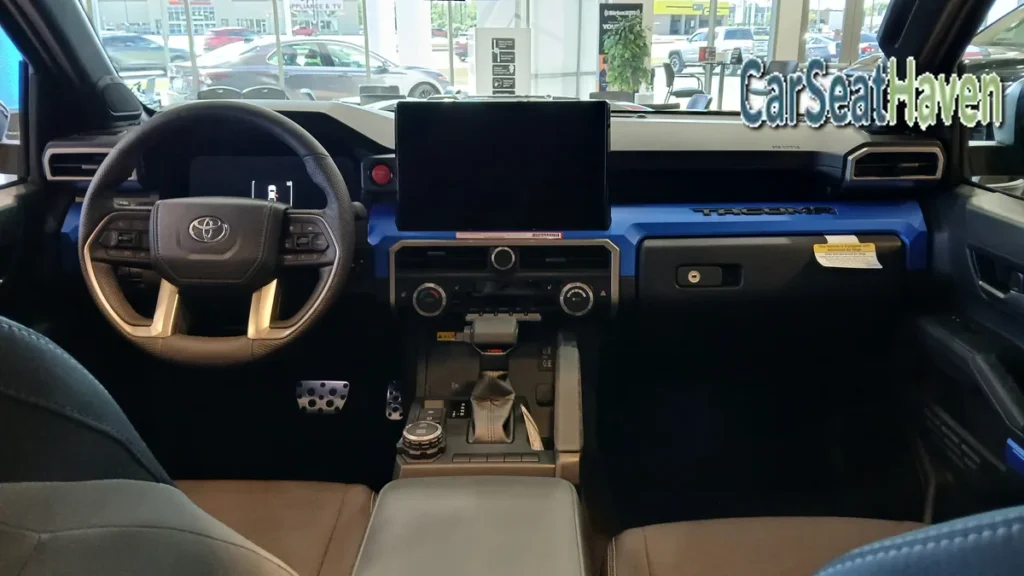
Space
Inside, Tundra is just bigger. Front shoulder room is 65 inches versus 58.3 inches for Tacoma. Rear legroom is 41.6 inches versus 33.7 inches. That is not a small gap. That is knees against the seat versus actually stretching out.
Front legroom is the one place Tacoma sneaks ahead, 41.8 inches versus 41.2 inches. You will not notice that.
Bottom line? If adults sit in the back every week, Tundra is worth it. If the back seat is for kids or occasional use, Tacoma is fine.
Technology and safety
Both give you an 8.0 inch touchscreen standard, 14.0 inch optional. Wireless Apple CarPlay and Android Auto are standard on both. So far, so same.
Tacoma is newer, so it gets Toyota Safety Sense 3.0. Tundra gets 2.5. The big difference is Proactive Driving Assist in 3.0, gentle braking into curves. Both have pre collision, adaptive cruise, lane keeping, automatic high beams, traffic sign recognition. Good enough, honestly, in both.
Daily driving
This is where Tacoma earns its money. Parking? Easy. Tight streets? Easy. Standard garage? Fits. City traffic? Less tiring.
Tundra is lovely on the highway. Smooth, quiet, roomy. But in the city it feels big, because it is big. Drive both in your normal traffic before you decide, not just on a highway test drive. That test drive will lie to you.
Off road
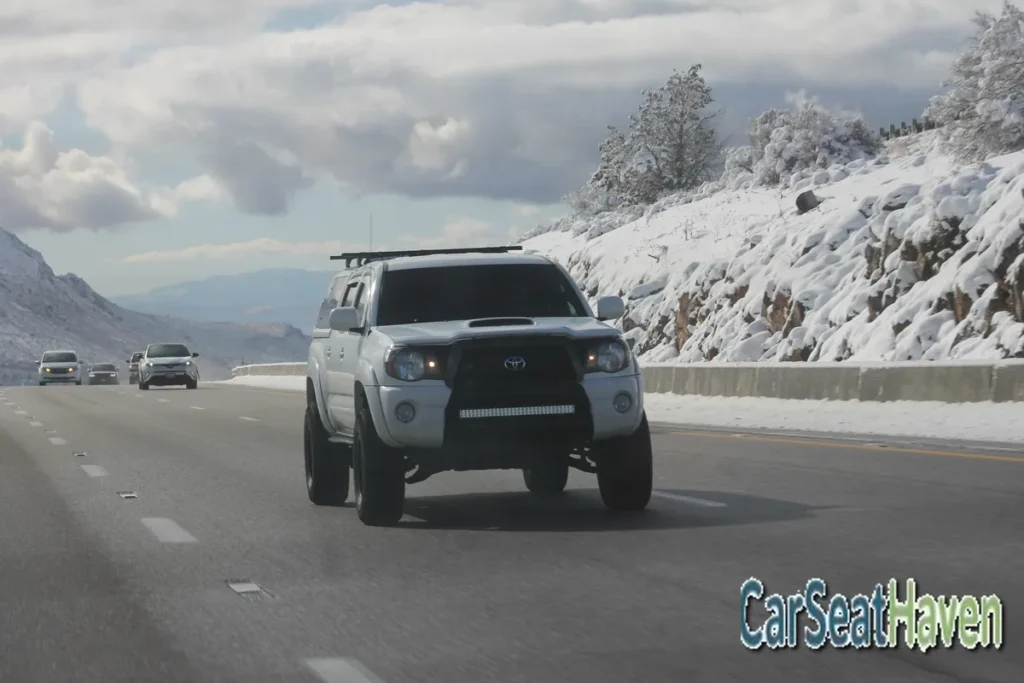
TRD Pro and clearance
Both offer TRD Pro with Fox shocks, lifted suspension, and 33 inch all terrain tires. Tacoma TRD Pro shocks are QS3 models with adjustable compression damping. Tundra TRD Pro does not get that, according to Edmunds.
Clearance? Almost the same. Tundra up to 11.1 inches, Tacoma 10.7 to 11 inches. So clearance alone does not pick a winner.
Approach angle and trims
Approach angle does. Tacoma hits 32.8 to 35.7 degrees. Tundra manages 21 to 26.2 degrees. That is the angle you can climb onto without smashing your front bumper. On a rocky trail entry, that matters a lot.
Tacoma also has a shorter wheelbase, so it turns around easier and does not ground out as much on a crest. And trims? Tacoma gives you TRD PreRunner, TRD Sport, TRD Off Road, and Trailhunter. Trailhunter is the overlanding one, Old Man Emu shocks, 33 inch tires, underbody protection, the works.
Tundra TRD Pro is great on open desert, fast stuff, where its long wheelbase feels stable. But tight, technical trails? Tacoma, every time.
Ride and suspension
Tacoma uses leaf springs at the back, with twin tube shocks. Tough, simple, proven for work. But empty, on a normal road, it can feel firm. Especially the base trims, which get leaf springs standard.
Tundra uses multi link coil springs at the back, with available load leveling air suspension on most trims. More complex, more expensive, but smoother. Especially empty, especially on the highway.
So if your commute comfort matters most, Tundra has an edge. If you want simple and tough for work, Tacoma leaf springs are hard to argue with.
Trims and price
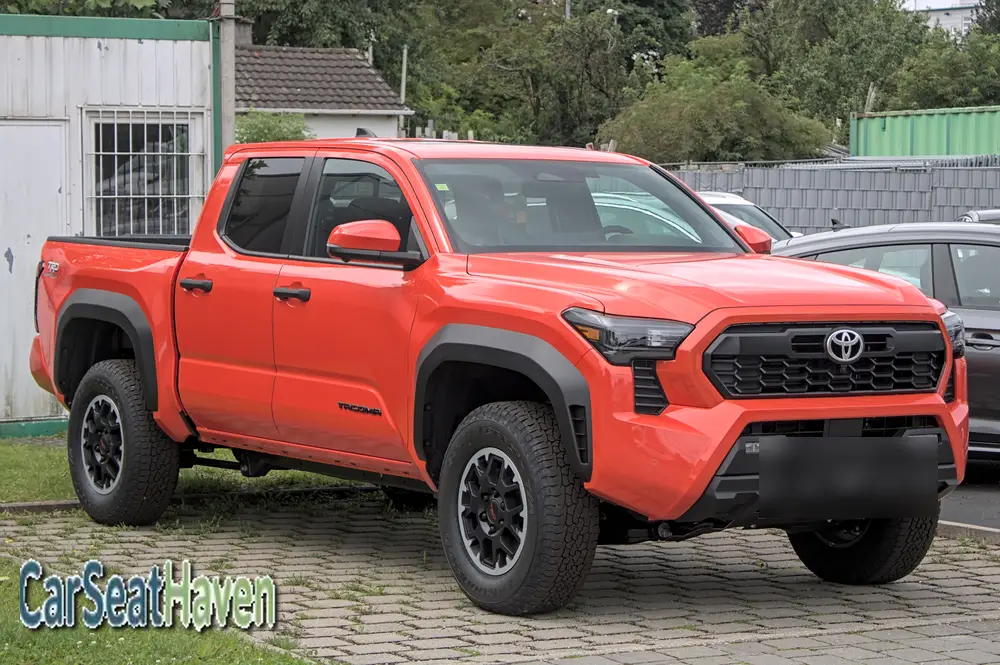
Tacoma trims and price
The 2026 Tacoma starts at 32,445 dollars for base SR. Cheapest hybrid starts at 47,235 dollars. Limited, the top non hybrid, is 53,470 dollars. Top hybrid trims are 63,650 dollars for Trailhunter and 64,650 dollars for TRD Pro. Four wheel drive on lower trims adds about 3,200 dollars.
Tundra trims and price
The 2026 Tundra starts at 41,260 dollars. Hybrid models start at 58,560 dollars with Limited i-FORCE MAX. The most expensive non hybrid is the 1794 Edition at 64,380 dollars. Top Capstone starts at 80,800 dollars. Four wheel drive adds about 3,000 dollars on lower trims, standard on most higher trims.
Price differences, used value, and a recall note
Prices move by year and by source, so do not take one number as gospel. Autoblog, comparing 2025 Tacoma to 2026 Tundra, puts Tacoma base at 31,590 dollars. A dealer table puts 2026 Tacoma at 34,190 dollars and Tundra at 43,455 dollars. Check destination, taxes, and fees too. Those are never in the headline price.
Used value favors Tacoma, holding 78 percent after five years versus 74 percent for Tundra, in the figures I found. That helps your total cost, not just the sticker price.
One thing to know about Tundra, and I will be straight about where this came from. One comparison reported nearly 270,000 Tundras recalled for possible engine failure from debris, with 70,000 engines replaced. That is a big number, and it is worth checking. If you buy used, check the recall history by vehicle identification number. Do not skip that step.
What is the 1794 Edition
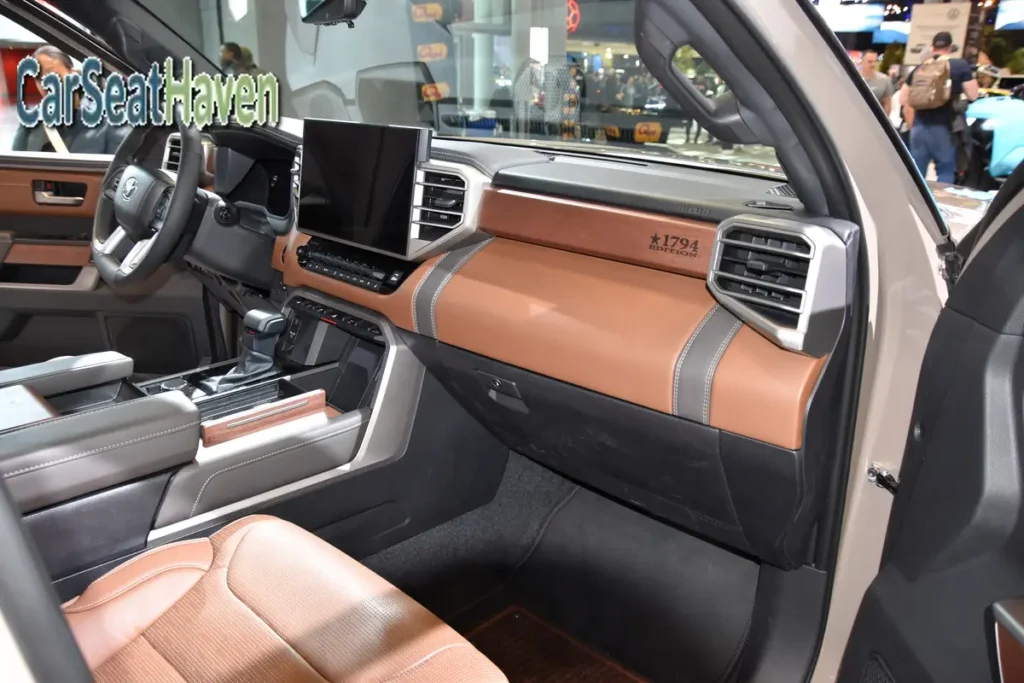
Where the name comes from
Okay, quick story, because this name confuses everyone. In 1794, a Spanish land grant set up a cattle ranch just south of what is now downtown San Antonio, Texas. That ranch became the JLC Ranch. In 2003, Toyota built its truck plant on part of that land. That plant now builds every Tundra sold in America.
Toyota launched the 1794 Edition in 2014, named after that ranch year. It is a nod to Texas truck culture. That is it. No secret model, no separate truck.
What makes it different and is it worth it
It is a Western luxury trim. Saddle brown or rich cream leather, suede accents, American walnut wood trim, chrome outside, exclusive 20 inch wheels, special badges. It sits at the top with Capstone.
Worth it? Only if you want full size capability plus that Western luxury feel, and you are happy paying luxury money for it. Most buyers will get similar capability for less in a Limited or Platinum Tundra. And no, there is no Tacoma 1794 Edition. If you see that badge, it is a Tundra.
Which truck for which buyer
Daily driver and city buyer
Tacoma. Easy to park, easy to turn, cheaper to buy, cheaper to fuel in the city. Tundra is nicer on the highway, but highway comfort does not fix a truck that feels huge in your daily parking spot.
Weekend adventurer and off road buyer
Tacoma, especially TRD Off Road, TRD Pro, or Trailhunter. Shorter, lighter, better approach angle, more off road trims. Tundra TRD Pro is fun on open desert, but tight trails belong to Tacoma.
Family buyer
Tundra, if adults ride in the back every week. The space difference is real. Tacoma, if the back seat is mostly kids or occasional use. Then its daily driving advantage wins.
Heavy towing and work buyer
Tundra, no hesitation, if your trailer is over 6,500 pounds or you tow heavy often. Tacoma cannot tow past its max, no matter how much you like it. For bed loads only, Tacoma payload is close enough that size and price might matter more.
Budget buyer
Tacoma. About 9,000 dollars cheaper to start, better city fuel, better resale after five years. Buying a bigger truck just in case you might tow someday? That just in case costs you every day in price, fuel, and size. The towing benefit only shows up on towing day.
Luxury buyer
Tundra in Platinum, 1794 Edition, or Capstone, if you want full size luxury and a smooth highway ride. Tacoma Limited, if you want comfortable and well equipped in a smaller, cheaper package.
FAQs:
Which is bigger, Tacoma or Tundra
Tundra. Full size versus midsize. Tacoma is about 213 inches long in base form, Tundra is 233.6 to 252.5 inches. Wider, taller, heavier, bigger cabin, longer bed.
What is the difference between Tacoma and Tundra
Class and capability, mainly. Tacoma is midsize, 2.4 liter turbo four, 6,500 pounds towing max, cheaper. Tundra is full size, 3.4 liter twin turbo V6, 12,000 pounds towing max, bigger cabin, higher price. They also differ in cab and bed choices, suspension, and trims.
Tacoma vs Tundra gas mileage, which is better
Tacoma, but not by much. Edmunds combined figures are 20 to 23 mpg for Tacoma, 19 to 22 mpg for Tundra. Best Tacoma is 23 mpg combined, best Tundra is 22 mpg combined. Check the exact drivetrain and trim, because one number does not cover the whole range.
Which truck tows more, Tacoma or Tundra
Tundra, by almost double at the max. 12,000 pounds versus 6,500 pounds. Even the weakest Tundra tows 8,300 pounds, more than the best Tacoma.
Which truck is better off road, Tacoma or Tundra
Tacoma for most people. Smaller, shorter wheelbase, approach angle up to 35.7 degrees, Trailhunter and TRD Off Road trims. Tundra TRD Pro is strong on open desert and fast terrain, where its long wheelbase helps.
Is the Tacoma or Tundra cheaper
Tacoma. 2026 Tacoma starts at 32,445 dollars, Tundra at 41,260 dollars. Tacoma also holds value better after five years, 78 percent versus 74 percent.
What is the 1794 Edition
A luxury trim of the Toyota Tundra, launched in 2014. Named after a ranch founded in 1794 on the land where the Tundra plant in San Antonio, Texas now stands. Western luxury inside, chrome and special badges outside. Not a separate model, not available on Tacoma.
Should I buy Tacoma or Tundra if I tow only sometimes
If you tow sometimes and your trailer is under 6,000 pounds, Tacoma is usually the better buy. You save money every day and still tow safely. If you tow sometimes but your trailer is over 6,500 pounds, buy Tundra. Tacoma cannot tow past its max, no matter how rarely you tow.

Aiden is the founder and editor of CarSeatHaven. He researches NHTSA safety standards, AAP guidance, manufacturer manuals, and recall notices, and turns them into plain-language car seat guides for parents.
