


Table of Contents
4Runner fuel economy starts at an EPA-estimated 20 city, 26 highway, and 22 combined MPG for the 2026 rear-wheel-drive gas model. Four-wheel-drive gas models earn 19 city, 25 highway, and 21 combined MPG. The i-FORCE MAX hybrid earns 23 city, 24 highway, and 23 combined MPG with four-wheel drive. Every 2026 gas model runs on regular unleaded fuel with an 87 octane rating. The hybrid uses the same regular fuel without any plug-in charging. Premium gasoline is not required for either powertrain in normal driving. Figures below cover every trim, both powertrains, past generations, real-world driving, fuel costs, and the tank range.
4Runner Fuel Economy by Trim and Drivetrain

MPG changes with the engine, the drivetrain, and the trim level. Figures below come from the U.S. Environmental Protection Agency and Toyota published specifications. The table lists every 2026 configuration with city, highway, and combined MPG.
| Configuration | City MPG | Highway MPG | Combined MPG |
| i-FORCE gas, rear-wheel drive (SR5, TRD Sport, TRD Sport Premium) | 20 | 26 | 22 |
| i-FORCE gas, four-wheel drive (SR5, TRD Sport, TRD Off-Road, Premium trims) | 19 | 25 | 21 |
| i-FORCE gas, Limited rear-wheel drive | 20 | 24 | 22 |
| i-FORCE gas, Limited four-wheel drive | 20 | 24 | 21 |
| i-FORCE MAX hybrid, four-wheel drive (all hybrid trims) | 23 | 24 | 23 |
Gas Models
The standard i-FORCE engine is a 2.4-liter turbocharged four-cylinder with 278 horsepower and 317 lb-ft of torque. Rear-wheel-drive gas models earn the best highway figure at 26 MPG. Four-wheel drive costs about 1 MPG combined against the same trim in rear-wheel drive. The Limited trims trade a little highway efficiency for more equipment and comfort. Every gas model uses an eight-speed automatic transmission with no manual option.
Toyota 4Runner Hybrid MPG
The i-FORCE MAX hybrid pairs the same 2.4-liter turbo engine with an electric motor. Output rises to 326 horsepower and 465 lb-ft of torque. The hybrid earns 23 city, 24 highway, and 23 combined MPG on every hybrid trim. City driving is where the hybrid gains most, with 23 city MPG against 19 or 20 for gas four-wheel-drive models. Highway driving tells a different story, since the gas rear-wheel-drive model reaches 26 MPG against 24 for the hybrid. The hybrid comes only with four-wheel drive, so buyers who want rear-wheel drive must choose gas. Hybrid trims are the TRD Off-Road, TRD Off-Road Premium, Limited, Platinum, Trailhunter, and TRD Pro. Battery placement cuts cargo space behind the second row from 48.4 cubic feet to 42.6 cubic feet. The hybrid also loses a little load-floor height for heavy gear. The 4Runner hybrid is a conventional hybrid, so drivers who want plug-in hybrid cars need a different model.
MPG by Year, 1984 to 2026
Fuel economy improved slowly for decades, then jumped with the 2025 redesign. The table below groups EPA figures by generation for a clear comparison.
| Generation | Model years | City MPG | Highway MPG | Combined MPG |
| First generation | 1984-1989 | 15-19 | 17-23 | 16-21 |
| Second generation | 1990-1995 | 13-17 | 17-20 | 14-18 |
| Third generation | 1996-2002 | 15-18 | 18-23 | 16-20 |
| Fourth generation | 2003-2009 | 14-16 | 17-21 | 15-18 |
| Fifth generation, early | 2010-2019 | 17-18 | 21-23 | 19 |
| Fifth generation, late | 2020-2024 | 16 | 19 | 17 |
| Sixth generation, gas | 2025-2026 | 19-20 | 24-26 | 21-22 |
| Sixth generation, hybrid | 2025-2026 | 23 | 24 | 23 |
The best combined figure ever is the 2025 and 2026 hybrid at 23 MPG. The best highway figure ever is the gas rear-wheel-drive model at 26 MPG. The old 4.0-liter V6 managed only 17 combined MPG in its final years. The jump from 17 to 23 combined MPG is the largest single gain in 4Runner history. Buyers looking at a used 4Runner should check open recalls by VIN through the National Highway Traffic Safety Administration before signing.
Toyota 4Runner vs Highlander

Shoppers often compare the 4Runner with the Highlander, so the difference deserves a clear answer. The Highlander is a car-based crossover built for efficiency and comfort on paved roads. The 4Runner is a body-on-frame SUV built for trails, towing, and rough ground. Fuel economy follows that split, with the Highlander Hybrid earning a much higher combined rating than the 4Runner. Buyers who need three rows and road comfort should look at the Highlander first. Buyers who need towing, ground clearance, and trail gear should stay with the 4Runner. Families who need seven seats should also check our best 7 seater SUVs guide for larger options.
The table below compares the 4Runner with other Toyota trucks and rival SUVs on combined MPG.
| Model | Combined MPG |
| 4Runner gas, rear-wheel drive | 22 |
| 4Runner hybrid, four-wheel drive | 23 |
| Toyota Tacoma gas | 23 |
| Toyota Tacoma hybrid | 23 |
| Toyota Tundra gas | 20 |
| Toyota Tundra hybrid | 22 |
| Sorento | 26 |
| CX-90 | 25 |
| Santa Fe | 24 |
Every entry in the table trades something, since no single SUV leads on efficiency, towing, and trail ability at once. A Toyota Corolla hybrid earns 50 combined MPG, which shows how far a car-based hybrid goes past a truck-based SUV. Our Toyota Tacoma vs Tundra comparison covers towing and price for both pickups in detail.
Gas or Hybrid: Which One to Pick
The right powertrain depends on driving mix, since city and highway reward different engines.
| Powertrain | Best for | City MPG | Highway MPG | Combined MPG |
| Gas, rear-wheel drive | Highway driving and low price | 20 | 26 | 22 |
| Gas, four-wheel drive | Trails and bad weather | 19 | 25 | 21 |
| Hybrid, four-wheel drive | City driving and torque | 23 | 24 | 23 |
Gas rear-wheel drive wins on highway MPG and price. The hybrid wins on city MPG and low-end torque. Four-wheel drive is the only choice for buyers who leave paved roads often.
Why the MPG Is Low
Weight, tires, and shape explain most of the gap against a car-based crossover.
Weight and Shape
The 4Runner weighs 4,455 to 5,455 pounds depending on the trim level. At its heaviest, the SUV sits only a few hundred pounds below a full-size SUV. A heavy body-on-frame design needs more fuel to move, stop, and climb. A boxy shape pushes more air aside at highway speed than a rounded crossover shape. Roof racks, bulky fenders, and extra exterior gear add wind resistance on top of that shape. Small exterior changes add up too, since even a 2025 4runner grill with a different shape changes airflow slightly.
Tires and Four-Wheel Drive
All-terrain tires grip dirt well, yet their tread raises rolling resistance on asphalt. Several trims, including the TRD Pro and Trailhunter, wear all-terrain tires as standard equipment. Larger, heavier 4runner rims add unsprung weight on every corner. Wider 4runner wheels raise rolling resistance on paved roads. Four-wheel drive adds weight and mechanical drag, which lowers MPG against rear-wheel drive. Part-time four-wheel drive helps only off road, while full-time four-wheel drive runs all the time.
An Engine Built for Torque
The old 4.0-liter V6 made 270 horsepower with a focus on torque and durability. Fuel optimization sat far below torque and durability on the priority list for that engine. The new turbo four-cylinder fixes part of that gap with 278 horsepower from a smaller engine. The hybrid adds an electric motor for low-end torque, which lifts city MPG most.
Fuel Tank and Driving Range
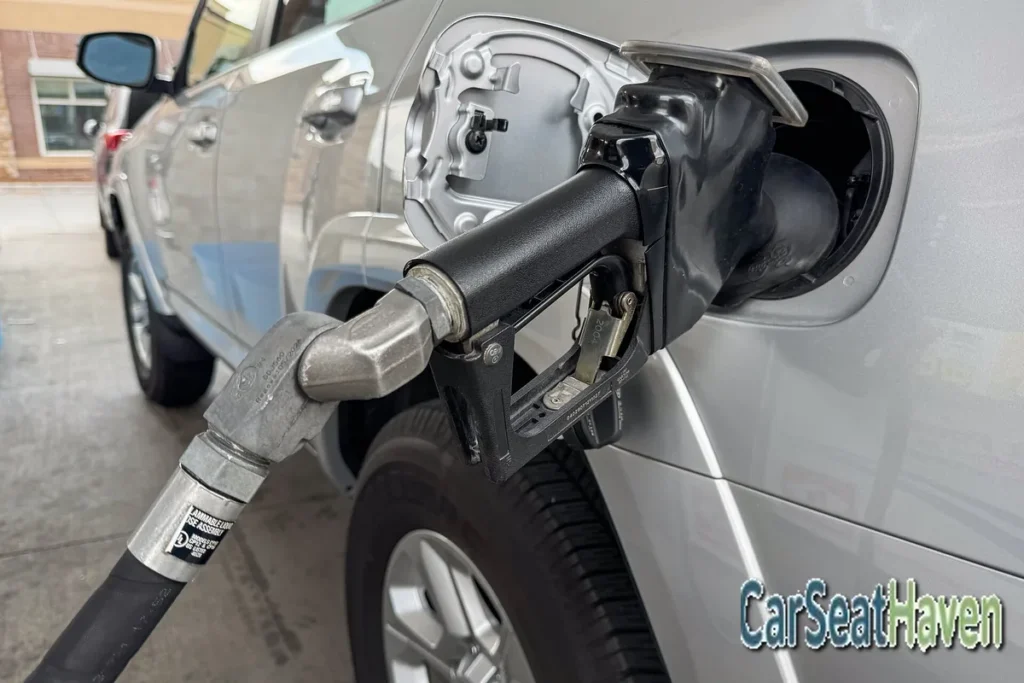
The 4runner fuel tank holds 19 gallons on every 2025 and 2026 trim, hybrid included. The rear-wheel-drive gas model covers an EPA range of 418 miles on that tank. Hybrid models travel a similar distance per tank despite the same 19-gallon size. Older 4Runners carried tanks from about 14 gallons in the 1980s to 23 gallons in recent years. A bigger tank does not improve MPG, since range and efficiency measure different things.
2026 4Runner Price and Fuel Cost
Fuel cost matters more than the sticker price over five years of ownership. Prices start at $41,570 before destination for the SR5. The TRD Pro tops the range at $67,900 before destination. Destination adds $1,495 to every trim, so the real starting price sits near $43,065. The hybrid costs $2,800 more than gas on trims where it is optional. Annual fuel cost runs about $2,850 for the rear-wheel-drive gas model at 15,000 miles a year. Over five years, the same model spends $3,250 more on fuel than the average new vehicle. A fill costs about $79 at current fuel prices for the 19-gallon tank. Five-year fuel cost reaches $13,765 for the SR5 in one published ownership estimate. Whether the hybrid pays back its premium depends on annual miles, fuel prices, and city driving share. High-mileage city drivers save most, while low-mileage highway drivers save least. Fuel is only one ownership cost, so compare car insurance quotes before judging the five-year total.
Real-World MPG
EPA figures allow fair comparison, yet real driving rarely matches the test cycle. Owners on public forums report combined averages in the high teens to low twenties. Lifted trucks with big tires fall several MPG behind EPA figures in owner reports. Winter driving drops the number further, with one owner reporting 17 to 19 MPG in cold months. Summer highway runs beat the EPA figures for careful drivers on stock tires. Owner reviews also complain about poor gas mileage, rough ride, and engine noise. Use EPA numbers to compare trims, then expect real life to move the result by a few MPG.
How to Improve 4Runner Gas Mileage
Five habits move the number more than any add-on part.
1. Check tire pressure every month, since correct pressure improves gas mileage by about 0.6 percent.
2. Drive smoothly with steady speed, since hard acceleration burns fuel fast on a heavy SUV.
3. Use cruise control on highways to hold a steady speed over long distances.
4. Remove roof racks, cargo boxes, and unused gear before daily driving.
5. Follow the maintenance schedule, since clogged filters, old oil, and bad alignment waste fuel.
Removing 100 extra pounds can improve MPG by about 1 percent. Tire and weight figures above come from the U.S. Department of Energy. Worn suspension parts hurt economy too, since a 2003 toyota 4runner upper control arm in poor shape throws off wheel alignment. Heavy add-ons deserve the same check, since a steel 4runner front bumper 5th gen replacement adds weight and wind drag. Many 4th gen 4runner accessories, from roof racks to cargo carriers, add weight and wind drag. Small items barely move the number, since a 4runner rear wiper or 4runner seat covers add almost no weight. Weight is the real lever, so heavy cargo goes first in any cleanup.
4Runner Fuel Economy in One Line
Gas models earn 20 city, 26 highway, and 22 combined MPG in rear-wheel-drive form. The hybrid earns 23 combined MPG with the strongest city figure in the lineup. Pick rear-wheel-drive gas for the best highway number on long trips. Pick the hybrid for the best city number in daily traffic.
FAQ
Q.1 What is the MPG of a 2026 Toyota 4Runner?
The 2026 gas model earns 20 city, 26 highway, and 22 combined MPG with rear-wheel drive. Four-wheel-drive gas models earn 19 city, 25 highway, and 21 combined MPG. The hybrid earns 23 city, 24 highway, and 23 combined MPG.
Q.2 Is the Toyota 4Runner Hybrid good on gas for daily driving?
The hybrid earns 23 combined MPG, the best combined figure in the lineup. City driving shows the gain most, with 23 city MPG against 19 or 20 for gas four-wheel-drive models. Highway driving favors the gas rear-wheel-drive model at 26 MPG.
Q.3 Does the Toyota 4Runner require premium gas for normal driving?
Premium gasoline is not required for either powertrain in normal driving. Every 2026 model runs on regular unleaded fuel with an 87 octane rating.
Q.4 What is the gas tank size on the Toyota 4Runner?
Every 2025 and 2026 4Runner carries a 19-gallon tank, hybrid models included. The rear-wheel-drive gas model covers 418 miles on that tank by EPA range.
Q.5 Is there a fully electric 4Runner EV for 2026?
A fully electric version does not exist for 2026, since the hybrid is the only electrified option. The hybrid needs no plug, since its battery charges through regenerative braking.
Q.6 What is the MPG of the four runner trd pro?
The TRD Pro comes only as a hybrid with 23 city, 24 highway, and 23 combined MPG. Off-road tires and extra gear can pull the real-world figure below the EPA rating.
Q.7 Where can I find a Toyota for 4runner for sale with the best MPG?
Start with the trim, since the SR5 rear-wheel-drive gas model earns the best highway figure at 26 MPG. The hybrid earns the best combined figure at 23 MPG for buyers who drive mostly in town.
Q.8 Does four-wheel drive affect Toyota 4Runner MPG in daily driving?
Four-wheel drive lowers combined MPG by about 1 against the same trim in rear-wheel drive. The gap grows in city driving, where the hybrid recovers most of the loss.

Aiden is the founder and editor of CarSeatHaven. He researches NHTSA safety standards, AAP guidance, manufacturer manuals, and recall notices, and turns them into plain-language car seat guides for parents.
