

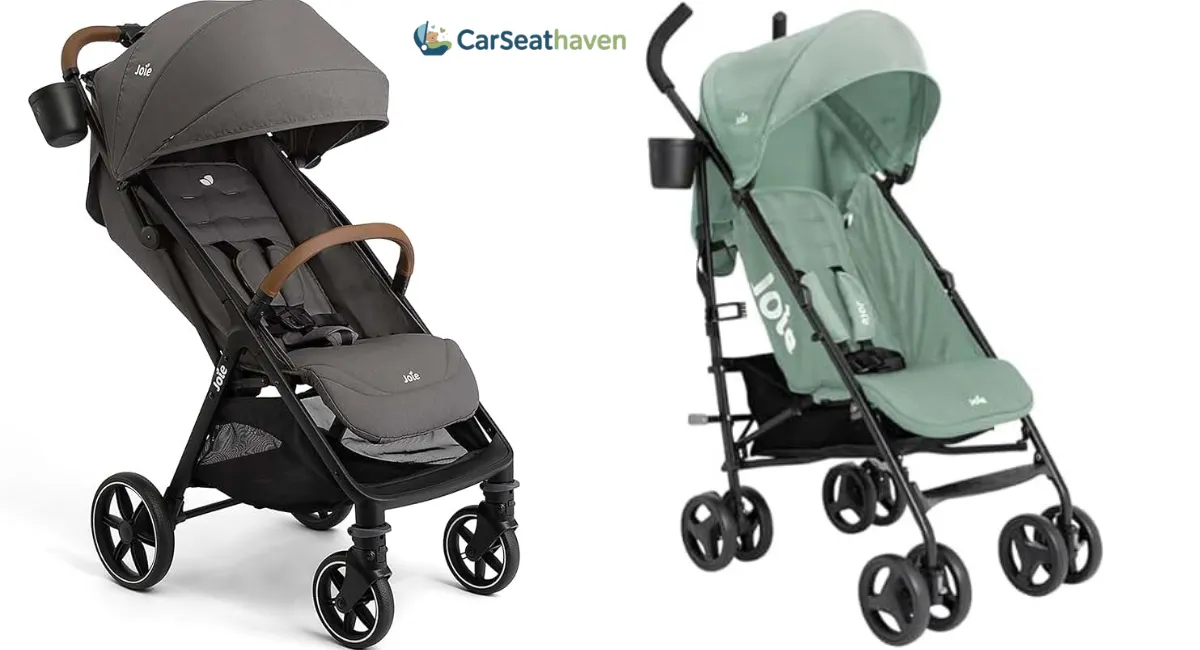
A fake Doona is a counterfeit copy of the popular Doona infant car seat and stroller that looks like the real thing but was never crash tested and does not meet any US safety standard. If your Doona cost far less than $550, came from Temu, an unknown Amazon seller, or a random website, and has blurry labels or no serial number, treat it as fake and stop using it immediately.
That is the short answer. The rest of this article shows you exactly how to tell a real Doona from a fake one, why the fakes are genuinely dangerous, where they get sold, and what to do if you already bought one. Because this is one of those topics where getting it wrong can cost a child their life, I am not going to sugarcoat anything.
What a fake Doona actually is
The real Doona, made by a company called Simple Parenting, is an infant car seat with wheels built into the base. One pull of a lever and it converts from a car seat into a stroller. Parents love it for travel, taxis, and tight city living. It costs around $550 or more in the US, and every real one is crash tested to FMVSS 213, the federal standard for child restraints.
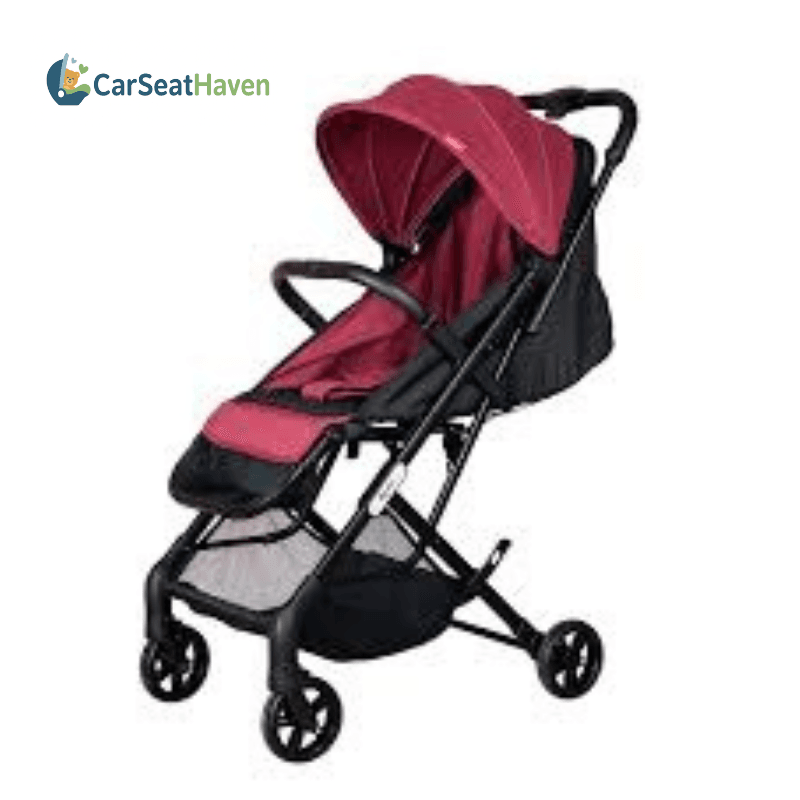
A fake Doona is a knockoff built to look like that product. Same general shape, same idea of wheels folding out of a car seat, similar colors. The resemblance is the whole business model. These copies get listed on Temu, on Amazon through third-party sellers, on Facebook Marketplace, and on sketchy standalone websites, often priced anywhere from $40 to a few hundred dollars. Some listings even use the word “Doona” in the title. Others dodge the trademark and call it a “4-in-1 baby stroller car seat” or a “luxury travel system.”
Here is what matters: none of these fakes went through US crash testing. Not the frontal test, not anything. They carry no genuine certification, no matter what the listing claims. A car seat that was never tested is not a bargain. It is a decoration that you strap your baby into.
Why a fake Doona is so dangerous
Let me put this bluntly, because the listings make these things look harmless. A real car seat is an engineered safety device. The shell, the foam, the webbing, the buckle, the chest clip, every piece is designed to manage crash forces and keep a baby’s body, especially the head and spine, within survivable limits. A fake copies the appearance and skips the engineering.
Car seat technicians who have handled fakes describe the same things over and over. The webbing is thinner than real harness webbing. The buckle feels hollow, and in some cases the plastic bends in your hands. The whole seat flexes in ways a real seat never would. One trauma injury prevention coordinator at Cook Children’s Medical Center in Texas said it made her sick to her stomach when a family showed up having used one, because she could bend the plastic herself and did not believe the straps would hold in a crash. Her fear, in her own words, was that the child would be severely injured or killed.
This is not theoretical. Hospitals have been intercepting these seats at newborn discharge. Children’s Hospital and surrounding hospitals in one region reported a rise in counterfeit seats brought in by unsuspecting parents, bought online or even gifted by relatives, priced anywhere from $40 to $500. Staff at Cook Children’s found fakes in their NICU discharge classes, including one missing the chest clip entirely, which most US seats are required to have in practice. The parents had no idea. They thought they bought a car seat.
There is crash test footage of lookalike seats failing, and it is genuinely frightening to watch. A fake seat in a real crash can break apart, eject the child, or collapse around them. The $500 you save means nothing if the seat cannot do the one job it exists for.
How to spot a fake Doona: the full checklist
Run through these checks on any Doona you own or are thinking of buying. One red flag is a warning. Two or more, and you almost certainly have a fake.
1. The price is far below $550
A real Doona infant car seat and stroller typically costs $550 or more in the US, and the price barely moves. Doona does not do deep discounting. If you see one for $99, $149, or even $299, that is not a deal. That is the single biggest red flag there is. Counterfeits live in the “too good to be true” price range because the price is the bait.
2. It was not bought from an authorized retailer
Doona publishes a list of authorized dealers on its official website. Buy new, from one of those retailers, and you are safe. Buy from Temu, a random Amazon third-party seller, an unknown website, or a social media ad, and you are gambling. When ordering on Amazon, check the actual seller name, not just the product title. Make sure the description, images, and color options match what is on the manufacturer’s own site. If photos or links on the listing do not load properly, buy somewhere else.
3. The serial number does not check out
Every genuine Doona has a unique serial number. Doona can verify it. If your seat has no serial number, or the seller cannot or will not provide one before you buy, walk away. Some fakes print a fake serial number, so a number alone is not proof, but the absence of one is close to a conviction.
4. The FMVSS 213 statement is missing or wrong
Every legal US car seat must carry a label stating that it conforms to all applicable Federal Motor Vehicle Safety Standards. On a real Doona you will find it. On fakes, this label is missing, has foreign compliance marks instead, or reads strangely. A children’s safety tech put it simply: look for a sticker saying the seat meets or conforms to FMVSS 213. No such statement, no deal.
5. No model number or manufacture date
Real seats carry a permanent label with the model name or number and a “manufactured in” date. Fakes routinely lack both. This one is non-negotiable. Without a model number and date, the seat cannot be registered for recalls, cannot be verified, and was never certified. It is not a seat that “forgot” its paperwork. It is a seat that was never in the system.
6. No registration card in the box
Federal rules require a postage-paid registration card with every new car seat so the manufacturer can reach you about recalls. Fakes do not include one, because there is no manufacturer standing behind the product to send it. Open the box, no card, that tells you plenty.
7. Labels are in the wrong language or full of errors
US seats carry labels in English (and usually Spanish). Fakes show up with labels in other languages, foreign addresses, no US customer support number, misspellings, and strange grammar. Any misspelling or odd sentence structure on a safety label is a red flag. Real manufacturers do not ship typos on the thing that certifies your child’s safety.
8. The packaging looks off
Authentic Doonas come in proper branded packaging with clear product information. Fakes arrive in generic boxes with blurry printing, wrong logos, or misspelled words. If the box looks like it was printed in a hurry, the seat inside was probably made in one.
9. The logo and branding details are wrong
Study a real Doona’s logo placement and compare. Fakes get the small details wrong: slightly off logos, blurry printing, or a different product name like “4-in-1” where the real branding should be. Side-by-side photos of real and fake Doonas show differences most people miss at a glance but cannot unsee once spotted.
10. The build quality feels cheap
Pick it up. A real Doona feels solid and precisely made. Fakes feel light in the wrong way, with flimsy plastic, thin straps, and parts that flex. If you can bend the shell with your hands, imagine what a crash would do. Trust your hands on this one.
11. There is no chest clip, or the buckle feels hollow
US infant seats use a chest clip (retainer clip) and a sturdy buckle. Technicians who examined fakes found seats with no chest clip at all and buckles that felt hollow and cheap. The buckle is the single point holding the harness together in a crash. A hollow one is a bad joke.
12. No instruction manual
A real car seat comes with a proper manual covering installation, use, and warnings. Fakes often come with nothing, or a thin pamphlet with broken English. No manual means no tested installation method, which means even a careful parent cannot install it the way it was supposedly designed to be used.
Real vs fake Doona: side by side
| Check | Real Doona | Fake Doona |
|---|---|---|
| Price | Around $550+, rarely discounted | $40 to ~$300, “too good to be true” |
| Seller | Doona authorized retailers | Temu, unknown Amazon sellers, random sites |
| Crash tested | Yes, to FMVSS 213 | No testing at all |
| Serial number | Unique, verifiable with Doona | Missing or unverifiable |
| Safety labels | FMVSS 213 statement, model number, manufacture date, English | Missing, foreign, or full of errors |
| Registration card | Included in the box | Missing |
| Build quality | Solid, precise, sturdy buckle and webbing | Flimsy plastic, thin straps, hollow buckle |
| Chest clip | Present | Sometimes missing entirely |
| Manual | Full instruction manual | Missing or broken English pamphlet |
| Packaging | Branded, professional | Generic, blurry, misspelled |
Where fake Doonas get sold
Temu is the name that comes up most. Listings there show seats that look like the Doona stroller car seat at a fraction of the price, and child passenger safety advocates flag these listings constantly. But Temu is not the only channel. Third-party sellers on Amazon, standalone bargain websites, Facebook Marketplace, and social media ads all move fakes. The newer trick is “dupe” culture: influencers and deal pages promoting “Doona dupes” as if a counterfeit car seat were the same kind of thing as a dupe handbag. It is not. A fake handbag disappoints you. A fake car seat can kill your child.
Red flags in a listing: stock photos that do not match the manufacturer’s own images, oddly cropped pictures, color options the real brand never offered, a product title that avoids saying “Doona” while showing a Doona-shaped seat, prices far below retail, and sellers with no verifiable business identity. When in doubt, open the manufacturer’s website in another tab and compare everything, image by image.
You already bought one. Now what?
First, stop using it. Today. Not after the next trip, not until the real one arrives. A fake seat in a crash is worse than useless because it gives you false confidence. If you need to travel before a replacement arrives, most communities have options: hospitals, health departments, and Safe Kids coalitions often run car seat programs for families in need.
Second, do not sell it or give it away. Passing a fake seat to another family just moves the danger. Destroy it or dispose of it so nobody else can use it.
Third, report it. This is how these listings get taken down:
- Report the listing to the retailer or marketplace where you bought it. Most large retailers are actively trying to remove counterfeit seats and rely on reports to find them.
- File a report with NHTSA, the federal vehicle safety agency, about the unsafe product.
- Report it to the Consumer Product Safety Commission through their SaferProducts portal.
- You can also file with the US Department of Commerce anti-counterfeiting program at StopFakes.
Fourth, replace it with a real seat from an authorized retailer. I know that stings after already spending money. But the math is simple: the fake was never a car seat, so you have not “already bought a car seat.” You bought an expensive lesson. Buy the real thing once, from the right place, and be done with it.
Buying a real Doona without getting burned
The safe way to buy a Doona is boring, and that is the point. Buy new. Buy from a retailer on Doona’s official authorized dealer list. Keep your receipt. Register the seat with the manufacturer using the card in the box, so you hear about recalls. Verify the serial number if you have any doubt at all.
Be skeptical of “sales” that seem generous. Real Doonas barely get discounted, so a 40-percent-off Doona is not a sale, it is a warning. Be skeptical of bundles and “travel systems” with names you do not recognize. And be skeptical of any seller who cannot tell you their business name, address, and customer support number.
If someone offers you a deal through a direct message, a pop-up ad, or a site you have never heard of, close the tab. The real product is easy to find through legitimate channels. There is no secret cheap source. Anyone claiming to have one is selling you the fake.
What about a secondhand Doona?
A used real Doona can be fine, but only with strict rules. Buy it only from someone you know and trust, a friend or family member, not a stranger online. Confirm it was never in a crash, not even a minor one. Check that it is not expired; Doona seats have an expiration date, and an expired seat’s materials can no longer be trusted. Make sure all labels, the manual, and the parts are present and intact. And check the model against recall lists before your baby ever rides in it.
What you should never do is buy a “used Doona” from a marketplace seller you do not know at the kind of price no real Doona sells for used. That is just a fake with a previous owner.
How the new FMVSS 213a rule makes fakes easier to spot
There is a useful side effect to the new federal side-impact standard, FMVSS 213a, which takes effect for seats manufactured from December 5, 2026. Certification is the manufacturer’s legal promise that a seat passed the required tests, and it lives on the labels: the conformity statement, the model number, the manufacture date. A counterfeit cannot honestly carry any of it, and after the deadline it certainly cannot claim side-impact certification either.
So the label check in this article doubles as a fake check, and the new rule raises the bar for everyone. Real manufacturers prove compliance on paper and on the product. Fakes prove nothing, because there is nothing behind them. If you want the full story on the new standard, what it tests, and whether your current seat is affected, read our complete FMVSS 213a guide.
Frequently asked questions
How much does a real Doona cost?
A genuine Doona infant car seat and stroller typically costs $550 or more in the United States, and the price rarely drops by much. If you see one advertised far below that, assume it is counterfeit until proven otherwise.
Can a fake Doona be made safe?
No. There is no way to upgrade, fix, or certify a counterfeit seat. It was never crash tested, its materials and construction are unknown, and no label or sticker can change that. Stop using it and replace it.
Do fake Doonas have serial numbers?
Some do, but the numbers are copied or made up and cannot be verified with Doona. A serial number alone does not prove a seat is real. The absence of one, though, is a major red flag.
Are Doonas sold on Amazon real?
Only if the seller is Doona itself or an authorized retailer. Amazon hosts many third-party sellers, and counterfeit seats have been found there. Always check the seller name, compare the listing against the manufacturer’s website, and be suspicious of low prices.
Where do I report a fake car seat?
Report the listing to the retailer or marketplace first. Then file reports with NHTSA and the Consumer Product Safety Commission through SaferProducts.gov. You can also report counterfeits to the Department of Commerce at StopFakes.gov. Every report helps get dangerous listings removed.
Will the hospital check my car seat?
Many hospitals do a basic check at newborn discharge, and technicians at several hospitals have caught fakes this way. But do not rely on it. Check your seat yourself using the list in this article before your baby arrives.
Is it safe to buy a used Doona from a friend?
It can be, if you trust the person and verify the seat: never crashed, not expired, all labels and parts intact, manual included, and no open recalls on that model. Never buy a used Doona from a stranger at a suspiciously low price.
The 60-second check: is your Doona real?
If you do not have time for the full article right now, run this quick check. Your Doona is very likely genuine if all of these are true:
- You paid around $550 or more, from a retailer on Doona’s official authorized dealer list.
- The seat has a unique serial number you could verify with Doona.
- Labels are in clear English, including the FMVSS 213 conformity statement, model number, and manufacture date.
- A postage-paid registration card came in the box.
- The build feels solid: sturdy buckle, thick webbing, present chest clip, no bendable plastic.
If two or more of those are missing or wrong, stop using the seat and read the full checklist above.
What a genuine Doona looks like up close
It helps to know the real product well enough that a fake feels wrong in your hands. A genuine Doona infant car seat has a sturdy shell with a clean, precise finish. The fabric covers fit snugly with no loose bunching. The harness webbing is thick and smooth, the kind that does not twist easily. The buckle clicks with a solid, confident snap, and the chest clip sits at armpit level when properly positioned. The wheels fold out and retract with a mechanical precision that feels engineered, because it is.
The labels are the giveaway most people skip. On a real Doona you will find crisp, clearly printed labels: the brand markings, the model number, the manufacture date, and the federal conformity statement. The printing is sharp. The placement is consistent. Nothing is crooked, blurry, or peeling. Counterfeits almost always fail this inspection because good labeling costs money, and the whole point of a fake is to avoid spending it.
Weight tells a story too. A real Doona has some heft to it; safety engineering weighs something. Fakes often feel surprisingly light, because thin plastic and skimpy materials weigh less than the real thing. If your “Doona” feels like a toy version of the product, trust that instinct.
What the law actually says about counterfeit car seats
Selling a counterfeit car seat in the United States is illegal, full stop. Every car seat sold here must be certified to FMVSS 213, the federal standard covering frontal crash performance, construction, and labeling. The American system runs on self-certification: manufacturers test their seats and declare compliance, and NHTSA follows up by buying seats off store shelves and running its own compliance tests, with recalls and penalties for failures.
A counterfeit seat short-circuits this entire system. There is no manufacturer testing anything. There is no declaration. There is no one for NHTSA to hold accountable, because the “brand” on the box is a fiction. That is why fakes cannot be fixed with a sticker or a new label. The certification was never real, so the seat was never legal to sell.
This matters for shoppers in a practical way too. When a listing says “meets safety standards” but the seat has no FMVSS 213 statement, no model number, and no manufacture date, the listing is lying. Real compliance leaves a paper trail on the product itself. Always follow the paper trail, not the marketing copy.
When a relative gifts you a fake
This happens more than you would think. A grandparent finds a “great deal” online, or an aunt sends a link to a “Doona dupe” she saw in a video, and suddenly there is a suspiciously cheap car seat stroller at your baby shower. The person meant well. The seat is still dangerous.
Handle it with honesty and kindness. Thank them, then explain plainly: counterfeit car seats are a known problem, this one shows the warning signs, and you cannot use it for the baby’s safety. Show them this article if it helps. Most relatives are horrified, not offended, once they understand. Then return it if you can, report the listing, and put a real seat on your registry instead. A few awkward minutes now beats an unthinkable outcome later.
And if you are the gift-giver reading this: the safest gift is money toward the real seat, or the real seat itself from an authorized retailer. Never buy a car seat from a marketplace deal to save money. The savings are imaginary and the risk is not.
Why “dupes” are different for car seats
A quick word about the word “dupe,” because it does real damage here. In beauty and fashion, a dupe is a cheaper product that performs like the expensive one. The concept breaks completely for car seats. A $30 dupe of a $60 serum might work fine. A $120 dupe of a $550 car seat was never tested, and testing is the entire product. There is no such thing as a safe counterfeit car seat, the way there is no such thing as a safe counterfeit parachute. The price gap is not profit margin you are cleverly avoiding. It is the engineering, the testing, and the accountability you are going without.
If a deal page or influencer calls a knockoff car seat a “dupe,” that is a red flag about the source, not a green light about the product. Real safety gear does not have dupes. It has fakes.
More questions parents ask
My Doona looks real but I bought it on sale. Should I worry?
It depends on the sale. Authorized retailers occasionally offer small promotions or bundle deals, and that is fine. What should worry you is a deep discount, a seller you have never heard of, or a price far below $550. Run the full checklist in this article. If the labels, serial number, and build quality all check out, you are probably fine. If anything feels off, contact Doona with the serial number and ask them to verify it.
Can I get my money back for a fake?
Sometimes. If you bought through a major marketplace, file a claim for a counterfeit product; most platforms side with buyers on fakes. If you paid by credit card, you can dispute the charge. Keep the listing screenshots, your receipt, and photos of the seat and its labels. Even if you cannot get a refund, report the seller so the listing comes down.
Do fake Doonas show up in stores, or only online?
Almost always online. Legitimate brick-and-mortar baby stores buy through authorized distribution, so fakes rarely reach their shelves. The risk lives in online marketplaces, social media ads, and unknown websites. This is one more reason the boring advice, buy from a known retailer, keeps being the right advice.
The bottom line
A fake Doona is not a bargain, a dupe, or a clever find. It is an untested copy of a safety device, sold by people who will never answer for what happens in a crash. The real Doona costs around $550 because engineering, testing, and accountability cost money. Every dollar below that from a shady seller is a dollar not spent on your child’s safety.
Check the price. Check the seller. Check the serial number, the labels, and the build. Buy from authorized retailers, verify what you own, and report what you find. And if someone you love bought a fake with the best intentions, tell them the truth kindly and help them replace it. That is what this article is for. Share it with any parent who might need it. Compare the real thing in our Doona vs Evenflo Shyft DualRide guide. See what parents say in Doona vs Evenflo Shyft tested by moms.

Aiden is the founder and editor of CarSeatHaven. He researches NHTSA safety standards, AAP guidance, manufacturer manuals, and recall notices, and turns them into plain-language car seat guides for parents.
