

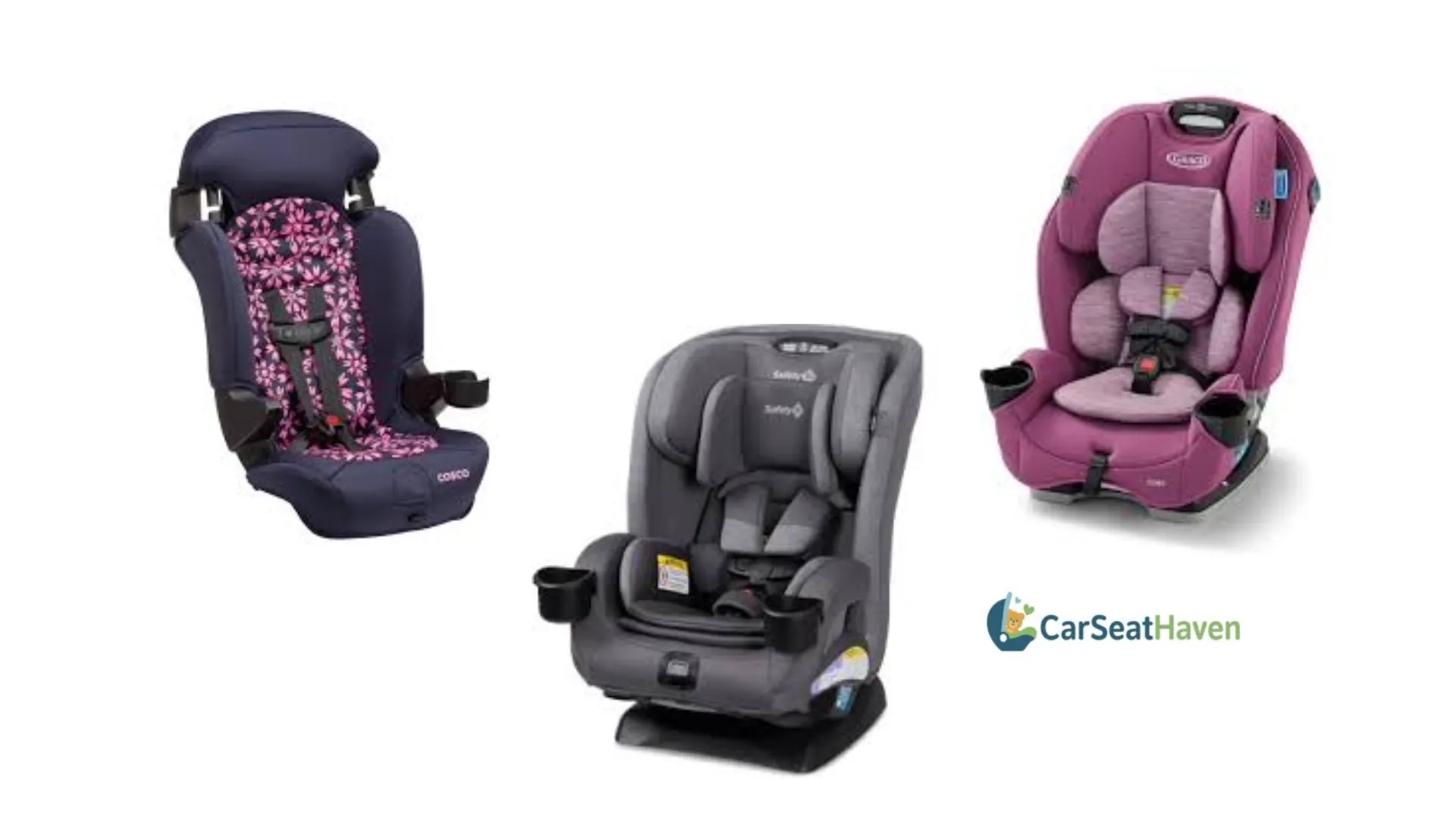
Shopping for walmart car seats on a budget comes with a real dilemma: car seats are one of the few baby products you cannot skip, and the price spread at Walmart runs from under $40 all the way past $400. The short answer is that you do not need to spend more than about $60 to $100 to get a safe, federally regulated car seat. Every single car seat sold at Walmart, from the $39 Cosco Scenera Next to the $200 Chicco KeyFit 30, must pass the same Federal Motor Vehicle Safety Standard 213 crash tests to be sold legally in the United States. Below you will find 14 genuinely available budget picks with real specs, typical 2026 price ranges, and an honest breakdown of what a cheap seat gives up (comfort and convenience features) versus what it does not (basic crash protection).
The short list: best budget picks at a glance
If you just want the winners, here they are. All of these are regularly stocked at Walmart, either in store or on Walmart.com, and all carry price tags that keep the total cost of your car seat journey low.
- Cheapest safe convertible: Cosco Scenera Next DLX, usually around $39 to $60, rear facing from 5 to 40 pounds.
- Best all round value: Cosco MightyFit 65 DX, usually around $60 to $80, with a 65 pound forward facing harness limit.
- Best compact pick: Evenflo Tribute LX, about $80, one of the narrowest and lightest convertibles sold.
- Best budget infant bucket: Evenflo LiteMax 35, usually around $110 to $140, fits babies from 4 to 35 pounds.
- Best when on rollback: Graco Contender 65, often drops to about $100 to $120, regularly $140.
- Best harness to booster deal: Cosco Finale DX 2-in-1, about $88, forward facing harness to 65 pounds then booster to 100.
- Best bargain all in one: Safety 1st TriFit, about $99, covers rear facing, forward facing, and booster modes.
Walmart car seats comparison table (2026)
Prices below are typical 2026 ranges seen at Walmart and Walmart.com. Car seat prices move constantly with rollbacks and clearance, so treat these as planning numbers and check the current price before you buy.
| Car seat | Type | Weight limits | Width (approx) | Price tier |
|---|---|---|---|---|
| Cosco Scenera Next DLX | Convertible | Rear facing 5-40 lb, forward facing 22-40 lb | About 17.5 in | $39-$60 |
| Cosco MightyFit 65 DX | Convertible | Rear facing 5-40 lb, forward facing 22-65 lb | About 19 in | $60-$80 |
| Safety 1st Guide 65 | Convertible | Rear facing 5-40 lb, forward facing 22-65 lb | About 19 in | $70-$90 |
| Evenflo Tribute LX | Convertible | Rear facing 5-40 lb, forward facing 22-40 lb | About 18.5 in | $79-$99 |
| Baby Trend Trooper SLIM | Convertible | Rear facing 4-40 lb, forward facing 30-65 lb | About 16.75 in | $96-$120 |
| Safety 1st TriFit | All in one | Rear facing 5-40 lb, forward facing 22-65 lb, booster 40-100 lb | About 19 in | $99-$130 |
| Graco Contender 65 | Convertible | Rear facing 5-40 lb, forward facing 20-65 lb | About 19 in | $100-$140 |
| Evenflo LiteMax 35 | Infant bucket | Rear facing 4-35 lb | About 17.5 in | $110-$140 |
| Graco SnugRide Classic Connect 35 | Infant bucket | Rear facing 4-35 lb | About 18 in | $110-$140 |
| Safety 1st onBoard FLX | Infant bucket | Rear facing 4-35 lb | About 19 in | $120-$145 |
| Safety 1st Grow and Go | Convertible | Rear facing 5-40 lb, forward facing 22-65 lb, booster 40-100 lb | About 19.5 in | $130-$180 |
| Chicco KeyFit 30 | Infant bucket | Rear facing 4-30 lb | About 17.5 in | $199-$240 |
| Cosco Finale DX 2-in-1 | Harness to booster | Forward facing harness 22-65 lb, booster 40-100 lb | About 17.6 in | $80-$100 |
| Safety 1st Grand 2-in-1 | Harness to booster | Forward facing harness 22-65 lb, booster 40-100 lb | About 19 in | $70-$90 |
Are cheap car seats actually safe? The FMVSS 213 answer
This is the single most important section of this guide, so let us get it out of the way early. Yes, a cheap car seat from Walmart is safe as long as you use it correctly. Here is why: every car seat sold in the United States, whether it costs $39 or $399, must meet Federal Motor Vehicle Safety Standard 213 (FMVSS 213). This is the crash testing standard set by the National Highway Traffic Safety Administration, and there is no budget loophole. A seat cannot be sold legally unless it passes.
NHTSA does not publish crash test scores that rank one seat above another the way it does with vehicles. All seats are pass or fail, and every seat on a Walmart shelf has passed. What NHTSA does publish is an ease of use rating (from 1 to 5 stars) for labels and instructions, which matters because a seat that is confusing to install is more likely to be installed wrong. Budget seats sometimes score lower here, which is worth knowing but not a reason to panic: take your time with the manual, and you can get an equally secure install.
There is also a newer piece of the standard worth knowing about. FMVSS 213a adds a dedicated side impact test for car seats, and it has been rolling out in recent years. Some newer budget models, like the Baby Trend Trooper SLIM sold at Walmart, are already tested to the FMVSS 213a side impact standard. Older designs may carry side impact claims based on manufacturer testing rather than the federal test. Either way, passing FMVSS 213 remains the legal baseline for everything on the shelf.
The real safety differences between cheap and expensive seats come down to installation features (premium seats add things like lock offs, bubble indicators, and load legs that make a correct install easier), extra padding, and convenience. Crash protection itself is regulated to the same minimum. So when a grandparent asks why your car seat only cost $60, the answer is simple: it passed the same federal tests as the $400 one.
What a budget car seat does not compromise (and what it does)
Parents hear "cheap car seat" and picture something flimsy. That picture is mostly wrong. Let us separate the facts.
What cheap does NOT compromise
- Crash test performance baseline: As covered above, FMVSS 213 applies equally. Price does not change the legal safety requirement.
- Five point harness: Every budget convertible, infant seat, and combination seat on this list uses a five point harness, the same fundamental restraint system as premium seats.
- LATCH installation: Budget seats come with LATCH connectors and seat belt installation paths. The hardware is simpler (often hook style connectors instead of push button), but it does the same job when installed correctly.
- Side impact design features: Most budget seats include some form of side impact protection, usually energy absorbing foam and deep side wings, even if the testing claims differ from premium models.
- Expiration and recalls: Budget seats have expiration dates printed on them and are covered by federal recall rules exactly like expensive seats.
What cheap DOES compromise
- Padding and comfort: This is the biggest trade off. A $40 seat has thin padding and basic fabric, while a $250 seat has plush inserts, breathable mesh, and better covers. Kids are still safe in the thin seat, but they may complain on long drives.
- Lower harness height and weight limits: Budget convertibles often top out at 40 pounds in harness mode (the Scenera Next, the Tribute LX), while pricier seats keep kids harnessed to 65 pounds and beyond. A lower limit means buying the next seat sooner, which eats into the savings.
- Convenience features: No no-rethread harness (you will rethread straps through slots as your child grows), fewer recline positions, cup holders you buy separately, and harder to clean covers.
- Narrower weight range per seat: A budget convertible may cover birth to age 3 or 4, while a premium all in one covers birth to booster. You save per seat but may buy more seats overall.
- Installation helpers: Premium seats offer push button LATCH, lock offs, and built in belt tensioners. Budget seats require more patience and muscle to get a tight install.
The math that matters: a $60 Cosco MightyFit 65 DX with a 65 pound harness limit can actually cost you less over time than a $45 seat with a 40 pound limit that forces an early upgrade to a booster. Always compare the limits, not just the price tag.
The 14 best budget car seats at Walmart, reviewed by category
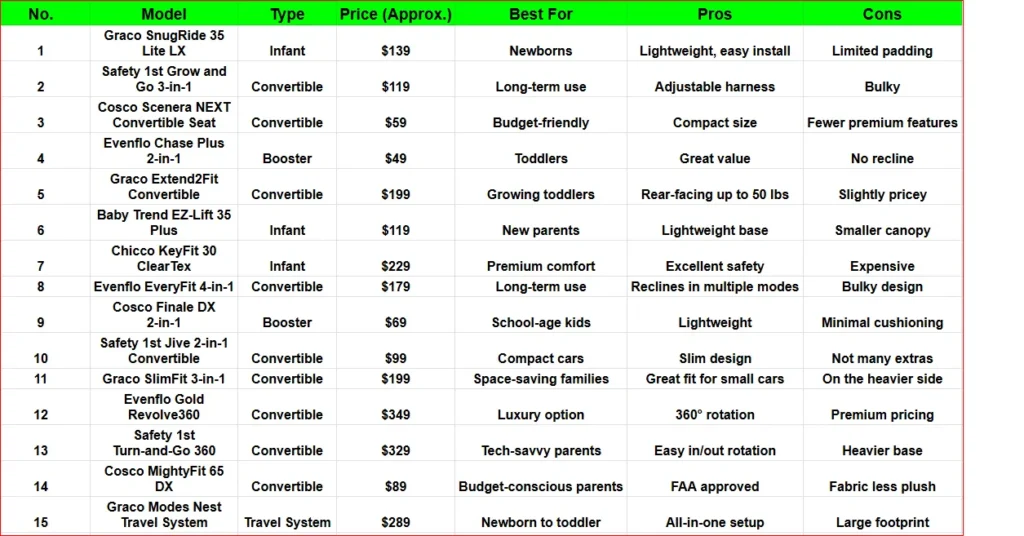
Below are the standout picks, grouped by what they are for. Every seat here is a real product that appears on Walmart shelves or Walmart.com, with real specs and the price ranges actually seen in 2026.
Best ultra budget convertible: Cosco Scenera Next DLX
The Cosco Scenera Next is the budget car seat that everything else gets compared to, and the DLX version adds slightly nicer fabrics and a cup holder. It is rear facing from 5 to 40 pounds (19 to 40 inches) and forward facing from 22 to 40 pounds. Five harness heights and three buckle positions help you dial in the fit, the cover is machine washable, and it is certified for aircraft use, which makes it a favorite for travel. At around 17.5 inches wide, three can fit across in many back seats. Typical Walmart pricing lands between $39 and $60 depending on the fabric and whether the DLX trim is in stock; colors sometimes sell out, so check both the standard and DLX listings. For a deeper look at the extended-rear-facing sibling in the same family, see our Cosco Scenera Extend review. The trade off is the 40 pound forward facing limit, so most kids will need a harness to booster seat around age 3 to 4. If that is acceptable to you, this is the cheapest safe seat you can buy.
Best value convertible: Cosco MightyFit 65 DX
The MightyFit 65 DX answers the Scenera Next’s biggest weakness: it keeps kids harnessed to 65 pounds forward facing, with the same 5 to 40 pound rear facing range. The shell is taller (about 24 inches) and the top harness slot is higher, so kids genuinely last longer in it. It weighs around 11 to 12.7 pounds, the cover is machine washable, and it carries side impact protection. Walmart pricing usually sits in the $60 to $80 range, which makes it one of the cheapest 65 pound harness seats anywhere. The main complaints, echoed by car seat reviewers, are that the harness can be fussy to tighten and rear facing installation may need a rolled towel or pool noodle for the right recline angle. Budget an extra 20 minutes for your first install and read the manual section on LATCH routing before you start.
Best for small cars and second cars: Evenflo Tribute LX
At about $80 at Walmart, the Evenflo Tribute LX is the classic second car or grandparent car seat, and plenty of families use it as their only seat too. It is compact (roughly 18.5 inches wide), weighs just 9.4 pounds, and works rear facing from 5 to 40 pounds and forward facing with the harness from 22 to 40 pounds. It includes a removable dishwasher safe cup holder, an up front harness adjuster, and a plush removable head pillow. Owners regularly report fitting three across, though that depends on the vehicle. The 40 pound forward facing cap is the limitation, same as the Scenera Next, so plan for a booster down the road. Where it beats the Cosco options is fit and finish: the Tribute LX feels a bit more polished for the money.
Narrowest budget convertible: Baby Trend Trooper SLIM
The Baby Trend Trooper SLIM is only about 16.75 inches at its widest, which makes it one of the genuinely slimmest car seats on the market at any price. That is a big deal if you are fitting three across or driving a small sedan. It converts from a rear facing infant mode (4 to 18 pounds) through rear facing toddler mode (18 to 40 pounds) to forward facing (30 to 65 pounds), with a flip foot for rear facing recline and a built in bubble level indicator that makes the install angle easy to get right. Walmart pricing typically runs $96 to $120, and it has been seen marked down from $119.99. Notably, the Trooper SLIM is tested to the newer FMVSS 213a side impact standard, which is unusual at this price point. Two cup holders are integrated. If narrow is your priority, this is the budget answer.
Best all in one under $100: Safety 1st TriFit
All in one seats that cover rear facing, forward facing, and booster modes usually start around $200, so the Safety 1st TriFit showing up at Walmart for about $99 is worth a look. It takes kids rear facing from 5 to 40 pounds, forward facing from 22 to 65 pounds, and as a belt positioning booster from 40 to 100 pounds. That is theoretically one seat from birth to booster. The catches are typical for the price: simpler padding, a basic no-frills install, and a shell that is not the tallest, so very tall kids may outgrow the harness mode before 65 pounds. Still, as a single purchase strategy on a tight budget, it is hard to beat.
Best Graco on a rollback: Graco Contender 65
The Graco Contender 65 is the seat to watch during Walmart rollback events. It lists around $140 but regularly drops to about $100 to $120, at which point it is one of the best values in the store. You get rear facing from 5 to 40 pounds, forward facing from 20 to 65 pounds, Graco’s Simply Safe Adjust harness system (the headrest and harness move together with one hand, no rethreading), eight headrest positions, EPS foam, and a cup holder. It has been a Consumer Reports best buy pick in the past. The known annoyance is that some parents find the LATCH strap difficult to release once installed, so many just install with the seat belt. If you can catch it under $120, it punches well above its price class in convenience.
Best infant bucket on a budget: Evenflo LiteMax 35
Infant bucket seats are the one category where budget options are thinner, because the carrier plus stay in car base design costs more to make. The Evenflo LiteMax 35 is the value leader: rear facing from 4 to 35 pounds, a stay in car base with a belt lock off for easy installation, an ergonomic handle, and a full coverage canopy. It typically sells at Walmart in the $110 to $140 range as a standalone seat. Evenflo also tests to its own side impact and rollover standards on top of the federal requirements. If you want the classic click the carrier in and out of the base experience without paying Chicco or Graco prices, start here.
Best Graco infant bucket deal: Graco SnugRide Classic Connect 35
The SnugRide Classic Connect 35 is Graco’s budget infant seat line, usually found at Walmart for about $110 to $140, often cheaper than the fancier SnugRide 35 Lite LX trims. It holds babies rear facing from 4 to 35 pounds and up to 32 inches, includes a stay in car base with a 4 position recline, and is compatible with Graco’s Click Connect strollers for a budget travel system. The Classic Connect line is older and simpler than Graco’s current flagship buckets, which is exactly why it is cheap: fewer fabrics, basic canopy, no premium base features. Check that the manufacture date is recent (the label is on the seat) since this line has been around a long time and old stock can linger.
Best Safety 1st infant bucket: Safety 1st onBoard FLX
The Safety 1st onBoard FLX is the Dorel family’s answer to the budget infant seat, typically around $120 to $145 at Walmart. It fits babies rear facing from 4 to 35 pounds, includes a stay in car base, and has a flip out visor on the canopy for extra sun coverage. The onBoard line is known for a fairly roomy interior for the price, which can help it last a bit longer before your baby outgrows it by height. Like the other buckets here, it meets all federal safety standards. Compare it directly with the LiteMax 35 on your store shelf if both are in stock, since pricing between them shifts often.
The mid range reference: Chicco KeyFit 30
The Chicco KeyFit 30 is not a budget seat, and it is included here on purpose as a reference point. At roughly $199 to $240 at Walmart, it costs about four times the Scenera Next. What does the extra money buy? Arguably the easiest infant seat installation in the industry, thanks to the SuperCinch LATCH tightener and bubble level indicators on the base, plus excellent newborn fit from 4 to 30 pounds and premium fabrics. It is included so you can calibrate: if your budget is truly tight, the LiteMax 35 and SnugRide Classic Connect give you the same federally regulated protection for roughly half the price, and you are giving up installation convenience, not safety.
Best forward facing only deal: Cosco Finale DX 2-in-1
Once your child is forward facing (at least age 2, and ideally older), the Cosco Finale DX 2-in-1 is a remarkably cheap way to keep them harnessed. At about $88 at Walmart, it works as a forward facing harness seat from 22 to 65 pounds and then converts to a belt positioning booster from 40 to 100 pounds. It is narrow (about 17.6 inches) and light, which makes it great for carpools, travel, and three across setups. It is forward facing only, so this is a second stage seat, not a from birth seat. Pair it with a Scenera Next or Tribute LX and you have covered birth to booster for roughly $130 to $170 total, which is about the cheapest full journey possible with new seats.
Runner up harness to booster: Safety 1st Grand 2-in-1
The Safety 1st Grand 2-in-1, often around $70 to $90 at Walmart, is the Dorel sibling of the Finale DX with a similar formula: forward facing harness from 22 to 65 pounds, then booster mode to 100 pounds. It is a popular pick for grandparents and caregivers because it is inexpensive, simple, and easy to move between cars. Ratings from Walmart shoppers are consistently strong. Choose whichever of the Finale DX and the Grand is cheaper or in stock when you shop; they serve the same role.
Worth watching: Safety 1st Grow and Go
The Safety 1st Grow and Go is a convertible that stretches into booster territory: rear facing 5 to 40 pounds, forward facing 22 to 65 pounds, and booster mode 40 to 100 pounds. It normally sits in the $130 to $180 range at Walmart, which is above strict budget territory, but it drops during baby savings events and clearance, sometimes near $120. It has more padding and a taller shell than the sub $100 convertibles, plus harness holders that keep straps out of the way when you load your child. If you can stretch a little and want one seat to last longer, put this on your watch list and buy on a rollback.
Worth watching: Safety 1st Guide 65
The Safety 1st Guide 65 (the Dorel twin of the Cosco MightyFit 65 DX) shows up at Walmart in the $70 to $90 range with the same core specs: rear facing 5 to 40 pounds, forward facing 22 to 65 pounds, and a narrow profile that fits three across in many cars. Availability comes and goes as Dorel shifts branding between the Safety 1st and Cosco labels, so if you see the Guide 65 cheaper than the MightyFit 65 DX, grab it: you are getting essentially the same seat.
Infant bucket vs convertible vs combination: which saves you the most?
Three seat types show up in the budget aisle, and the cheapest option over time depends on which path you take.
Path 1: Infant bucket, then convertible, then booster
You start with a carrier like the Evenflo LiteMax 35 (about $110 to $140), move to a convertible like the Cosco MightyFit 65 DX (about $60 to $80) when the baby outgrows the bucket around 9 to 12 months, then finish with a booster. Total for the first two stages: roughly $170 to $220. The bucket is convenient because you can carry a sleeping baby inside without unbuckling, and it clicks into a stroller. It is the most expensive path but the most convenient for the newborn months.
Path 2: Convertible from birth, then booster
You skip the bucket entirely and start with a convertible like the Cosco Scenera Next DLX (about $39 to $60) or the Evenflo Tribute LX (about $80) from day one, rear facing from birth. Add a Cosco Finale DX ($88) or a basic booster later. Total: roughly $130 to $170 from birth to booster. This is the cheapest path and perfectly safe, since every convertible on this list is rated from 5 pounds up (the Trooper SLIM starts at 4 pounds). The trade off is convenience: you cannot carry the seat into the house with a sleeping baby, and getting a good newborn recline angle can take more effort. Many budget parents choose this path and never miss the bucket.
Path 3: All in one from birth
One seat like the Safety 1st TriFit ($99) or a discounted Safety 1st Grow and Go does rear facing, forward facing, and booster. In theory this is one purchase for the whole journey. In practice, budget all in ones are often outgrown in harness mode by tall kids before the booster years, and infant fit can be less snug than a dedicated bucket or a small convertible. It is a solid choice if you want simplicity and one box to open, but Path 2 usually wins on total cost and fit.
What to avoid when shopping for cheap car seats
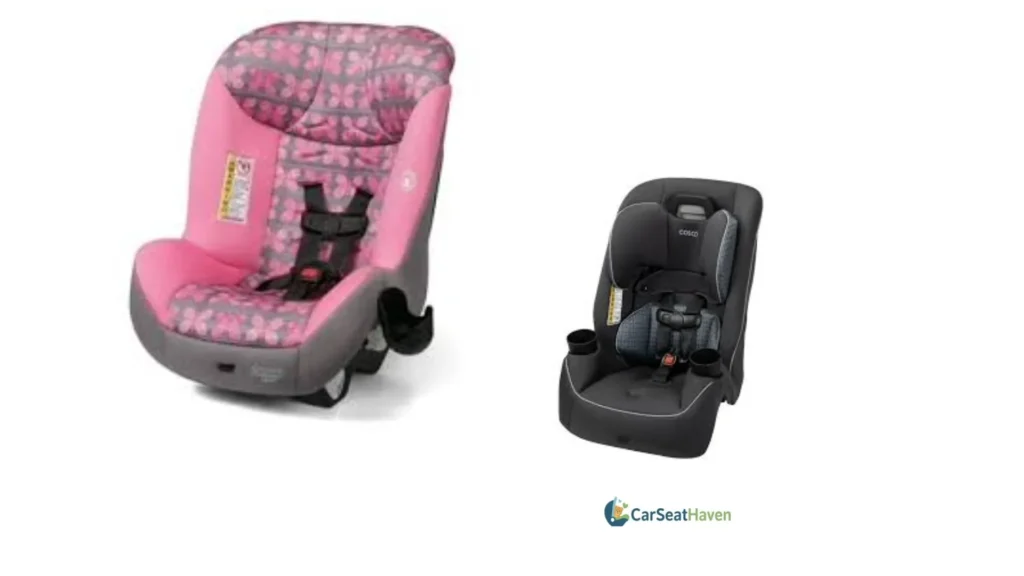
Saving money on a car seat is smart. Cutting corners on safety is not. These are the traps to avoid.
Used seats with an unknown history
A car seat that has been in even a minor crash must be replaced, and you cannot tell by looking at it. Never buy a used seat from a stranger, a flea market, or a random marketplace listing where you do not know its full history. The one exception is a seat from a trusted family member or close friend who can tell you honestly that it has never been in a crash, never been checked as airline luggage in a rough way, and is not expired. Even then, check the expiration date and confirm it was never recalled.
Counterfeit and lookalike listings
Walmart.com hosts third party marketplace sellers alongside Walmart’s own inventory. A seat sold and shipped by Walmart is the real product. A seat from an unknown third party seller at a price that seems too good to be true deserves skepticism. Counterfeit car seats are a documented problem: they copy the look of real seats but have never been crash tested. Check who the seller is before you click buy, and prefer listings sold and shipped by Walmart itself.
Expired seats
Every car seat has an expiration date, usually 6 to 10 years after manufacture, printed on a label on the seat. Plastic degrades, standards change, and parts wear. This matters most with older budget lines like the Graco SnugRide Classic Connect, which can sit in warehouses. Always check the manufacture date when the box arrives, and register your seat with the manufacturer so you hear about recalls.
Aftermarket inserts, strap covers, and toys
Anything that did not come in the box with your seat and is not approved by the seat’s manufacturer is an aftermarket product: head inserts, strap covers, seat protectors, and hanging toys. These are not crash tested with your seat and can change how the harness fits or how the seat performs. The one exception is items the manufacturer itself sells or approves for that specific model. When in doubt, leave it out.
Seats that do not fit your child or your car
The cheapest seat is a bad deal if your newborn swims in it or it cannot be installed tightly in your vehicle. Before buying, check the seat’s minimum weight against your baby’s size (especially for preemies, where a 4 pound minimum like the Trooper SLIM beats a 5 pound minimum), and test the install in your actual car during Walmart’s 90 day return window. A seat that moves more than one inch side to side at the belt path is not installed correctly, regardless of what it cost.
How to shop Walmart for the lowest car seat prices
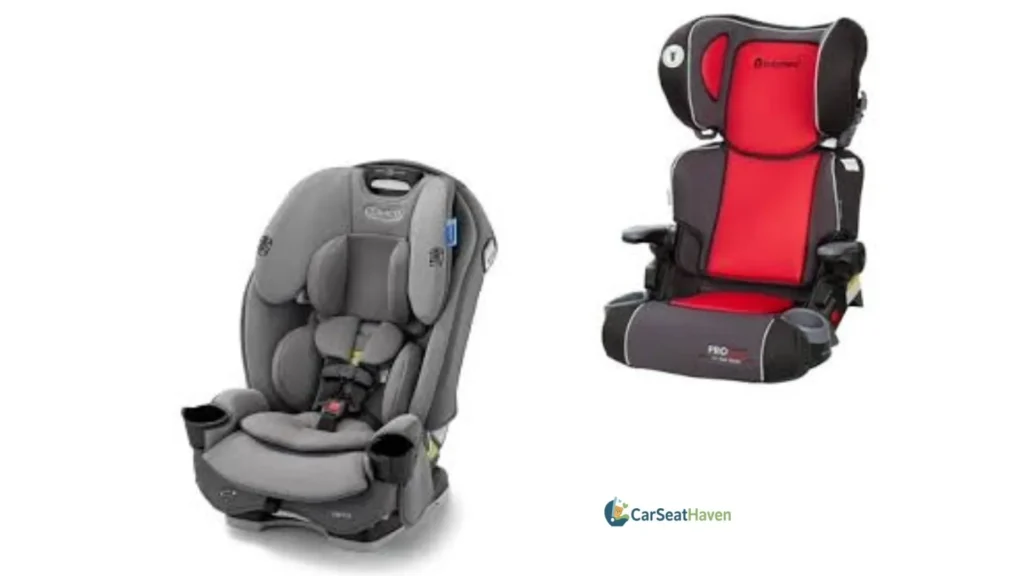
Walmart’s pricing on car seats is not static. Parents who time their purchases routinely save 20 to 40 percent.
Watch for rollbacks
Rollback is Walmart’s term for a temporary price drop, and car seats go on rollback regularly, especially Graco and Safety 1st models. The Graco Contender 65 dropping from about $140 to near $100 is a classic example. There is no published schedule, so check prices weekly once you know which seat you want. Adding the seat to a wishlist or your cart makes it easy to spot a drop.
Check clearance, in store and online
When Walmart clears out a fabric pattern or an older trim, prices can fall below the everyday low price. Clearance car seats are still new and safe as long as the box is intact and the manufacture date is recent. Check the date on the box before you buy clearance, and avoid anything more than a year or two old.
Use the baby registry completion discount
Walmart’s baby registry comes with a completion discount on remaining registry items as your due date approaches. If a car seat is on your registry, that discount stacks on top of everyday pricing. Even a modest percentage off a $100 seat is real money.
Compare pickup, delivery, and Walmart+
Many car seats qualify for free store pickup, which is often the fastest option and avoids shipping damage to a bulky box. Walmart+ members get free shipping with no order minimum and free delivery from the store, which matters for heavy seats like the Graco Contender. Non members get free shipping on orders over $35, which every car seat on this list clears easily. If a seat shows out of stock online, check store availability: Walmart’s site lets you see which nearby stores have it on the shelf.
Buy the seat before you need it, but not too early
Car seats expire, so do not buy one two years before your baby is born. But buying a few months ahead lets you wait for a rollback instead of paying full price in a panic the week before the due date. For the second stage seat (the convertible or booster), start watching prices when your child is about two thirds through the current seat’s limits.
When spending more is actually worth it
Budget seats are safe, but there are real situations where paying more pays off.
- You drive long distances often: Thicker padding, better fabrics, and nicer covers make a genuine difference in comfort on road trips. A seat like the Safety 1st Grow and Go or a discounted Graco model is a reasonable step up.
- Your child is tall for their age: Taller shells and higher harness slots keep kids harnessed longer. If your toddler is already outgrowing a 40 pound limit seat by height at age 3, the money you "saved" disappears into an early upgrade.
- You move the seat between cars weekly: Premium installation features like push button LATCH and lock offs save real time and frustration. If grandparents or two cars are in the mix, easier installs mean fewer mistakes.
- You want a travel system: Budget buckets like the LiteMax 35 and SnugRide Classic Connect do pair with strollers, but the stroller options are basic. If daily stroller walks matter to you, a mid range travel system bundle can be better value than piecing it together.
- Twins or multiples: With two or three seats to buy, the math flips: narrow budget seats like the Trooper SLIM or Scenera Next save you hundreds versus buying multiples of a premium seat, and three across fit becomes the deciding factor anyway.
FAQs about budget car seats at Walmart
Are Walmart car seats as safe as the ones at specialty baby stores?
Yes. The store does not change the safety standard. Every new car seat sold at Walmart must pass FMVSS 213, the same federal crash testing standard that applies to seats sold at specialty retailers. What differs is the selection: Walmart stocks more budget brands like Cosco and Safety 1st and fewer premium brands.
What is the cheapest car seat at Walmart right now?
The Cosco Scenera Next is consistently the cheapest convertible car seat at Walmart, typically between $39 and $60 depending on the fabric and whether you get the DLX trim. For booster age kids, backless boosters like the Cosco Rise can be found under $20, though those are for older children who meet the height and weight minimums.
Is a $40 car seat really safe?
Yes, provided it is new, not expired, correctly installed, and the right fit for your child’s size. The price reflects simpler materials and fewer convenience features, not weaker crash protection. Federal law requires the same testing for a $40 seat and a $400 seat.
Should I buy an infant car seat or a convertible to save money?
A convertible used from birth is the cheapest path: one seat like the Cosco Scenera Next DLX (about $39 to $60) covers you from newborn to roughly age 3 or 4. An infant bucket like the Evenflo LiteMax 35 adds $110 to $140 but gives you the carry-the-sleeping-baby convenience for the first 9 to 12 months. If budget is the top priority, start with the convertible.
How do I know a car seat is not expired?
Find the manufacture date on the label attached to the seat (usually on the back or bottom), then check the manual for that model’s usable life, typically 6 to 10 years. If you are buying clearance or an older product line, verify the date as soon as the box arrives and return it if the remaining life is too short.
Can I buy a car seat from a Walmart marketplace seller?
You can, but check the seller first. Prefer listings sold and shipped by Walmart. Third party sellers on Walmart.com are generally legitimate businesses, but counterfeit car seats exist, and an unknown seller offering a famous seat far below market price is a red flag. When in doubt, buy the listing that Walmart itself fulfills.
Do budget car seats work for preemies or small newborns?
Most budget convertibles start at 5 pounds, which works for many full term newborns but can be a loose fit for smaller babies. If you are expecting a preemie or a small baby, look for a 4 pound minimum: the Baby Trend Trooper SLIM and the infant buckets on this list (LiteMax 35, SnugRide Classic Connect 35, onBoard FLX) all start at 4 pounds. Always check the fit with the harness snug before leaving the hospital.
What is the difference between the Cosco Scenera Next and the Scenera Next DLX?
The DLX is the same seat shell with upgraded fabrics, extra padding, and usually an included cup holder. Safety ratings are the same since the structure is identical. Buy whichever is cheaper or in the color you prefer; the price gap at Walmart is usually small.
When will my child outgrow a budget convertible?
It depends on the seat’s limits and your child’s growth. A 40 pound forward facing limit seat like the Scenera Next or Tribute LX is typically outgrown around age 3 to 4. A 65 pound harness seat like the MightyFit 65 DX or Contender 65 usually lasts to age 5 or 6 in harness mode. Kids outgrow seats by height (shoulders above the top harness slot, or less than one inch of shell above the head rear facing) as often as by weight, so check both.
Are expensive car seats worth it over budget seats?
For crash protection, no seat is legally allowed to be "safer" in a way you can shop by, since all pass the same federal tests. Expensive seats are worth it for comfort, easier installation, longer lasting limits, and convenience features. If those matter to your daily life and your budget allows, they are a reasonable upgrade, not a safety requirement.
The bottom line
The best walmart car seats for parents on a budget are the ones that fit your child, fit your car, and get installed correctly every single time. Start with the Cosco Scenera Next DLX or Evenflo Tribute LX if money is tightest, step up to the Cosco MightyFit 65 DX or a rollback Graco Contender 65 for longer harness use, and add an Evenflo LiteMax 35 if you want the infant bucket convenience. Check the current price before you buy, since Walmart’s rollbacks move fast, and register every seat so recall notices reach you. A $60 seat installed right protects your child just as well as the seat that costs five times more.

Aiden is the founder and editor of CarSeatHaven. He researches NHTSA safety standards, AAP guidance, manufacturer manuals, and recall notices, and turns them into plain-language car seat guides for parents.
