

Table of Contents
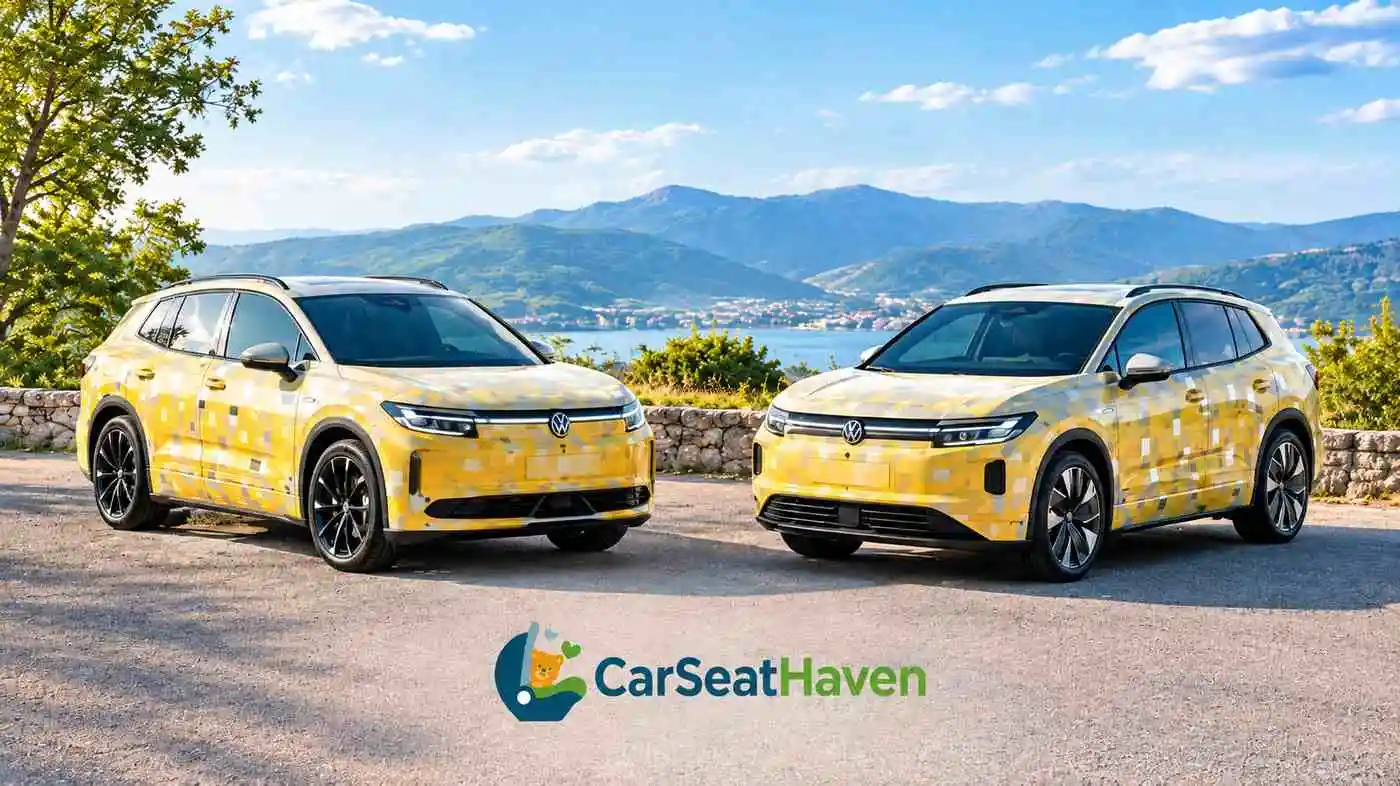
Volkswagen will pull the cover off the ID Tiguan on October 9, 2026, and if you are a parent shopping for a family SUV in 2027, this is one to watch. Everyone keeps asking the same question: when is the ID Tiguan coming out? The reveal happens October 9, with sales starting in early 2027. The ID Tiguan replaces the ID.4 and ID.5 as VW’s mainstream electric SUV, rides on an updated MEB+ platform, stretches about 44mm longer than the ID.4 for a roomier cabin, and brings back the physical buttons parents have been begging for. Reported figures point to up to 600 km of WLTP range, though VW has not confirmed final specs or pricing yet. Here is everything a family buyer needs to know, including how it stacks up against the Tesla Model Y and the new 2027 Hyundai Tucson.
Key Takeaways
- Volkswagen unveils the ID Tiguan on October 9, 2026; sales start in early 2027.
- It replaces the ID.4 and ID.5 and sits alongside the gas-powered Tiguan.
- About 44mm longer than the ID.4, with a bigger boot (534 litres) plus a front trunk.
- Physical buttons return to the steering wheel and dashboard, a big win for parents.
- Reported range up to 600 km (WLTP); VW has not confirmed final specs yet.
- Main rivals: Tesla Model Y, 2027 Hyundai Tucson, Hyundai Ioniq 5, Kia EV6.
What Is the VW ID Tiguan?
The ID Tiguan is Volkswagen’s next mainstream electric SUV. Think of it as the ID.4’s successor with a smarter name. Volkswagen decided that buyers connect better with familiar model names than with numbers, so the electric SUV takes the Tiguan badge, the same nameplate that has made the gas Tiguan VW’s best-selling SUV in North America for a decade. The ID. part stays, signaling it is fully electric.
This is not a clean-sheet new car. It rides on MEB+, an updated version of the platform under the ID.4, with new batteries, revised styling, and a reworked interior. Volkswagen CEO Thomas Schäfer calls it part of the company’s “True Volkswagen” push: recognizable names, premium feel, and controls that work the way drivers expect. The ID.5, the coupe-styled sibling, gets no successor at all.
For parents, the pitch is simple. The Tiguan name already means “practical family SUV” to millions of buyers. Now that name comes with an electric powertrain, more space, and an interior fixed around the complaints ID.4 owners shouted about for years.
When Does the ID Tiguan Come Out?
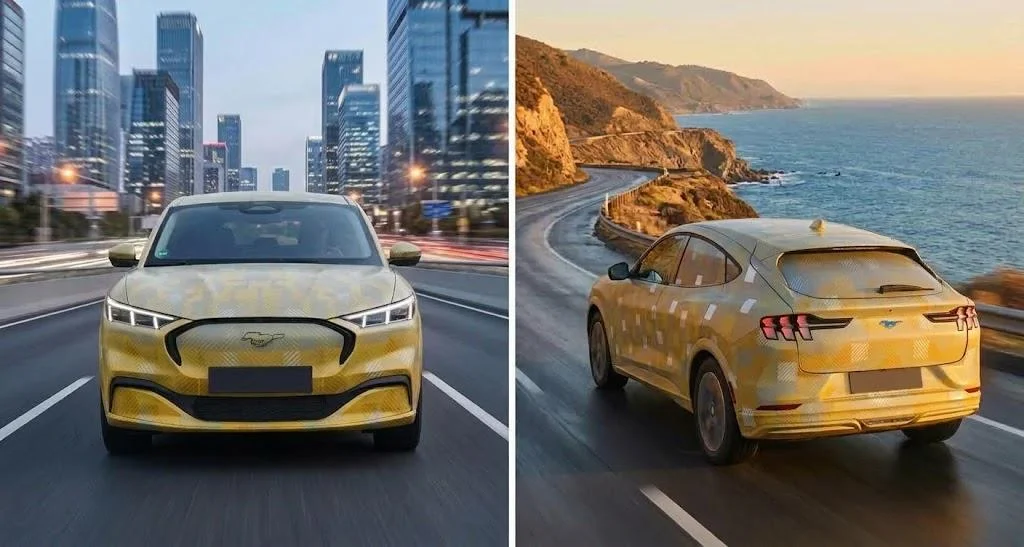
Mark October 9, 2026 on your calendar. That is the global debut date Volkswagen has confirmed, when the company will reveal the production car in full, including the final specifications it has kept under wraps.
This is the question more people are asking every week. Search interest for the ID Tiguan release date has jumped over 160 percent in recent weeks as the debut approaches, and related searches like “id tiguan 2027” are breaking out. If you are one of the parents typing that into Google, here is the timeline as VW has confirmed it.
Sales follow in early 2027, with Europe first. Volkswagen has said North American timing will be shared “in due course,” which is corporate speak for “we will tell you later.” If you are shopping for a family EV in the first half of 2027, the ID Tiguan may or may not be on your local lot yet. It is worth asking your dealer now and getting on a notification list, because early demand for a fresh family EV can mean waiting lists.
The car will be built in Emden, Germany, on the same lines where the ID.4 is made today. Production is scheduled to run through 2031, so this is a long-term model, not a stopgap. That matters for families who keep cars for eight or ten years. You want a model with a future, with parts and software support for the long haul.
Why Parents Should Pay Attention
Most EV coverage talks about 0 to 60 times and charging curves. Parents care about different things. Here is why the ID Tiguan deserves a spot on your family shortlist.
It is sized for real family life. At roughly 4,618 to 4,628mm long, it sits in the heart of the compact SUV segment, the same footprint as a Honda CR-V or Toyota RAV4. That is the size that fits in a standard garage, parks without drama, and still swallows a stroller, sports gear, and a week’s groceries.
The Tiguan name carries trust. Volkswagen has built more than 8.3 million Tiguans. Combined Tiguan and Tayron deliveries topped one million units in the past year. When grandparents ask what you drive, “a Tiguan” needs no explanation. For mainstream buyers nervous about going electric, a familiar name on an electric car lowers the psychological barrier.
VW fixed the interior complaints. The ID.4’s touch-sensitive sliders and capacitive buttons frustrated owners for years. Volkswagen heard them. The ID Tiguan brings back real buttons, and that single change might matter more to parents than any spec on the sheet.
The timing lines up with family buying cycles. If your current SUV is getting tired and you have been waiting for the right electric family car, early 2027 puts the ID Tiguan in showrooms right when many three to five year ownership cycles come due.
Size and Space: What It Means for Car Seats
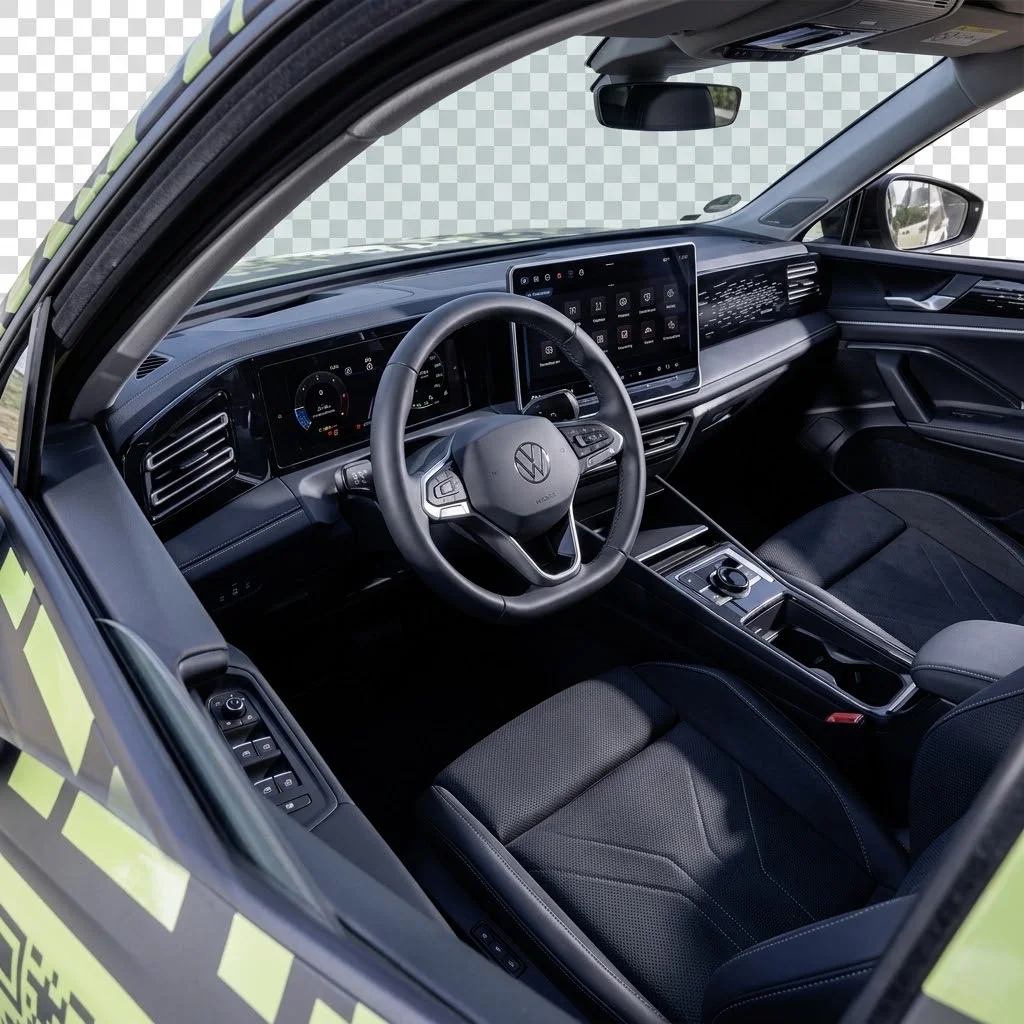
This is the section that matters most on a parenting site, so let us be precise about what we know and what we are still guessing.
What we know: the ID Tiguan is about 44mm (1.7 inches) longer than the ID.4, which measured 4,584mm long, 1,852mm wide, and 1,639mm high on a 2,765mm wheelbase. The wheelbase, the distance between the axles that largely determines cabin room, stays the same at 2,765mm. Volkswagen promises a “more spacious cabin,” and the extra length goes mostly to the front and rear overhangs, which helps cargo space.
Boot space is reported at 534 litres with the seats up, expanding to 1,577 litres folded. That is a genuinely useful family number. A 534-litre boot swallows a full-size stroller plus bags without playing Tetris. And for the first time in a European Volkswagen, there is a front trunk, a frunk, giving you extra storage for charging cables, emergency kits, or muddy sports shoes you do not want near the kids.
Will Three Car Seats Fit Across?
Honestly, we do not know yet. Nobody has published the rear bench width or the distance between the LATCH anchors. The ID.4’s rear seat handled two car seats comfortably, and three across was tight but possible with slim seats, based on dealer-published fit tests using seats like the Chicco KeyFit 30 and Graco Contender 65.
The ID Tiguan’s extra length does not automatically mean a wider bench, since the wheelbase is unchanged. But the redesigned body with its flatter shoulder line and new doors could free up a little more hip room. Our advice: if three across matters to you, wait for real measurements after the reveal, and bring your actual seats to the dealership for a test fit before you buy. No spec sheet replaces that test.
Stroller and Cargo Space
The numbers look promising. A 534-litre boot beats many compact SUV rivals and the flat load floor of an EV (no transmission tunnel, no exhaust routing) usually makes the space more usable than the raw figure suggests. The frunk adds bonus storage that gas SUVs simply do not have. For the double-stroller crowd, the folded 1,577-litre maximum should handle even bulky side-by-side models.
One more family number: towing capacity is reported at 1.8 tonnes for the base version and 2.0 tonnes for the larger-battery models. If your family hauls a small camper or a utility trailer, that is enough to matter.
Physical Buttons Are Back (And Parents Cheer)
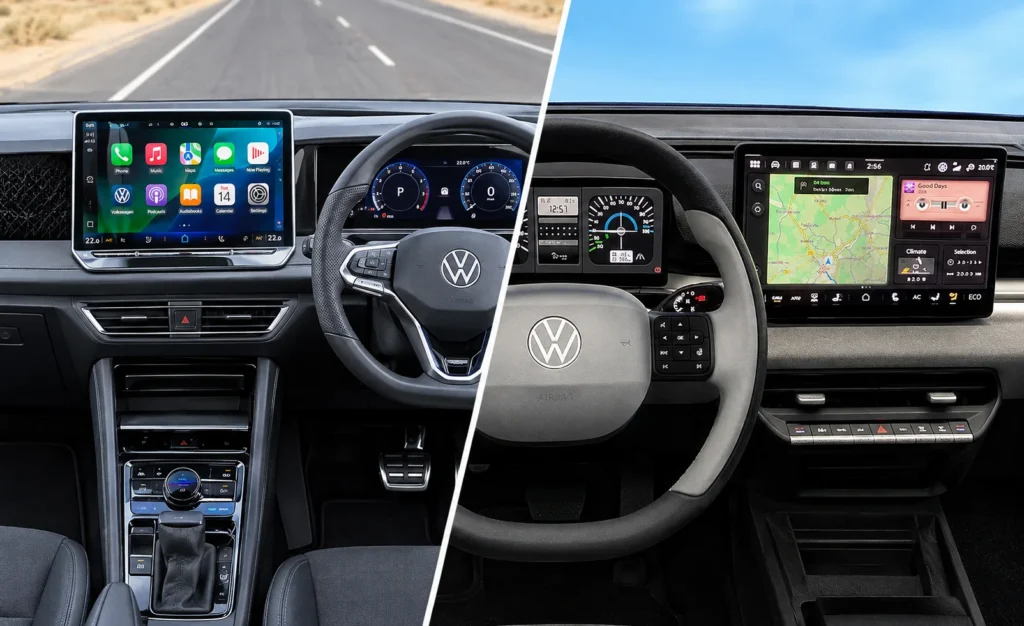
This deserves its own section because it might be the ID Tiguan’s biggest family feature, and it costs nothing extra.
The ID.4 became infamous for its haptic touch sliders: no backlighting, easy to brush accidentally, maddening to use with gloves or while bouncing over potholes. Now imagine doing all that with a toddler screaming in the back seat and a baby who finally fell asleep. Every parent who has fumbled for a volume control while driving knows this pain.
Volkswagen is fixing it properly. The ID Tiguan gets real physical buttons on the steering wheel, a rotary volume knob, separate switches for all four windows, and a fixed climate-control strip. These are changes VW already previewed on the ID. Polo, and they are rolling across the range because customers demanded them.
Why does this matter more for parents than for anyone else? Because driving with kids divides your attention by default. Controls you can find by touch, without looking away from the road, are a safety feature. A volume knob you can grab blind is worth more than a slightly bigger touchscreen. Volkswagen’s return to buttons is an admission that the touchscreen-everything experiment went too far, and families benefit most from the correction.
Range, Charging, and Family Road Trips
Let us talk numbers, with an honest framing. Volkswagen has NOT released official specs. Everything below comes from a German outlet called Edison that drove a camouflaged prototype, plus industry reporting. Treat these as well-informed reports, not confirmed facts. The October 9 reveal will settle them.
Reported lineup: an entry model with a 140 kW (190 hp) rear motor and 58 kWh LFP battery, projected at up to 450 km WLTP. A mid-range 210 kW (286 hp) rear-drive version with a 77 kWh NMC battery, projected at up to 600 km WLTP. And a dual-motor all-wheel-drive 4MOTION flagship at 220 kW (299 hp) with the 77 kWh pack, projected at up to 560 km WLTP.
What LFP means for families: the base battery uses lithium iron phosphate chemistry. LFP batteries are cheaper, more durable over many charge cycles, and more tolerant of being charged to 100 percent regularly. For a family car that you charge at home every night and keep for a decade, that durability matters. The NMC packs deliver more range for road trips.
Charging: reported peak DC rates are 105 kW for the small battery and 165 kW for the large one, with 10 to 80 percent taking about 26 and 29 minutes respectively. In parent terms, that is one proper snack and bathroom stop. Not as fast as 800-volt rivals, but perfectly livable. Home charging runs at up to 11 kW AC, which fills the big battery overnight.
The honest caveat: WLTP figures always read higher than US EPA estimates. If the top version does 600 km WLTP, expect something in the low 300s of miles on the EPA cycle. That is still plenty for a family SUV. Most families drive under 40 miles a day, which means a full charge covers a week of school runs and errands.
ID Tiguan vs ID.4: What Actually Changes for Families
If you already own or considered an ID.4, here is what the new car changes.
Space: 44mm more length, bigger boot, plus a frunk the ID.4 never had. Small gains, but they land exactly where families feel them.
Interior: physical buttons replace the hated sliders. Better materials are promised throughout the cabin. A new dashboard, new steering wheel, and new displays modernize the space.
Comfort: WardsAuto drove a prototype and found it quieter and more settled than the ID.4, with comfort-tuned suspension and a new one-pedal driving mode. For kids prone to carsickness, a smoother, quieter ride is a genuine upgrade.
Batteries: the MEB+ platform brings LFP chemistry to the base model, which should mean lower prices and longer battery life. Charging speeds improve over the ID.4’s underpinnings.
Looks: the ID.4’s futuristic blob gives way to a more conventional SUV shape with rectangular LED headlights, a full-width light bar, normal pull-type door handles (goodbye flush handles that freeze shut in winter), and a more upright stance.
One fair warning from the coverage: several outlets note this is a comprehensive facelift rather than a clean-sheet new car. That is not a criticism. It means proven mechanicals with the rough edges polished off, which is arguably what families want most.
ID Tiguan vs 2027 Hyundai Tucson: Electric or Hybrid?
Many family buyers will cross-shop these two, so let us lay it out. The 2027 Hyundai Tucson was revealed on October 1, 2026 in New York, just days before the ID Tiguan’s debut. It is a gas and hybrid SUV, not an EV, which makes this a powertrain philosophy choice as much as a car choice.
Tucson’s family highlights: rear doors now open 83 degrees (up from 73), which is a headline feature for anyone loading car seats. The body is longer and wider with more rear headroom. A new XRT Pro trim adds all-wheel drive and 8.3 inches of ground clearance for outdoorsy families. The hybrid makes 233 horsepower and targets about 42 mpg. US sales start in early 2027, same window as the ID Tiguan.
How to choose: pick the Tucson if you want zero charging lifestyle changes, maximum fuel flexibility for long road trips, and that wide-opening rear door for car seat duty. Pick the ID Tiguan if you can charge at home, want lower running costs, and prefer the quiet, smooth EV driving experience. Both are 2027-model family SUVs arriving in the same window, which is great news for buyers. Competition keeps everyone honest.
On pure space, they play in the same compact SUV sandbox. The Tucson’s 83-degree rear doors are a clever, tangible family win that the ID Tiguan has not matched on paper yet, since VW has not published its door opening angle. If that number matters to you, wait for the reveal.
One interesting signal: search interest for the 2027 Tucson has surged sharply since its October 1 reveal, hitting its highest point of the year, while ID Tiguan searches are only just starting to climb ahead of the October 9 debut. That tells you the Tucson has a head start in buyer awareness. If the ID Tiguan wants to steal family buyers, the reveal needs to land hard.
ID Tiguan vs Tesla Model Y: The Benchmark
The Tesla Model Y is the best-selling electric vehicle on the planet and the default family EV. Any ID Tiguan verdict runs through it.
Price: the 2026 Model Y starts at $39,990 for the Standard RWD (321 miles EPA) and runs to $57,490 for Performance AWD. The ID Tiguan’s pricing is unannounced, but the outgoing ID.4 started at $45,095. Volkswagen needs to land near or under the Model Y to compete, and early reports suggest VW is targeting tax-credit-friendly pricing.
Range: Model Y offers 294 to 357 miles EPA depending on trim. The ID Tiguan’s reported 600 km WLTP top figure should translate to low-300s EPA miles, putting it in the same ballpark.
Where VW can win: physical controls (Tesla doubles down on screen-everything), a more conventional SUV look that many parents prefer, and VW’s dealer network for service. Plenty of parents like the idea of an EV but want a normal car buying and servicing experience.
Where Tesla wins today: the Supercharger network remains the gold standard for road trips, Tesla’s software is more polished, and the Model Y’s sales volumes mean strong resale data and abundant used examples.
The parent’s take: if you value buttons you can feel, a quieter cabin, and a dealership down the road, the ID Tiguan deserves your attention. If charging network and software matter most, the Model Y still leads. Drive both before you decide.
Safety: What Family Buyers Should Expect
Volkswagen has not published crash test ratings for a car that has not debuted yet, and anyone who claims otherwise is guessing. But we can make reasonable expectations based on the Tiguan nameplate’s history and the platform underneath.
The gas-powered Tiguan has consistently earned strong safety ratings, and the MEB platform that underpins the ID.4 already proved itself in European and American crash testing. The MEB+ evolution keeps the same fundamental structure with updated components, so there is no reason to expect a step backward. Still, wait for the actual IIHS and Euro NCAP results before treating this as fact.
What parents should watch for at the reveal:
- Standard driver assists. Expect automatic emergency braking, blind spot monitoring, lane keeping assist, and rear cross traffic alert. The question is what comes standard versus what hides in option packages. For a family car, these should all be standard.
- Rear occupant alert. Systems that remind you to check the back seat before locking the car have become common on family SUVs. Given the Tiguan’s family positioning, this should be present. Confirm it at the reveal.
- Child lock and window controls. Here is where those returning physical window switches matter again. Separate switches for all four windows, as reported, suggest proper rear window lockout controls. Touchscreen-buried child locks are a pain. Physical ones just work.
- Camera and parking tech. A family SUV gets parked in tight school lots daily. Expect a surround view camera system on higher trims at minimum.
One more safety-adjacent point: the new one-pedal driving mode. Lift off the accelerator and regenerative braking slows the car smoothly to a stop. Parents will either love it or hate it, but it is worth test driving with kids aboard, because abrupt regen tuning can upset sensitive stomachs. Volkswagen’s comfort-first tuning philosophy suggests they calibrated it gently, and the WardsAuto prototype drive praised the smoothness.
How the Tiguan Name Helps Resale
Safety ratings affect insurance, but the badge affects resale, and resale affects your family budget directly. The ID.4 suffered brutal depreciation, with some reports citing values down over 60 percent for early owners. Part of that was the EV market cooling, but part was the ID.4’s weak brand identity.
The Tiguan name should help. It is a known quantity with a decade of sales history, which gives used car buyers and pricing guides something to anchor to. A car called “Tiguan” is easier to value than a car called “ID.4” was. For families who buy new and sell in five to eight years, stronger residuals mean real money back.
The Real Cost of Going Electric: A Parent’s Math
Sticker price gets the headlines, but family budgets run on monthly costs. Here is how the math typically works for an electric family SUV, using the ID Tiguan’s reported specs as a guide.
Fuel versus charging: the average American family SUV burns roughly $150 to $200 a month in gasoline. Home charging the same miles on an EV typically costs $40 to $70 depending on your electricity rates. That is a saving of over $1,000 a year, every year you own the car. If you have solar panels, the math gets even better.
Maintenance: EVs skip oil changes, transmission services, and most brake jobs, because regenerative braking does most of the stopping. Tires wear a bit faster on heavy EVs, so budget a little extra there. Over eight years of family ownership, maintenance savings versus a gas SUV commonly run into the thousands.
The tax credit question: the federal EV tax credit of up to $7,500 could apply if the ID Tiguan meets domestic content and battery sourcing rules. That is a big “if” for a German-built car, though VW may shift some production or sourcing to qualify. Do not count this money until VW confirms eligibility. At $45,000 minus $7,500, the math changes dramatically. At full sticker with no credit, the Model Y’s $39,990 starting price looks tougher to beat.
Insurance: EVs can cost slightly more to insure than equivalent gas cars, partly because battery repairs are expensive. Get quotes before you buy, not after. The Tiguan’s mainstream positioning should help versus premium EVs, but confirm with your insurer.
The bottom line for budgets: if the ID Tiguan lands near the outgoing ID.4’s $45,095 starting price and qualifies for incentives, its total cost of ownership over eight family years could undercut both gas rivals and the Model Y. If it launches at $50,000-plus with no credit, the value story gets harder. Pricing day is the day this article’s advice gets sharp.
ID Tiguan vs Hyundai Ioniq 5 and Kia EV6
The Model Y gets the headlines, but the Korean twins are the ID Tiguan’s most direct rivals on value, and many parents cross-shop all three.
Hyundai Ioniq 5: the design standout of the segment, with ultra-fast 800-volt charging that beats the ID Tiguan’s reported 165 kW peak. US sales hit 47,039 in 2025, more than double the ID.4’s 22,373. Where the VW fights back: a more conventional interior that some parents prefer over the Ioniq 5’s lounge-like minimalism, physical buttons versus Hyundai’s own touch-heavy approach, and the Tiguan badge’s familiarity.
Kia EV6: shares the Ioniq 5’s 800-volt platform and fast charging, with sportier styling. Both Koreans offer proven reliability records in their current generations, something the ID Tiguan cannot claim until it has been on roads for a year or two.
The honest read: on charging speed alone, the Korean pair wins today. On interior usability for parents, the ID Tiguan’s button comeback gives it a real argument. On price, we will know when VW announces numbers. This three-way fight is genuinely good for family buyers, because every contender has to earn the sale.
What We Still Don’t Know
Honesty matters in a preview, so here is the list of things Volkswagen has not told us yet.
- US pricing. The single biggest unknown. Everything about value depends on this number.
- EPA range ratings. WLTP figures do not directly translate. Wait for the EPA sticker.
- US launch timing. Europe first, America “in due course.”
- Full interior details. We have seen buttons in spy shots and prototype drives, but not the final cabin.
- Rear seat measurements. Hip room, legroom, LATCH anchor spacing, all unconfirmed.
- Rear door opening angle. The Tucson’s 83 degrees set a bar. VW has said nothing.
- Trim lineup and options. Beyond the expected R Line, details are thin.
- Federal tax credit eligibility. Depends on final assembly and battery sourcing. This could swing the effective price by $7,500.
October 9 should answer most of these. We will update this guide when it does.
Should Your Family Wait for the ID Tiguan?
It depends on your timeline and your tolerance for first-year models.
Wait if: your current car runs fine into 2027, you can charge at home, and you like the idea of physical buttons, more space, and fresh batteries. Early adopters also get the newest tech and the longest support runway.
Do not wait if: you need a car now. The outgoing ID.4 is still on dealer lots, often with discounts as VW clears inventory, and it remains a solid family EV. The Tesla Model Y, Hyundai Ioniq 5, and Kia EV6 are proven quantities you can buy today.
The smart middle path: put yourself on a VW dealer’s notification list now, test drive the ID Tiguan when it lands, and compare it back to back with the Model Y and the 2027 Tucson. Never buy a family car on reveal-day hype. Buy it after your car seats are installed in the back and your stroller is in the boot.
Frequently Asked Questions
When is the VW ID Tiguan release date?
Volkswagen will fully unveil the ID Tiguan on October 9, 2026. Sales begin in early 2027, starting in Europe, with US timing to be announced.
Is the ID Tiguan replacing the ID.4?
Yes. The ID Tiguan succeeds both the ID.4 and the ID.5. The ID.5 gets no successor. It will be built in Emden, Germany, where the ID.4 is made today.
How much will the ID Tiguan cost?
Volkswagen has not announced pricing. The outgoing 2026 ID.4 started at $45,095 in the US. Expect VW to target competitive pricing against the Tesla Model Y, which starts at $39,990.
What is the ID Tiguan range?
Official figures are pending. Prototype reports point to up to 600 km WLTP for the 77 kWh version, which should translate to low-300s miles on the EPA cycle. The base 58 kWh version is reported at around 450 km WLTP.
Is the ID Tiguan good for families?
On paper, yes. It is slightly longer than the ID.4 with a bigger boot plus a front trunk, it brings back physical buttons, and early prototype drives praise its quiet, comfort-tuned ride. Final judgment waits on rear seat measurements and pricing.
Does the ID Tiguan have physical buttons?
Yes. Volkswagen is returning to physical steering wheel buttons, a rotary volume knob, separate window switches, and a fixed climate control strip, fixing the ID.4’s widely criticized touch sliders.
Should I buy an ID.4 now or wait for the ID Tiguan?
If you need a car now, discounted ID.4s on dealer lots are a solid buy. If you can wait until 2027, the ID Tiguan brings more space, better batteries, faster charging, and physical buttons. Test drive both before deciding.
Related Guides
- CarSeatHaven Home: car seat and family car guides
- Do Car Seats Expire? Yes, and Here’s When Yours Does
- Free Car Seat Expiration Checker

Aiden is the founder and editor of CarSeatHaven. He researches NHTSA safety standards, AAP guidance, manufacturer manuals, and recall notices, and turns them into plain-language car seat guides for parents.
