
Table of Contents
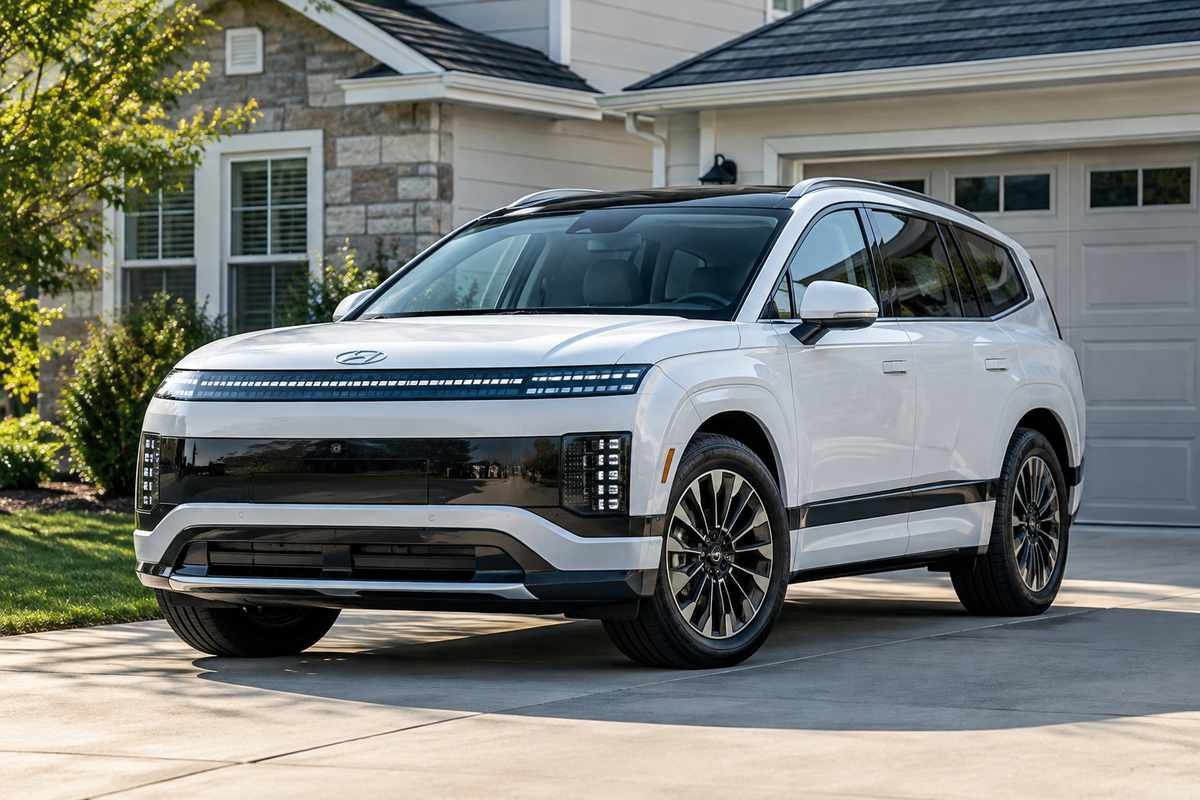
Yes, the 2026 Hyundai Ioniq 9 has been recalled because its power second-row seats can keep moving after touching a person, which creates a trap risk that Hyundai itself says is particularly dangerous for children. The recall covers 5,360 SUVs in the United States, and the fix is a free software update that owners can get over the air or at a dealer. If you own a 2026 Ioniq 9 in the Limited, Calligraphy, or Calligraphy Design trim, check your VIN on the NHTSA website today, keep children away from the second-row power seats until the fix is installed, and watch for the official owner letter arriving November 9. This guide walks you through every step, including how to check your VIN, what to tell your kids, and what to do in an emergency.
Key Takeaways
- 5,360 US 2026 Ioniq 9 SUVs (Limited, Calligraphy, Calligraphy Design) are recalled under NHTSA 26V588.
- Power second-row seats may fail to stop on contact, creating a trap risk for children.
- The fix is a free software update, available over the air or at a dealer.
- Check your VIN at nhtsa.gov/recalls now. Do not wait for the November 9 letter.
- Keep children away from powered second-row seats until the fix is installed.
How To Tell Which Trim You Have
The recall covers only the Limited, Calligraphy, and Calligraphy Design trims. Many owners do not remember their exact trim, especially on a lease. Here is how to check without guessing.
- Rear badge: walk to the back of your Ioniq 9 and read the trim badge on the tailgate. It states the trim name directly.
- Window sticker: if you kept the original Monroney sticker from purchase, the trim appears at the top.
- Purchase or lease paperwork: your sales contract or lease agreement lists the trim level.
- Ask your dealer: call any Hyundai dealer, give them your VIN, and they can confirm the trim in seconds.
- The VIN lookup itself: if you run the NHTSA check described above and a recall appears, your trim is affected, no further detective work needed.
Lower trims with manual second-row seats are not part of this recall, so confirming your trim can end the worry in one step.
Which Ioniq 9 SUVs Are Recalled?
Not every Ioniq 9 is affected. The recall is narrow, and knowing the exact scope saves you a panic trip to the dealer. Here are the facts, straight from the NHTSA filing.
| Detail | What It Is |
|---|---|
| Model year | 2026 only |
| Trims affected | Limited, Calligraphy, Calligraphy Design |
| Units (US) | 5,360 |
| Built between | March 17, 2025 and May 4, 2026 |
| Built at | Hyundai Metaplant America, Georgia |
| NHTSA campaign number | 26V588 |
| Hyundai recall number | 307 |
The common thread is the power second-row seat. If your Ioniq 9 has manual second-row seats, or if it was built after May 4, 2026, this recall does not apply to your vehicle. Hyundai estimates that 100 percent of the recalled population carries the defect, so if your SUV falls inside those lines, take it seriously.
What Is Wrong With the Seats?
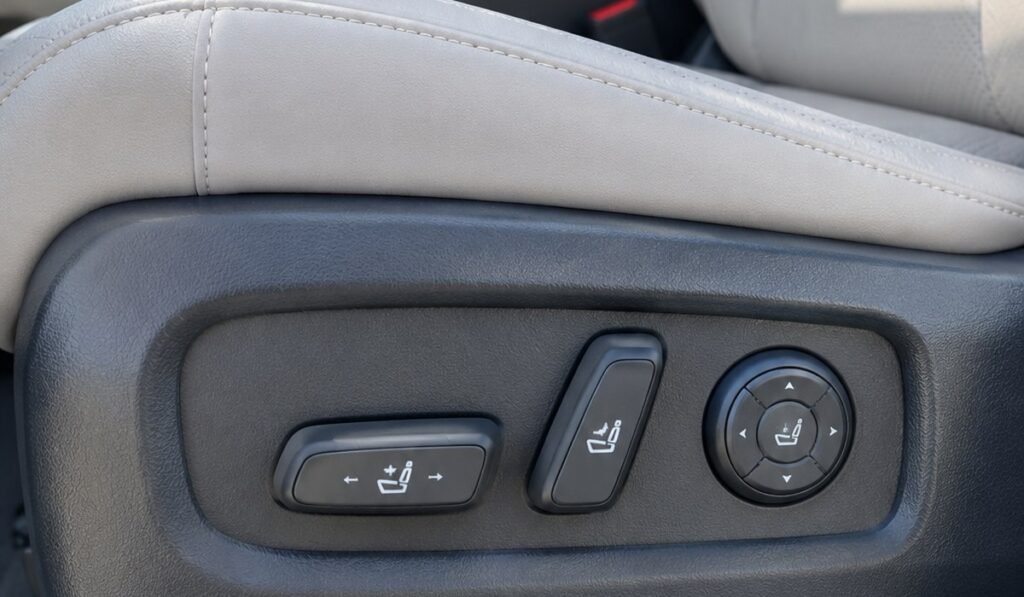
The problem lives in the seat controller software. The second-row power seats are supposed to detect when they touch a person or an object and stop immediately. In the recalled vehicles, that anti-pinch protection does not always work. The seat can keep folding, sliding, or stowing even after it makes contact with someone.
Hyundai investigated for three months and confirmed the issue after five owner complaints, including two reports of minor injuries. The company found that the seats can produce force above its own safety limits during powered movement. No crashes or fires have been reported.
Which Seat Functions Are Affected
The recall covers the powered functions of the second-row seats. That includes:
- Power folding: the seatback folds flat at the push of a button
- Power stowing: the seat tucks itself away to open cargo space
- Walk-in slide: the seat slides forward so passengers can reach the third row
- Power slide and recline: fore-aft and backrest adjustment by motor
Any of these can keep driving the seat after contact if the anti-pinch logic fails. Until the software fix is installed, treat every powered second-row movement as a potential pinch point.
Second Row vs Third Row: Which Seats Are Proven Safe
Here is a detail most news coverage skips. During testing, Hyundai measured the force produced by both rows. The second-row seats produced force above the company’s safety limits. The third-row seats tested below those limits. In plain terms: the proven problem is in the second row. The third row is not part of this recall. That does not make the third row a playground, but it does tell you where to focus your caution.
Timeline: How Hyundai Found the Problem
Recalls do not appear overnight. This one followed months of testing. Here is the sequence:
- March 2026: Hyundai receives early benchmarking results on power-folding seat operation and starts looking closely at the Ioniq 9’s second row.
- June 2026: Hyundai and an independent testing firm build a dedicated test device and confirm second-row force readings above company limits.
- September 2, 2026: Hyundai decides to recall 5,360 US vehicles.
- September 3, 2026: A corrected seat-controller software version enters production, so newly built Ioniq 9s do not carry the defect.
- September 12, 2026: Affected VINs become searchable on the NHTSA website.
- November 9, 2026: Official owner notification letters start going out by mail.
If you are reading this before November 9, you are ahead of the letter. Do not wait for it. Check your VIN now using the steps below.
Is My Ioniq 9 Recalled? Check Your VIN in 3 Steps
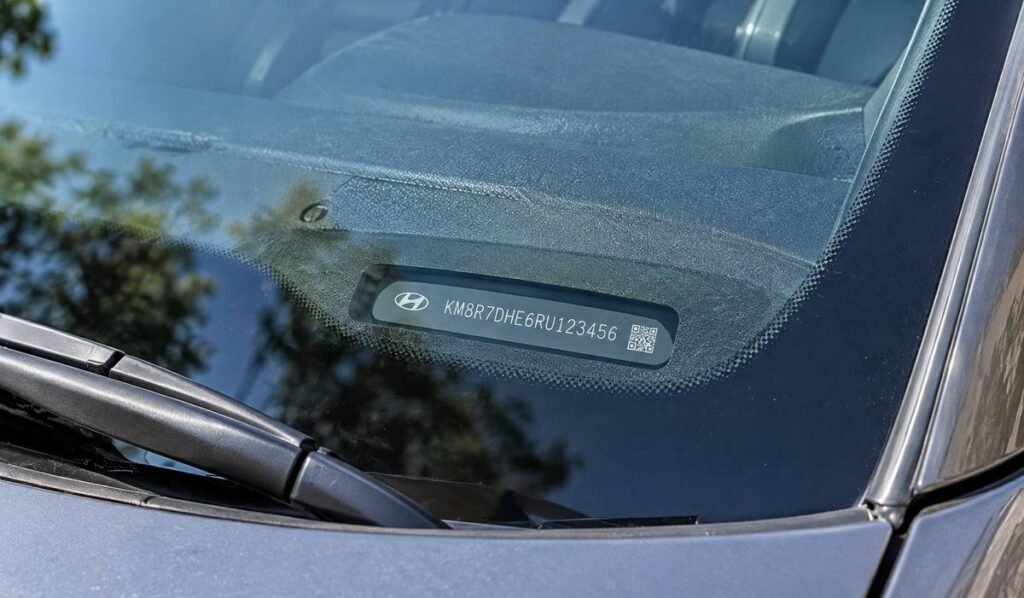
Every competitor says “check your VIN at NHTSA.” Almost none show you how. Here is the actual walkthrough.
Step 1: Find your VIN. Your 17-character Vehicle Identification Number sits in two easy places on the Ioniq 9. Look through the windshield at the driver’s side of the dashboard, where a small plate is visible from outside. Or open the driver’s door and read the sticker on the door jamb. Write it down or photograph it.
Step 2: Run the lookup. Go to nhtsa.gov/recalls and type the VIN into the search box. This is the official US government database, and it is free.
Step 3: Read the result. If your SUV is affected, the page lists the recall with its campaign number and a description of the defect and remedy. If the page shows no open recalls, your VIN is not in the recalled population. One caution: if your seat ever behaves strangely even with a clean VIN result, report it anyway. Databases reflect what the manufacturer has filed, and new complaints are how recalls grow. The section below shows you how to file one.
Parent Safety Checklist: What To Do Today
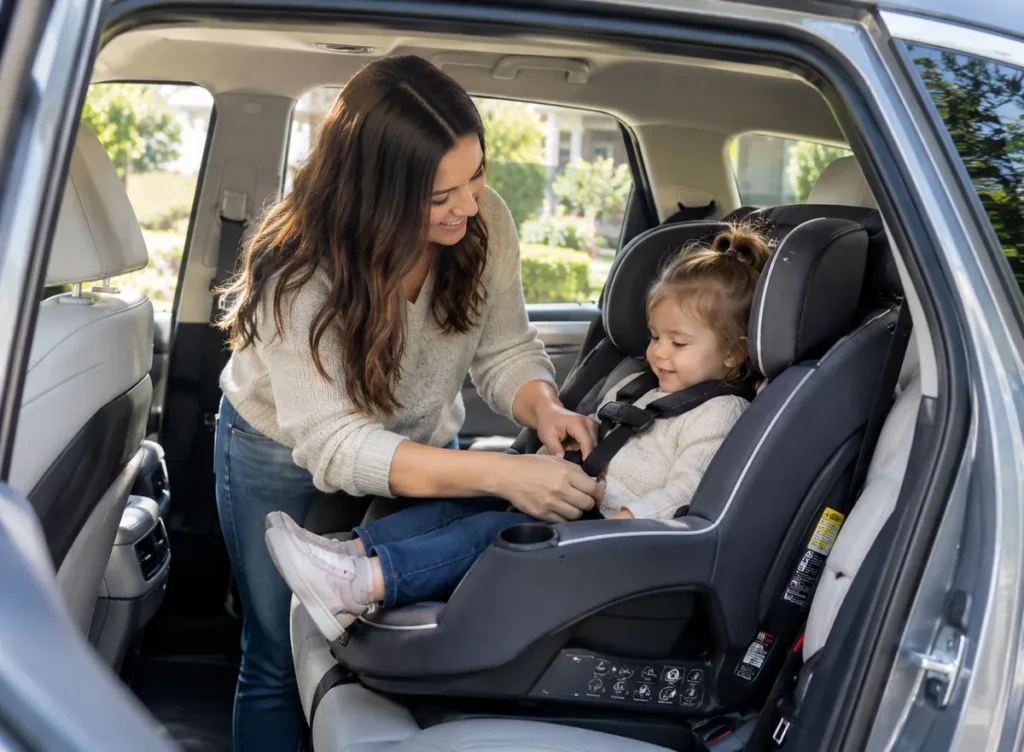
This is the section no competitor wrote properly. “Keep children away from the seats” is good advice, but parents need a plan, not a slogan. Here it is.
Kids in Car Seats in the Second Row
Many families install car seats in the second row because it is the safest seating position in most vehicles. That advice has not changed. What changes is how you operate the powered seats around them. Never run a power fold, stow, or slide while a child is strapped into a car seat in that row or standing nearby. Buckle the child in only after the seats have finished moving and settled. If you need to fold a seat and a car seat is installed next to it, remove the child from the area first, then operate the seat. For a refresher on correct installation once seats are settled, see our complete car seat installation guide.
A Safer Loading and Unloading Routine
Build a simple habit for school runs and errands. First, finish all seat adjustments before the kids approach the car. Second, load children into the second row, buckle them, and only then touch any power control, and only if you must. Third, when unloading, get the kids out and clear of the doors before folding or sliding anything. It adds thirty seconds. It removes the risk window entirely.
What To Teach Your Kids
Kids love buttons. Tell yours, in plain words, that the seat buttons are off limits until the car is fixed. Show them the path the seat travels when it folds and explain that the seat cannot always feel them. Older kids who operate the walk-in function for third-row access should wait for an adult until the software update is done.
Emergency: What If a Seat Starts Moving on a Child
Act fast and stay calm. Press the seat control in the opposite direction to reverse it, or press the same control again to stop it. If the seat does not respond, switch the vehicle off, which cuts power to the seat motors. Free the child gently and check for injury. If a child is trapped and you cannot release them, call 911 first and the dealer second. After any incident, report it to NHTSA using the steps near the end of this article, because your report protects other families.
The Free Fix: OTA Update vs Dealer Visit
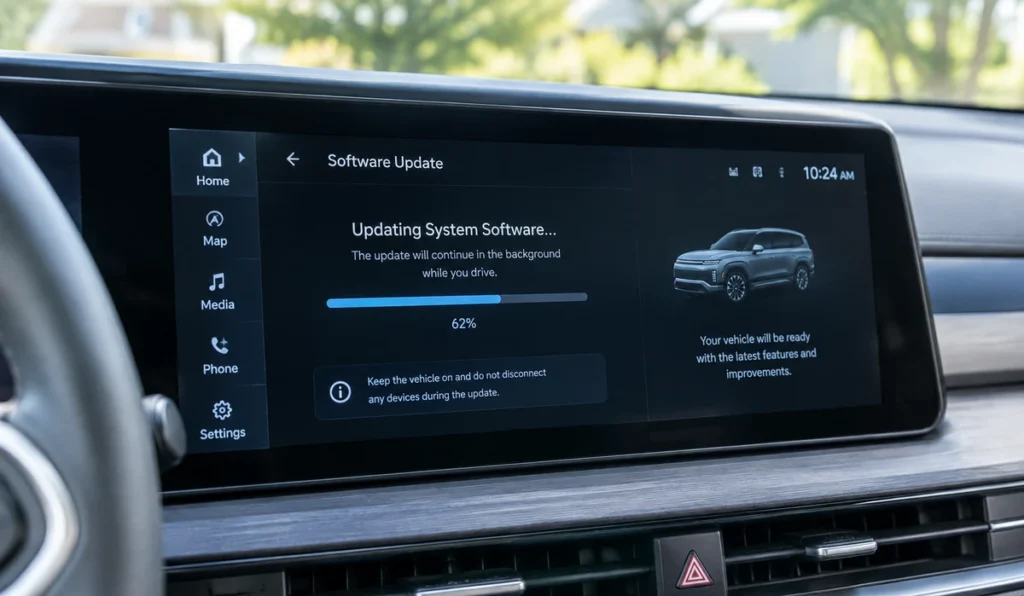
Hyundai fixed this with software, not wrenches. The updated seat-controller logic sharpens both occupant detection and anti-pinch response. You have two ways to get it, and both are free.
How To Get the Over-the-Air Update
If your Ioniq 9 is enrolled in Hyundai’s Bluelink connected service, the fix can arrive as an over-the-air update with no dealer visit. Open the Bluelink app or the vehicle’s software update screen and check for available updates. Install it over a stable connection, ideally while parked. If you are not enrolled in Bluelink, or the update does not appear, book the dealer visit instead.
How To Confirm the Update Actually Installed
Do not assume. After an OTA install, recheck the software version in the vehicle’s settings and confirm the seat-controller version changed. After a dealer visit, ask the service advisor to show the completed recall on your repair order before you leave. Then rerun your VIN on the NHTSA site a few days later. When the recall shows as completed or no longer open, you are done. Keep the paperwork with your service records into 2027, especially if you ever sell the SUV.
Want extra peace of mind? Once the fix is confirmed, test a powered seat function yourself with no children anywhere near the vehicle. Place a soft object such as a rolled towel in the seat’s path and run the fold function. The seat should stop on contact. If it does not, return to the dealer immediately and report the outcome to NHTSA. Never test with a person or a pet in the path.
Buying a Used 2026 Ioniq 9?
One competitor mentioned used buyers in a single line. Here is the full picture. Federal law bars dealers from selling a new vehicle with an open recall, but most used sales have no such federal requirement. That means a used 2026 Ioniq 9 on a lot could still carry the open seat recall.
Before you buy, run the VIN on the NHTSA site yourself and ask the seller for written proof that recall 26V588 is completed. Check vehicle history reports too, since completed recall work often appears there. If the seller cannot prove the fix, make completion a written condition of the sale or walk away. A 5,360-vehicle recall is small enough that many used examples on the market will be unaffected, but verify instead of guessing. If you are comparing large family SUVs more broadly, our 7-seater SUV guide covers the alternatives.
Canadian Owners: What You Need To Know
Some coverage claims Transport Canada has not listed this recall. That is outdated. Transport Canada published its notice on September 18, 2026, under reference 2026445, covering Ioniq 9 Ultimate Calligraphy models with second-row captain chairs. If you own one in Canada, the same advice applies: keep children clear of the powered second row, contact your Hyundai dealer about the free software remedy, and watch for the official notice. The US owner-letter date of November 9 applies to the American notification process; Canadian timing follows Transport Canada’s process, so check with Hyundai Canada for your letter date.
All 3 Hyundai Ioniq 9 Recalls of 2026
Search results for “is my ioniq 9 recalled” mix up three separate recalls. Here they are, side by side, so you can tell which one affects you.
| Recall | Units | Issue | Campaign |
|---|---|---|---|
| High-voltage battery bus bar | 27 | Battery electrical connection defect | Early 2026 |
| Rear suspension fasteners | 172 | Suspension fastener defect | 26V314000 (Hyundai 303); letters July 17, 2026 |
| Power second-row seats (this article) | 5,360 | Anti-pinch failure, entrapment risk | 26V588 (Hyundai 307); letters November 9, 2026 |
When you check your VIN on NHTSA, the site lists each open recall separately, so you will see exactly which of the three apply to your SUV.
The Bigger Pattern: Ioniq 9 vs Palisade vs Telluride
The Ioniq 9 is not the first Hyundai-group SUV with a power-seat problem. In March 2026, Hyundai recalled 61,093 Palisades after a similar anti-pinch failure, following the death of a 2-year-old in Ohio and four reported minor injuries. Kia’s Telluride faced a related recall as well. Hyundai says the Ioniq 9 uses different seat architecture, motors, and software than the Palisade, but the pattern is real enough that regulators and parents are watching closely. The issue is not even limited to Hyundai. In 2026, the Cadillac Vistiq also faced a recall for a similar power-seat failure, which suggests the whole industry is learning the same lesson about anti-pinch reliability at the same time.
What does this mean if you are shopping for a three-row SUV in 2027? Put powered second-row seats on your test-drive checklist. Operate every power function before you buy and watch how the seat behaves. Ask the dealer, in writing, whether all seat-related recalls and software updates are complete. And remember that simpler manual seats have no software to fail, which is one reason many family buyers still prefer them. The lesson for families stays the same: treat powered seats in any vehicle with respect, keep small children clear of moving seat paths, and take every seat-related recall letter seriously. Federal safety rules add another layer of protection for young passengers, which our FMVSS 213a side-impact explainer breaks down in plain language.
Is the Kia EV9 Affected?
The Ioniq 9 shares its electric platform with the Kia EV9, so EV9 owners are asking the obvious question. As of this writing, no matching power-seat recall has been announced for the EV9. Platform sharing does not mean part sharing: seat suppliers, motors, and controller software can differ between models. If you own an EV9, run your VIN on the NHTSA site to be sure, and file a complaint if you ever experience a seat that fails to stop on contact.
How To Report a Seat Problem to NHTSA
Recalls grow because owners speak up. The Ioniq 9 investigation started from just five complaints. If your seat ever fails to stop on contact, file a report. Go to nhtsa.gov, choose the vehicle safety complaint form, enter your VIN and the details of what happened, and submit. It takes about ten minutes. Your report joins the public record that regulators use to decide whether an investigation or recall is needed.
Can You Get Reimbursed for Costs?
If you paid out of pocket for a repair related to this defect before the recall was announced, federal rules generally allow you to seek reimbursement from the manufacturer. Keep every receipt and repair order, then contact Hyundai customer service at 855-371-9460 and ask about the reimbursement process for recall 26V588. For the NHTSA vehicle safety hotline, call 888-327-4236.
To strengthen your claim, keep a simple file with the repair invoice showing the date and the work performed, proof of payment, and your vehicle’s VIN. Manufacturers typically ask for these three items. File your request sooner rather than later, because reimbursement windows can close, and note that only repairs tied to the recalled defect qualify. General maintenance done at the same visit does not count.
FAQs
Is it safe to drive my Ioniq 9 before the fix?
Yes, driving is not the problem. The risk comes only from operating the powered second-row seat functions. Drive normally, but do not run power fold, stow, or slide with children near the seats until the software update is installed.
How do I know if my Ioniq 9 was built in the affected date range?
Check the manufacturing date on the driver’s door jamb sticker, or simply run your VIN at nhtsa.gov/recalls. The affected build window is March 17, 2025 through May 4, 2026.
Does the recall fix cost anything?
No. The software update is free whether you get it over the air through Bluelink or at a Hyundai dealer, and it is free regardless of your warranty status.
Will the dealer disable my power seats?
No. The remedy is a software update that improves detection and anti-pinch behavior. Your power seats keep working, just more safely.
What if my VIN shows no recall but my seat acts strangely?
Stop using the powered functions, keep children away from the seats, and file a complaint with NHTSA. Also tell your dealer in writing. Investigations expand when owners report.
Is the third row affected?
No. Testing showed third-row seat force below Hyundai’s safety limits, and the recall covers the second row only.
What should I do when the November 9 letter arrives?
If you already completed the fix, file the letter with your service records. If not, the letter includes instructions for the free remedy. Either way, confirm completion on the NHTSA VIN lookup afterward.
Sources: NHTSA recall database (nhtsa.gov/recalls), Transport Canada notice 2026445, Hyundai customer service 855-371-9460, NHTSA vehicle safety hotline 888-327-4236.

Aiden is the founder and editor of CarSeatHaven. He researches NHTSA safety standards, AAP guidance, manufacturer manuals, and recall notices, and turns them into plain-language car seat guides for parents.
