
Table of Contents
Peg Perego rewrote its expiration policy on January 1, 2023, and the new version is one of the most generous in the industry. Infant seats get 7 years, convertibles get 10, and boosters get a full 12. Like Diono, Peg Perego counts from the date of purchase rather than the date of manufacture, which makes your receipt a document worth keeping. If your paperwork is long gone, our Baby Car Seat Expiration Checker can work from the manufacture date on the label instead.
Peg Perego Expiration Rules
- 7 years from purchase: infant car seats, including the Primo Viaggio line
- 10 years from purchase: convertible car seats
- 12 years from purchase: booster seats
Older seats follow the rules they were sold under. Primo Viaggio infant seats made in 2010 or earlier had a 5 year life, and models from 2011 onward carried 7 years counted from the production date, as stated in their manuals. For an older seat, the manual and the label govern, not the new policy. And if you cannot prove a purchase date on any Peg Perego, the company says to fall back to the date of manufacture.
Where Is the Date on a Peg Perego Seat?
The production date label is on the seat shell. On Primo Viaggio infant seats it hides under the fabric near the child’s feet, so you may need to lift the edge of the cover to read it. That label is what you use to work out the expiration whenever the purchase date is unknown.
What If the Seat Has Been in a Crash?
Peg Perego’s US site does not publish its own detailed crash checklist, so the sensible route is the federal baseline plus a phone call. NHTSA requires replacement after a moderate or severe crash and allows reuse after a minor one only when all five of its conditions hold. Before a crashed Peg Perego goes back into service, confirm it with Peg Perego USA customer service, which can also provide documentation for an insurance claim.
Can You Fly With a Peg Perego Seat?
The Primo Viaggio infant seats are certified for use in commercial aircraft, without the base. Strap the carrier in with the aircraft lap belt and leave the base at home or in checked luggage, because the base is not aircraft certified. Booster configurations cannot be used on planes. One more travel note: Peg Perego seats are made in Italy, and only the US market versions certified to FMVSS 213 are legal in US vehicles, so check that yours is a US seat.
Check Your Peg Perego Seat
Find your purchase date or the label under the cover, then run the numbers through our Baby Car Seat Expiration Checker. Our explainer on car seat expiration shows how Peg Perego’s booster lifespan compares with everyone else’s. For the policy straight from the source, Peg Perego’s official site at pegperego.com publishes it in full.
FAQs
Q.1 How long are Peg Perego car seats good for?
Under the policy in effect since January 2023, infant seats last 7 years, convertibles 10 years, and boosters 12 years, counted from the original purchase date. If the purchase date is unknown, count from the date of manufacture. Older Primo Viaggio seats had 7 year lives, or 5 years for 2010 and earlier production.
Q.2 Where is the date label on a Peg Perego Primo Viaggio?
On the shell, under the fabric near the child’s feet. Lift the edge of the cover to read it. Use that date to calculate the expiration whenever you cannot document the purchase date.
Q.3 Is the Primo Viaggio FAA approved?
Yes, the infant seats are certified for commercial aircraft, but only without the base. The certification statement is printed on the seat.
Peg Perego Car Seats at a Glance
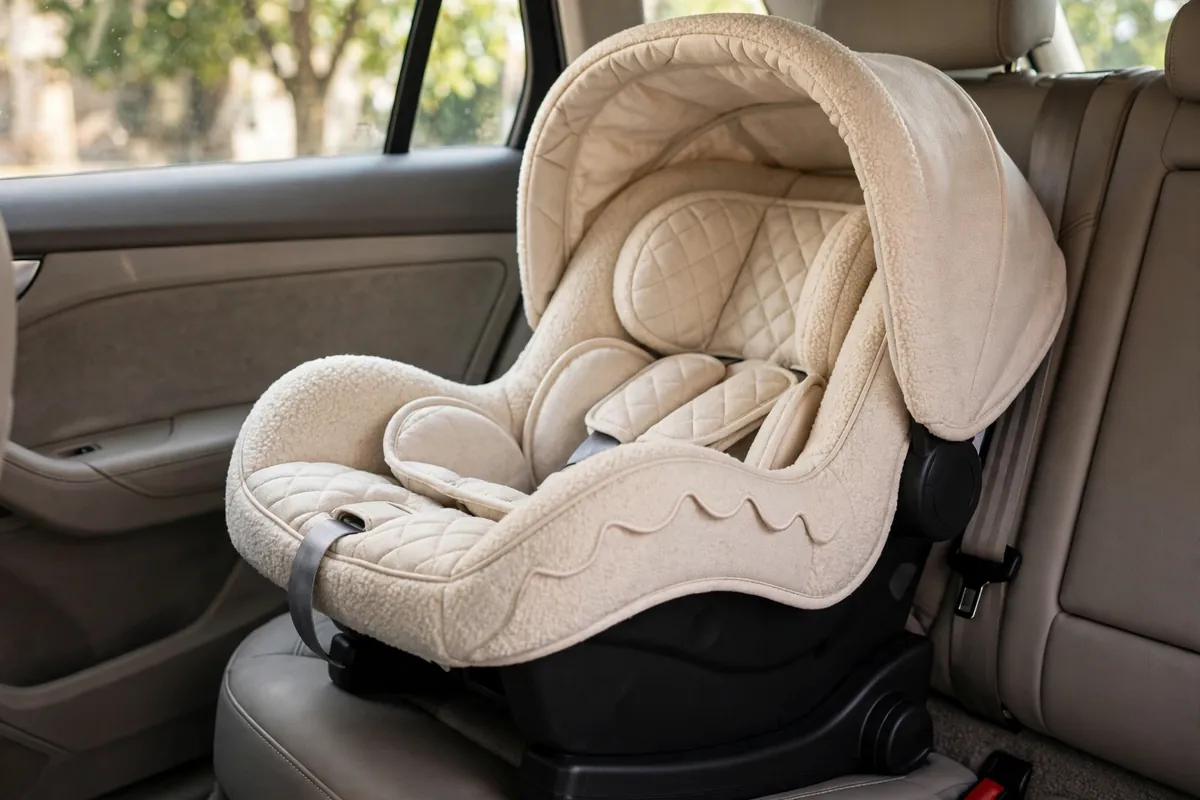
Peg Perego is an Italian brand, making baby gear since 1949, and its car seats feel Italian in the best sense: leatherette trim, a big Pagoda hood canopy, soft fabrics, and a build that looks made to last. The seats are made in Italy, and the price shows it. This is a luxury brand, and it does not pretend to be anything else.
The lineup is simple. The Primo Viaggio line is the infant seats. The Viaggio convertible covers the toddler years. The Viaggio Flex is the booster. There are no budget models and no rotating seat, just a small range done well.
Which Peg Perego Seat Fits Your Child
A newborn starts in a Primo Viaggio 4-35. It carries 4 to 35 lb and up to 32 inches tall, and it comes in three versions. The standard Primo Viaggio 4-35 is the base model. The Primo Viaggio Lounge adds a comfort recline, so the backrest tilts and the leg rest extends when the seat is on a stroller. The Primo Viaggio 4-35 Nido adds a base with a load leg and an anti rebound bar, which are the two best safety extras you can get on an infant seat. Our guide to the best infant car seat compares the top carriers if you are choosing between brands.
After the infant seat, the Viaggio convertible takes over, rear facing first and then forward facing. The Viaggio Flex 120 booster finishes the run. It covers 40 to 120 lb, so it can be the last seat your child ever needs.
What Makes Peg Perego Different
The materials are the first thing you notice. The fabrics and the leatherette feel closer to a luxury car interior than to a typical car seat, and the Pagoda hood extends far enough to shade a sleeping baby properly. The Nido base adds a load leg that braces against the car floor and an anti rebound bar that stops the seat from rotating toward the back of the car in a crash. Both are premium features that cheaper seats skip.
The other thing that sets Peg Perego apart is the focus. The range is small, the seats are built in one factory in Italy, and nothing in the lineup chases the budget market. You are paying for that focus.
Installing a Primo Viaggio
The base is where the care shows. The bubble level indicator on the base has three weight settings, 4 to 11 lb, 11 to 22 lb, and 22 to 35 lb, and you turn a knob to set the recline for your baby’s weight. Get that setting right, because the wrong recline angle is unsafe even when the seat feels tight.
The load leg on the Nido base presses against the floor and cuts how much the seat moves in a crash. Our glossary explains the load leg in plain words, and our page on LATCH anchors explains where the car anchors are in your vehicle. For the whole process, read our guide on how to install a car seat, and finish with the inch test: less than one inch of movement at the belt path is the pass mark.
Buying a Used Peg Perego Seat
Peg Perego counts from the purchase date, so ask for the receipt before anything else. No receipt means the clock runs from the manufacture date on the label, which can cut years off the seat. Check that the base is included, because a Primo Viaggio without its base is hard to use and the base costs a lot to buy separately. Check the Pagoda hood extends and retracts smoothly, and check the load leg on a Nido base still locks. If you buy online and the seat does not fit your car, read our guide on car seat return policies before you try to send it back.
More Questions About Peg Perego Car Seats
Is Peg Perego worth the price?
It depends on what you are paying for. Every seat sold in the US meets the same federal safety standard, so a cheaper seat is not an unsafe seat. What you pay for with Peg Perego is the Italian build, the materials, the Pagoda hood, and features like the load leg on the Nido. If those things matter to you, the price makes sense. If they do not, a cheaper seat protects your child just as well.
Which strollers fit the Primo Viaggio?
It clicks into Peg Perego strollers like the Ypsi, Veloce, Vivace and Duette, and many other stroller brands sell an adapter for it. Check the adapter list for your stroller before you buy, because a carrier that does not click in is just extra weight.
Does Peg Perego make a rotating seat?
No. Peg Perego does not sell a rotating seat. If you want a seat that turns toward the door, our rotating car seat comparison shows the brands that do make one and what each costs.