

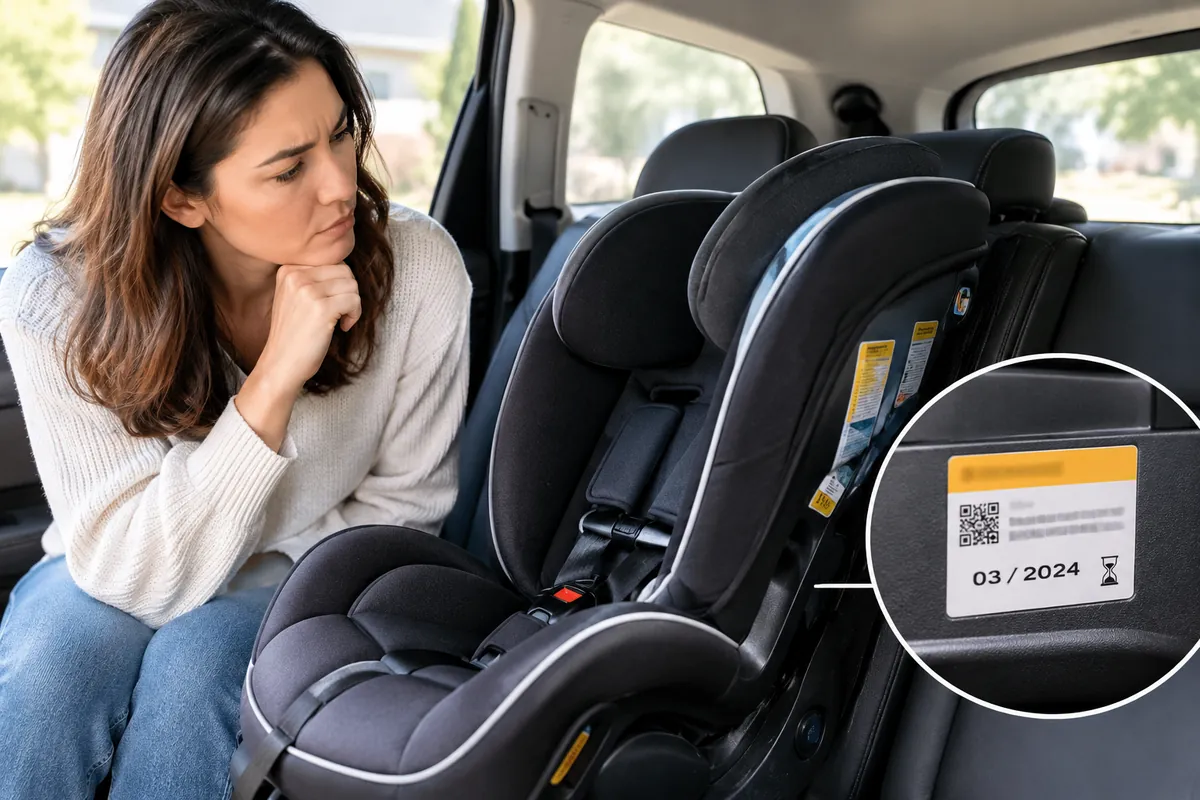
No, it is not illegal to use an expired car seat under federal law. The National Highway Traffic Safety Administration has confirmed that its safety standards cover new restraints, not how long you keep using one you already own. So the federal answer is no. But the picture gets murkier at the state level, because most states require you to use a car seat according to the manufacturer’s instructions, and every manufacturer says to stop using a seat after its expiration date. That puts an expired seat in a legal gray area. There are also no known cases of a parent getting ticketed for this. The legal question was never the one that mattered, though. Every child safety authority agrees an expired seat should not be used, because the materials wear out over time. Here is what the law actually says.
Key Takeaways
- There is no federal law that makes it illegal to use an expired car seat. NHTSA has confirmed its standards apply to new restraints, not to seats you already own.
- Most states require you to use a car seat according to the manufacturer’s instructions. Since every manufacturer says not to use a seat past its expiration date, an expired seat sits in a legal gray area in those states.
- No known tickets or court cases have involved a parent cited specifically for using an expired car seat. We looked, and we could not find a single documented one.
- There are also no documented cases of an insurance claim being denied because a car seat was expired. That rumor floats around parent groups, but it is unverified, and we will not present it as fact.
- Legality was never the real point. The AAP and Safe Kids both advise against using a seat past its expiration date, because the plastic, straps, and foam degrade over time.
- Quick heads-up: I am a parent blogger, not a lawyer. This is general information, not legal advice.
No Federal Ban Exists
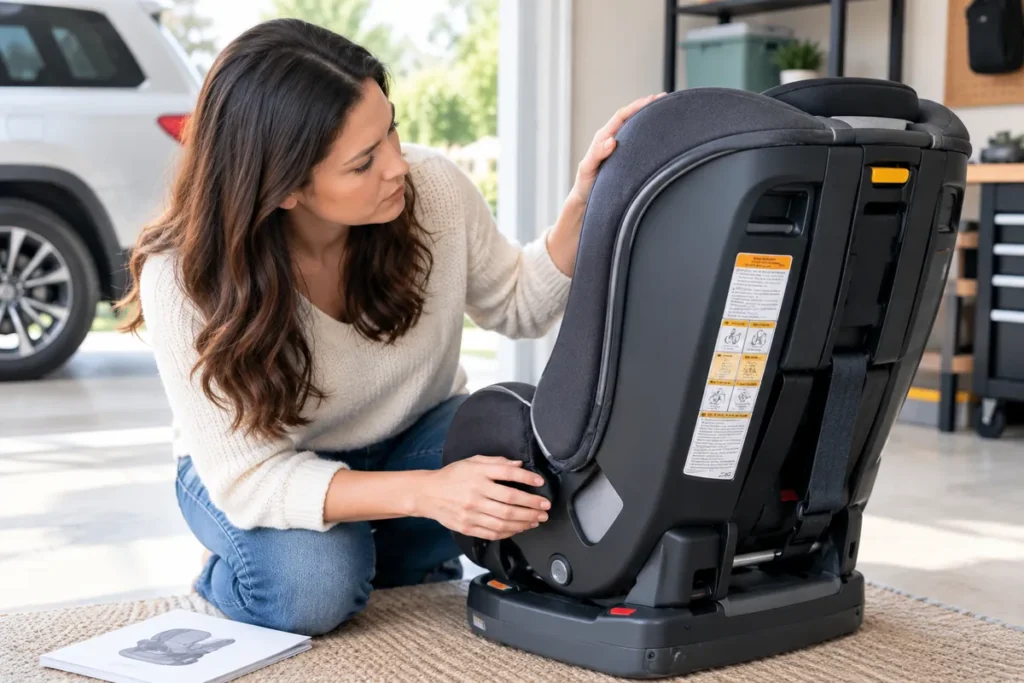
Let us get the headline question out of the way first, because it is the reason you are here. There is no federal law in the United States that bans you from using an expired car seat. Not in 2027, not ever. Congress has never passed one, and NHTSA, the federal agency in charge of car seat safety, has never written a regulation that says a seat becomes illegal the day after its expiration date.
That surprises a lot of parents, because car seats feel so heavily regulated. And in one sense they are. Every car seat sold in the United States has to meet Federal Motor Vehicle Safety Standard 213, a crash testing standard that manufacturers must pass before a seat hits the shelves. But FMVSS 213 governs how seats are built and tested when they are new. It says nothing about how many years you can keep buckling your kid into one. That is a gap some parents find reassuring and others find frustrating. Either way, it is the reality.
NHTSA has addressed the used-seat question directly in its used car seat safety checklist at nhtsa.gov. The agency’s position is that it does not set expiration dates at all. The manufacturer sets them. NHTSA’s guidance for used seats focuses on whether the seat has its labels, whether it was in a crash, and whether it has been recalled. There is no federal rule that turns an expired seat into contraband.
What Federal Law Actually Says About Car Seats
To understand why there is no federal ban, it helps to know what federal car seat law actually covers. It covers three things: how seats must be built, how they must be tested, and what labels and instructions must come with them. That is it. Once the seat leaves the store, the federal government steps back. How you use the seat, how long you keep it, whether you hand it down to your sister, those are not federal questions.
FMVSS 213, the federal standard for child restraints, sets the crash performance requirements for new seats. It also requires manufacturers to print the date of manufacture and the model number on a label attached to the seat. That label is the reason you can check whether your seat is expired in the first place. But the standard does not set a lifespan, does not require a specific expiration date format, and does not make it an offense to keep using a seat after the manufacturer says to retire it.
This is worth spelling out because a lot of parenting blogs blur the line between a manufacturer’s instructions and actual law. When Graco or Chicco says do not use this seat after December 2027, that is a manufacturer instruction backed by their own testing. It is not a statute. Ignoring a manufacturer instruction is very different from breaking a law, and it is important not to mix those up when you are trying to figure out what you can and cannot do.
The bottom line on federal law: nothing bans the use of an expired seat, nothing requires you to throw it away, and nothing creates a penalty for keeping one in your car. That is the honest federal picture.
The State Law Gray Area: “Proper Use” Clauses
Here is where things stop being simple. Car seat laws in the United States are mostly state laws, not federal ones. Every state has its own child passenger safety law, and while they differ in the details, most of them share a common feature: a clause that says the car seat must be used according to the manufacturer’s instructions. Lawyers and child passenger safety technicians call these proper use clauses.
Proper use clauses are written in general terms. They do not mention expiration dates. A typical one says something like: the child must be secured in a child restraint system used in accordance with the manufacturer’s instructions. The word expired does not appear in the law. But the logic chain is easy to follow, and it is the reason this question keeps coming up in parent groups.
How the Gray Area Works
Walk through it step by step. Your state says: use the seat per the manufacturer’s instructions. The manufacturer says: do not use this seat after its expiration date. So if your seat is expired, you are arguably not using it per the manufacturer’s instructions, which means you could be in violation of the state law. That is the gray area. It is a reasonable reading of the law, and it is the reading most child passenger safety technicians will give you.
But reasonable reading is not the same as settled law. For this to be more than a gray area, a few things would need to happen. An officer would need to stop you, notice or check the seat’s expiration date, and write a ticket specifically for that. Then a court would need to agree that an expired seat violates the proper use clause. As far as we can determine, none of that has happened in any documented case. So the gray area stays gray: possible in theory, unproven in practice.
Does Every State Have a Proper Use Clause?
No, not every state words its law this way. Most do, but the wording varies, and a handful of states have simpler laws that just say a child must be in a car seat without specifying that it be used per the instructions. We are not going to list all fifty states here, because state laws change and we will not pretend we have verified each one. If this question keeps you up at night, look up your own state’s child passenger safety statute or ask a certified Child Passenger Safety Technician in your area. They deal with this stuff every day and can tell you exactly how your state phrases it.
Has Anyone Actually Been Ticketed for an Expired Car Seat?

This is the question that matters most to the parent reading this on their phone in the driveway, and we want to answer it as honestly as we can. We could not find a single documented case of a parent receiving a ticket, a citation, or any legal penalty specifically for using an expired car seat. Not one. We looked through news reports, legal discussions, and parent forums, and every ticket story out there is about kids not being in a seat at all, kids in the wrong type of seat, or seats installed so badly they might as well not be there.
Think about why that makes sense. For an officer to ticket you over expiration, they would need to know the seat’s manufacture date, know the manufacturer’s lifespan for that exact model, and do the math on the spot. Officers are looking at whether your child is restrained, not at the fine print on a sticker under the seat. It is hard to imagine this becoming an enforcement priority when there are so many more obvious violations happening every day.
That said, we want to be careful with our language. No known cases does not mean it could never happen. It just means that, in practice, this appears to be a non-issue for law enforcement. If someone tells you their cousin got a ticket for an expired seat, ask for details, because we could not verify any story like that. Until a real case surfaces, this is one of those internet worries that outruns the evidence.
What About Canada?
Canadian readers ask this question too, and the short version is that Canada differs. Child restraint laws in Canada are set by the provinces and territories, and Transport Canada regulates the safety standards for new seats sold in the country, similar to how NHTSA works in the United States. We have not verified the details of every province’s rules, and we are not going to guess at them. If you are in Canada, check your province’s highway or traffic safety rules and look at Transport Canada’s guidance on child restraints. The safety message, though, is the same on both sides of the border: expired seats should not be used.
The Insurance Rumor: Would a Claim Get Denied?
You have probably seen this one in a Facebook group. Somebody claims that if you get in a crash with an expired car seat, your insurance company will deny the claim, or deny the medical coverage for your child. It sounds scary, it gets shared a lot, and it has a problem: nobody can point to a case where it actually happened.
We want to be direct about this. We could not find a single documented case of an insurance claim being denied because a car seat was expired. No court case, no news report, no regulatory filing, nothing. The rumor appears to be exactly that, a rumor. It gets repeated because it sounds plausible, and because insurance companies are easy villains in a story. But plausible is not the same as true, and we are not going to present it as fact.
Now, a quick dose of honesty about what we do not know. Insurance policies are private contracts with fine print, and we have not read every policy in America. It is possible that somewhere, in some policy, there is language that could theoretically matter. But in the absence of any documented denial, the fear that your claim will be rejected over an expired seat is not supported by evidence. Do not let a Facebook comment scare you more than the actual facts do.
If you want extra peace of mind, this is an easy one to resolve. Call your insurance company and ask. It takes five minutes, you will get a straight answer from the source, and you will never have to wonder about it again.
Why the Law Was Never the Real Question
Okay, so the legal picture is this: no federal ban, a state-level gray area that has never produced a ticket, and an insurance rumor with no evidence behind it. If you came here hoping the law would make the decision for you, we are sorry to say it will not. The law is mostly silent on this. But the safety experts are not silent at all, and they are unanimous.
The American Academy of Pediatrics advises parents not to use a car seat past its expiration date, or past six years from the date of manufacture if the seat has no stated expiration. (We are citing that guidance via WebMD’s coverage, since we could not locate a standalone AAP page stating it directly, and we would rather be honest about that than pretend otherwise.) Safe Kids Worldwide, one of the most trusted child safety organizations in the country, points parents to the same guidance on its site at safekids.org. When the pediatricians and the safety advocates all land in the same place, it is worth listening.
And their reasoning has nothing to do with law. It is about physics and chemistry. The plastic shell of a car seat sits in your car through years of summer heat and winter cold, and that thermal cycling makes plastic brittle over time. The harness webbing stretches and weakens. The energy-absorbing foam compresses. Buckles wear. Safety standards keep evolving, which means a seat designed a decade ago was tested to older requirements. None of this is visible from the outside. A twelve-year-old seat can look perfectly fine and still not perform the way it did when it was new.
That invisible wear is the whole reason expiration dates exist, and it is also the reason the legal debate misses the point. A seat does not become dangerous because a law says so. It becomes less protective because materials degrade. The date on the sticker is the manufacturer’s best estimate of when that degradation starts to matter. If you want the full breakdown of why seats expire and how long each brand lasts, our guide on do car seats expire covers it in depth.
No law can tell you the exact day your car seat stopped being safe. The expiration date is the manufacturer’s honest estimate, and the safety experts all say to respect it. That is the whole story.
What to Do Instead
So the law will not force your hand. Good. That means you get to make this decision for the right reason: your child’s safety. Here is what we recommend, step by step.
- Check the date on your seat. Flip it over and look for the white manufacture sticker or a stamp in the plastic that says something like Do Not Use After. If you are not sure how to read it, our free car seat expiration checker walks you through it in about thirty seconds.
- If the seat is expired, stop using it. We know that is easier said than done when money is tight, so keep reading, because there are affordable ways to replace it below.
- Do not pass it on. An expired seat is not a hand-me-down. Giving it to a friend, a family member, or a donation center just moves the risk to someone else’s child.
- Destroy it before you toss it. Cut the harness straps, remove the cover, and write EXPIRED in big letters on the shell with a marker. That way nobody pulls it out of the trash and uses it.
- Trade it in if you can. Retailer trade-in events let you swap an old seat for a discount on a new one, which takes some of the sting out of the cost. Check our do car seats expire guide for the current trade-in calendar and recycling options.
If money is the reason you are still using an expired seat, you are not alone, and you have options. Many Safe Kids coalitions and local health departments run programs that provide free or low-cost car seats to families who need them. Hospitals sometimes have them too. A quick call to your local health department can turn up resources you did not know existed. An expired seat is never your only option, even when it feels like it.
The Bottom Line
Here is the honest summary. No federal law bans expired car seats. State proper use clauses create a gray area that has never, to our knowledge, produced a ticket. The insurance scare stories have no documented cases behind them. If you were looking for the law to settle this, it will not. But you do not need the law to settle it. The pediatricians, the safety organizations, and the manufacturers themselves all agree: when the date passes, the seat is done. Replace it, trade it in, or recycle it, and drive with the peace of mind that comes from knowing your child is riding in a seat that is still doing its job.
FAQs
Is it illegal to use an expired car seat?
No federal law makes it illegal. At the state level, most states require car seats to be used according to the manufacturer’s instructions, which creates a gray area since manufacturers say not to use expired seats. But there are no known tickets or court cases involving expired seats specifically, so this is a theoretical concern rather than a practical one.
Can a police officer ticket me for an expired car seat?
In practice, this does not happen. We could not find a single documented case of a ticket issued specifically for an expired seat. Officers enforcing car seat laws are checking whether your child is properly restrained, not reading manufacture date stickers. That does not make it impossible, but there is no evidence it has ever occurred.
Is it illegal to sell or give away an expired car seat?
There is no federal law against reselling used car seats, and NHTSA has noted that federal standards apply to new restraints rather than the resale of used ones. That said, selling or donating an expired seat is a bad idea for safety reasons, and some online marketplaces have their own policies against listing expired seats. Just because you can does not mean you should.
Will my insurance deny a claim if my car seat was expired?
There are no documented cases of an insurance claim being denied because a car seat was expired. This is a rumor that circulates in parent groups, but it is unverified, and we found zero evidence to support it. If you are worried, call your insurer and ask directly. It is the fastest way to get a real answer.
Does the same law apply to expired booster seats and car seat bases?
Yes, the same logic applies. Boosters and infant seat bases have expiration dates too, and the same federal picture holds: no ban, and the same state-level gray area under proper use clauses. An expired base is just as much of a concern as an expired seat, so check the dates on every piece, not just the main shell.
Is it illegal to use an expired car seat in Canada?
Canada’s rules differ from those in the United States. Child restraint laws are set by the provinces and territories, and Transport Canada sets the standards for new seats. We have not verified the provincial details, so check your province’s traffic safety rules if you need a definitive answer. The safety guidance is the same either way: do not use an expired seat.
What should I do with my expired car seat?
Stop using it, do not pass it on to anyone else, and destroy it before disposal so nobody can reuse it. Cut the straps, write EXPIRED on the shell, and look into retailer trade-in events or recycling programs to get value out of it. Our guide on do car seats expire has the full rundown on trade-ins and recycling.

Aiden is the founder and editor of CarSeatHaven. He researches NHTSA safety standards, AAP guidance, manufacturer manuals, and recall notices, and turns them into plain-language car seat guides for parents.
