

Table of Contents
The best infant car seat for most newborns is the Chicco KeyFit 30, because it consistently earns top ease-of-use ratings from NHTSA, installs securely in seconds with its straightforward base, and fits small newborns well, including many preemies, with its infant insert. Close contenders include the Graco SnugRide SnugLock 35 DLX for its easy installation and budget-friendly price point, the UPPAbaby Mesa V2 for premium build and direct stroller compatibility, and the Britax B-Safe Gen2 for its sturdy feel and steel frame. The honest truth, though: every seat on this list passes the same federal safety standards, so the ‘best’ seat is the one that installs tightly in your car, fits your newborn correctly, and that you will use right every single time.
Key Takeaways
• The Chicco KeyFit 30 is the safest default choice: top NHTSA ease-of-use ratings and a foolproof install.
• Every infant seat sold in the US passes the same federal crash standards. Fit and correct use matter more than brand.
• Most infant seats hold babies from 4 to 35 pounds, but check the specific limits before buying.
• Newborns need a proper recline angle and a snug harness. The seat matters less than the setup.
• Choose based on your life: stroller compatibility, your car’s size, and how often you will click the carrier in and out.
Shopping for an infant car seat is one of those tasks that starts fun and turns stressful fast. You walk in thinking ‘how different can they be’ and walk out two hours later with seventeen tabs open and a vague sense of panic. I have been down this rabbit hole so you do not have to. This guide cuts through the noise: what actually makes one infant seat better than another, the top-rated picks worth your money in 2027, how weight limits really work, and the newborn-specific details that matter in those first weeks. No sponsored rankings, no invented test drives, just the facts that help you decide.
One thing to get straight before we dive in: when parents search for the best car seat for newborns, they are almost always looking for an infant carrier, the rear-facing-only bucket seat with a handle and a stay-in-the-car base. That is what this guide covers. If you are wondering whether to skip the bucket and go straight to a convertible seat, there is a whole section on that below, because it is a legitimate question with a real answer.
What Actually Makes an Infant Car Seat ‘The Best’
Let us demystify this first, because marketing departments work hard to make it confusing. In the United States, every car seat must pass Federal Motor Vehicle Safety Standard 213. Same crash test, same bar, every brand, every price. A $120 seat and a $550 seat both cleared it. So when someone declares a seat ‘the safest,’ what they usually mean is one of three things: it is easier to install correctly, it fits newborns better, or it has extra features that add margin. All three are real advantages. None of them means the cheaper seats are unsafe.
So what should you actually compare? After reading more manuals and ratings than I care to admit, here is the short list that matters:
• Ease of installation. This is the big one. The safest seat is the one installed correctly, and some seats make correct installation dramatically easier. NHTSA publishes ease-of-use ratings for car seats, and they are worth checking before you buy. A seat with a foolproof install beats a ‘safer-feeling’ seat that you will install slightly wrong.
• Newborn fit. Not every bucket fits a 6-pound newborn equally well. Look for a low minimum weight (4 pounds is the gold standard), a good infant insert, and harness slots that go low enough that the straps sit at or below tiny shoulders.
• The base. You will interact with the base more than the seat itself. A base with a clear level indicator and an easy tightening mechanism (a lock-off or a smooth LATCH adjuster) saves daily frustration.
• Weight and stroller compatibility. You will carry this thing, with a baby in it, more times than you can imagine. Every pound matters. And if you own or plan to buy a stroller, check whether the seat clicks in directly or needs adapters. Travel systems are genuinely life-changing in the newborn months.
• Canopy, fabrics, and the little things. A generous canopy, machine-washable fabrics, and a handle that moves smoothly will not show up in crash data, but they show up in your daily life. Do not dismiss them.
Notice what is not on the list: price as a proxy for safety, celebrity endorsements, and color options. Buy the seat that fits your baby, your car, and your life. Everything else is noise.
Top Rated Infant Car Seats for 2027
Here are the seats that consistently rise to the top across NHTSA ease-of-use ratings, technician recommendations, and parent feedback. Each one passes federal standards, so think of these as the standouts for usability and newborn fit rather than a safety ranking.
Chicco KeyFit 30: the safest default choice
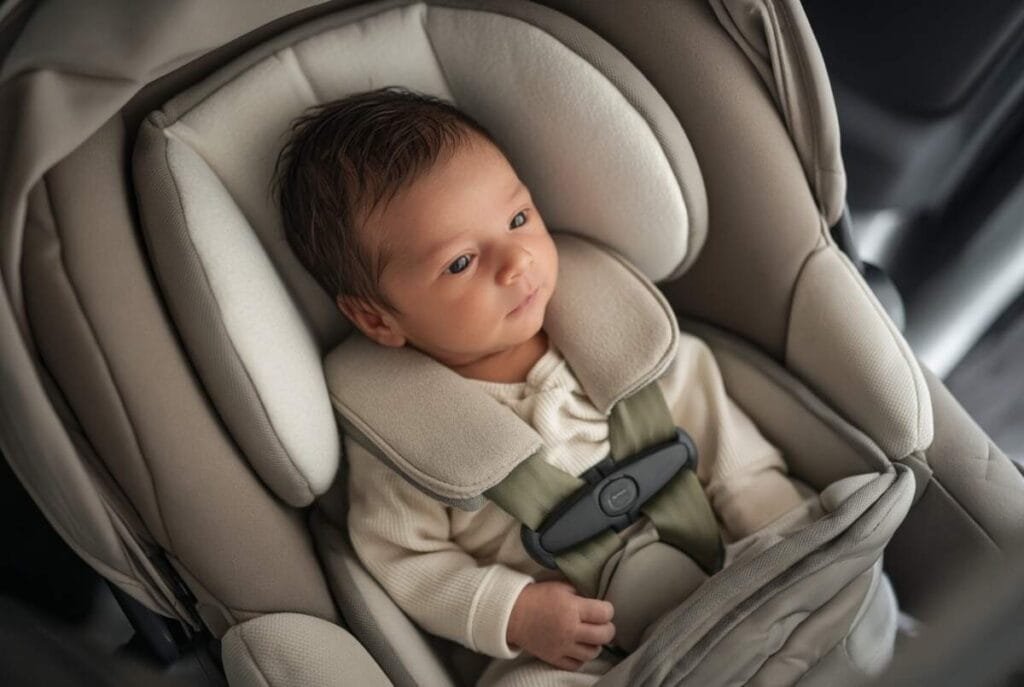
If you want one recommendation and want to stop reading, this is it. The KeyFit 30 has been the technician-favorite infant seat for years, and for boring, wonderful reasons: it installs easily and correctly in an almost suspicious number of vehicles, the base has a clear level indicator and a straightforward tightening system, and the infant insert fits small babies genuinely well. NHTSA’s ease-of-use ratings have consistently smiled on this seat. It is not the lightest carrier and not the flashiest, but it is the seat least likely to be installed wrong, and that counts for more than any feature list.
Graco SnugRide SnugLock 35 DLX: Best value with easy install
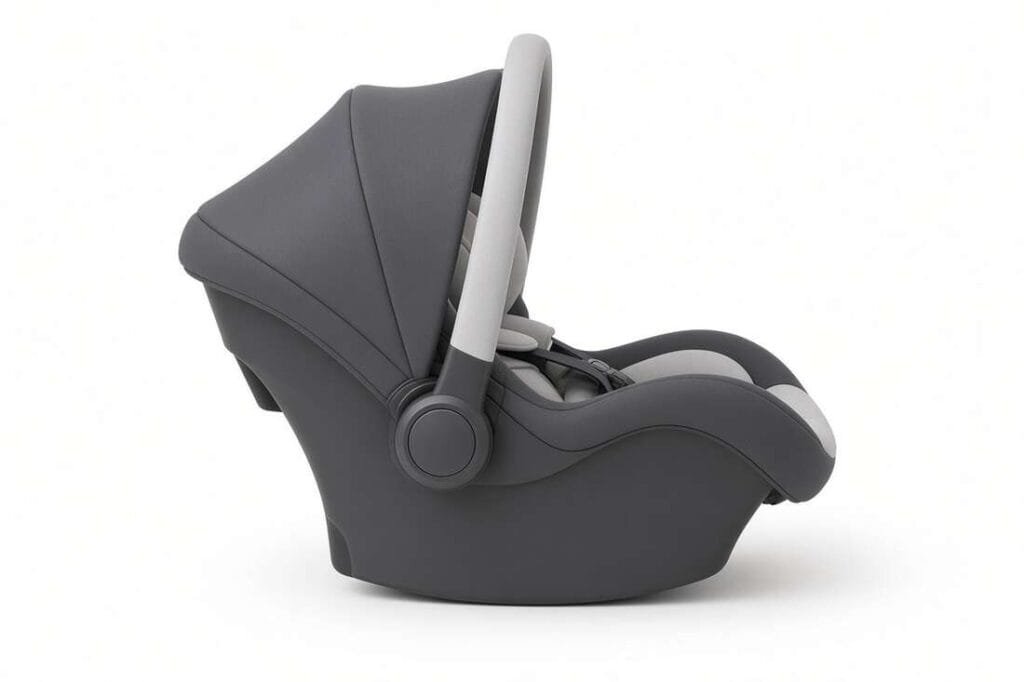
Graco’s SnugLock line earns its name. The lock-off on the base makes seat belt installation genuinely simple, which matters if you will move the seat between cars. It typically costs less than the premium options while offering a higher weight limit (35 pounds) that buys you more months of use. The fabrics and canopy are not luxury-grade, but they are perfectly pleasant. For families watching the budget, this is the sweet spot: easy install, long usable life, sane price.
UPPAbaby Mesa V2: The premium pick
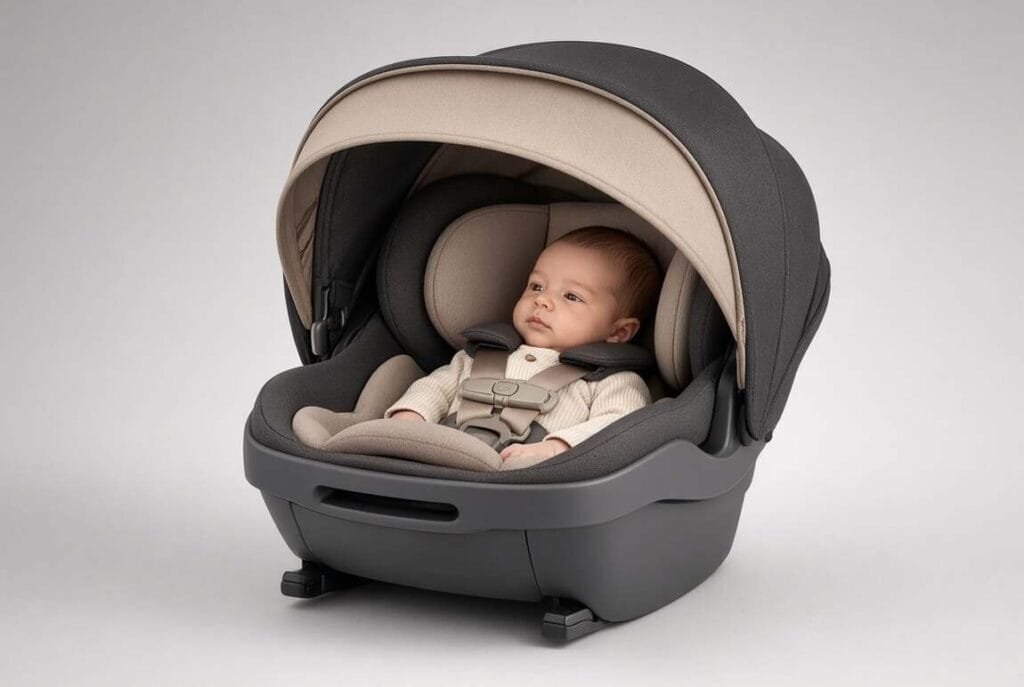
The Mesa V2 is what you buy when the budget has room and you value refinement. The install is famously quick, the SMARTSecure system gives clear confirmation when things are right, and if you own an UPPAbaby stroller, the direct click-in compatibility with no adapters is a daily joy. It is heavier on the wallet and middling on carrier weight, but the build quality and thoughtful details (a huge canopy, breathable fabrics) are real. A favorite among parents who will be in and out of the car constantly.
Britax B-Safe Gen2
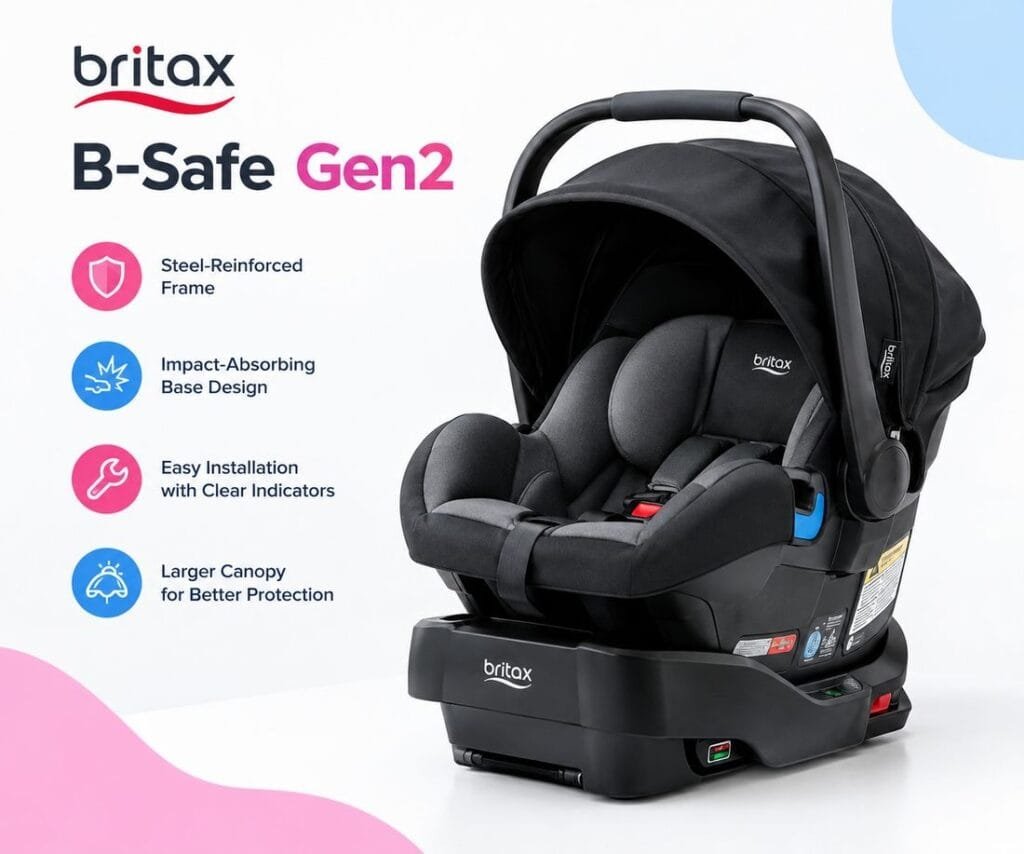
Britax has a devoted following, and the B-Safe Gen2 shows why. It feels substantial, with a steel-reinforced frame and impact-absorbing base design that give it a vault-like impression. Installation is straightforward with clear indicators, and the larger canopy is genuinely useful. It is on the heavier side as a carrier, so if you plan to lug it around constantly, factor that in. For parents who equate heft with security and want a seat that feels indestructible, this delivers.
Evenflo LiteMax 35: The lightweight budget win
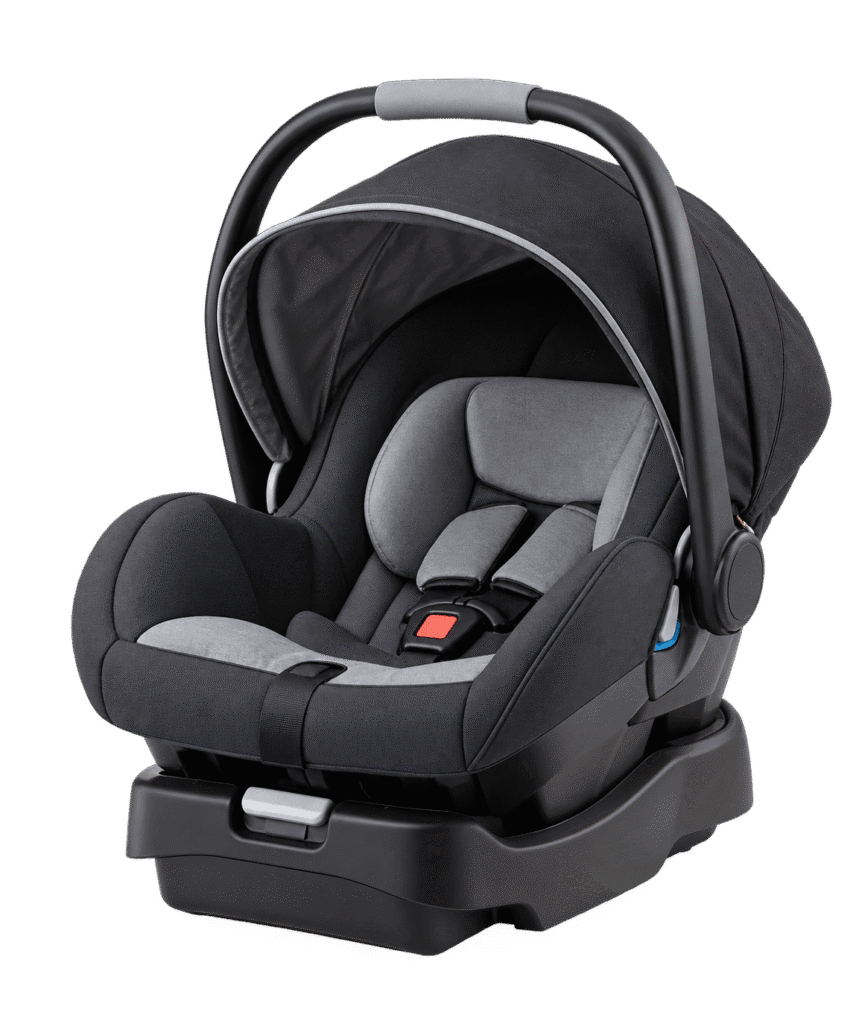
Here is the sleeper pick. The LiteMax 35 is one of the lightest infant carriers you can buy, which your arms will thank you for around month four. It is also priced for real-world budgets. The trade-off is a more basic feature set and a less premium feel, but the fundamentals are solid: decent install, reasonable newborn fit, 35-pound limit. If lightness and price top your priority list, start here.
A note on what is missing: you will notice no obscure boutique brands and no seats I cannot verify against current manufacturer information. The infant seat market has fakes and gray-market imports floating around, and this is not the product category to gamble on. Buy from authorized retailers, register your seat with the manufacturer so you hear about recalls, and be deeply suspicious of deals that seem too good to be true.
Best Car Seat for Newborns: What Tiny Babies Specifically Need
A newborn is not just a small baby. The first weeks come with specific needs that should shape your choice, and this is where the best car seat for newborns conversation gets practical.
• Low minimum weight. Look for seats rated from 4 pounds. Most full-term newborns arrive between 6 and 9 pounds, but a 4-pound minimum gives you margin, and it is essential for preemies coming home from the NICU.
• Infant insert included. A proper newborn insert positions a tiny baby so the harness fits correctly. Do not substitute aftermarket inserts or rolled blankets behind the baby unless the manual explicitly allows specific positioning aids. The insert that came in the box is the tested one.
• Recline angle. Newborns must ride reclined at roughly 45 degrees so their airways stay open. Your base’s level indicator is not decoration. Set it, check it after tightening, and recheck it periodically.
• Harness slot height. The lowest harness slots must sit at or below your newborn’s shoulders. If the straps start above the shoulders on day one, the seat does not fit your baby yet, no matter what the box says.
• The hospital check. Many hospitals do a car seat challenge for preemies and some full-term newborns: the baby sits in the seat for 90 minutes while staff monitor breathing and heart rate. Bring your seat to the hospital. Practice the install before the big day so you are not learning in the parking lot.
For preemies and low-birth-weight babies, add one more step: talk to your pediatrician before buying. Some NICUs have specific seat recommendations, and the car seat challenge results can change the plan. The right seat for a 5-pound preemie is not always the right seat for an 8-pound full-term baby, even though both are ‘newborns.’
Infant Car Seat Weight Limit: What the Numbers Mean
The infant car seat weight limit confuses everyone, so let us clear it up. Most infant carriers are rated from 4 or 5 pounds up to 30 or 35 pounds, with a height limit usually around 30 to 32 inches. Your child outgrows the seat when they hit EITHER limit, whichever comes first. In practice, most babies outgrow by height before weight: once the top of their head is within about an inch of the top of the shell, or they exceed the stated height limit, the seat is done, even if they are nowhere near the weight cap.
What does this mean in real life? A seat rated to 35 pounds does not mean your baby rides in it until 35 pounds. Most babies move to a convertible seat somewhere between 9 and 15 months, when the carrier gets heavy to lug and the baby starts protesting the bucket. The higher weight limit mostly buys you flexibility, not years. Do not choose a seat on the weight number alone. Choose on fit, install, and your life.
One more number people miss: the carrier has no business being used as a routine sleeping spot outside the car. The weight limit is about crash protection, not nap approval. Pediatric guidance is clear that babies should not spend long unsupervised stretches sleeping in car seats, swings, or carriers. Car seat, car ride, then out. Your baby’s spine and breathing will thank you.
Car Seats and Newborns: The First Ride and Beyond
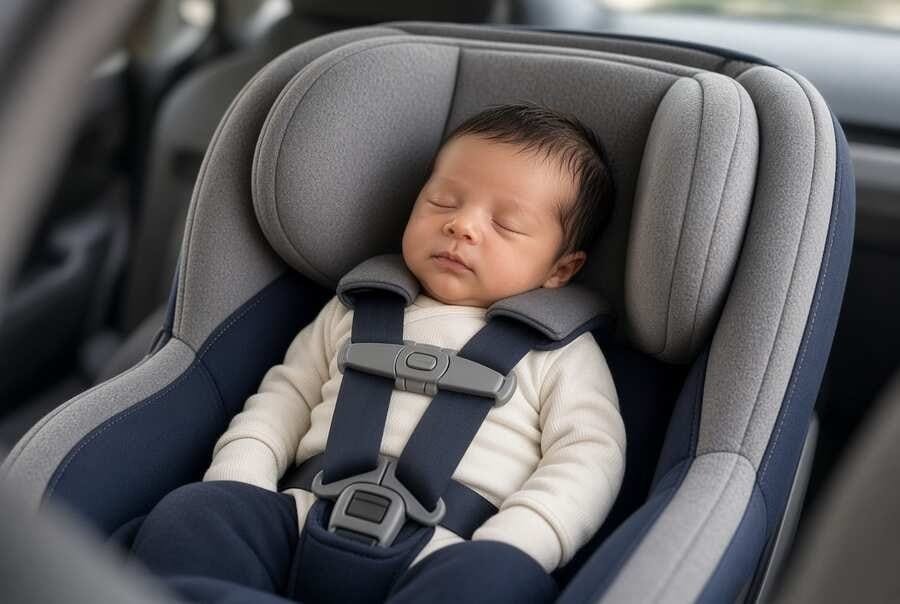
Let us talk about the actual experience of car seats and newborns, because the manual covers the straps but not the 2 a.m. logistics. The first ride home is the obvious milestone. Install the base a week or two before your due date, not the night before. Hospitals will not let you leave without the baby properly buckled, and some will have a nurse check your install, which is equal parts reassuring and nerve-wracking.
In the early weeks, the carrier-plus-base system earns its keep. Sleeping baby stays asleep while you click the carrier out of the car and into the stroller. This is the entire argument for the infant bucket over starting with a convertible, and for many families it is decisive. The counterargument is real too: convertibles last years longer, so starting convertible skips a purchase. There is a full comparison below, because ‘which should I buy’ deserves more than a paragraph.
A few newborn realities nobody puts in the marketing copy. You will rethread or adjust the harness more often than expected in the first months, because newborns grow shockingly fast. No-rethread harnesses, which adjust with the headrest, are worth real money in this phase. Winter babies need thin warm layers under the harness, never a puffy coat, with blankets over the top. And the carrier handle has required positions for travel in the car, so check your manual rather than leaving it wherever it landed.
Infant Seat vs Convertible: Should You Skip the Bucket?
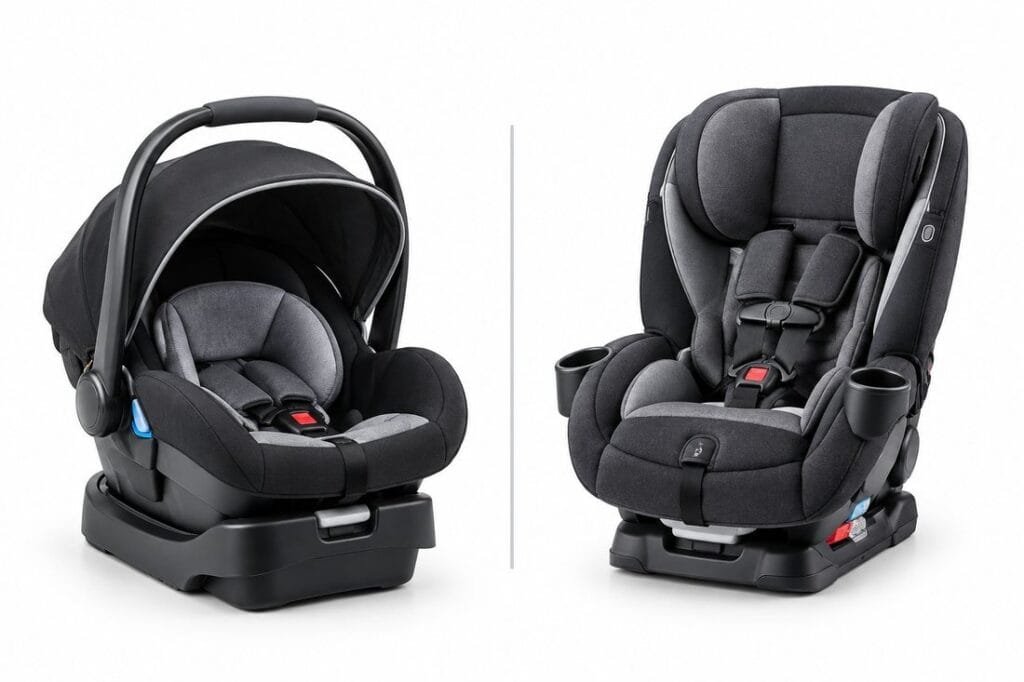
This is the question behind half of all ‘best infant car seat’ searches, so let us settle it honestly. A convertible seat can be used from birth (rear-facing) and lasts through the toddler years, so starting with one saves you buying two seats. That is a genuine advantage, especially on a tight budget or if you hate baby gear clutter.
But the bucket has advantages a convertible cannot match. Portability is the obvious one: sleeping baby transfers from car to stroller to house without waking. Fit is the subtler one: infant buckets generally fit small newborns better than convertibles, with lower harness slots and better inserts. And there is the multi-car factor: an extra base is far cheaper than an extra convertible, so two-car families often come out ahead with the bucket system.
My honest take after all this research: if this is your first baby and the budget allows, the infant bucket is worth it for the newborn months alone. The sleep transfers are not a luxury, they are survival. If money is tight, if you have twins (two buckets plus two bases adds up fast), or if you simply prefer minimal gear, a good convertible from birth is completely safe and reasonable. There is no wrong answer here, only trade-offs.
Installation: The Part That Matters More Than the Seat
I will keep this short because there is a whole guide for it, but it bears repeating in a buying guide: the best infant car seat installed wrong is worse than a basic seat installed right. Before your baby arrives, install the base and get it checked. Many fire stations and hospitals host free inspection events, and NHTSA’s site can point you to one: find a car seat inspection station. Bring both manuals. A certified technician will teach you to do it yourself, which is the actual goal.
The thirty-second version: back seat, base tight with under an inch of movement at the belt path, recline indicator reading correctly for a newborn, carrier clicked in with an audible click and confirmed with an upward tug. Practice the baseless install too, for taxis and travel.
When to Move Out of the Infant Seat
You will know it is time when one of three things happens: your baby hits the seat’s height or weight limit, the top of their head gets within an inch of the shell top, or you simply cannot face carrying the thing anymore. That last one is more common than parents admit. A 20-pound baby in a 10-pound carrier is a workout, and there is no shame in moving to a convertible for your own back’s sake, as long as the baby still fits safely.
The next seat is a convertible, used rear-facing. Remember the rule: rear-facing as long as possible, until the convertible’s rear-facing limits are maxed out. The AAP is unambiguous on this, and modern convertibles make it easy with 40 to 50 pound rear-facing limits. Moving ‘up’ to forward-facing is not a milestone to rush. It is a safety downgrade you postpone as long as the seat allows.
Safety Ratings Explained: What Those Stars Actually Mean
You will see stars and ratings everywhere while shopping, and they do not all mean the same thing. Let us translate. NHTSA’s ease-of-use ratings score how simple a seat is to install and use correctly, on a five-star scale. This is arguably the most useful rating in existence, because use errors are the real-world safety gap. A five-star ease-of-use seat is not ‘safer’ in a crash lab. It is safer in your driveway at 7 a.m., which is where safety actually happens.
Then there are the crash standards themselves. FMVSS 213 is the federal standard every seat must pass. It is pass or fail, not graded, so you will never see a seat advertised as passing with honors. There is also a newer side-impact standard, FMVSS 213a, phasing in with a compliance deadline in December 2027, which adds a dedicated side-impact test for child restraints. Seats meeting it will say so, and it is a nice plus, but its absence does not make a current seat unsafe.
Consumer publications do their own testing with their own scoring, and those reviews can be genuinely useful for comparing ease of use and features. Just remember what they are measuring: mostly usability and convenience, layered on top of the federal pass/fail. Nobody is allowed to sell a seat that fails the federal standard, so treat third-party scores as tiebreakers between finalists, not as safety verdicts.
The rating that matters most has no stars at all: correct use. A top-rated seat installed loosely with a twisted harness protects worse than a basic seat installed tightly with a snug harness. Spend your energy on the install and the fit. The stars will take care of themselves.
Your 20-Minute Buying Walkthrough
Enough theory. Here is how to actually choose, start to finish, in less time than a nap:
1. Measure your back seat and check your car’s manual for LATCH positions. If you drive something compact, note it now, because some wide-based seats fight small cars. This single check eliminates bad fits before you fall in love with a seat.
2. Decide the stroller question. Own a stroller? Check which infant seats click into it, with or without adapters. Buying a stroller too? Consider a travel system from the start. This decision narrows the field enormously.
3. Set your budget tier honestly. Under $150 puts you in solid basic territory (Evenflo LiteMax 35 shines here). The $200 to $350 range is the sweet spot for most families (KeyFit 30, SnugRide SnugLock 35 DLX). Above $350 buys premium materials and refinement (Mesa V2, B-Safe Gen2). All tiers are safe. The money buys convenience, not crash protection.
4. Shortlist two or three seats and check NHTSA ease-of-use ratings for each. If one of your finalists has a notably easier install, that is your tiebreaker. Seriously. Install ease wins more real-world safety than any feature.
5. Check the newborn fit specifics: 4-pound minimum weight, infant insert included, low harness slots. If you are expecting a preemie or a smaller baby, weight this heavily.
6. Buy from an authorized retailer, register the seat with the manufacturer the day it arrives, and install the base two weeks before your due date. Then book a free inspection. Done. Go nap while you still can.
Notice what is not in the walkthrough: reading four hundred parent reviews at midnight. Reviews are useful for spotting patterns (everyone mentions the canopy is small), but they are terrible for safety judgements. One angry review about a ‘flimsy’ latch does not outweigh a federal standard and a five-star ease-of-use rating. Use reviews for lifestyle fit, use ratings and manuals for safety.
Our Research Method
This guide was compiled from NHTSA ease-of-use ratings and child passenger safety guidance, AAP recommendations for newborns, and the current manuals and specifications published by the major car seat manufacturers. No hands-on testing was performed, and no manufacturer sponsored these picks. Details were verified in October 2027, but models and specs change, so confirm current details with the manufacturer before buying.
FAQs
Q.1 What is the best infant car seat for newborns?
The Chicco KeyFit 30 is the most recommended all-around choice thanks to top NHTSA ease-of-use ratings and a foolproof install. The Graco SnugRide SnugLock 35 DLX is the best value, the UPPAbaby Mesa V2 is the premium pick, and the Britax B-Safe Gen2 suits parents who want a sturdy, substantial seat. All pass the same federal safety standards.
Q.2 What is the infant car seat weight limit?
Most infant seats are rated from 4 or 5 pounds up to 30 or 35 pounds, with a height limit around 30 to 32 inches. Your baby outgrows the seat at whichever limit comes first. In practice, babies usually outgrow by height first, typically between 9 and 15 months.
Q.3 Are expensive infant car seats safer?
Not necessarily. Every seat sold in the US must pass the same federal crash standard, FMVSS 213. Pricier seats usually buy easier installation, better fabrics, lighter carriers, or stroller compatibility, not a higher safety bar. A correctly installed budget seat beats a poorly installed premium seat every time.
Q.4 Can a newborn use a convertible car seat instead?
Yes, as long as the convertible is rated from birth (usually 5 pounds and up) and fits your newborn with the harness at or below the shoulders. Infant buckets fit tiny babies better and offer portability, but a convertible from birth is completely safe and saves you buying two seats.
Q.5 How long can a newborn stay in a car seat?
For car travel, follow your pediatrician’s guidance, and take regular breaks on long drives. Pediatric experts advise against long unsupervised sleep in car seats outside the car. The seat is for the ride, not for naps at home. When you arrive, move the baby to a flat sleep surface.
Q.6 Do I need the stroller that matches my car seat?
No, but life is easier when they connect. Most infant seats work with their brand’s strollers directly and with other strollers via adapters. If you already own a stroller, check the manufacturer’s compatibility list before choosing your seat. The click-and-go travel system is genuinely worth it in the newborn months.

Aiden is the founder and editor of CarSeatHaven. He researches NHTSA safety standards, AAP guidance, manufacturer manuals, and recall notices, and turns them into plain-language car seat guides for parents.
