

Table of Contents
Let me guess why you are here. You saw a post, or a friend in a mom group sent you one, saying that car seats are about to become illegal. Or that the seat you bought last spring is suddenly unsafe. Or that you need to panic-buy something before Christmas.
Take a breath. Almost none of that is true.
Here is what actually happened. The NHTSA (National Highway Traffic Safety Administration), the federal agency that writes car seat safety rules, created a brand new regulation called FMVSS 213a. For the first time in American history, it forces harnessed infant and toddler seats to survive a crash test that mimics a T-bone collision, the kind where another car smashes into your door. Until now, federal law only made car seats prove themselves in frontal crashes.
The deadline is December 5, 2026. Any covered car seat manufactured on or after that date has to pass the side-impact test, or it cannot be legally sold in the United States.
And here is the part the scary posts leave out: the seat already installed in your car is fine. It does not become illegal. It does not become dangerous overnight. You do not need to throw it away and buy a new one. This article will explain exactly why, what the new test actually does, which seats it touches, why the deadline moved once already, and the simple way to check whether any seat you are shopping for already meets it.
Why side crashes needed their own test
Most parents picture a head-on collision when they think about the worst crash. The numbers tell a different story. When NHTSA wrote this rule, it noted that side impacts are nearly as deadly as frontal crashes for children from birth to age 12. Front and side crashes together account for most child passenger deaths. And only one of those two had a mandatory test.
The physics make it obvious once someone points it out. In a frontal crash, your child has the hood, the engine, and the whole front of the car crumpling ahead of them, soaking up energy before the force ever reaches the back seat. In a side crash, there is basically nothing between your child and the other car. A door panel, some plastic trim, and the other vehicle’s bumper is suddenly inside the cabin. The door rushes inward fast, and a small child sitting next to it gets hit early in the crash, right when the forces are at their worst.
Now picture the kid. A baby’s head is big and heavy compared to the rest of the body, the neck is still weak, and in a car seat the head sits roughly at the height where an intruding door arrives. So the entire standard boils down to one brutal question: when the door comes in, does the seat keep the child’s head and chest protected, or not?
Car seats were never helpless in side crashes, by the way. NHTSA’s own research estimated that harnessed seats already prevented around 42 percent of deaths in side crashes for children up to age 3, just from their shells, padding, and harnesses doing their job. The problem was that none of it was guaranteed. One company could spend years perfecting side wings and energy-absorbing foam while another did the bare minimum, and both were equally legal. There was no federal test to separate the good ones from the lazy ones. FMVSS 213a draws the line.
What FMVSS 213a actually is
FMVSS stands for Federal Motor Vehicle Safety Standard. Standard 213 is the old rulebook for child restraints, the one that has required a 30 mph frontal crash test for decades. Standard 213a, with the little “a” tacked on, is its side-impact companion. NHTSA published the final rule on June 30, 2022, after Congress ordered the agency to act way back in a 2012 law called MAP-21. If you are the type who likes reading source documents, NHTSA’s announcement and the full rule text are in the Federal Register.
Three things about this rule actually matter to you as a parent:
First, it covers harnessed seats for small kids. The test applies to add-on child restraints recommended for children weighing up to 40 pounds, or whose height range includes heights up to 43.3 inches. Translation: infant carriers, convertible seats, and combination seats while they are used with their built-in harness for babies and younger toddlers. Travel vests and car beds are carved out in the rule text.
Second, booster seats are not part of it. Belt-positioning boosters are for bigger kids who have outgrown those weight and height ranges, and they work by positioning the vehicle’s own seat belt instead of strapping the child down with a harness. They do not take the 213a test. Some booster makers add side-impact features on their own dime, but the federal side test was written for the harnessed seats that protect the youngest kids.
Third, and this one matters more than people realize, it is pass or fail. There are no stars, no scores, no published grades. A seat either meets every requirement or it cannot be certified and sold. That shapes how you should shop, and we will come back to it.
Inside the test: a T-bone crash on a sled
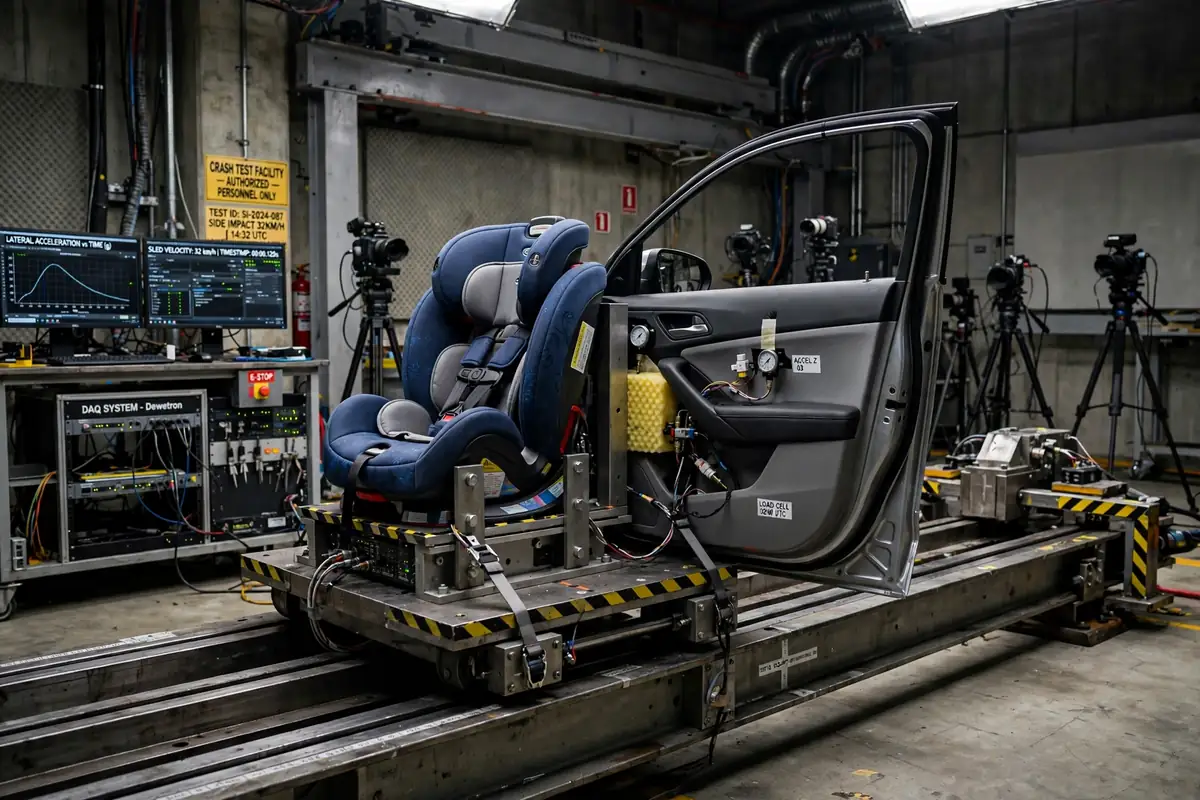
Nobody totals a real car for every car seat model. Instead, labs use a contraption called the Side Impact Seat Assembly, bolted onto a moving sled. It has two pieces: a bench seat that slides sideways on rails, and a rigid fake door standing next to it, shaped and padded to behave like a real car door, armrest and all.
Here is how a test runs. A crash test dummy gets strapped into the car seat, and the seat gets mounted on the sliding bench exactly the way the manufacturer tells parents to install it, using either the lower LATCH anchors or a seat belt, since the seat has to pass with whatever installation methods its manual allows. Then the platform moves so the bench and the door are sliding toward each other at a relative speed of 31.3 km/h (about 19 mph) when they meet. The bench slides away while the door pushes in, copying what happens to a child sitting on the struck side of the car. The whole setup was tuned to reproduce NHTSA’s full-scale side crash scenario: a striking vehicle traveling at 30 mph hitting the side of a car moving at 15 mph. NHTSA describes it as replicating a 30 mph side collision.
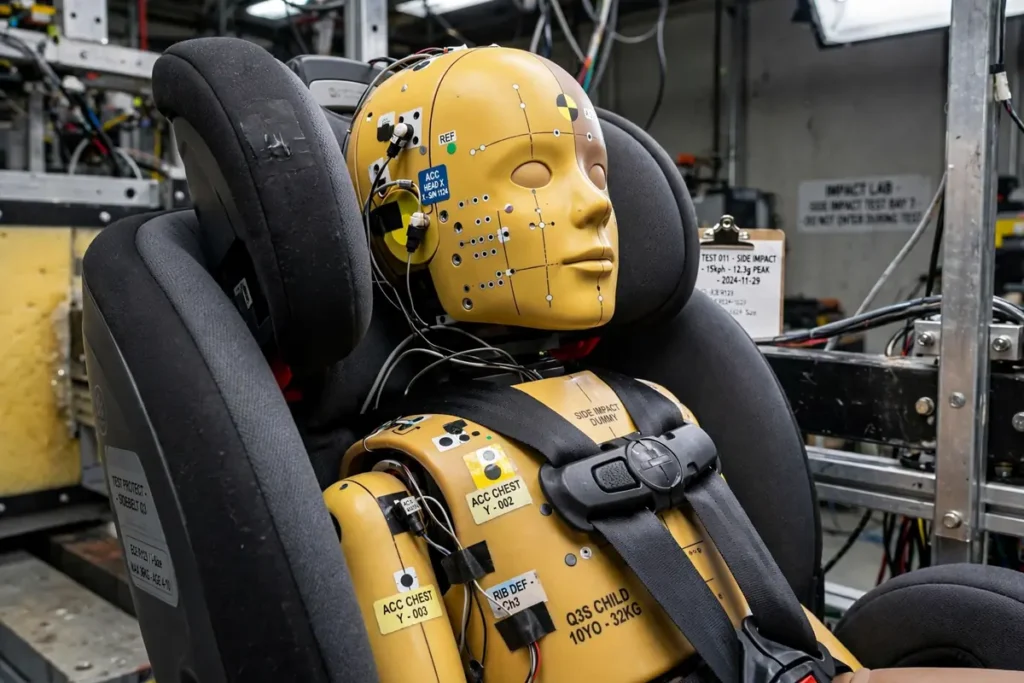
Two dummies do the work, and which one rides along depends on the size of child the seat is built for.
The CRABI 12-month-old dummy stands in for babies. For seats in this size range, the headline requirement is containment, and it is beautifully simple: the dummy’s head must not touch any part of the test door assembly. At all. If the head reaches the door, the seat fails. Done.
The Q3s dummy is a purpose-built 3-year-old side-impact dummy that NHTSA finalized in November 2020, after years of development, because the older dummies were designed mostly for frontal crashes. It carries sensors in the head and chest. For a seat to pass, the head injury measure (called HIC, calculated over a 15 millisecond window) has to stay at or below 570, and the chest must not compress more than 23 millimeters.
Then the seat itself has to survive. It cannot break apart, shed sharp fragments, or collapse in a way that could hurt the child. Adjustable parts have to stay put, and the buckle must hold during the crash but still open afterward with a push an adult can manage, so a rescuer can get the kid out.
FMVSS 213, 213a, and 213b: the family tree
You will keep running into three similar codes, sometimes all on the same product page, and they are not the same thing. Here is the family tree.
FMVSS 213 is the original child restraint standard. It covers the frontal 30 mph crash test, the basic design and strength requirements, the labels every seat must carry, and the registration rules. If a seat is legally sold in the US today, it meets 213. Full stop.
FMVSS 213a is the side-impact standard this article is about. Think of it as an extra chapter bolted onto 213 in 2022. A seat does not pass 213a instead of 213. It has to pass both.
FMVSS 213b is a newer, updated edition of the main standard itself, created in a December 2023 final rule. It refreshes things like the frontal test bench and various requirements, and its mandatory start date is the same day as the 213a deadline: December 5, 2026. When you see a brand advertise that a new seat “meets FMVSS 213b,” it is telling you the seat was certified to the newest version of the core rulebook. Some of the first seats marketed this way are already on sale. Our Doona X vs Doona+ comparison looks at one of them, since the Doona X was designed and certified against the newest standards while the original Doona+ was built to the earlier ones.
The practical takeaway is simple. After December 5, 2026, a newly manufactured harnessed seat has to satisfy the updated package of rules, frontal and side, instead of the frontal test alone that was enough for the last several decades.
The road to December 5, 2026: a deadline that moved once
If you feel like you heard about this deadline before, with a different date attached, you are not imagining it. The timeline has a twist, and understanding it explains a lot of the confusing advice floating around online.
| Date | What happened |
| 2012 | Congress passes MAP-21, ordering NHTSA to write a side-impact rule for child restraints. |
| November 2020 | NHTSA finalizes the Q3s, the first dummy built specifically for child side-impact testing. |
| June 30, 2022 | NHTSA publishes the final rule creating FMVSS 213a. First compliance date: June 30, 2025. Early compliance is allowed right away. |
| December 2023 | NHTSA issues the separate FMVSS 213b rule, updating the main standard, with its own future start date. |
| May 30, 2025 | Weeks before the original deadline, NHTSA proposes delaying the 213a compliance date to December 5, 2026, so it lines up with 213b, and pauses enforcement in the meantime. |
| June 30, 2025 | The original deadline passes under that enforcement pause, so seats do not suddenly become noncompliant while the paperwork catches up. |
| September 9, 2026 | NHTSA publishes the final rule that makes the delay official. The new compliance date for 213a is December 5, 2026. |
| December 5, 2026 | Every covered car seat manufactured on or after this date must pass the 213a side-impact test, and FMVSS 213b becomes mandatory the same day. |
Why the delay? Lining up the two standards meant manufacturers could redesign and retest a seat once, against both rulebooks, instead of doing the whole job twice about a year apart. The September 2026 rule also tidied up a few details, like exempting school bus child restraints that follow specified labeling rules, and dropping the baby dummy from forward-facing seat tests, since a 12-month-old dummy in a forward-facing test did not reflect how those seats get used. None of those tweaks change what the standard means for a family buying a normal car seat. The date to remember is December 5, 2026.
The big question: is your current car seat suddenly illegal or unsafe?
No. Let us take the worries one at a time, because this is the part that keeps parents up at night, and it is also where the worst social media posts live.
“My seat becomes illegal on December 5, 2026.”
False. The compliance date controls what manufacturers may build and certify, not what you may use. Federal standards work on manufacture dates. A seat that was legal when it was made stays legal to use for its whole service life, as long as it has not expired and has not been recalled. State laws tell you that your child must ride in a proper restraint. None of them require your seat to meet a standard that was written after it was manufactured.
“A seat that never took the side test is unsafe.”
False, and NHTSA has said so in plain language. The agency’s position: if your current seat is not expired, not recalled, and correctly installed, there is no reason to get rid of it. Seats certified under the current rules are, in NHTSA’s own words when the rule came out, still extremely safe. The new standard raises the floor for future seats. It does not retroactively declare a decade of car seats dangerous. And remember what we covered earlier: harnessed seats were already saving lives in side crashes long before anyone tested them for it.
“Stores will have to pull older seats off the shelves on deadline day.”
False. Seats manufactured before December 5, 2026 can keep being sold after that date until the stock runs out. You will see pre-deadline and post-deadline seats sitting side by side in shops well into 2027. Both are legal. The newer one simply had to pass one more test.
“My seat will be recalled if it fails the new test.”
That is not how recalls work. Recalls are for seats with defects, or seats that fail the standard that applied to them. An older seat is judged against the rules in force when it was built. If you want to see what a genuine recall looks like, our Evenflo REO recall guide walks through one where a real defect triggered the whole process. Failing a test that did not exist when your seat was made is not a defect.
“I need to rush out and buy a 213a seat before my baby arrives.”
Only if you want to. Plenty of seats on sale right now already meet the new standard, because brands have had since 2022 to comply early, and most redesigned their lines ahead of the deadline. If it matters to you, the next section shows how to check. If your budget or your due date says buy the seat that fits your car, your baby, and your wallet today, an unexpired, well-installed current seat is a sound choice.
How to check whether a new seat meets FMVSS 213a
There is no single government sticker that says “213a inside,” so checking takes two minutes and a little know-how. Work through these steps in order.
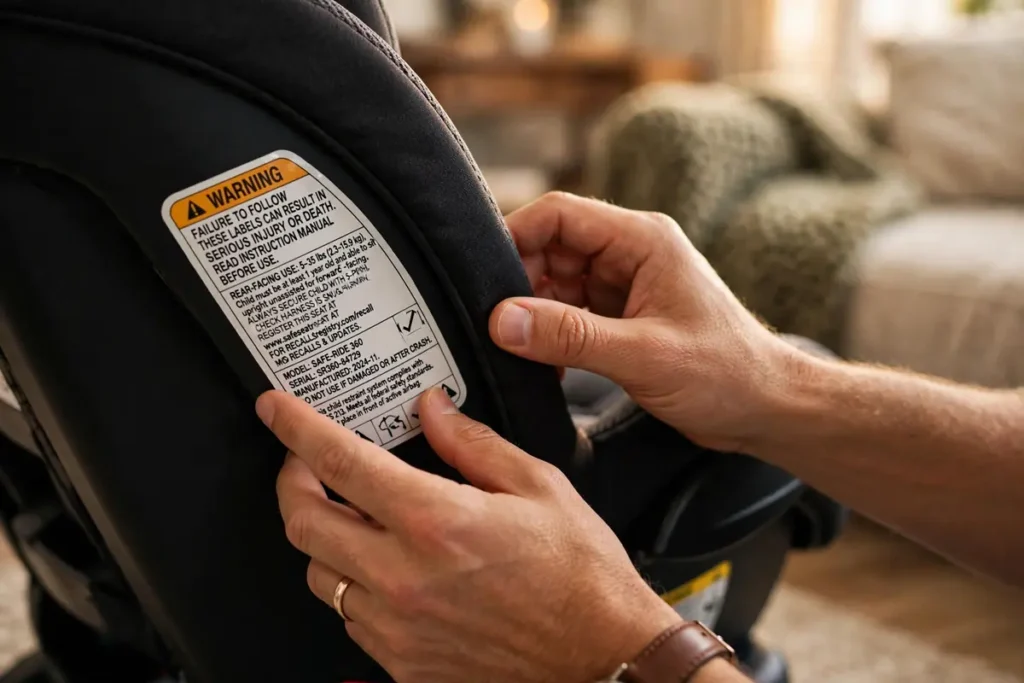
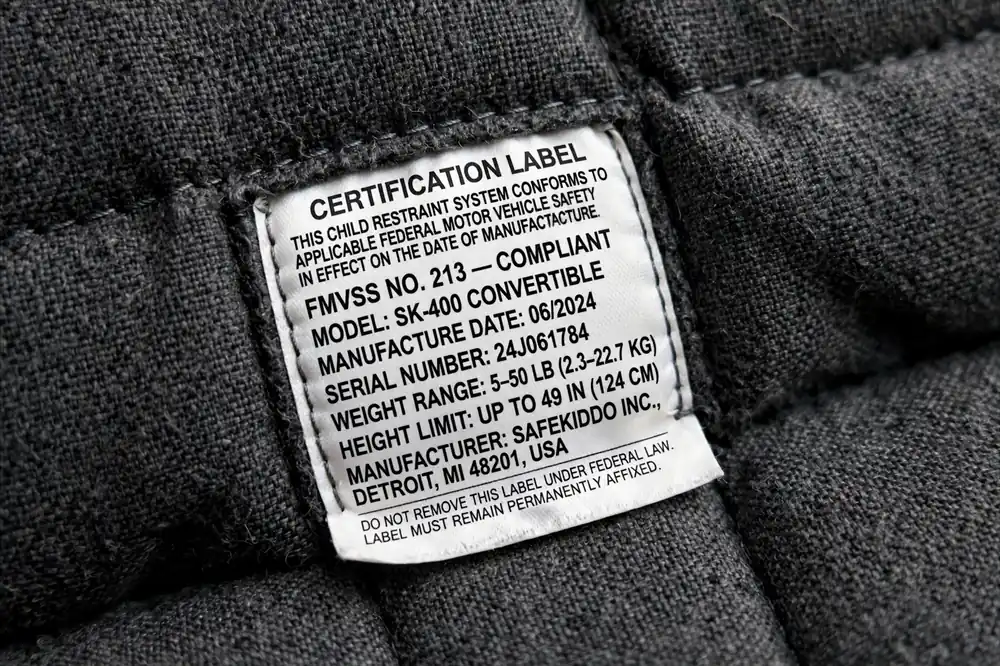
**1. Find the manufacture date.** Every US car seat carries permanent labels with its model name or number, the manufacturer’s name, and a line that reads “Manufactured in” followed by the month and year. Any covered seat manufactured on or after December 5, 2026 had to pass the side test to be certified. That date is your simplest shortcut.
**2. Read the certification statement.** The same label area carries a sentence every legal US seat must show: “This child restraint system conforms to all applicable Federal motor vehicle safety standards.” That wording is required by FMVSS 213, and the phrase “all applicable” is doing real work in that sentence. For a seat built after the deadline, the applicable standards include 213a.
**3. Look for an explicit 213a mention.** Brands know parents are asking, so many state compliance outright. Check the box, the product page, and the manual for wording like “meets FMVSS 213a” or “tested to the new side-impact standard.” Some brands print a small standards shield on the packaging that lists the rules the seat meets. If a seat was built before the deadline and the brand redesigned it early, this is how they will tell you.
**4. Ask the manufacturer.** This is the step NHTSA itself recommends. If the label and box leave you unsure, contact the brand with the model number and manufacture date and ask directly whether that seat is certified to FMVSS 213a. Reputable brands answer this quickly, and several publish compliance lists on their websites.
**5. Be suspicious of seats with no labels at all.** A seat missing its model number, manufacture date, or certification statement is not a seat that “forgot” its paperwork. It is a seat that was never certified for the US market, which leads straight into the counterfeit problem covered below.
Buying a car seat in late 2026 and 2027: what changes for shoppers
The deadline lands in the middle of the holiday shopping season, so here is what to expect at the shelf and online.
Old stock is not a trap, but check the date. Retailers can legally sell seats made before December 5, 2026, and many will discount them to clear the shelves. A discounted pre-deadline seat from a real brand, bought from an authorized retailer, is still a certified, crash-tested seat. Just walk in knowing which of the two generations you are buying, using the manufacture date on the box or label, and make sure the price reflects it. One caution: a seat’s expiration clock starts at manufacture, so old stock also means a shorter usable life. Check the expiration date before you pay, especially on a seat you hope to hand down to a second child, like the long-lasting models in our list of car seats that rear-face to 50 pounds.
Prices are set by brands, not by the rule. The standard does not set or raise any seat’s price. Most major brands finished their redesigns well before the deadline, and their current prices already reflect the engineering. What the deadline changes is the mix on the shelf. Through 2027 you will see more seats advertising side-impact credentials, and the cheapest no-name end of the market, the part that could never afford proper testing, will quietly disappear from legitimate stores.
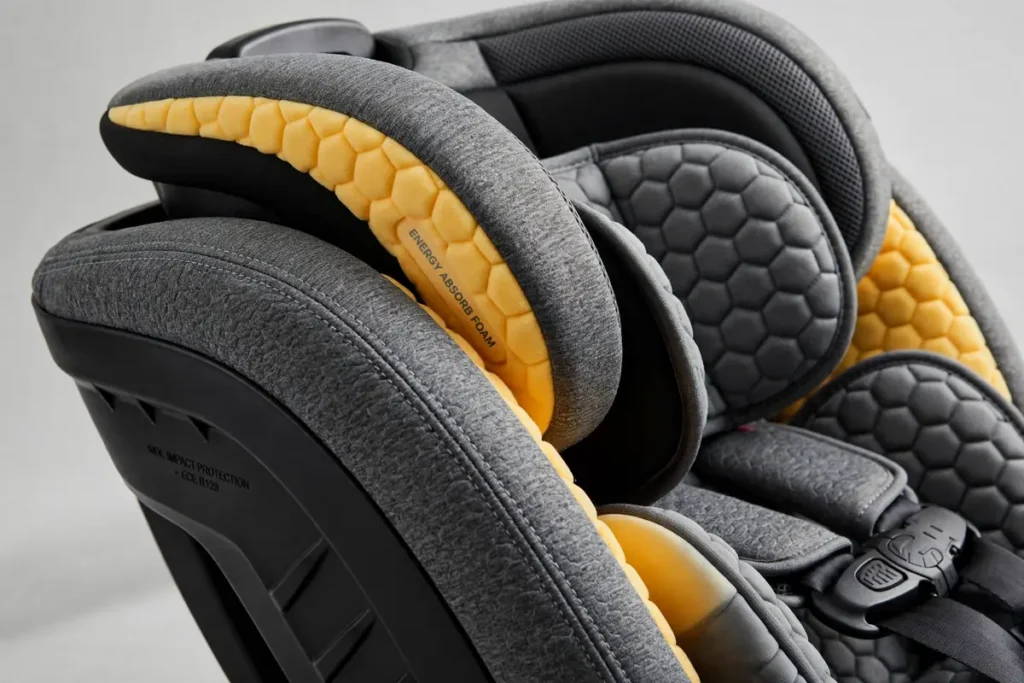
What you will physically see on new seats: because the test punishes head contact with the door, brands have been racing to manage exactly that. Expect deeper head wings, thicker energy-absorbing foam around the head and torso, bolt-on side-impact pods on some models, and stiffer shells. Some seats will get a little wider or heavier as a result, which is worth knowing if you are planning a three-across setup. And expect marketing to get loud. “Side-impact tested” will be everywhere. Remember that after the deadline it stops being a bragging point and becomes the legal minimum for every new harnessed seat.
The counterfeit connection: why 213a makes fakes easier to spot
Counterfeit car seats were already a problem before this rule existed. They are copied seats, often sold through online marketplaces at prices that look too good, built with weak plastic, flimsy webbing, and none of the engineering of the real product. They were never crash tested to any US standard, and crash footage of lookalike seats failing is genuinely frightening.
FMVSS 213a raises the bar in a way that hurts the fakes most. Certification is the manufacturer’s legal promise that a seat passed the required tests, and it lives on those labels: the conformity statement, the model number, the manufacture date, the registration card in the box. A counterfeit cannot honestly carry any of it, and after December 2026 it certainly cannot claim side-impact certification. So the label check above doubles as a fake check. No labels, no manufacture date, no registration card, and a price that undercuts the real seat by half? Walk away, report the listing, and buy from the brand or an authorized retailer instead.
What FMVSS 213a does not do
A little honesty about the limits of the rule will make you a smarter shopper than any headline.
**It is not a rating system.** NHTSA does not publish scores, and there is no way to know whether a seat passed the side test by a mile or by an inch. Two seats can both be fully legal while offering different levels of real-world protection. The standard guarantees a floor. It does not rank what is above the floor. So your usual homework still applies: fit in your car, correct installation, harness fit on your child, and features you will actually use right every day.
**Manufacturers certify themselves.** The US system runs on self-certification. Brands test their seats and declare compliance, and NHTSA then buys seats off shelves and runs its own compliance tests, with recalls and penalties for seats that fail. That system is exactly why genuine recalls happen, and why buying traceable brands with real model numbers and registration cards matters.
**It does not cover every seat or every crash.** Boosters are outside it, as explained above. It tests one side-impact scenario, at one severity, with the seat installed correctly on a lab bench. It cannot test your car, your installation, or a crash at a different angle, and no standard can. Correct installation and a snug harness remain the biggest safety factors you personally control.
**It does not change how long your seat lasts.** Expiration dates, replacement after a crash, and recall rules all work exactly as before. The standard changes what new seats must prove, not how you care for the one you own.
Expecting a baby around the deadline? A simple game plan
If your due date falls anywhere near December 2026, the deadline can feel like one more thing to stress about. It does not need to be. Here is a calm way to handle it.
If you are building a registry now, add the seat you actually want, the one that fits your car and your budget, and check whether the brand already lists it as 213a compliant. Most current models from the major brands already are, because they redesigned early. If the seat you love is not yet updated, that is not an emergency. An unexpired, correctly installed seat from a reputable brand protects your baby well today, and the new standard does not change that math overnight.
If grandparents or friends offer a hand-me-down or buy you a seat as a gift, run the same checks you always should: confirm it has never been in a crash, confirm it is not expired, find its labels and manufacture date, and check its model number against recall lists. The 213a deadline adds one optional question to that list. Nothing more.
And if your baby is already riding in a seat you bought last year, the game plan is the shortest one of all: keep it installed tightly, keep the harness snug, and spend your energy on the things that prevent injuries every single day. The new standard is about the next seat you buy, whenever that day naturally comes.
Frequently Asked Questions
Is my current car seat illegal after December 5, 2026?
No. The deadline applies to manufacturing, not to using a seat you already own. A seat that was legal when it was made stays legal to use until it expires, as long as it has not been recalled and you install and use it correctly.
Do I need to replace my seat with one that meets FMVSS 213a?
No. NHTSA’s position is that a current seat that is unexpired, unrecalled, and properly installed is still very safe, and there is no reason to throw it away just because a newer standard exists. When you are next in the market for a seat anyway, choosing one that already meets 213a is a sensible tiebreaker.
Which car seats have to pass the FMVSS 213a test?
Harnessed add-on seats recommended for children weighing up to 40 pounds, or whose height range includes heights up to 43.3 inches. That covers infant carriers, convertibles, and combination seats in harness mode for babies and toddlers. Booster seats, travel vests, and car beds are outside the test.
How can I tell if a seat I am buying meets FMVSS 213a?
Check the manufacture date first: any covered seat made on or after December 5, 2026 had to pass. For older stock, look for a 213a statement on the box, product page, or manual, and if it is not there, ask the manufacturer with the model number in hand. The certification label sentence, “This child restraint system conforms to all applicable Federal motor vehicle safety standards,” must be on every legal US seat.
What is the difference between FMVSS 213, 213a, and 213b?
FMVSS 213 is the original standard, built around the frontal crash test. FMVSS 213a is the side-impact standard added in 2022. FMVSS 213b is the updated edition of the main standard from December 2023. Both 213a compliance and 213b become mandatory on December 5, 2026.
Will car seats get more expensive because of FMVSS 213a?
The rule itself does not set prices, and most big brands redesigned their seats well ahead of the deadline, so their prices already include the work. The most likely effect for shoppers is the opposite at first: discounts on pre-deadline stock as stores clear shelves through 2027. Just check the manufacture and expiration dates on any clearance seat.
If a seat passes FMVSS 213a, does that mean it is the safest seat I can buy?
It means the seat cleared the federal minimum for side-impact protection, which is a real and meaningful bar. But the test is pass or fail, with no published scores, so it cannot tell you how far above the minimum any seat sits. Fit, correct installation, and everyday ease of use still matter as much as ever.

Aiden is the founder and editor of CarSeatHaven. He researches NHTSA safety standards, AAP guidance, manufacturer manuals, and recall notices, and turns them into plain-language car seat guides for parents.
