

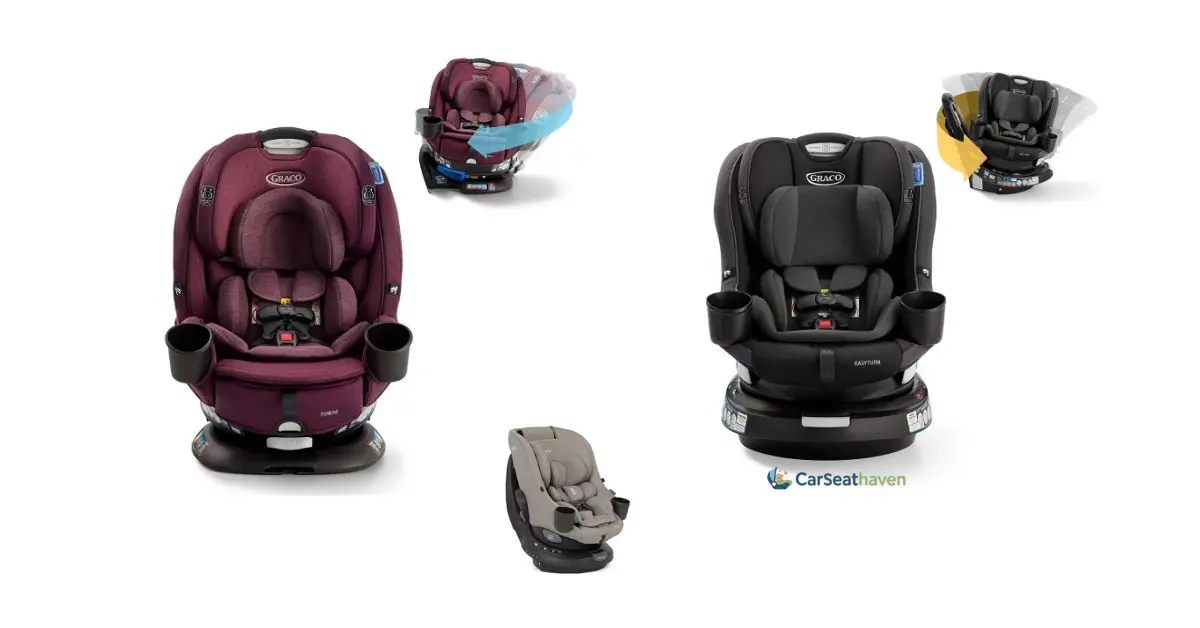
The Cosco Scenera Extend car seat is a budget convertible car seat made by Dorel Juvenile Group under its Cosco Kids brand. It works rear-facing from 5 to 40 pounds and forward-facing from 30 to 50 pounds, it weighs about 8 to 9 pounds, it is certified for use on airplanes, and it typically sells for around $59. The one-line verdict: it is one of the smartest buys on the market if you need a lightweight, affordable second seat or a travel seat, while families looking for one daily-use seat that lasts five or more years will get more for their money by spending more upfront.
If you are shopping for the Scenera Extend, you are probably asking one of three questions. Is it really safe at this price? How is it different from the older Scenera Next? And how long will my child actually fit in it? This guide answers all three with manufacturer-stated specifications, explains what the “Extend” name really means, walks through installation step by step, and compares it honestly against the Scenera Next and other budget convertibles. Every figure below comes from Dorel, the product listings, or published third-party spec sheets, and where sources differ slightly, that is noted.
What the Cosco Scenera Extend Is
The Cosco Scenera Extend car seat is the third generation of Cosco’s famously affordable Scenera convertible line, and it is replacing the popular Scenera Next as old stock sells through. Like its predecessors, it is a simple two-mode convertible: rear-facing for babies and toddlers, then forward-facing with the five-point harness for preschoolers. There is no booster mode, and it is not an all-in-one seat.
What changed with this generation is size and safety testing. The shell is taller and a bit wider than the Scenera Next, the forward-facing limit jumped from 40 pounds to 50 pounds, and the seat was updated to meet the newer federal side-impact standard, FMVSS 213a. Cosco describes it as its most affordable convertible, engineered and tested to meet or exceed federal safety standards, and it is proudly assembled in Columbus, Indiana.
Before going further, one important clarification about the name. “Extend” does not refer to a pull-out leg extension panel like the one on the Graco Extend2Fit. The Scenera Extend has no sliding extension panel. The name refers to extended use: a taller shell, higher harness slots, and a higher weight limit so children fit longer than they did in the Scenera Next. If you bought it expecting a legrest-style panel, you will not find one, and that is not a defect. It is simply a different kind of extension.
Cosco Scenera Extend Car Seat Specs at a Glance
Here are the headline numbers, stated as published by the manufacturer and major retailers. Always confirm against the labels on your own seat, since Dorel can revise specifications.
| Specification | Detail |
| Rear-facing limits | 5 to 40 lbs, 19 to 40 inches tall |
| Forward-facing limits | 30 to 50 lbs, 34.4 to 44 inches tall, at least 1 year old |
| Seat weight | About 8 to 9 lbs (sources vary slightly) |
| Seat width | About 18.5 to 19 inches at the widest point |
| Top harness slot height | About 13 to 13.5 inches |
| Harness | 5-point, front-adjust, 5 height positions, 3 buckle locations |
| Installation | Vehicle seat belt or LATCH lower anchors, plus top tether forward-facing |
| Side-impact testing | Meets federal side-impact standard (FMVSS 213a) |
| Airplane use | Certified for aircraft use, rear-facing and forward-facing |
| Cup holder | Removable, dishwasher-safe |
| Seat pad | Removable, machine-washable and dryer-safe |
| Expiration | 8 years from date of manufacture |
| Typical street price | About $59 to $79 (check current price, it moves with sales) |
Key Features Explained
A spec table tells you what the Cosco Scenera Extend car seat has. This section explains what those features actually mean in daily life, and what the seat deliberately leaves out to hit its price.
Taller, Roomier Shell
The most meaningful change from the Scenera Next is the shell itself. It is taller and somewhat wider, which is what allows the higher forward-facing limit and the taller harness positions. For a child, that translates into more shoulder room and more headroom, which matters a lot in a seat with thin padding, because a cramped shell is the main comfort complaint with ultra-budget seats. The tradeoff is that the seat takes up more width in your back seat than the Scenera Next did, so the old “fits anywhere” reputation needs a small asterisk now: measure before assuming it fits three across.
Five Harness Heights and Three Buckle Positions
The five-point harness adjusts from the front of the seat, which is a genuine convenience at this price. Five shoulder-strap heights and three crotch buckle positions give you enough combinations to fit a 5-pound newborn and, later, a 45-pound preschooler. The harness is a rethread style, meaning you pull the straps out of one set of slots and thread them through another as your child grows. That is less convenient than the no-rethread systems on pricier seats, where the headrest and harness slide up together, but it is simple and it works. The rule never changes: rear-facing, the straps come from slots at or below your child’s shoulders; forward-facing, from slots at or above the shoulders.
Lightweight, Travel-Friendly Build
At roughly 8 to 9 pounds, the Scenera Extend is one of the lightest convertible car seats you can buy, and travel reviewers consistently rank it as the lightest FAA-accepted full convertible in its class. There is no separate base to carry, no heavy steel frame, and the shell is easy to grip with one hand. If you fly with kids, take rideshares, or swap the seat between two cars every week, that low weight is the single best thing about this seat. It is light enough to strap to a rolling carry-on, wear as a backpack with a travel strap, or gate-check without wincing.
Removable Cup Holder and Washable Pad
The cup holder pops out and is dishwasher-safe, and the seat pad removes for machine washing and can go in the dryer. Parents of toddlers know exactly why this matters. Juice boxes explode, crackers get ground into seams, and motion sickness happens. A seat you can strip down and wash without a three-hour ordeal is worth real money, and at this price the washable pad is a standout feature. Note that the harness straps themselves should only be spot-cleaned with a damp cloth, never submerged or machine-washed, because soaking can weaken the webbing.
LATCH-Equipped, Wide Belt Path
The seat installs with either the vehicle seat belt or the LATCH lower anchors, and the belt path is wide and clearly marked, which makes threading the belt through easier than on many competitors. Travel-focused reviewers rate the installation ease highly for rental cars, taxis, and airplanes, where you often have thirty seconds and bad lighting. There is no built-in lock-off, so with a seat belt install you rely on the vehicle’s locking retractor or a locking clip, exactly as the manual describes. The top tether is required in forward-facing mode, not optional.
What It Deliberately Leaves Out
Honesty matters here. The Scenera Extend has no no-rethread harness, no adjustable headrest separate from the shell, no premium padding or infant insert beyond the basics, no anti-rebound bar, and no fancy fabrics. The padding is a single thin layer, and comfort on drives longer than three or four hours is the most common complaint. Cosco spent the budget on the things that matter for safety and longevity, the taller shell, the higher limits, the side-impact compliance, and kept everything else basic. If you go in expecting a $60 seat to feel like a $250 seat, you will be disappointed. If you go in expecting a safe, light, honest seat, it delivers.
Rear-Facing and Forward-Facing Limits: How Long Your Child Actually Fits
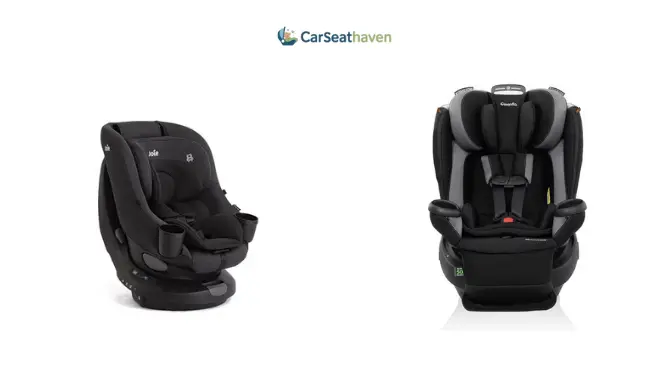
Manufacturer limits are maximums, not promises. Children outgrow seats by height long before they hit the weight limit, so here is how the numbers translate into real ages.
Rear-Facing: 5 to 40 Pounds, 19 to 40 Inches
The seat rear-faces from birth, which means it can genuinely replace an infant bucket seat if you want to skip that purchase. The low harness slots fit small newborns well, and many parents use it from day one. Most children will reach the 40-inch rear-facing height limit or get to where the top of the head is within an inch of the top of the shell somewhere around age two to three, depending on the child.
That is a perfectly respectable rear-facing run for a budget seat, and it keeps most kids rear-facing past the second birthday, which is what child passenger safety advocates recommend as a minimum. Remember the fit rules: the child’s head must be at least one inch below the top of the shell, and the harness must come from slots at or below the shoulders.
Forward-Facing: 30 to 50 Pounds, 34.4 to 44 Inches
Once a child outgrows rear-facing by weight, height, or fit, the seat turns forward-facing. The 30-pound minimum and the requirement that the child be at least one year old are hard rules from the manufacturer, and the child must have outgrown rear-facing first. In practice, the top harness slots at about 13 to 13.5 inches are the binding constraint.
Long-torsoed kids can outgrow the harness by height before age three, while average kids typically fit until around age three to four. Published reviews estimate most children are done with this seat around 2.5 to 3.5 years old. When the shoulders go above the top slots or the ears reach the top of the shell, the seat is outgrown, even if the child is under 50 pounds. That is normal and it is how every harnessed seat works.
What Comes After the Scenera Extend
Because the seat tops out earlier than premium convertibles, plan ahead. Most children will move from the Scenera Extend into a forward-facing combination seat with a higher harness limit or, if they are mature enough and meet the minimums, a high-back booster. Budget-friendly next steps include combination seats in the $100 to $150 range. The key point: the Scenera Extend is a bridge seat, not a “one seat from birth to booster” seat, and its price reflects that. Buying it with a plan for what comes next is smarter than being surprised later.
Installation Walkthrough
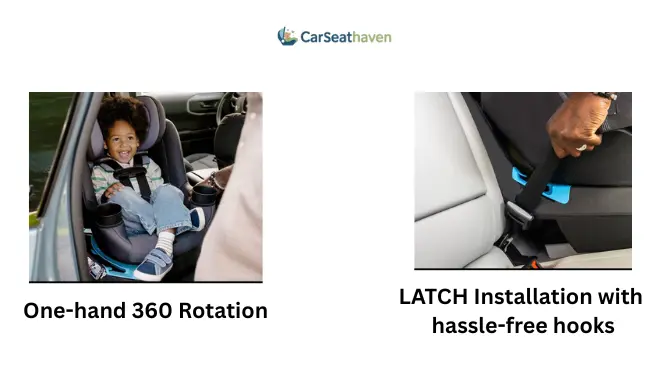
Install the Cosco Scenera Extend car seat using either the vehicle seat belt or the LATCH lower anchors, never both at the same time, and always read your specific manual before the first install. What follows is the general process as published across the Scenera family manuals and reviewer guides. Your manual is the final authority.
Rear-Facing Installation
Start by placing the seat rear-facing on the vehicle seat, with its base flat against the cushion. Route the vehicle seat belt or the LATCH strap through the rear-facing belt path, which is the opening low on the shell marked for rear-facing use. Using the forward-facing path by mistake is one of the most common and most dangerous errors, so double-check the labels.
Next, set the recline angle. The shell has a level line, and that line must be parallel to the ground when the seat is installed. In many vehicles the vehicle seat slopes enough that you will need a tightly rolled towel or a foam pool noodle under the front of the car seat base to get the angle right. That is a normal, manufacturer-allowed technique, not a hack.
Once the angle is set, tighten the belt or LATCH strap. Put weight into the seat, a knee in the seating area works, and pull the strap tight. Then check for movement at the belt path with your weakest hand: if it moves more than one inch side to side or front to back, it is not tight enough.
A few rear-facing specifics worth knowing. Do not use the top tether in rear-facing mode with this seat; it is for forward-facing only. If the seat is installed in an outboard position, it is fine and often recommended for the back of the car seat to make light contact with the back of the front vehicle seat, which limits rotation.
And if the install feels wobbly at the front edge of the car seat, that is normal for untethered rear-facing seats; what matters is that it does not move more than an inch at the belt path.
Forward-Facing Installation
Turn the seat to face forward and route the belt or LATCH strap through the forward-facing belt path. Attach the top tether strap to the vehicle’s tether anchor and remove the slack. The top tether is required in forward-facing mode, every time, no exceptions. It dramatically reduces how far a child’s head moves forward in a crash, and skipping it is one of the most consequential mistakes parents make with forward-facing seats.
Tighten the installation the same way: weight in the seat, pull the belt tight, check for less than one inch of movement at the belt path. Then place your child in the seat, move the harness to slots at or above the shoulders, position the chest clip at armpit level, and tighten until the harness passes the pinch test: try to pinch a horizontal fold of webbing at the child’s collarbone, and if you can grab slack, it is too loose.
Common Installation Mistakes to Avoid
Technicians see the same errors over and over with this seat family, and every one of them is fixable in a few minutes.
- Using the wrong belt path. Rear-facing belt through the forward-facing opening, or vice versa. The paths are labeled on the shell. Match the mode to the label.
- Skipping the top tether forward-facing. Required, not optional. Find your vehicle’s tether anchors in the vehicle owner’s manual before you start.
- More than one inch of movement at the belt path. Test with your non-dominant hand, right where the belt goes through. A knee in the seat while tightening solves most of this.
- Harness slots at the wrong height. Rear-facing means at or below the shoulders. Forward-facing means at or above. When in doubt, re-read that sentence.
- Loose harness. Do the pinch test every ride. Bulky winter coats are the usual culprit: the coat compresses in a crash and leaves the harness effectively loose. Use thin layers and put the coat on backward over the tightened harness instead.
- Twisted straps or a low chest clip. Straps should lie flat, and the chest clip belongs at armpit level, not on the belly.
- Adding aftermarket products. Head inserts, strap covers, seat protectors, and toys that did not come in the box are not crash-tested with this seat and can change how it performs. The one exception: the manufacturer allows a thin towel between the car seat and the vehicle seat to protect upholstery.
- Using LATCH past its weight limit. Your manual lists the maximum child weight for the lower anchors. Once your child passes it, switch to a seat belt installation and keep using the top tether forward-facing.
Cosco Scenera Extend vs Scenera Next
This is the comparison most shoppers actually need, because the Extend is replacing the Next and the two will sit side by side on shelves and in search results for a while.
| Feature | Scenera Next | Scenera Extend |
| Rear-facing limits | 5 to 40 lbs, 19 to 40 in | 5 to 40 lbs, 19 to 40 in |
| Forward-facing limits | 22 to 40 lbs, 29 to 43 in | 30 to 50 lbs, 34.4 to 44 in |
| Shell | Smaller, narrower | Taller and wider |
| Width | About 17 in | About 18.5 to 19 in |
| Seat weight | About 6.8 lbs | About 8 to 9 lbs |
| Side-impact standard | Older federal standard | Meets newer FMVSS 213a |
| FAA aircraft approval | Yes | Yes |
| Expiration | 8 years | 8 years |
| Typical price | About $45 to $60, phasing out | About $59 to $79 |
Size and Limits: The Real Upgrade
The rear-facing limits are identical on paper, but the forward-facing story is completely different. The Next topped out at 40 pounds forward-facing, which many kids hit before age three. The Extend goes to 50 pounds with a taller shell and taller harness slots, buying most families an extra year or so of harnessed use. For a seat that costs roughly $15 to $20 more, that is meaningful extra value.
Safety Testing: The Generational Leap
The bigger story is the side-impact standard. The Scenera Next was designed before the newer FMVSS 213a side-impact requirements, while the Extend was built to comply with them. Side impacts are a major source of serious child injuries, so a budget seat meeting the current side-impact standard is a genuine improvement, not marketing fluff. Both seats meet the baseline FMVSS 213 frontal crash standard that every legal car seat in the United States must pass.
Travel and Portability: The One Tradeoff
The Next was the lighter, narrower seat at under 7 pounds and about 17 inches wide, which made it the darling of traveling families for years. The Extend is a couple of pounds heavier and about an inch and a half wider. It is still extremely light for a convertible and still FAA-approved, but on very narrow airplane seats you may need to raise the armrest, and three-across back-seat setups need measuring rather than assuming. If you already own a Scenera Next and love it for travel, keep it. If you are buying new, the Extend is the better seat for the small price difference.
Price and Availability
The Scenera Next is being phased out as existing stock depletes, so prices on remaining units bounce around and color choices are thinning. The Extend is the current model, widely stocked at major retailers, and typically priced around $59 on sale up to about $79. Given the higher limits and the updated side-impact compliance, the Extend is the one to buy new unless you find a Next at a steep clearance discount and understand you are getting the older design.
How It Stacks Up Against Other Budget Convertibles
The Scenera Extend does not compete with $250 premium seats. Its real rivals are the other seats under about $120. Here is the honest landscape.
| Seat | Typical price | RF limits | FF limits | Best for |
| Cosco Scenera Extend | $59 to $79 | 5 to 40 lbs | 30 to 50 lbs | Travel, second car, tight budgets |
| Evenflo Tribute | About $80 to $100 | 5 to 40 lbs | 22 to 40 lbs | Compact cars, simple backup seat |
| Baby Trend Trooper | About $100 to $120 | 5 to 40 lbs | 22 to 65 lbs | Longer harnessed use on a budget |
| Cosco Entrada | About $89 | 5 to 40 lbs | 22 to 65 lbs | Budget seat that lasts longer |
A few notes on these comparisons, using manufacturer-stated limits. The Evenflo Tribute is the Scenera Extend’s closest rival: similarly light, similarly simple, similarly priced, with a lower 40-pound forward-facing cap. If you find the Tribute cheaper, it is a fair alternative, but the Extend’s higher forward-facing limit and newer side-impact compliance give it the edge at similar prices.
The Baby Trend Trooper and the Cosco Entrada both harness forward-facing to 65 pounds, which means they keep kids harnessed meaningfully longer than the Scenera Extend. The tradeoff is price, roughly $30 to $60 more, and in the Trooper’s case reviewers note that rear-facing installation can be fiddly. If your goal is one budget seat that lasts as long as possible before a booster, the Trooper or Entrada deserve a look. If your goal is the cheapest safe seat for travel or a second car, the Scenera Extend still wins on price and weight.
For a broader look at affordable options, our roundup of budget-friendly infant and toddler seats at Walmart covers more picks in this price range, and the Scenera Extend is a regular on that list because Walmart stocks it at a sharp price with free shipping.
Safety: What “Meets Federal Standards” Actually Means
Every car seat sold legally in the United States must pass the same federal crash-test protocols under FMVSS 213, regardless of price. A $59 seat and a $400 seat clear the same minimum bar. That does not mean all seats are identical: pricier seats add features like no-rethread harnesses, extra padding, anti-rebound bars, and higher limits that add real-world convenience and extended use. But on the core question of crash protection, the federal standard is pass or fail, and the Cosco Scenera Extend car seat passes.
Dorel states that the Cosco Scenera Extend car seat is engineered and tested to meet or exceed federal safety standards, and retailer listings confirm it meets the federal side-impact standard, FMVSS 213a. That side-impact compliance is the meaningful safety upgrade over the Scenera Next. Dorel does not publish its internal crash-test numbers, which is standard across the industry, so treat any third-party claim of specific scores with skepticism unless it comes from an independent lab with published methods.
On recalls: a travel-gear review that tracks the NHTSA recall index reported a clean recall history for the Scenera Extend as of May 2026.
No recalls specific to the Scenera Extend have been published by NHTSA. That said, recalls can be announced at any time, so register your seat with Dorel when you buy it. Registration is how the manufacturer reaches you directly if anything is ever announced, and it takes two minutes. You can also check NHTSA’s recall database periodically using the model number on your seat’s label.
One more safety rule that surprises people: replace the seat after a moderate or severe crash, even if it looks fine. Crash forces can create invisible damage in the shell and harness. Dorel follows the standard industry guidance here, and your manual covers the details. Minor parking-lot bumps have separate criteria, which NHTSA defines, but when in doubt, replace.
Travel and Second-Car Use: Where This Seat Shines
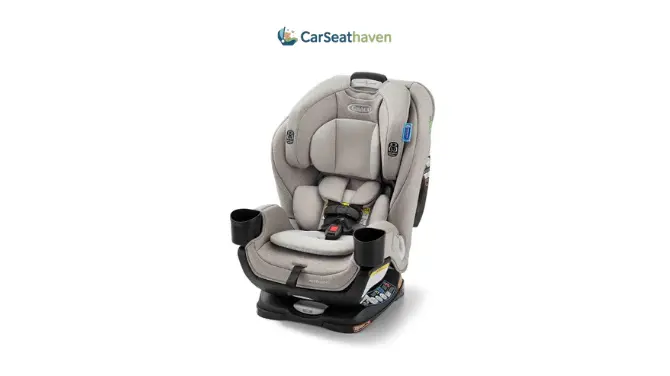
If there is one job the Cosco Scenera Extend car seat was born for, it is travel. It carries the FAA-required certification label for aircraft use, in red lettering on the side of the shell, which permits it on US domestic carriers in both rear-facing and forward-facing modes. The FAA’s guidance is clear that a child in an approved restraint is safer than a child on a lap, and at this price and weight, there is little excuse not to bring it.
On the plane, the seat installs with the aircraft lap belt only, through the same belt paths used in cars. At about 19 inches wide, it fits most US economy seats with the armrest raised, though very narrow seats on some carriers can be tight, so raising the armrest during installation is the standard trick. Rear-facing on a plane keeps a toddler from kicking the seat in front, which fellow passengers will appreciate. Two practical tips from experienced traveling parents: board during family boarding so you are not installing while the aisle is jammed, and if the lap belt buckle ends up pressing against your child, ask the flight attendant for a seat belt extender to reposition it.
For the airport itself, the light weight is the whole game. The seat straps to a rolling carry-on, fits on inexpensive car seat travel carts, and can be worn as a backpack with a travel strap. Many families buy the Cosco Scenera Extend car seat specifically as a dedicated travel seat and leave their expensive primary seat installed at home. At around $59, gate-checking it or handing it to a rental-car shuttle driver causes zero anxiety.
The same logic makes it ideal as a second-car or grandparent seat. It moves between vehicles in minutes, installs easily in unfamiliar cars thanks to the wide belt path, and costs little enough that buying two, one for each car, is cheaper than one premium seat. If grandparents do school pickup twice a week, this is the seat to leave at their house.
Vehicle Fit Notes
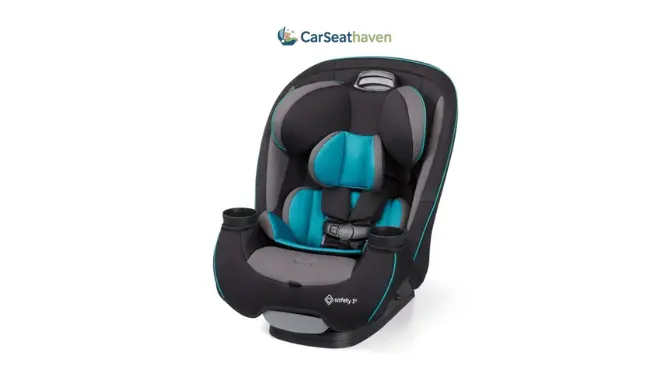
The Cosco Scenera Extend car seat is marketed as fitting three across in most vehicles, and at under 19 inches wide that is plausible in many mid-size sedans and SUVs, but “most” is doing some work in that sentence. The seat is wider than the Scenera Next was, so if you are planning a three-across setup with two other seats, measure your back seat and the other seats first. Narrow seats on either side, like the Baby Trend Trooper or a slim booster, make it much more likely to work.
Front-to-back space is the other thing to check. Rear-facing convertibles eat legroom, and while the Scenera Extend is compact for its class, a tall driver in a small sedan may still find the front seat pushed forward. Installing in the center position often buys extra room, and center is statistically the safest spot anyway when you can get a good install there. If your vehicle has deep, bucket-style rear seats, test the recline angle carefully, since the level line must be parallel to the ground and contoured cushions can complicate that.
Cleaning and Maintenance
Real life with toddlers is sticky, and this seat is designed for easy cleanup. The seat pad removes and is machine-washable and dryer-safe according to the manufacturer, which is unusually convenient at this price. The cup holder is removable and dishwasher-safe, so dried milk and crushed crackers are a non-issue.
The harness straps are the exception: spot-clean them with a damp cloth and mild soap only. Never submerge the straps, never machine-wash them, and never use bleach or harsh chemicals on them, because those treatments can weaken the webbing in ways you cannot see. The plastic shell can be wiped down with a damp cloth. Let everything air-dry fully before reassembling, and rethread the harness carefully through the correct slots when the pad goes back on.
A quick maintenance habit worth building: every few months, check that the harness adjuster still grips firmly, look over the straps for fraying or fading, and confirm the seat’s labels are still legible. If the harness ever slips or the adjuster feels wrong, stop using the seat and call Dorel. And remember that the thin towel the manufacturer allows between the car seat and the vehicle seat is for protecting upholstery, not for fixing a bad install angle.
Expiration and When to Retire the Seat
The Scenera Extend expires eight years from its date of manufacture, not from the date you bought it. The manufacture date is on a label on the seat, so check it when the box arrives, especially if you bought from a marketplace seller where stock can sit. Eight years is generous for a budget seat and means a seat bought for a first child can legitimately serve a younger sibling later.
Do not use the seat past its expiration date. Plastics degrade, safety standards evolve, replacement parts disappear, and the manual for your specific model may no longer be available. Also retire the seat if it has been in a moderate or severe crash, if any part is cracked or broken, if the harness no longer adjusts properly, or if labels with the model information are missing. When you retire it, cut the harness straps and mark the shell so nobody pulls it from the curb and uses an unsafe seat.
Pros and Cons
Pros
- Extremely affordable, typically around $59 on sale, among the cheapest convertibles from a major brand
- Very lightweight at about 8 to 9 pounds, easy to carry and move between cars
- Higher forward-facing limit (50 lbs) and taller shell than the Scenera Next it replaces
- Meets the newer federal side-impact standard, FMVSS 213a
- FAA-certified for airplane use, rear-facing and forward-facing
- Five harness heights and three buckle positions fit newborns through preschoolers
- Machine-washable, dryer-safe seat pad and dishwasher-safe cup holder
- Wide, clearly marked belt path makes installation straightforward
- Eight-year expiration is generous for the price
Cons
- Thin padding makes long drives less comfortable than pricier seats
- No no-rethread harness; adjusting strap height means rethreading
- Top harness slots around 13 to 13.5 inches mean most kids outgrow it by about age three
- No anti-rebound bar, no premium fabrics, no extra convenience features
- Wider than the Scenera Next, so three-across setups need measuring
- Rear-facing installation angle can need a rolled towel or pool noodle in some vehicles
- Budget build quality feels basic next to seats costing three times as much
Who Should Buy It and Who Should Skip It
Buy it if: you need a second seat for a partner’s car or the grandparents; you fly with your child and want a light, cheap, FAA-approved seat; you are on a tight budget and need a safe seat now rather than a fancy seat later; you want to skip the infant bucket seat and go straight to a convertible from birth; or you need an occasional-use seat for a caregiver or rideshares.
Skip it if: you want one seat to use daily for five or more years, since the low top harness slots will end its useful life around age three; comfort on long road trips is a top priority; you want a no-rethread harness and premium padding and are willing to pay for them; or you need the narrowest possible seat for a guaranteed three-across fit, in which case a dedicated slim seat is the safer bet.
The honest middle ground that many families land on: buy the Cosco Scenera Extend car seat as the travel and second-car seat, and put the money saved toward a longer-lasting primary seat. That combination covers every scenario for less than the price of one premium convertible.
Cosco Scenera Extend FAQs
Is the Cosco Scenera Extend car seat good for newborns?
Yes. It rear-faces from 5 pounds and 19 inches, and the lowest harness slots sit low enough to fit small newborns properly, with straps at or below the shoulders. The deep recline angle required rear-facing also suits infants. Many parents use it as their only seat from birth, skipping the infant bucket seat entirely. As with any seat, have the install checked by a certified child passenger safety technician if you are unsure.
What is the difference between the Scenera Extend and the Scenera Next?
The Extend is the newer, larger replacement. The main differences: the forward-facing limit rose from 40 to 50 pounds, the shell is taller and wider, and the Extend meets the newer FMVSS 213a side-impact standard. The Next was lighter (about 6.8 pounds versus 8 to 9) and narrower (about 17 inches versus about 19), so it was slightly easier for travel, but it is being phased out. For a new purchase, the Extend is the better seat.
Can I take the Cosco Scenera Extend on an airplane?
Yes. It is certified for aircraft use and carries the FAA-required red-letter label, valid in both rear-facing and forward-facing modes on US carriers. It installs with the aircraft lap belt. At about 8 to 9 pounds and 19 inches wide, it is one of the easiest convertibles to fly with. Use it in a window seat so it does not block other passengers, and raise the armrest during installation on narrow seats.
How long will my child fit in the Scenera Extend?
Rear-facing, most children fit until about age two to three, when they reach 40 pounds, 40 inches, or the head-within-an-inch-of-the-shell rule. Forward-facing, the binding limit is usually harness height rather than weight: with top slots around 13 to 13.5 inches, most kids outgrow the harness around age three, some earlier, some later. Published reviews estimate the seat’s total useful life at roughly 2.5 to 3.5 years for an average child. Plan for a combination seat or booster afterward.
Does the Scenera Extend fit three across?
Sometimes. At about 18.5 to 19 inches wide it is slim for a convertible, and Cosco says it fits three across in most vehicles, but it is wider than the Scenera Next was. Success depends on your vehicle’s back-seat width and how slim the neighboring seats are. Measure before you buy if three across is the plan.
Does the Scenera Extend have an extension panel for legroom?
No. Despite the name, there is no pull-out leg extension panel like the one on the Graco Extend2Fit. “Extend” refers to the seat’s extended size range: a taller shell, higher harness slots, and a higher 50-pound forward-facing limit than the Scenera Next. Rear-facing legroom is whatever the shell provides, and children sitting with bent or crossed legs rear-facing is safe and normal.
When does the Cosco Scenera Extend expire?
Eight years from the date of manufacture, which is printed on a label on the seat. Check the date when you buy, since the clock starts at manufacture, not purchase.
Can I wash the Scenera Extend cover?
Yes. The seat pad is removable, machine-washable, and dryer-safe per the manufacturer. The cup holder is removable and dishwasher-safe. Spot-clean the harness straps with a damp cloth only, and never machine-wash, submerge, or bleach them.
Is the Cosco Scenera Extend car seat safe?
It meets all applicable federal safety standards, including FMVSS 213 and the newer FMVSS 213a side-impact standard, and Dorel states it is engineered and tested to meet or exceed those standards. Every car seat sold in the US must pass the same federal crash tests regardless of price. No recalls specific to the Scenera Extend have been published, with a clean NHTSA recall history reported as of May 2026, but register your seat with Dorel so you are notified if that ever changes.
Should I install it rear-facing or forward-facing?
Start rear-facing and stay there as long as possible, until your child reaches any one of the rear-facing limits: 40 pounds, 40 inches, or the head within an inch of the top of the shell. Only then turn it forward-facing, with the top tether attached. The 30-pound and one-year minimums for forward-facing are hard manufacturer rules, and safety guidance recommends keeping children rear-facing well beyond those minimums.

Aiden is the founder and editor of CarSeatHaven. He researches NHTSA safety standards, AAP guidance, manufacturer manuals, and recall notices, and turns them into plain-language car seat guides for parents.
