

Don’t believe every car seat rule you see online.
We live in a world where misinformation spreads faster than ever and when it comes to car seat safety, that can quickly turn into confusion for parents. One of the most debated topics in child passenger safety groups is 3-across or side-by-side car seat installation and a pile of myths has surrounded it for years.
After spending nearly two decades in the child passenger safety world as both a CPST-Instructor and a mom, I’ve seen how misinformation can make life harder for parents just trying to keep their kids safe. It’s time to clear the air with facts, common sense and verified sources.
Myth: Car Seats Should Never Touch or “Share Airspace”
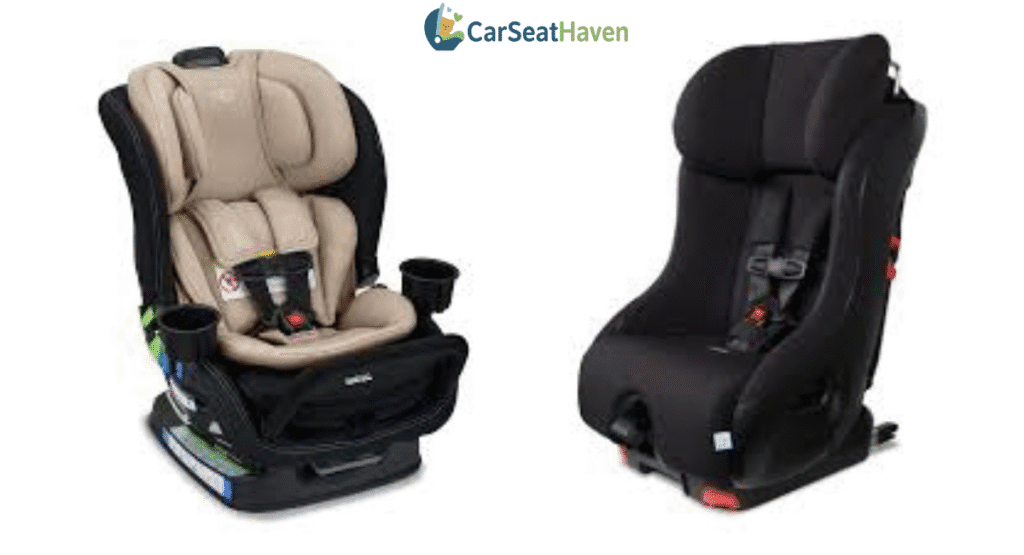
Some online forums and groups claim car seats must never touch or “puzzle” together. These posts often insist that no seat should share imaginary airspace with another period.
While these comments are usually well-intentioned, they can come off as unrealistic and even privileged. Not every family has the financial flexibility to purchase a larger vehicle or buy multiple new car seats. For many, fitting three car seats in the backseat is a necessity, not a luxury.
Over-strict “rules” that discourage using what families already own can become counterproductive. Instead of helping, they can frustrate and confuse parents who genuinely want to do the right thing.
What Real Car Seat Safety Depends On
When it comes to fitting multiple car seats, let’s focus on verified information from trusted sources:
- The car seat manufacturer’s instruction manual or website
- The vehicle owner’s manual
- The Child Passenger Safety Technician (CPST) certification curriculum
- Common sense
Below are the real guidelines that matter when installing multiple car seats side-by-side or in a 3-across setup.
1. Only Use Approved Seating Positions
Always check your vehicle owner’s manual to see which seating positions are approved for car seat installation.
Most newer vehicles allow car seats in any rear position, but there are exceptions. Your manual will also show the locations of the lower LATCH anchors and top tether anchors and explain how seat belts lock when securing a seat. If you want to buy, you can visit Amazon and Target…
Source: Vehicle Owner’s Manual
2. Each Seat Must Be Independently Secure
Every rear-facing or forward-facing harnessed car seat must be properly installed according to its instruction manual.
Once installed using either the seat belt or lower anchors (and tether if required), the seat should not move more than 1 inch side-to-side or front-to-back at the belt path.
If each seat passes this test independently, your setup meets safety standards.
Source: CR Instruction Manuals; CPST Curriculum
3. Infant Seats Must Attach Securely to Their Bases
When using an infant car seat with a detachable base, make sure the carrier locks firmly onto the base without interference from other seats.
Light contact or “puzzling” between seats is fine as long as you can still securely attach and detach the infant carrier.
If another seat prevents proper connection, that’s a problem.
Source: Common Sense
4. Never Share or Double Up LATCH Anchors
Each lower anchor bar in your vehicle can only hold one lower anchor connector. Do not share anchors between two car seats.
This ensures that both car seats remain properly secured in case of a crash.
Source: Instruction Manuals; Vehicle Owner’s Manual
5. Seatbelt Buckles Must Be Accessible
If a child is using a booster or seatbelt, the buckle must remain reachable so they can buckle and unbuckle safely.
This may sound basic, but during 3-across setups, buckles often get trapped between seats, making it impossible to use correctly.
Source: Common Sense
6. Car Doors Should Close Naturally
You should be able to close both rear doors easily without bending the car seat shells or shifting them out of position.
If the doors press against the seats or force them to tilt, the installation isn’t safe.
Source: Common Sense
When 3-Across Simply Isn’t Possible
Let’s face it, sometimes fitting three car seats in a row just won’t work.
Small cars and compact SUVs often have limited backseat width, making 3-across setups extremely challenging or impossible.
For example, in a 2016 Hyundai Tucson, the center position is barely wider than the fold-down armrest. Installing three seats is a real struggle.
In mid-size or larger vehicles, the chances are better, especially if the center seat is usable. But even then, achieving a safe and solid 3-across setup requires trial and error and a deep understanding of each seat’s shape and size.
The Art of “Puzzling” Car Seats
“Puzzling” refers to how car seats fit together based on their shapes and contours. Sometimes, finding the right combination of seats that mesh well side-by-side can make a 3-across possible, especially in larger vehicles.
Unless you’re driving a full-size pickup or SUV, puzzling is almost unavoidable. But remember the key is ensuring that each seat remains independently secure and all buckles are accessible.
What Official Sources Say About Seats Touching
Let’s talk about evidence.
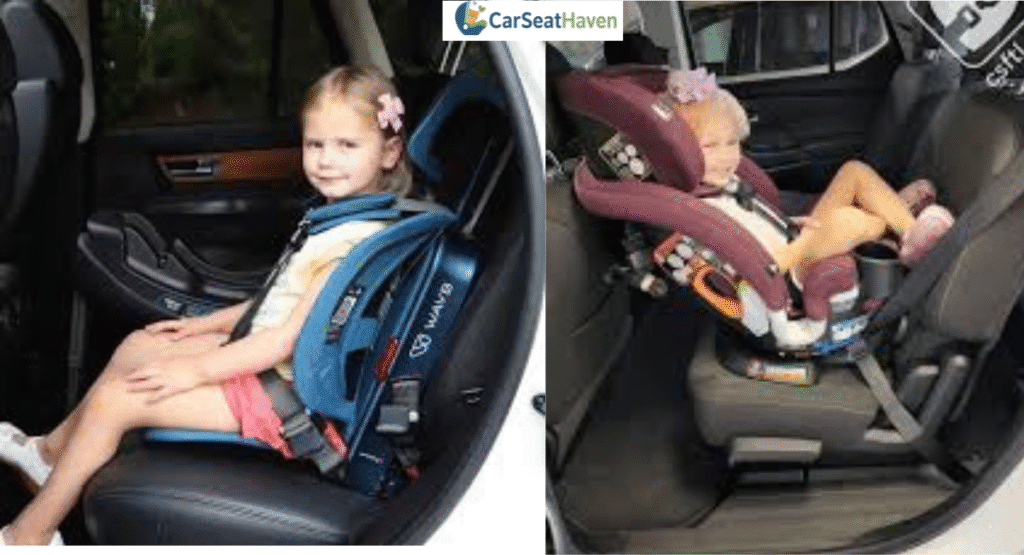
Even the National Highway Traffic Safety Administration (NHTSA) shows car seats touching in their official image library. The photos demonstrate that mild contact between seats does not automatically make an installation unsafe as long as each seat is correctly installed and buckles are accessible.
If NHTSA’s own visuals display this, it’s safe to say that light contact is not forbidden.
Searching for the “No Touching” Rule
I went through multiple credible resources to find where this strict “no touching” rule originated. Here’s what I discovered:
- CPST Instructor Guides: No mention of adjacent seat restrictions.
- Car Seat Manuals: Only Graco SlimFit3 LX mentions 3-across installation (designed specifically for that). It doesn’t ban seat contact or puzzling.
- Manufacturer FAQs: Diono even states that their seats may touch each other or other brands’ seats.
So where did this myth come from?
Most likely, it started as a misinterpretation of safety language that spread through online discussions until it felt like an official rule. If you want information about evenflo360…
The Real Message: Good, Better, Best
In the CPST world, there’s a saying: Good, Better, Best.
- Best is the ideal setup, everything perfectly aligned.
- Better means the installation meets all safety criteria, even if it’s not flawless.
- Good still keeps the child well-protected in real-world crashes.
Less than ideal does not automatically mean unsafe. Real life isn’t perfect and neither are cars or families. The goal is to keep kids safe and secure, not to achieve some unattainable perfection.
Why Over-Strict Rules Can Hurt Families
When advocates push for only the “perfect” setup, they risk discouraging parents who can’t meet that standard.
The result? Some children might end up riding in the front seat or without a proper restraint, which is far more dangerous.
Being flexible, empathetic and evidence-based helps more families achieve safe, realistic solutions that work for their situation.
Final Verdict: Myths Officially Busted
After reviewing official resources, there’s no credible evidence supporting a strict “no touching” or “no puzzling” rule for car seats.
While 3-across setups aren’t always ideal and may introduce variables in crash dynamics, families must often work with what they have.
For those parents, having accurate, practical guidance rather than rigid myths can make all the difference.
As advocates and technicians, we should focus on empowering parents with knowledge, options and understanding, not fear or perfectionism.
Summary
Fitting three car seats across isn’t always easy, but it’s often possible and safe if done correctly.
The belief that car seats can’t touch or puzzle together has no credible basis in official safety guidelines.
Focus on independent installation, accessible buckles, proper anchor use and secure attachment rather than unrealistic “no contact” rules.
When families work within verified safety principles, kids stay protected without the unnecessary stress of chasing perfection.
FAQs
1. Can car seats touch each other in a 3-across setup?
Yes, they can touch as long as each seat is independently secure and all buckles remain accessible.
2. Are puzzling car seats safe?
Absolutely. Puzzling is common and safe if every car seat fits tightly and correctly according to its manual.
3. Can I use LATCH anchors for two seats in the same position?
No. Each anchor bar can secure only one seat. Never double up or share LATCH anchors.
4. What if my vehicle can’t fit 3-across?
Not all vehicles can handle 3-across. Try different seat combinations or prioritize two rear-seat installations if space doesn’t allow three.
5. Do all car seat brands allow touching or adjacent installation?
Most do, but always check your seat’s manual. For instance, Diono explicitly allows contact, and Graco offers models designed for 3-across.

