

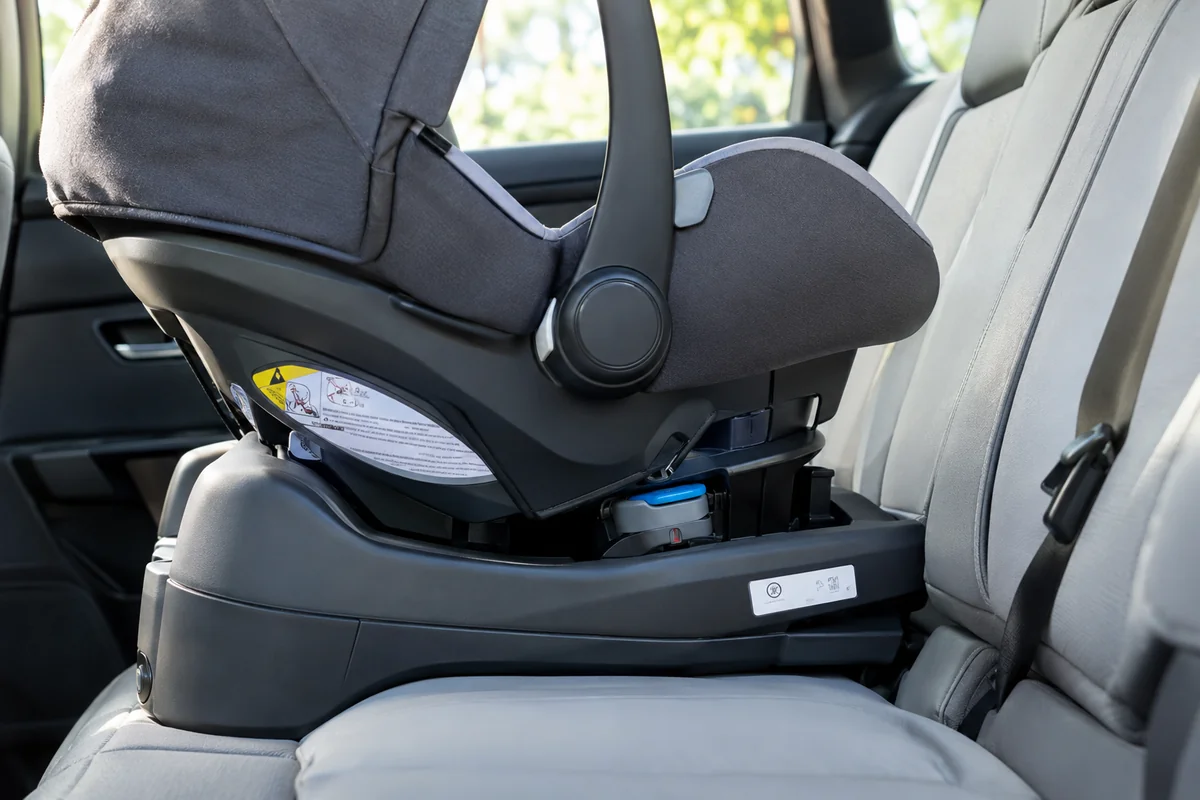
Yes, car seat bases expire. If you use an infant car seat with a stay in the car base, that base has its own expiration date, and it is often different from the date on the carrier that clicks into it. Most parents miss this detail. You check the carrier, see years left, and never think about the base bolted to your back seat. Britax, for example, gives its infant bases a six year lifespan, counted from the date of manufacture like a seat. The base is built from the same plastic and webbing as the carrier, so it wears out the same way. In this guide, you will learn where to find your base’s date, what to do when the base expires but the carrier is still fine, and how to check both pieces of any travel system before your baby rides in it.
Key Takeaways
Yes, infant car seat bases expire, usually on a different date than the carrier that clicks into them.
The countdown starts on the base’s own date of manufacture, not the day you bought it.
Find the date on the white sticker on the bottom of the base.
Check BOTH the base and the carrier on any travel system, new or secondhand.
If the base expires but the carrier is fine, replace the base or install the carrier without it. You can check both pieces with our free expiration checker.
Yes, Car Seat Bases Expire
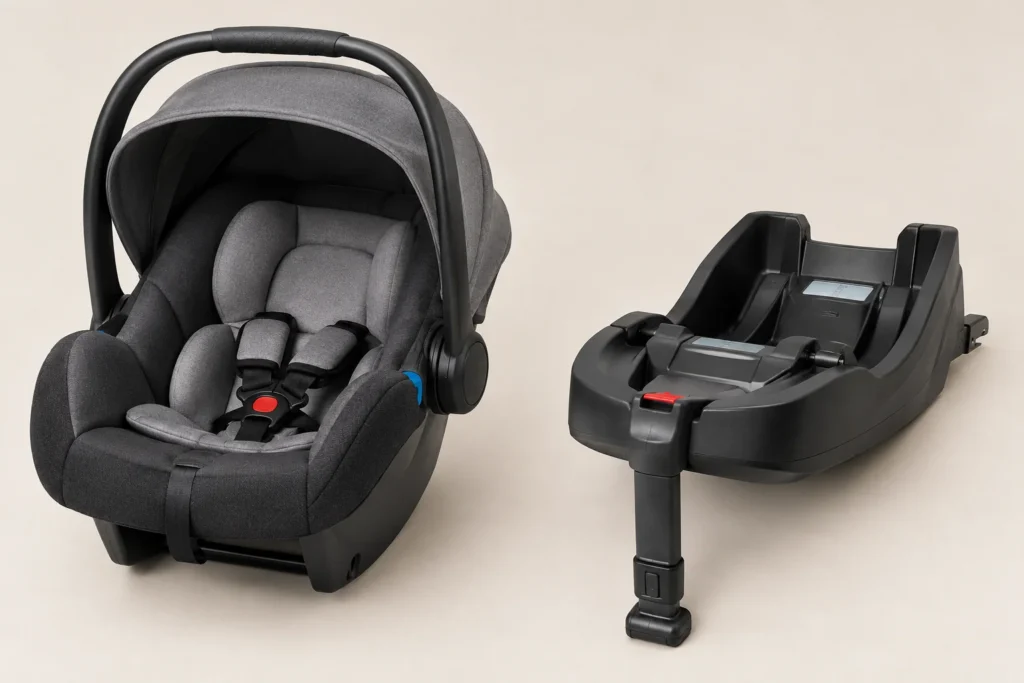
Let us get the direct answer out of the way. The base is not a dumb plastic tray. It is half of your child’s restraint system, and it expires just like the carrier does. Every major brand that sells a separate infant base assigns it a useful life, counted from its own date of manufacture. When that date passes, the manufacturer no longer stands behind the base’s performance in a crash, and safety experts treat that date as a hard stop.
Here is why this matters more than most parents realize. Almost everyone checks the carrier. It is the part you carry, the part with the handle, the part the baby sits in. The base just sits in the car doing its job quietly, so it never crosses your mind. But the base and the carrier were very likely manufactured on different days, possibly months or even years apart, which means their expiration dates are different too. A carrier with three years of life left can be sitting on a base that expired last summer. That combination is more common than you think, and this article will make sure it never happens in your car.
One quick note on scope: this guide is about the separate stay in the car bases that infant carriers click into, the kind that come with most travel systems. Convertible and all in one seats do not have separate bases, so if that is what you own, the seat’s own expiration date is the only one you need. For the full picture on how seats themselves expire, see our guide on when car seats expire by brand.
Why Your Base Has Its Own Expiration Date
It feels strange at first. The base is the simple part, right? No harness, no baby, no moving pieces you notice. But the base does the heavy lifting in a crash. It is the part anchored to your car, and everything the carrier does in a collision runs through it. That is why manufacturers certify it, date it, and expire it on its own schedule.
Your Base Is a Car Seat Too
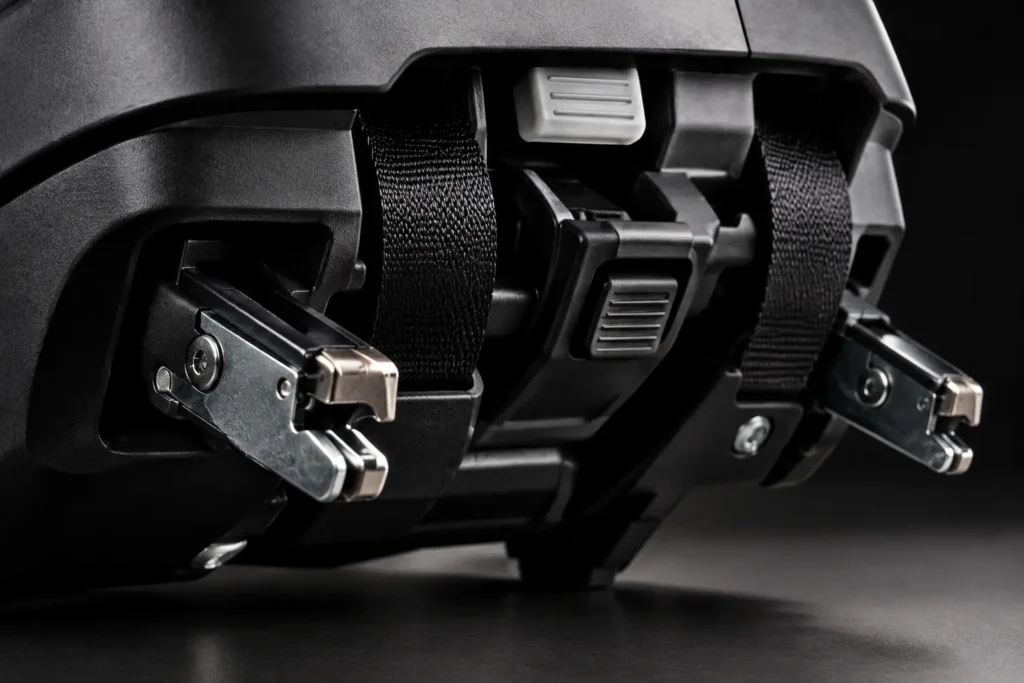
Think of the base and carrier as a team with one job. In a crash, the base stays locked to the vehicle through the LATCH connectors or the seat belt lockoff, and the carrier stays locked to the base. If any link in that chain fails, the system fails. The base carries the LATCH straps, the belt tensioning mechanism, the recline adjustment, and on many models a load leg or anti rebound bar. Those are precision safety parts, not decoration.
And the base is built from the same materials as the seat. The shell is molded plastic. The LATCH straps are woven webbing. There are metal connectors, springs, and adjustment mechanisms inside. Every one of those materials ages. Plastic becomes more brittle after years of heat and cold. Webbing loses strength from UV exposure and constant tension. Metal parts can corrode. The manufacturer tests the whole system, base included, for a defined number of years. After that, they cannot promise it will perform the way it did on day one.
Bases Live the Hardest Life in the Car
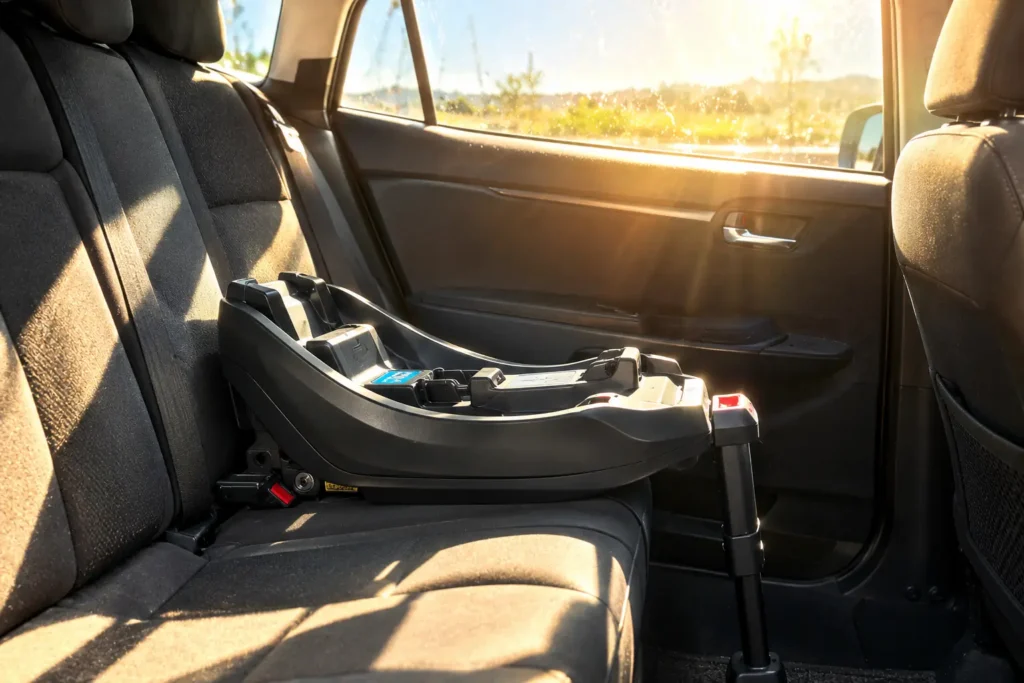
Here is the part nobody thinks about. The carrier comes inside with you. It sits in your hallway, your kitchen, your stroller. The base never leaves the car. It bakes in the summer heat and freezes on winter nights, every single day, for its entire life. A parked car can top 140 degrees on a sunny afternoon and drop below freezing overnight in January. That brutal cycle of expansion and contraction is exactly what breaks plastic down over time, and the base takes the full force of it because it is always there.
The base also lives under constant tension. The LATCH straps or the locked seat belt hold it tight against the vehicle seat, year after year. Webbing under steady load, soaked in heat, slowly loses strength even if nobody ever touches it. Add in the crumbs, spilled milk, and ground in goldfish dust that work their way into every crevice, and you have a part that ages faster than it looks. An old base can look perfectly fine while its materials quietly degrade. That invisible aging is the whole reason the expiration date exists.
The Trap: Your Base and Carrier Often Expire on Different Dates
This is the heart of the issue, and it is where most families get caught. The base and the carrier are two separate products with two separate manufacture dates. They were very likely made on different days, in different production runs, possibly in different years. Each one gets its own lifespan counted from its own date of manufacture. So even if both pieces came in the same box, their expiration dates can differ by months. And once real life gets involved, the gap can grow much wider.
Think about how travel systems actually live. You buy a second base for your partner’s car six months after the baby arrives. That base is six months younger than the carrier. Your sister hands you her old carrier but keeps her base, so you buy a new base that is years newer than the carrier. A fender bender cracks the carrier, the insurance replaces it, but the original base stays in the car. In every one of these completely normal situations, the two pieces now expire on different dates. The rule is simple: the older date rules. The system is only as safe as its oldest expiring part.
Britax Gives Its Infant Bases 6 Years
Britax is one of the clearest brands on this topic, and it is a good example of how base lifespans work. According to <a href=”https://us.britax.com/knowledge-center/how-tos-and-britax-guides/car-seat-expiration-and-date-of-manufacture-a-britax-guide”>Britax’s official expiration guide</a>, the company’s infant car seat bases, including popular lines like the Aspen, Alpine, and StayTight bases, carry a six year lifespan from the date of manufacture. That is a firm manufacturer stated limit, not a suggestion.
Notice what that means in practice. If your Britax carrier has a longer lifespan than six years, the base will expire first. You could be holding a carrier with years of life left, sitting on a base that is already done. The fix is easy once you know, which is the whole point of this article, but you have to actually check the base. Flip it over, find its own sticker, and do its own math. If you own a different brand, check your manual for your base’s specific lifespan. When in doubt, call the manufacturer with your model number. Never assume the base matches the carrier.
Mixed Ages Are Completely Normal
Let us normalize something: having a base and carrier of different ages is not a mistake. It is how real families end up. Extra bases for second cars and grandparents’ cars are sold separately and are almost always manufactured later than the original set. Replacement carriers after a crash are newer than the surviving base. Hand me down setups get split up between siblings and cousins. None of this is wrong. It just means you cannot check one sticker and call it done.
Make it a habit to treat the base and carrier as two separate seats that happen to work together. When you check one, check the other. When you note one expiration date on your calendar or in your phone, note the other right beside it. Two minutes of attention, once, saves you from the nasty surprise of discovering an expired base the week before a road trip. And if you ever replace just one piece, write down the new date immediately, because that is exactly the moment the two clocks start drifting apart.
Where to Find the Expiration Date on Your Base
Finding the date on a base is actually easier than finding it on most seats, because there is less plastic to hunt through. But you still have to go looking. Nobody puts the expiration date where you can see it while the base is installed, because the labels would wear off. Here is exactly where to look.
Flip It Over: The Bottom of the Base
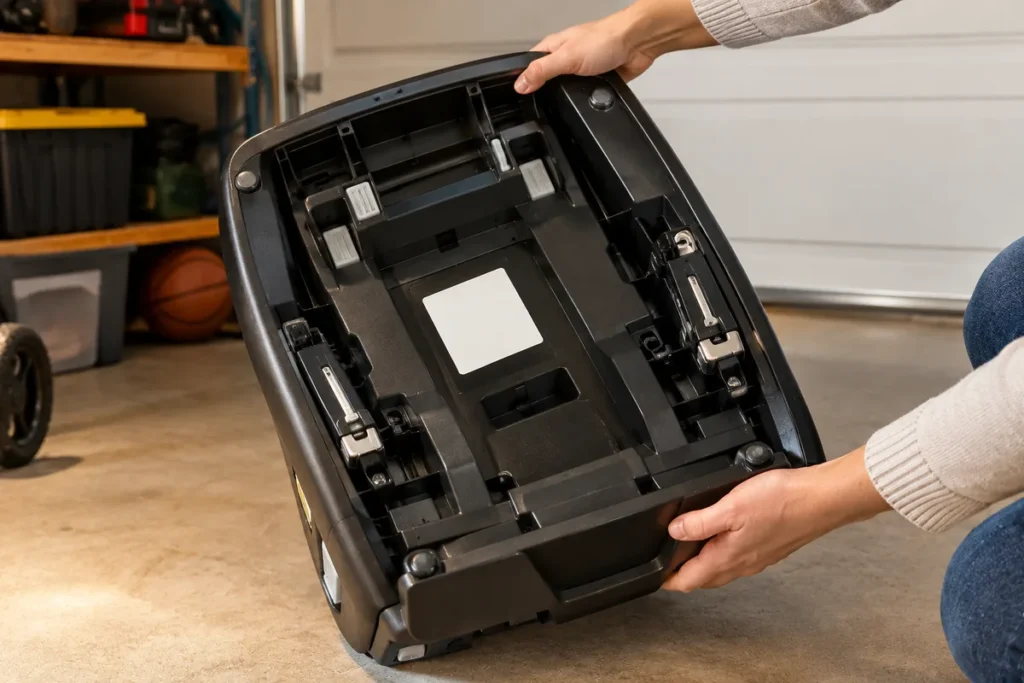
The date lives on the underside of the base. Uninstall the base from your car, flip it over, and look for the white manufacture date sticker, the same kind of white label you find on car seats. It lists the date of manufacture, usually shortened to DOM, along with the model number and serial number. Some brands go further and print a Do Not Use After date right on that sticker. If yours has one, congratulations, that is your answer with no math required.
If the sticker shows only the manufacture date, the math is simple. Add your brand’s stated base lifespan to that date. For a Britax base made in March 2021, six years puts expiration in March 2027. If your brand does not publish a clear base lifespan, check the manual that came with the base or look up the manual PDF on the manufacturer’s website using your model number. The sticker can be hard to read in dim garage light, so bring your phone flashlight and wipe the dust off first. A quick photo of the sticker is smart too, so you have the date saved without flipping the base again.
When the Sticker Is Gone or Unreadable
Base stickers live on the bottom of a part that slides around on car upholstery for years, so they take abuse. If yours is peeled, faded, or scratched beyond reading, do not guess. Find the model number, which is often stamped into the plastic shell itself near where the sticker was, and call the manufacturer’s customer service line. They can tell you the lifespan for your exact base and help estimate the manufacture date from the model and serial numbers.
If you truly cannot determine the base’s age, treat it as expired. That is the guidance child passenger safety technicians give for any restraint of unknown age, and it applies to bases just as much as seats. A base you cannot date is a base you cannot trust. Our main guide on <a href=”https://carseathaven.com/do-car-seats-expire/”>finding car seat expiration dates</a> has more sticker hunting tricks that work on bases too, including how to spot dates molded directly into the plastic shell.
What to Do When the Base Expires but the Carrier Is Fine
This is the scenario that confuses everyone, so let us be clear about your options. An expired base does not automatically mean you need a whole new travel system. The carrier is a separate product with its own date. If the carrier is still within its lifespan, has never been in more than a minor crash, and has all its parts, you have two good paths forward. What you cannot do is keep using the expired base and hope for the best.
Option 1: Buy a Replacement Base
The simplest fix is a new base made for your carrier. Every major infant seat brand sells its bases separately, which is exactly what they are for: second cars, grandparents, and replacements. Buy the base that your carrier’s manufacturer approves for your exact carrier model. Compatibility matters, so check the manufacturer’s fit list before you order, not after the box arrives.
And here is the trick most parents miss a second time: check the manufacture date on the new base’s box before you buy it, especially when ordering online. Bases can sit in warehouses for a year or more, and the clock starts at manufacture, not at purchase. For a base with a six year lifespan, an eighteen month old box costs you a quarter of its life before your baby ever rides in it. In a store, ask an employee to check the box date or pick the newest box on the shelf. Then register the new base with the manufacturer so you get recall alerts, and write the expiration date somewhere you will actually see it.
Option 2: Install the Carrier Without the Base
Almost every infant carrier on the US market can be installed without its base, using the vehicle’s seat belt routed through the belt guides on the carrier itself. This is called a baseless installation, and when it is done correctly, it is just as safe as a base installation. Your carrier’s manual has a dedicated section for it, usually with clear diagrams. Read that section before you try it the first time, because the belt routing is specific and it has to be exactly right.
A baseless install is a great stopgap while you wait for a replacement base to arrive, and some families use it permanently for travel or second cars. The tradeoff is convenience. You lose the click in and go ease that made you buy the base in the first place, and every install takes a couple of minutes of careful work instead of seconds. For daily use with a newborn, most parents find a fresh base worth the money. But never let anyone tell you a baseless install is second class safety. Done right, it is the real thing.
Do Not Mix and Match Random Bases
One thing you should never do: grab a different brand’s base, or an older base from a different model line, and assume it fits because the carrier clicks in. A carrier that seems to latch onto the wrong base is not the same as a carrier that is approved for that base. The lock mechanism, the belt geometry, and the crash testing were all done as a matched set. Only use bases that your carrier’s manufacturer explicitly approves for your model. If you are unsure, the manufacturer’s website has fit lists, and their customer service can confirm in minutes. Check your manual is the boring answer that keeps your baby safe.
Secondhand Travel Systems: Check Both Dates
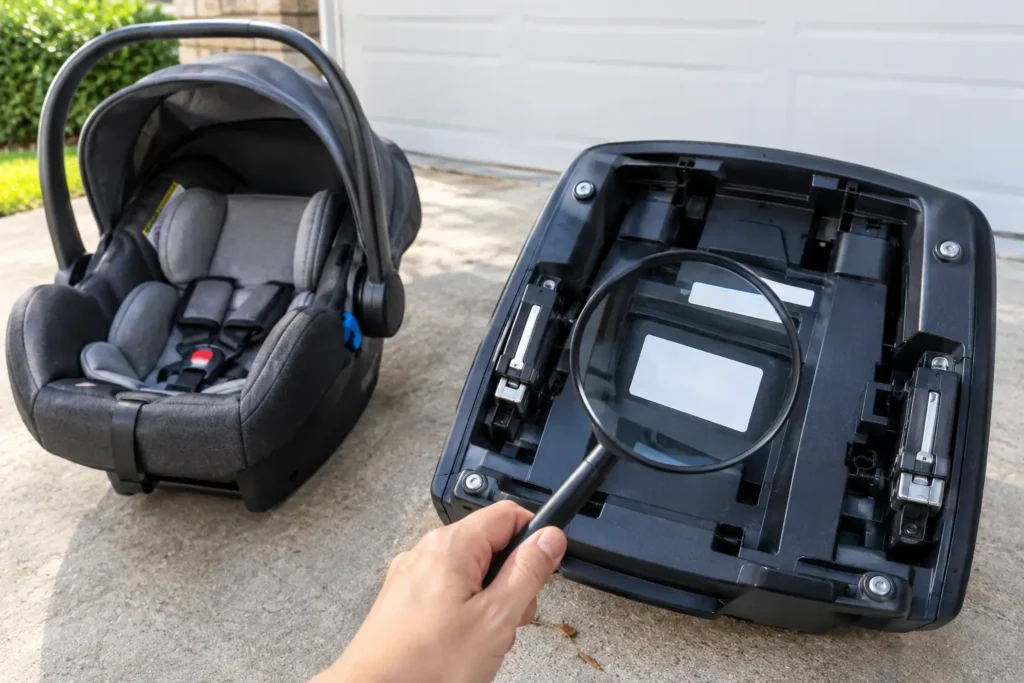
Secondhand travel systems are everywhere: Facebook Marketplace, consignment sales, hand me downs from family. They are also where expired bases hide most often. Here is why. The seller flips the carrier over, photographs its sticker, and proudly tells you the seat has years left. Nobody photographs the bottom of the base. The base might be the original from years earlier, or a spare that lived in a hot garage, or a replacement from a different production run. You cannot know until you check it yourself.
NHTSA’s used car seat safety checklist says a secondhand seat is only acceptable if its labels, including the date of manufacture and model number, are present and readable. Apply that rule twice: once for the carrier, once for the base. If the seller cannot or will not show you both stickers, walk away. A deal is not a deal if half the system is expired.
The Two Date Checklist
- Check the carrier’s date. Find the manufacture sticker on the carrier, confirm the model, and verify it is within its lifespan.
- Check the base’s date. Flip the base over, find its own sticker, and verify it separately. This is the step almost everyone skips.
- Confirm no crash history for either piece. Ask directly whether the carrier or the base has ever been in any crash, even a minor one. Vague answers are a no.
- Check recalls for both model numbers. Look up the carrier and the base separately on NHTSA’s recall database, because recalls can affect one piece and not the other.
- Verify all parts are present. The base should have its LATCH connectors, belt lockoff parts, and manual. The carrier needs its harness, pads, and infant insert if your baby is small.
- Get both manuals. Download the PDFs from the manufacturer if the seller does not have them, and read the base installation section before your first drive.
The Grandparent Spare Base
The sneakiest expired base in America lives at grandma’s house. Years ago someone bought a second base so the baby could ride in grandma’s car. The baby grew up, the base stayed installed in grandma’s back seat, and now there is a new grandbaby. Nobody checked the date because the base was out of sight and out of mind. Before your child rides in it, flip that base over and check its sticker. If it is expired or you cannot read it, buy grandma a new base or install your carrier baseless in her car. Bring it up gently: you just learned bases expire too, and you are checking every base in the family. Make it a team project, not an accusation.
Is It Safe to Keep Using an Expired Base?
No. An expired base should not be used, and this is not a gray area. The American Academy of Pediatrics advises parents not to use a car seat past its expiration date, as reported by WebMD, and the base is part of the car seat system. Safe Kids Worldwide notes that manufacturers set expiration dates for their restraints with a minimum of six years from the date of manufacture. Those dates cover the whole system, base included.
To be honest about what unsafe means here: an expired base will still click, still feel tight, and still look completely normal on an ordinary drive. The problem is the crash you cannot predict. Years of heat cycling weaken the plastic shell, the LATCH webbing loses strength under constant tension, and the internal mechanisms wear. In a collision, the base has to hold the carrier locked to the car while absorbing enormous force. A degraded base may not do that the way it did when it was new, and you would never know until the moment it matters most.
Parents sometimes ask if they can squeeze out a few more months while they save for a replacement. The safer move is to switch to a baseless installation with the seat belt today, using your unexpired carrier, and buy the replacement base when you can. That costs nothing and removes the risk immediately. There is no version of keep using the expired base that safety experts endorse.
What to Do With an Expired Base
Once a base is expired, it needs to leave circulation permanently. An intact expired base left on the curb or donated to a thrift store will absolutely end up holding someone else’s baby, because it looks perfectly usable. Do not let that happen. Here are your options, from best to last resort.
Trade It In
Car seat trade in events run by major retailers are the best option for most families. You bring in the old gear, get a discount toward new gear, and the old pieces get destroyed and recycled responsibly instead of ending up in another car. Many parents trade in the base along with the seat at these events. Event rules change from year to year, so check the current event’s rules to confirm that bases are accepted before you haul everything to the store. If no event is running right now, cut the base’s LATCH straps immediately and store it out of reach until the next one.
Destroy It Before You Toss It
If trade in is not available, make the base permanently unusable before it leaves your house. Cut the LATCH straps off completely. Remove any padding or covers that make it look complete. Write EXPIRED DO NOT USE in big letters on the shell with a permanent marker. Then bag the pieces in a dark trash bag so nobody spot a free base at the curb and grabs it. It feels wasteful, but an intact expired base in the trash is a hazard to another family’s child. Destroying it is the responsible choice.
Check Both Pieces With Our Free Tool
Reading about base expiration is useful. Knowing your own dates is better. Our free car seat expiration checker does the math for you. Run it once for the carrier and once for the base, using each piece’s own manufacture date from its own sticker. If your base model is not listed, choose Other or not sure and the checker will use the typical range and remind you to confirm with your manual. Thirty seconds per piece, and you will know exactly where both halves of your travel system stand.
FAQs
Q.1 Do car seat bases really expire?
Yes. The base is part of the restraint system, and it is made from the same plastic and webbing as the seat. Years of heat, cold, UV exposure, and constant tension weaken those materials, even though the damage is invisible. Manufacturers assign each base its own useful life counted from its date of manufacture, and safety experts treat that date as a hard stop. An expired base should be replaced or retired, never continued in daily use.
Q.2 Where is the expiration date on a car seat base?
On the bottom of the base. Uninstall it, flip it over, and look for the white manufacture date sticker with the date of manufacture, model number, and serial number. Some brands print a Do Not Use After date right on the sticker. If yours shows only the manufacture date, add your brand’s stated base lifespan to get the expiration date. Britax infant bases, for example, last six years from the manufacture date. When the sticker is missing or unreadable, call the manufacturer with your model number.
Q.3 Can I use my carrier with an expired base?
No. The carrier and base work as a tested system, and an expired base is the weak link. If your carrier is still within its own lifespan, you have two safe options: buy a replacement base approved for your carrier model, or install the carrier without the base using the vehicle’s seat belt, following the baseless installation section in your manual. What you should not do is keep clicking a good carrier into a bad base.
Q.4 My base expired but my carrier is fine. What should I do?
First, stop using the expired base today. Today, not next week. If you need the car right now, install the carrier baseless with the seat belt according to your manual. Then order a replacement base made for your exact carrier model, and check the manufacture date on the new box before you buy so you do not lose months to warehouse stock. Register the new base for recall alerts and write down its expiration date where you will see it.
Q.5 Do I have to use the base at all?
No. Nearly every infant carrier sold in the United States can be installed without its base using the vehicle’s seat belt routed through the carrier’s belt guides. A correct baseless installation is just as safe as a base installation. The base exists for convenience, the click in and go ease, not because the carrier cannot work without it. Many families skip the second base for grandparents’ cars and just do a baseless install when they visit.
Q.6 How long do Britax infant bases last?
Six years from the date of manufacture, according to Britax’s official expiration guide. That covers Britax infant seat bases including the Aspen, Alpine, and StayTight lines. Count from the base’s own manufacture date on its own sticker, not from the carrier’s date and not from the purchase date. For any other brand, check your manual or call the manufacturer, because base lifespans are set by each manufacturer and can differ from the carrier’s lifespan.
Q.7 Should I check the base on a secondhand travel system?
Absolutely, and check it separately from the carrier. Sellers almost always show the carrier’s sticker and forget the base entirely. The base may be older than the carrier, may have lived in a hot garage for years, or may come from a different production run with a different date. Flip it over, read its own sticker, and confirm it is within its lifespan before your baby rides in it. If the seller will not show you the base’s sticker, walk away from the deal.

Aiden is the founder and editor of CarSeatHaven. He researches NHTSA safety standards, AAP guidance, manufacturer manuals, and recall notices, and turns them into plain-language car seat guides for parents.
