

Table of Contents
The expiration date on a car seat lives on a white sticker with the date of manufacture, usually stuck on the bottom or back of the seat. Some seats print a “Do Not Use After” date right on that sticker, so no math is needed. Others stamp the date directly into the plastic shell instead, and you read it by feel or with a flashlight held at an angle. Infant seats typically hide the sticker under the carrier or base, convertibles put it on the back of the shell and boosters carry it underneath. Below, I walk you through exactly where to look for your seat type and brand, how to read tricky stamped dates, and what to do if the sticker is missing.
Key Takeaways
Look for the white date-of-manufacture (DOM) sticker on the bottom, back, or side of the seat. You may need to peel back the fabric cover, which is completely fine. Some seats print a “Do Not Use After” date. Others only show the DOM and you add your brand’s lifespan to get the expiration date. Expiration counts from the manufacture date, not the purchase date (Diono is the one exception). If the sticker is missing or unreadable, do not guess: check the manual, call the manufacturer with your model number or treat the seat as expired. Shortcut: enter your DOM into our free car seat expiration checker and get your exact date in seconds.
First, Know What You Are Actually Looking For
Before you start flipping your seat around, it helps to know what you are hunting. Car seats carry two different labels that parents often mix up and spotting the difference saves a lot of frustration.
The most important label is the white DOM sticker. DOM stands for date of manufacture, and this is the birthday of your seat. It usually lists the month, day and year the seat was made, plus the model number and serial number. The expiration date is counted from this day on most seats, so finding this sticker solves most of the puzzle.
Some brands go one step further and print a Do Not Use After date on the same sticker. If your seat has one, your job is done. That is your expiration date, plain and simple, and you do not need to do any math. Graco, for example, prints this phrase on many of its seats.
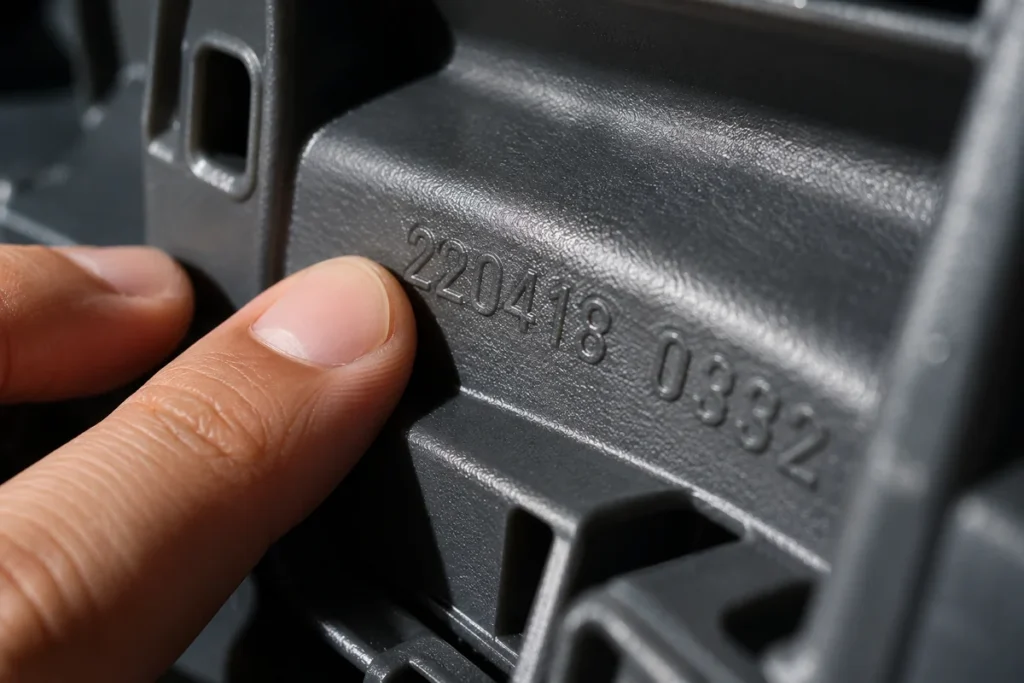
Other seats carry the date embossed or stamped directly into the plastic shell. This looks like raised or pressed numbers in the same color as the plastic, which makes it annoyingly hard to see. It is not a sticker at all, so there is nothing to peel. I will show you how to read these in a minute.
One more thing to know: The model number and serial number live on or near this same label. Jot them down while you are down there. You need the model number to look up recalls and you will need it if you ever have to call the manufacturer because the date is unreadable.
The 30-Second Check: Where the Sticker Usually Lives
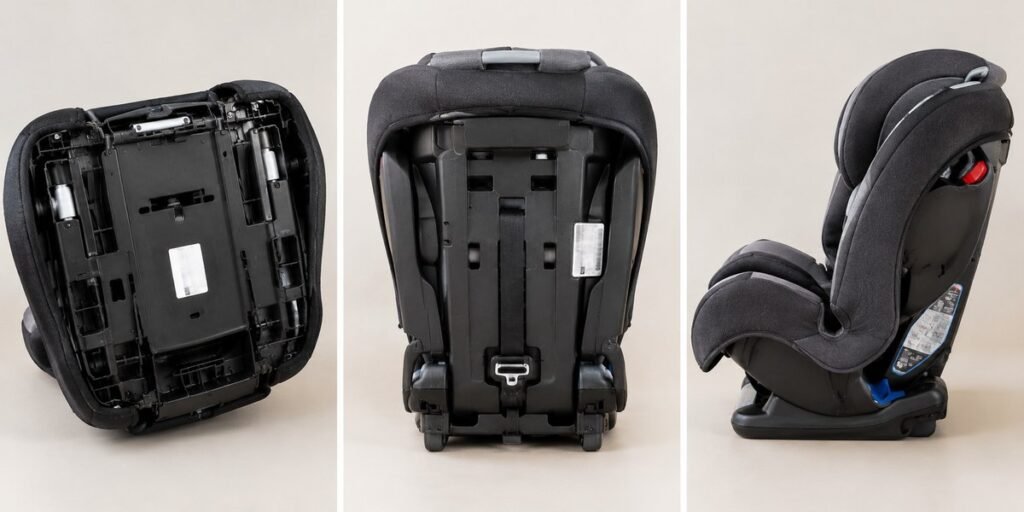
If you just want the fastest possible answer, here is the quick sweep that finds the date on most seats. Give yourself a clear workspace, because you will be flipping the seat over.
- Take the seat out of the car. You cannot do this properly while the seat is installed. Unbuckle it and carry it inside where you have room and good light.
- Flip it over and check the bottom. On infant carriers, backless boosters, and many convertible bases, the white sticker sits right on the underside.
- Turn it around and check the back of the shell. On convertibles and all-in-one seats, the sticker is commonly on the rear of the plastic shell, sometimes low near the belt path.
- Run your eyes along the sides. A few models, especially boosters, place the label on a side panel.
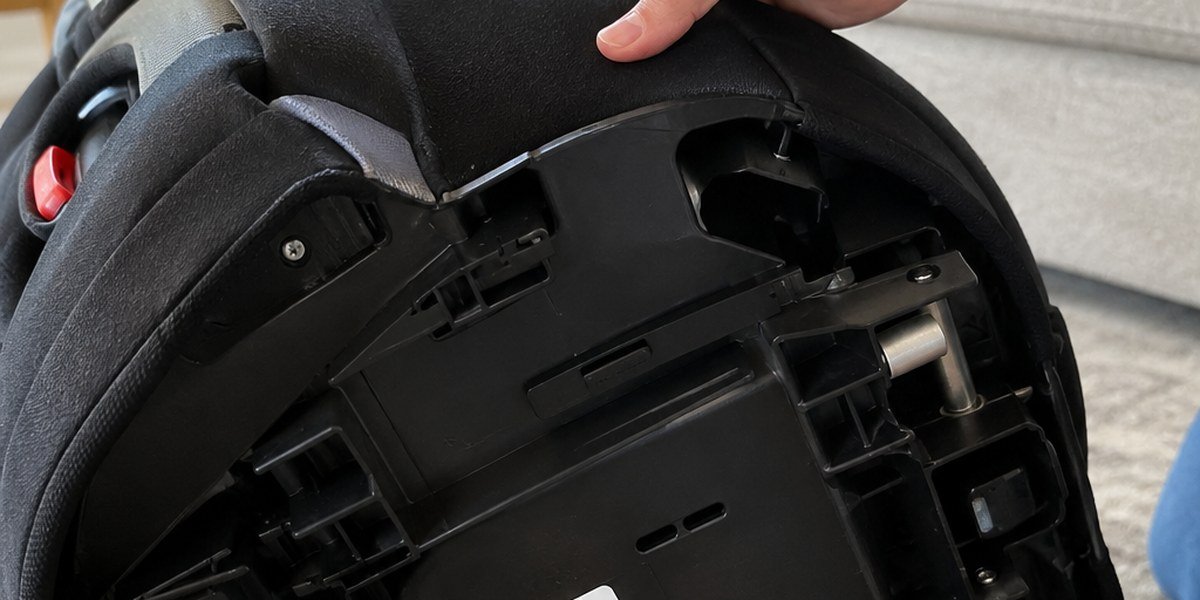
- Peel back the fabric cover near the foot or lower shell. Covers are held on with elastic loops, J-hooks, snaps and they are designed to come off for washing. The sticker or embossed date is often hiding right under the cover edge. It feels wrong the first time. It is fine.
- Look for raised numbers in the plastic. No sticker anywhere? Feel along the back and bottom of the shell with your fingertips for embossed numbers.
Found it? Great. If the sticker says Do Not Use After with a date, write that date down. If it only shows the manufacture date, note the month and year, then jump to the math section below. Or skip the arithmetic entirely and plug the date into our free car seat expiration checker, which does it for you.
Where to Find the Expiration Date on an Infant Car Seat
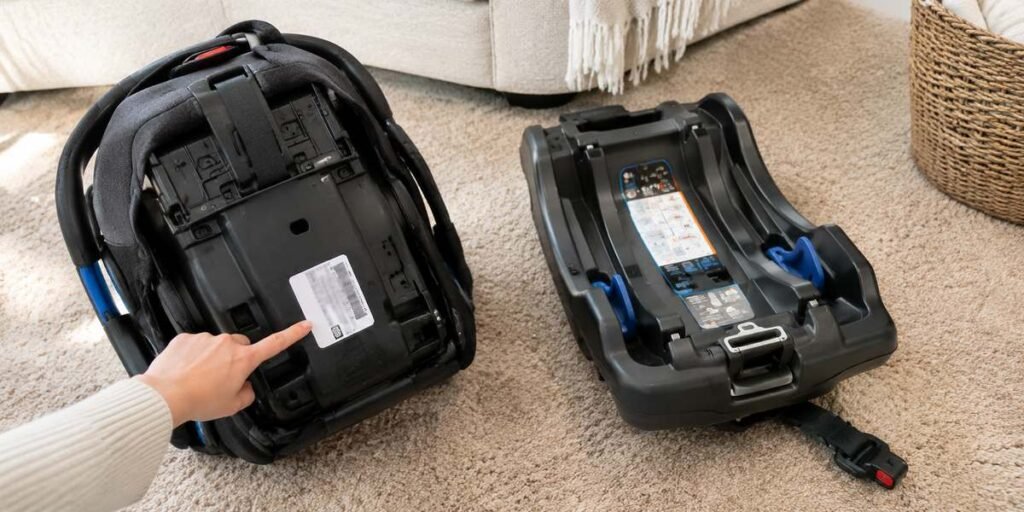
Infant seats are the trickiest to search because they come in two pieces, the carrier and the base, and each piece can carry its own date. Check both. The carrier and base can even have different expiration dates, so a match on one piece tells you nothing about the other.
On the Carrier
Flip the carrier upside down. On most infant carriers, the white DOM sticker is on the bottom of the carrier shell. Manufacturers place it there because the bottom never touches the child and never gets installed against anything, so the label stays readable longer.
If the bottom shows nothing but smooth plastic, peel the fabric cover back near the foot end. Several brands hide the label under the cover edge on the lower shell. Graco infant seats in particular often emboss the date into the shell under the cover near the foot, so run your fingers over the bare plastic there. Chicco carriers typically carry a white label on the underside, sometimes tucked where the carrier meets the handle mounts.
While you have the carrier flipped, check the sides of the handle area too. It is a less common spot, but a few older models place a secondary label there.
On the Base
The base has its own sticker, and it matters just as much. Turn the base over. The DOM label is usually on the bottom of the base, often near the belt lock-off or the load leg storage area. Because the base sits on the vehicle seat, the label can get scratched by years of installations, so do not be surprised if it is worn.
Some bases also stamp the date into the plastic on the underside. If the sticker has worn away, feel for embossed numbers on the bottom panel. Write down the model number while you are there. Infant bases are frequently handed down separately from carriers, and the model number is the only way to confirm the pair belongs together and is within its dates.
Where to Find the Expiration Date on a Convertible or All-in-One Seat
Convertible and all-in-one seats are big, heavy, and awkward to flip, which is why most parents give up before they find the date. Do not give up. The sticker is almost always on the back of the shell.
Stand the seat upright and walk around behind it. Look at the rear face of the plastic shell, usually in the lower half near the belt path where the seat belt or LATCH strap threads through. Manufacturers put the label there because the back of the seat faces the vehicle seatback, which keeps the sticker protected from sunlight and little hands.
On many convertibles, the fabric cover wraps around the back of the shell. Lift the bottom edge of the cover and peek underneath. The white label is often sitting right under the cover edge, or the date is embossed into the plastic an inch or two below where the cover ends. Britax convertibles typically carry a serial label on the back of the shell that includes the date of manufacture. Evenflo convertibles usually place their DOM label on the back of the shell as well, sometimes low and off to one side.
If the back of the shell shows nothing, check the underside. Lay the seat on its side and look at the bottom. A few models place the sticker there instead, especially slimmer convertibles. And on seats with a separate base section, check the base too, since it can carry its own label.
Rotating convertible seats, the kind that swivel to face you for loading, add one wrinkle. The rotation mechanism covers part of the shell, so you may need to rotate the seat to its side-facing position to expose the label behind the rotating base. Check with the seat rotated both ways before you conclude the sticker is missing.
Where to Find the Expiration Date on a Booster Seat
Booster seats expire too, which surprises plenty of parents. The dates hide in simpler spots than on harnessed seats, because boosters have less plastic and less cover to search.
High-Back Boosters
On a high-back booster, check the back of the seat first. The DOM sticker is commonly on the rear of the backrest, low down near where the backrest meets the seat bottom. Some models place it on the underside of the seat portion instead. If your high-back booster separates into two pieces, check both pieces. The backrest and the bottom can carry separate labels, and either one can be the limiting date.
Backless Boosters
Backless boosters are the easiest of all. Flip the booster over. The white sticker is almost always on the bottom, often molded into a recessed area of the plastic. Because backless boosters get tossed around trunks and back seats, the label can be scratched or partially peeled. If the bottom is blank, feel the plastic for embossed numbers. Graco backless boosters in particular often carry the date embossed in the shell rather than on a sticker.
Brand by Brand: Where Each Brand Hides Its Date
Every manufacturer has its own habits. Here is where to look first for each major brand. These are the typical spots based on the manufacturers’ own manuals and label guides. Individual models can vary, so if your model differs, trust what you actually see on the seat.
Graco
Graco is famous for embossed dates. Many Graco seats have the date of manufacture molded directly into the plastic shell rather than printed on a sticker, often near the bottom of the shell under the fabric cover. Peel the cover back near the foot end and run your fingers over the bare plastic. Graco also prints a “Do Not Use After” date on the label of many models, sometimes phrased as “Do Not Use After December” followed by a year. If you see that phrase, you have your answer with no math required.
Chicco
Chicco typically uses white paper-style labels. On infant carriers like the KeyFit, check the bottom of the carrier. On the KeyFit base, the label is on the bottom of the base. On Chicco convertibles, look at the back of the shell. The label includes the date of manufacture along with the model number, and the print is usually clear and easy to read when it has not been scratched.
Britax
Britax places a serial label on the back of the shell that includes the date of manufacture. On infant seats, check the back or underside of the carrier. On convertibles, the label sits on the rear of the shell. Britax manuals also spell out the lifespan for each model, which helps when you are doing the math. The label print can be small, so use your phone camera zoomed in if your eyes are struggling.
Evenflo
Evenflo typically places a DOM label on the back of the shell on convertibles, and on the bottom of carriers and bases for infant seats. On the Revolve360 rotating seats, rotate the seat to expose the back of the shell behind the rotating base, because the label can hide behind the mechanism. Evenflo’s labels usually show the date of manufacture clearly, and the manual lists the lifespan for your exact model.
Clek
Clek seats carry a white label with the date of manufacture, usually on the back or underside of the shell. Clek keeps things simple with a flat nine-year lifespan across every model, so once you find the DOM, the math is just adding nine years. The label also carries the model and serial numbers you need for recall checks.
Diono
Diono typically places the DOM label on the back of the shell or on the side of the seat. Here is the important quirk: Diono counts its lifespan from the date of purchase, not the date of manufacture, which makes it unique among major brands. The DOM still matters for recall lookups, but your expiration clock starts when you bought the seat. Keep your receipt or order confirmation somewhere safe, because that is your proof.
Safety 1st and Cosco
Safety 1st and Cosco are both Dorel brands, and they typically place the DOM sticker on the back of the shell or the bottom of the seat. Dorel manuals spell out the lifespan by model, and it varies more than most parents expect, so do not assume. The labels on these seats tend to be straightforward white stickers with the manufacture date, model number, and serial number together.
Maxi-Cosi
Maxi-Cosi usually places the date label on the back of the shell or underneath the seat. On infant carriers, check the bottom of the carrier and the bottom of the base separately. Maxi-Cosi lifespans range from 8 to 10 years depending on the model in the US, so confirm your exact model in the manual once you have the DOM.
Nuna, UPPAbaby, Baby Trend, Cybex, and Peg Perego
These brands generally follow the same pattern: a white label with the date of manufacture on the bottom of infant carriers and bases, and on the back of the shell for convertibles. Nuna and UPPAbaby labels are typically clear and well printed. Baby Trend seats often place the label on the underside. Cybex and Peg Perego tend to put theirs on the back of the shell. As always, peel the cover back if the obvious spots come up empty.
How to Read a Stamped or Embossed Date
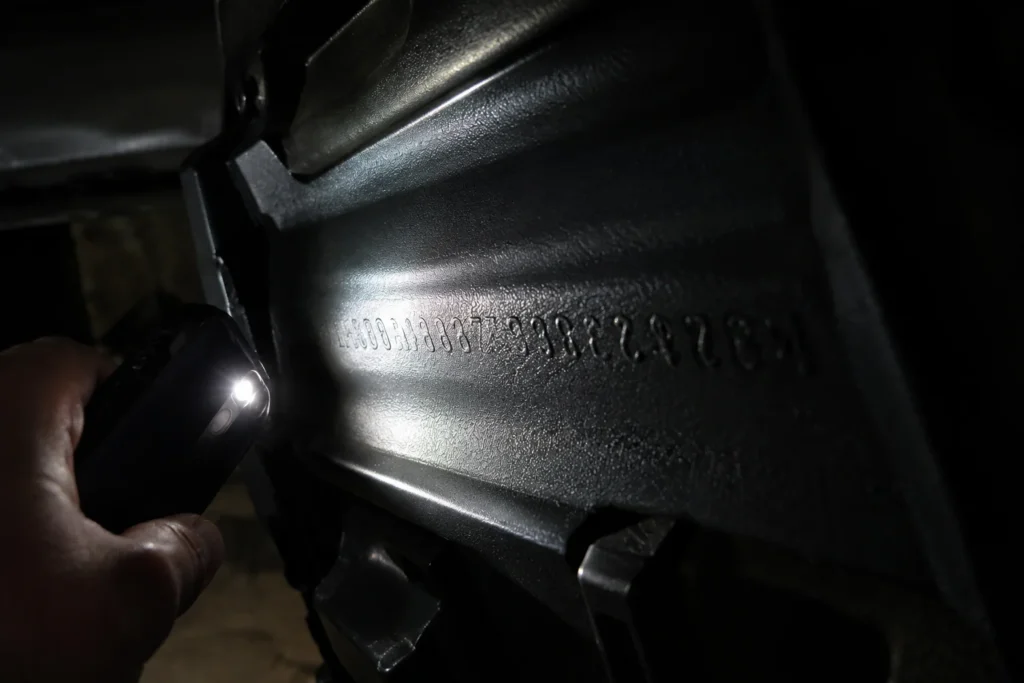
An embossed date is the same color as the plastic around it, which makes it nearly invisible in normal light. Here is the technique that actually works.
- Shine a flashlight across the surface at a low angle. Hold your phone flashlight almost flat against the plastic, maybe an inch or two above the surface, and sweep it slowly. The raised numbers cast tiny shadows, and the date jumps out. Shining the light straight down does nothing. The angle is everything.
- Run your fingertips over the area. Your fingers can feel raised numbers your eyes cannot see. Move slowly and press lightly. You are feeling for a small cluster of digits, usually in a month/day/year or month/year format.
- Wipe the area clean first. Years of dust and cracker crumbs fill in the embossed grooves and flatten the shadows. A damp cloth makes a surprising difference.
- Photograph it and zoom in. Take a close-up photo with your phone and pinch to zoom. The camera often picks up contrast your eyes miss, and you get a permanent record of the date for your files.
- Check both date formats. Some shells show a full date like 03/14/2021. Others show a clock-style dial with an arrow pointing at the month and the year in the center. If you see a circle with numbers around it, you are looking at a manufacture dial, and the arrow marks the month.
Embossed dates appear most often on Graco seats and on backless boosters, but any brand can use them on some models. If you have tried every spot in this guide and found no sticker and no embossed numbers, move on to the missing sticker protocol below.
“Do Not Use After” vs Manufacture Date: Doing the Math
Here is how the two label types work in practice. If your sticker says “Do Not Use After December 2029,” that is your expiration date. Treat it as good through the end of that month. Come January 2030, the seat is done.
If the sticker only shows the date of manufacture, you add your brand and model’s lifespan to the DOM. The lifespan is the number of years the manufacturer certifies the seat. For example, a Chicco KeyFit made in March 2021 has a six-year lifespan, so it expires in March 2027. A Graco 4Ever made in June 2020 lasts ten years, so it expires in June 2020 plus ten, which is June 2030.
For the full lifespan of every major brand and model, see our guide on how long car seats last. The short version: most seats last 6 to 10 years from the manufacture date, and the exact number depends on your model. When a brand gives a range, always confirm your specific model, because the difference between 6 and 10 years is enormous.
Two quirks to remember. First, the clock starts on the manufacture date, not the purchase date. A seat that sat in a warehouse for a year before you bought it has already burned a year of its life. Second, Diono is the exception: it counts from the date of purchase, so keep your receipt. And if you are checking an infant seat, do the math separately for the carrier and the base, because their dates can differ.
The Sticker Is Missing or Unreadable: What to Do Next

Stickers fade in the sun, peel at the edges, and get shredded by years of installations against the vehicle seat. If yours is gone or unreadable, do not guess and do not estimate. Follow this protocol in order.
- Check your manual. Many manuals list the lifespan for your exact model, and some show a diagram of where the date markings are. Lost the paper manual? Every major manufacturer posts manuals as free PDFs on its website. Search for your brand, model name, and the word manual.
- Find the model number and call the manufacturer. The model number is usually on a separate smaller label, or stamped into the shell near where the main sticker was. Call the manufacturer’s customer service line with the model number and serial number in hand. They can confirm the lifespan for your exact seat and often help you pin down the manufacture date from the serial number.
- Treat a seat of unknown age as expired. This is the guidance child passenger safety technicians give, and it is the right call. If you cannot determine when the seat was made, you cannot determine whether it is safe. No matter how nice it looks, retire it.
- Never buy or accept a used seat without readable labels. NHTSA’s used car seat safety checklist requires the date of manufacture and model number labels to be present and readable on any acceptable used seat. If a seller cannot show you a readable date, walk away.
One hard rule for the road: a missing sticker is not a minor cosmetic issue. It means the single most important safety fact about the seat, its age, is unverifiable. Parents sometimes feel silly retiring a seat that looks perfect. Do not. The date exists precisely because age damage is invisible.
Check Your Seat With Our Free Expiration Checker
You found the date. Now get the answer in seconds. Our free car seat expiration checker takes your brand, your model, and the manufacture date from the sticker, and tells you your exact expiration date plus how much safe use you have left. No math, no digging through the manual, no guessing. It takes about 30 seconds, runs entirely in your browser, and nothing you enter is uploaded anywhere.
If your model is not listed, choose “Other / not sure” and the checker will use the typical range for your brand and remind you to confirm with your manual. Either way, you stop wondering and start knowing. Check your seat now.
Quick Tips for Checking a Used Seat Before You Buy
If you are buying a secondhand seat, the date check happens before money changes hands, not after. Ask the seller to send you a clear photo of the DOM sticker before you drive over. If they cannot produce one, or the photo shows a date you cannot read, do not make the trip.
When you inspect the seat in person, check the date first, before you fall in love with how clean it looks. Run the same flip-and-search routine from this guide. Confirm the carrier and base dates separately on infant seats. Then check the date against the brand’s lifespan right there on your phone.
Remember that a readable date is only one item on the list. The seat also needs a clean crash history, no open recalls, all its parts, and the instruction manual. Our pillar guide covers the full secondhand checklist. But the date is the fastest filter. An expired seat fails in ten seconds, and you move on.
Frequently Asked Questions
Where is the expiration date on a Graco car seat?
Graco often embosses the date of manufacture directly into the plastic shell instead of using a sticker. Peel the fabric cover back near the foot end and feel the bare plastic for raised numbers, using a flashlight at a low angle. Many Graco seats also print a “Do Not Use After” date on the label. If you see that phrase, that is your expiration date.
Can I peel back the cover to find the sticker?
Yes, absolutely. Car seat covers are designed to come off for washing. They attach with elastic loops, J-hooks, and snaps. Unhook them gently, peek underneath for the label, and reattach the cover when you are done. You will not damage the seat, and you will not void anything by looking.
My sticker only shows a manufacture date. What is my expiration date?
Add your brand and model’s lifespan to the manufacture date. Most seats last 6 to 10 years from the DOM, depending on the model. If you do not want to do the math, enter the date into our free car seat expiration checker and it will calculate your exact expiration date for you.
What does “Do Not Use After December 2029” mean?
It means the seat is good through the end of December 2029. Starting in January 2030, the seat is expired and should not be used. When in doubt about a boundary month, retire the seat at the start of the month after the printed date.
The sticker is completely gone. Is my seat still safe?
You cannot know, so treat it as expired. Child passenger safety technicians give exactly this guidance: a seat of unknown age is a seat you cannot trust. Try the manual and the manufacturer first using your model number. If the age stays unverifiable, retire the seat.
Do I need to check the base too, or just the carrier?
Check both. Infant seat bases carry their own expiration dates, and they can differ from the carrier that clicks into them. Flip the base over and look for its own DOM sticker on the bottom. The same goes for high-back boosters that separate into two pieces.
Does expiration count from when I bought the seat?
No, with one exception. For nearly every brand, the lifespan counts from the date of manufacture, not the purchase date. A seat that sat in a warehouse for a year has already used a year of its life. Diono is the exception: it counts from the date of purchase, so keep your receipt as proof.
Related Guides
- Do Car Seats Expire? Yes, and Here Is When Yours Does
- Free Car Seat Expiration Checker: Check Your Seat in 30 Seconds

Aiden is the founder and editor of CarSeatHaven. He researches NHTSA safety standards, AAP guidance, manufacturer manuals, and recall notices, and turns them into plain-language car seat guides for parents.
