

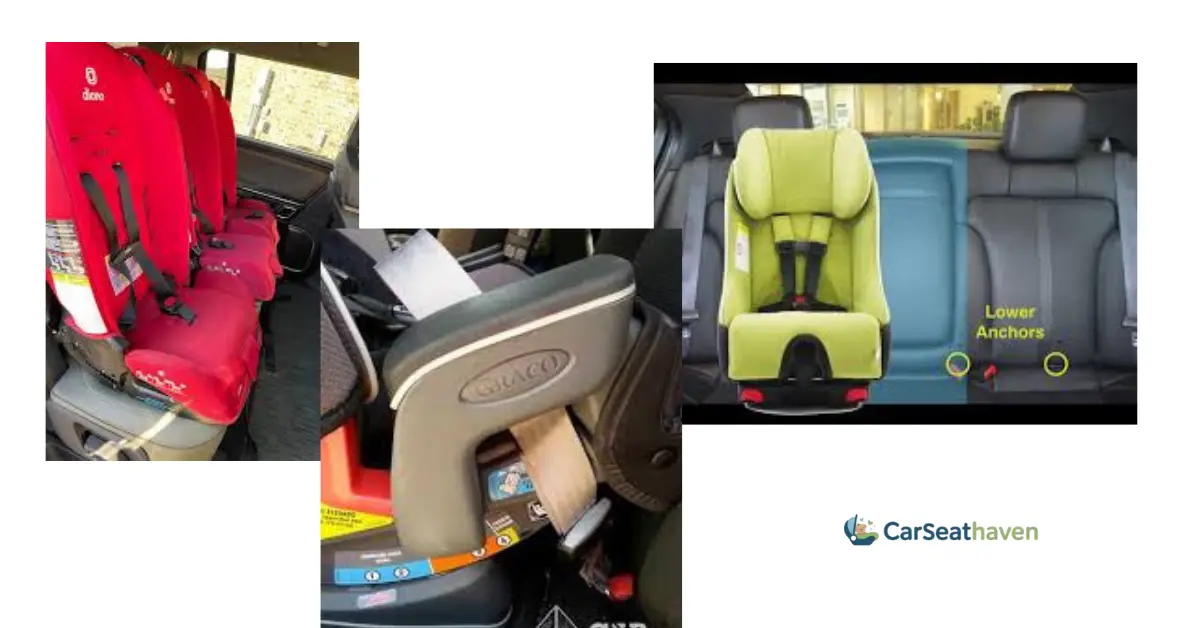
“Safety First”Parents genuinely want the safest possible setup for their child’s car seat but even with good intentions, mistakes can happen. Child Passenger Safety Technicians most often see three issues: a loose harness, a loose installation, and a chest clip positioned too low. Close behind these is another common error, using lower LATCH anchors in the center seat when they are not approved for that position. These mistakes appear so frequently that their order almost does not matter. When parents do not make these mistakes when installing the car seats for their babies, this will be safe for parents and also for their children. When you are installing the seats keep in mind that the seat should be tight and not able to clip from the baby’s chest. After all these requirements seat will be safe for baby.
Wait—You are Saying I Can’t Use LATCH in the Center?
Yes, in many vehicles, that’s correct.
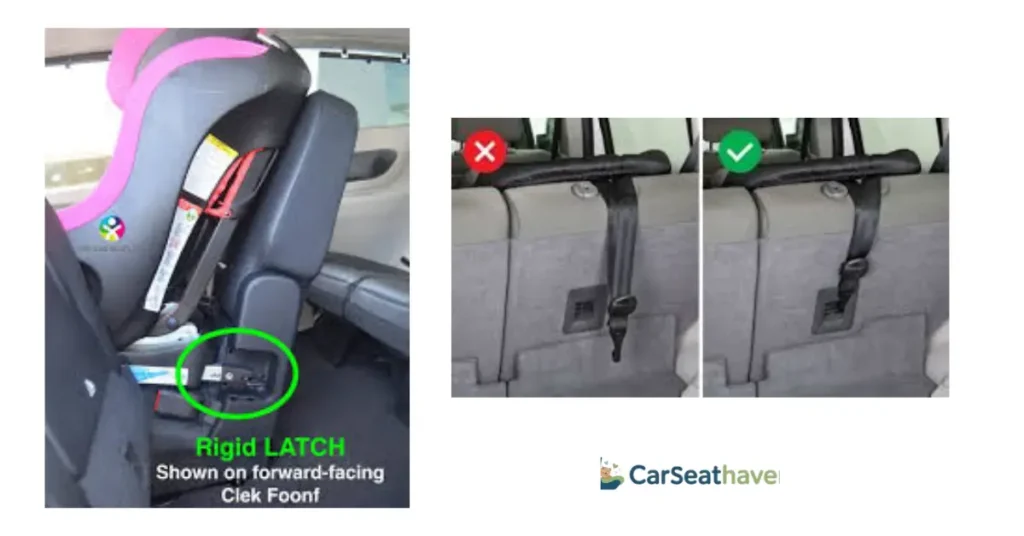
Table of Contents
All passenger vehicles made after September 1, 2002, generally include lower LATCH anchors, though there are exceptions. While some vehicles are equipped with a dedicated set of lower anchors specifically for the center rear seat, most are not. This surprises many parents because the middle car seat is often considered the safest spot, it’s farthest from side impacts, and LATCH systems usually make achieving a tight install easier. Understanding the rules around LATCH placement can help you avoid common installation mistakes and keep your child as safe as possible on every ride. After all things, I again and again repeating that “Safety First”. So we discuss all the things that will safe your child.
So why is the center, LATCH use sometimes restricted? And why do some CPS technicians allow it while others strongly advise against it? The answer lies in how LATCH systems are designed and tested. Anchor spacing, crash testing limits, and manufacturer guidelines all play a critical role in determining whether center LATCH use is permitted. Without meeting these specific criteria, using LATCH in the center seat may not provide the intended level of safety.
Understanding LATCH: The Basics
Lower LATCH anchors are made up of two U-shaped metal bars welded to a solid support bar inside the vehicle seat. These anchors are spaced 280 mm (11 inches) apart, known as standard spacing. They are engineered as a paired system, meaning they are designed to work together not individually. When the seats in the pair system then these seats will be more safe then single system.
LATCH stands for Lower Anchors and Tethers for Children. The “tether” refers to the top tether strap found on forward-facing car seats and this will use on the chest of the baby and avoid to clip. Lower LATCH straps should never be confused with top tethers, even though manuals may call them lower connectors or lower anchor connectors. The lower will also the part of the seat and this will also use to safe the lower part of the seat.
What Does “Borrowing” LATCH Anchors Mean?
Vehicles come with many seating layouts and LATCH configurations vary just as much.
Most four-door sedans include two full sets of lower anchors, one for each outboard seat. This allows for two car seats to be installed using LATCH. Some larger sedans, SUVs, and trucks may also include a third set in the center, but space is the deciding factor. The availability of center lower anchors ultimately comes down to the vehicle’s interior space and design limitations.
Even if a vehicle has six total anchors, installing three car seats with LATCH isn’t always possible. Why? Because LATCH anchors are only 11 inches apart, while even the narrowest car seats are about 16.7 inches wide. Simply put, the math doesn’t always work.
Vehicles with Odd Anchor Layouts
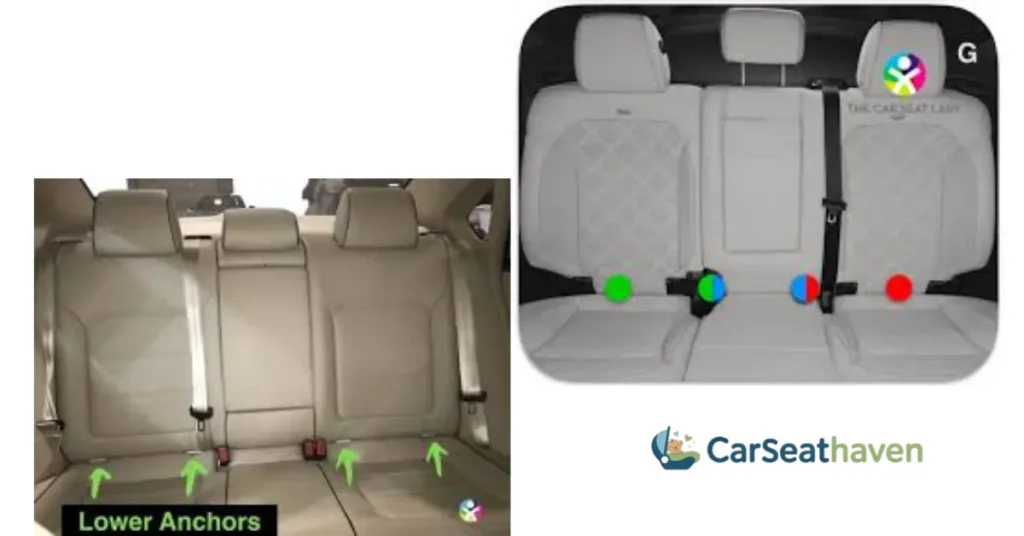
Some vehicles include five lower anchors two on each outboard side and a single anchor in the middle. Strange? Yes. But there’s a reason.
In these cases, the center installation may be allowed by combining the single center anchor with the inner anchor from one side seat. This results in an offset installation, meaning the car seat won’t be perfectly centered. While not visually centered, this setup follows the intended anchor design when manufacturer guidelines allow it.
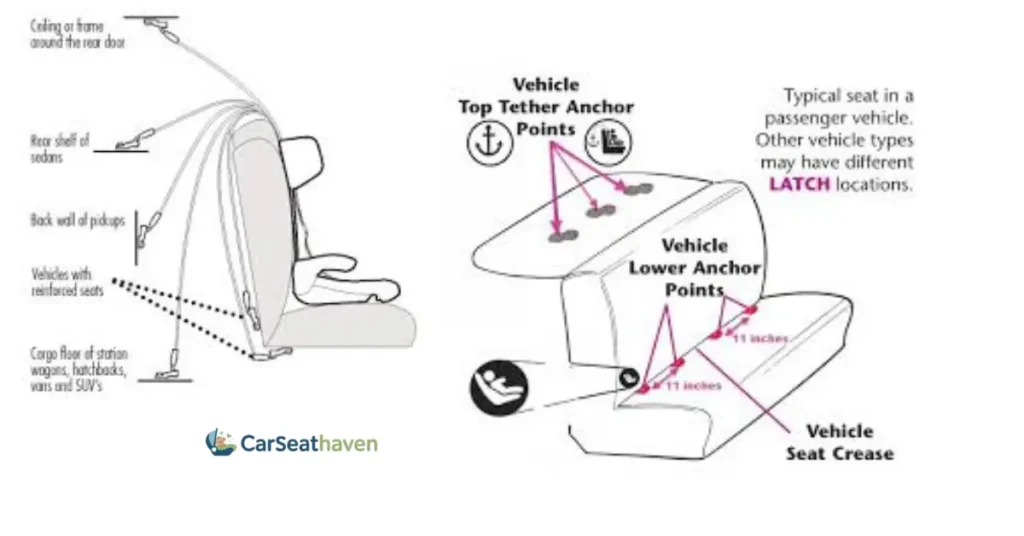
Examples include:
- 2022–2024 Acura MDX – three full sets of LATCH anchors
- 2017–2022 Honda CR-V – one center anchor used with either inner outboard anchor
- 2014 Ford Focus – LATCH anchors only for outboard seats
LATCH Borrowing Explained Clearly
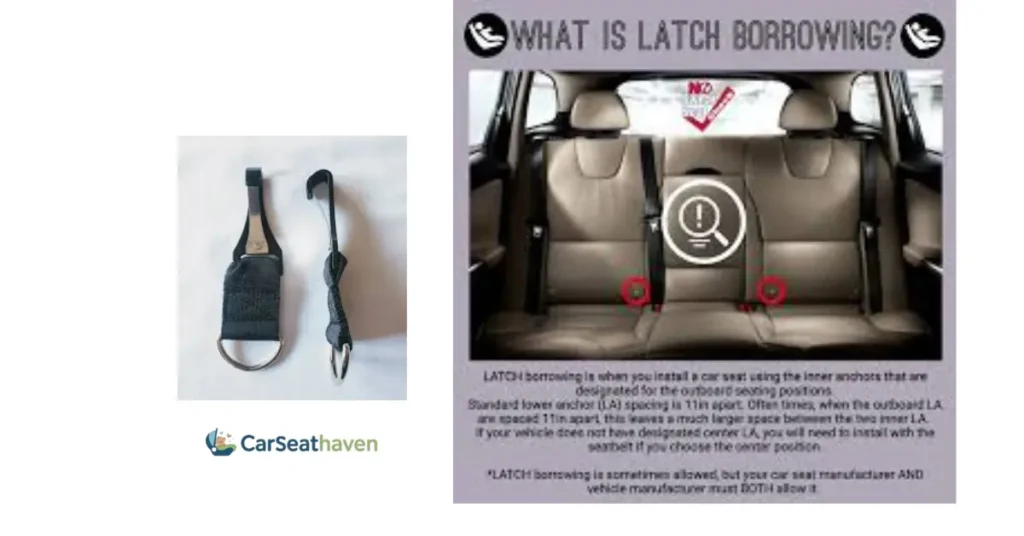
Using inner anchors from the outboard seats to install a car seat in the center is called LATCH borrowing. This is sometimes allowed but only if both the vehicle manufacturer and the car seat manufacturer approve it. If either one says no, borrowing is not permitted. Without clear approval from both, using borrowed anchors can compromise the safety of the installation.
You may also encounter the term non-standard spacing. This means the anchors are farther apart than the tested 11 inches sometimes over 20 inches. That difference matters. How that difference matters? Here we will discuss! With an example let a seat with 11 inches can easily handled and also can easily installed in any large or small car. And on the other if any car is 20 inches it should be difficult to handle and also for installation.
During a crash, forces transfer to both the vehicle’s metal anchors and the car seat’s plastic belt path. When spacing changes, those forces hit at angles that may not have been tested or may have failed testing entirely. That’s why improper anchor spacing can significantly increase the risk of failure during a collision.
Think of it like asking one parent for permission. If one says no, the answer is still no.
When Is LATCH Borrowing Allowed?
Some manufacturers have tested wider anchor spacing and approve borrowing in specific vehicle–car seat combinations. If you are fortunate enough to have a matching setup, borrowing may be safe. In these approved cases, the anchor spacing has been evaluated to handle crash forces safely. However, this approval applies only to those specific combinations and should not be assumed for other setups. In short, LATCH borrowing is allowed when the seat of the car is not proper safe for baby.
But documentation matters always verify.
What Should Parents Do?
- If your vehicle has dedicated center LATCH anchors, you can safely use them. Just be sure to check your car seat’s LATCH weight limits.
- If borrowing is required, confirm that both manuals allow it. The wording can be subtle, so reach out to customer support if you’re unsure.
- If center LATCH isn’t allowed, don’t worry. Seat belt installation is just as safe when done correctly.
- If you can’t achieve a tight install with a seat belt but can with LATCH, it’s safer to move the car seat to an outboard position and use LATCH there.
- Remember: a car seat that moves less than 1 inch at the belt path is safer than a poorly installed center seat.
Avoiding improper LATCH borrowing helps eliminate one major safety mistake leaving you to focus on proper harness tension, chest clip placement, and a solid installation. If you want other baby products…
Summary
Borrowing LATCH anchors isn’t automatically unsafe. It isn’t automatically safe either. Whether it is the choice depends on things like how far apart the anchors are, how the car seat is made and the exact rules that the car seat and car makers provide. That is why it is important to know where the anchors are and if your specific car seat can use this way to put it in.
Before you use LATCH anchors that you borrowed read both the car owner’s manual and the car seat maker’s directions carefully. These guides can tell you if this way of putting the seat in is allowed and if the anchors are spaced the way they need to be. Getting the installation right is also important because even a tiny mistake can change how well the car seat stays in place.
If the instructions are not clear or the way you try to put it in doesn’t follow the maker’s rules using a seat belt to hold the car seat might be a choice. The important thing is not which way you choose to install the seat but whether the car seat is put in the right way and is held firmly according to the rules. A car seat that is installed correctly no matter where it is, in the car or how it is put in gives the safety for your child. Spending time to read the manuals learn about the anchors. Make sure the seat is tight can help you avoid problems and give your child a safer trip.
FAQs
1. Is the center seat always the safest place for a car seat?
It can be, but only if the car seat is installed tightly and correctly.
2. Can I use inner anchors from both sides for the center seat?
Only if both your vehicle and car seat manufacturer explicitly allow it.
3. What does non-standard LATCH spacing mean?
It means the anchors are spaced wider than the tested 11 inches.
4. Is seat belt installation less safe than LATCH?
No. Seat belts are just as safe when installed properly.
5. How tight should a car seat be?
It should move less than 1 inch side-to-side or front-to-back at the belt path.

Aiden is the founder and editor of CarSeatHaven. He researches NHTSA safety standards, AAP guidance, manufacturer manuals, and recall notices, and turns them into plain-language car seat guides for parents.
