

Table of Contents
Hi, here we discuss about Tether and its proper use. Basically this is about all safety and I already mentioned many times in my other articles that “Safety First”. When you use tether in your seat when installing seat this will be the good for baby and his/her safety. And safety is most important factor as you know already. Car seats already come with plenty of confusing details for parents and tethers are right up there alongside questions like, “Should I use LATCH and the seat belt at the same time? This is the good question and here we discuss each and every thing. In U.S. tether usage is still under 50%. Yes, that’s correct. The numbers have gone up and down over the years, but overall they have stayed about the same disappointingly low.
This figure comes from the last major study on tether use. While there is newer field data available, it covers a limited range and is not as comprehensive. It is used in forward-facing and also for rear-facing for properly installing and controlling the baby car seat.
The Tether and where is it found?
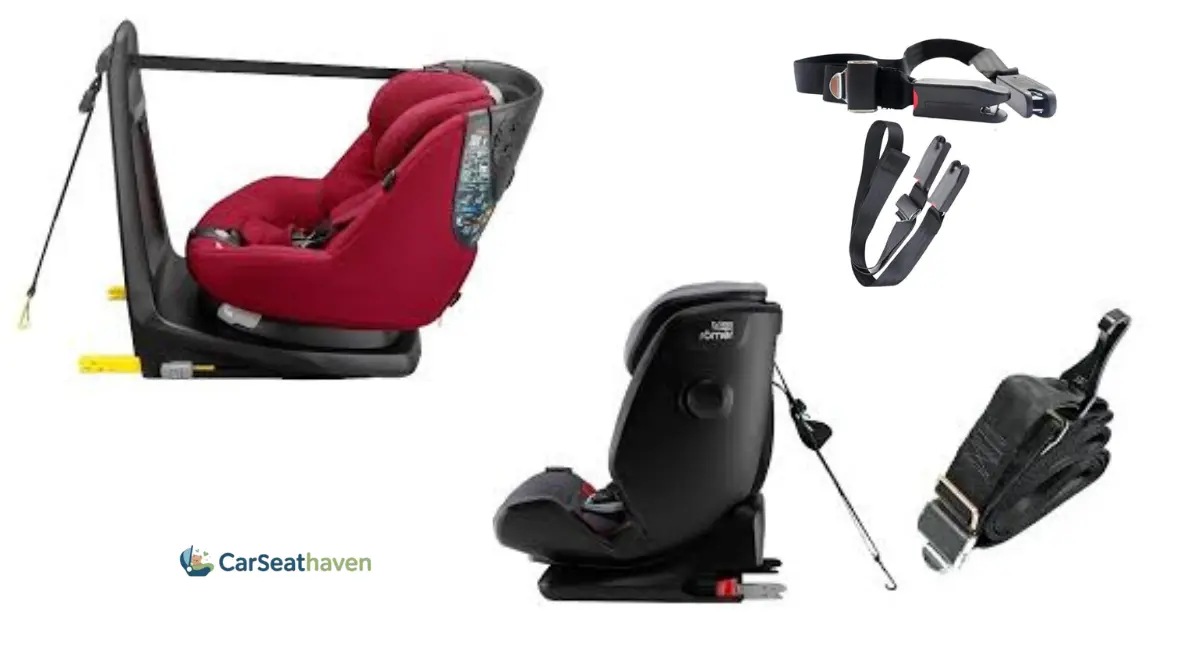
Let’s clear up some terminology first so everyone is on the same page. A tether is also called a top tether, top tether strap, or top strap and is a long strip of seat belt–like material with a hook at the end. This hook is used for properly grip the seat. It’s attached to the upper back of a convertible, all-in-one, or combination car seat.
Convertible car seat:
A convertible car seat is designed to be used rear-facing for infants, toddlers and sometimes preschool-aged children and later switched to forward-facing for older kids.
That is the main purpose of these seats and tether is used for proper safety when rear-facing or forward-facing.
All in one car seat:
An all-in-one car seat can be used rear-facing, then forward-facing and eventually turns into a belt-positioning booster for school-aged children. And specially for above 6 years old baby.
Combination car seat:
A combination car seat is a forward-facing seat with a harness that later converts into a belt-positioning booster. Some brands refer to these as harness-to-booster seats.
Your car seat’s tether might be a single strap coming from the center of the seat’s back, or it could be two straps forming a V-shape from the sides, often referred to as a dual-strap design. It may also comes in cross sign for beter installation.Manufacturers may give these different names for marketing purposes, but they all function the same way they are tethers. Most are about 1.5 inches wide and also in more then 1.5 inches but 1.5 is best, similar to harness straps, although one model uses a 1-inch-wide tether, which is perfectly acceptable. When a car seat is installed in the forward-facing position, the tether connects to a tether anchor in the vehicle. This attachment helps hold the top of the car seat in place and reduces movement. And just to quickly clarify before moving on it’s definitely not called a teether.
Why should I use a tether?
In simple and clear reason is safety of baby. When we insatall a seat then this is used for more safety and for more grip to control the seat in best way. This simple strap can reduce how far a child’s head moves forward during a crash a motion known as head excursion by about 4 to 6 inches. In the world of car seat safety, that’s a massive and huge difference. Those few inches can be the line between a child striking the front seat or side pillar and a child walking away unharmed and laughing in a controlled area and in parent’s sight.
Benefits
Here you can read the benefits. Theere are the several benefits but here are some we discuss and you will easily understand.
- Using a tether also lowers the risk of serious neck injuries by decreasing both head acceleration and the stress placed on the neck.
- When the tether secures the car seat more firmly to the vehicle, more of the crash energy is absorbed by the car and the seat itself, rather than the child’s body.
- In any accident if happen then that tether will protect the baby seat which is best for baby’s safety. And I told you many times “Safety First”
When you install a car seat with a seat belt or lower anchors, you are securing the bottom portion of the seat to the vehicle. Adding the tether connects the top of the car seat to the vehicle as well, which improves overall stability and creates a more secure installation. When you secure a car seat with a seat belt or lower anchors, the bottom of the seat is held in place. Adding the tether connects the top of the seat to the vehicle, reducing forward movement and making the installation more stable and safe.
You might be thinking, “But my child is in a harness there’s no way they could hit the front seat.”
There are a few important things to consider. One of the most common mistakes is a harness that is not tight enough, allowing the child to move too far forward. Another frequent issue is a loose installation, which also increases forward movement. On top of that, during a crash the harness, seat belt and LATCH strap all stretch, which means the child will still move forward. Using the tether helps limit that movement.
Federal Safety Standard:
Federal safety standards allow up to 32 inches of head excursion when a tether is not used, and 28 inches when it is attached. To better understand what 32 inches looks like in a real vehicle for Examples.
Example 01:
The vehicle shown is a mid-sized SUV with the front passenger seat positioned at a comfortable distance similar to how I set my own driver’s seat at 5’6”. While the seat could be pushed farther back, this position allows reasonable legroom for back-seat passengers.
Example 02:
This car is a regular sedan with the front seat set for someone about 5’6”. The seat could go back more, but there’s still enough legroom for back passengers. A car seat’s head can move during a crash, and the extra thickness of headwings is included in safety rules. With a tether, head movement can not exceed 28 inches and without it, 32 inches. Even in a small car, this movement can reach the front seat.
(Warning: technical, diagram-style details ahead!) The federal standard diagram below explains how head excursion is measured. Once a car seat is installed on a vehicle seat, you also have to account for the extra inches of car seat structure behind the child’s head. FMVSS 213 does consider this, and manufacturers do as well. While headwings on a car seat can be built up to 6 inches thick, the seat must still meet the maximum limits: no more than 28 inches of head excursion with a tether and 32 inches without one. As a side note, perspective in photos can be misleading—much like trying to photograph chest clip placement or make yourself look slimmer. The “0” line in the image is actually closer to Point Z in the diagram than it appears.
What’s important to notice is that 32 inches reaches into the front passenger seat—even in a mid-sized SUV with a spacious second row. Now imagine how 28 or 32 inches of head movement would look in a compact or subcompact car.
How easy is a tether to use?
Attach the clip, tighten the strap and you are good to go. Yes, it really is that simple. So why has not it happened yet? Because if it were truly that easy for everyone, it would already be done. Totally fair. Sometimes there are obstacles that make tether use confusing or tricky, and that’s exactly why technicians like us are here to help. If you are ever unsure, a certified car seat technician can guide you step by step and make sure everything is used correctly. Our goal is to remove the confusion so every child rides as safely as possible, every single trip.
But before anything else, have you checked the manuals? That’s right you will need to read both your car seat manual and your vehicle owner’s manual. Knowledge is power, and informed parents and caregivers make the safest choices.
How long have tethers been in use?
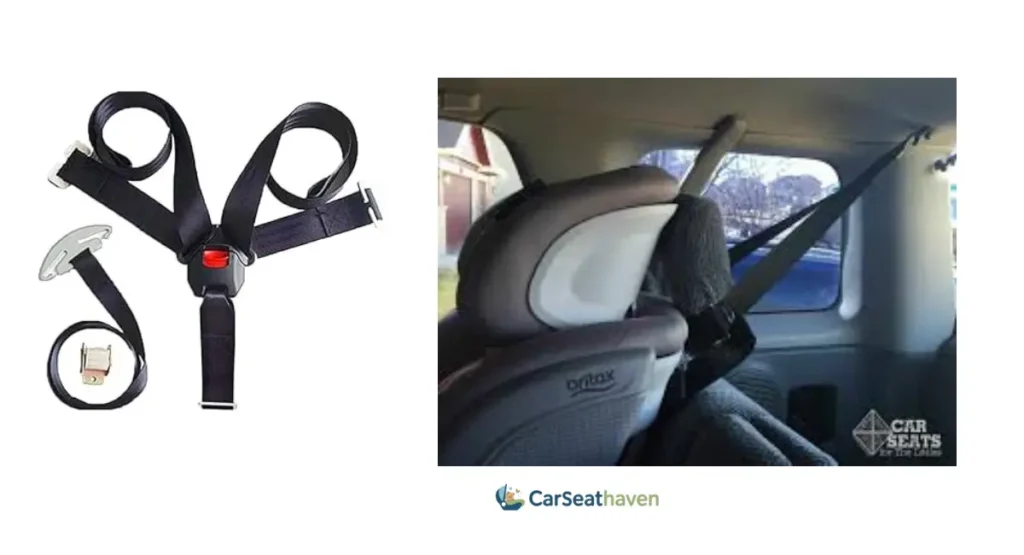
Forward-facing car seats in the U.S. have included tethers since September 1999, while Canadian car seats have had them much longer since 1980. The tether anchors in vehicles were gradually introduced starting with vehicles built on September 1999, which are considered model year 2000. By September 2000 all minivans, SUVs and light trucks were required to be equipped with tether anchors. In simple all type of vehicles can use tether for car seat to save the baby by any accident.
It’s important to note that the actual build date of the vehicle matters more than the model year, since a vehicle can be labeled as a certain MY even if it was manufactured before the September 1 cutoff. You can check the sticker on the driver’s-side door to find the exact manufacture date of this. And if all of this sounds confusing but your vehicle is MY 2001 or newer, do not stress you almost certainly have tether anchors, so go ahead and use them. Always double-check your vehicle’s manual for specific tether instructions. Using the tether anchors correctly helps keep child seats secure in every ride. Even if the exact date is unclear, newer vehicles are designed with safety anchors in mind.
Now, what if your vehicle was built before September 1999 say, in 1995? You might assume it does not have tether anchors. That assumption may or may not be correct. Many vehicles made before 1999 can be retrofitted with tether anchors if the parts are still available. If you are comfortable with basic DIY work, it’s even possible to install them yourself. For example, I added tether anchors to my own 2000 Toyota Sienna.
Since tether anchors are a safety feature, some manufacturers used to offer free retrofit programs. These days, most charge for the service because retrofits are less common. If you plan to install them yourself, you’ll typically need the correct part number, a torque wrench, installation instructions, and about $15 for the hardware. For official installation programs, it’s best to contact a child passenger safety technician who has access to a LATCH manual. Always follow the instructions carefully to ensure the tether anchors are installed securely. Using the proper tools and parts helps prevent damage to your vehicle or child seat. If you’re unsure, consulting a certified technician is the safest way to complete the installation.
Child passenger safety isn’t always black and white there are plenty of gray areas and tethering is one of them. While most modern vehicles are equipped with top tether anchors, convertible vehicles are exempt from this requirement. That said, exemption doesn’t mean they wo not have them. Many manufacturers still include tether anchors in convertibles because doing so improves customer satisfaction ratings and IIHS scores.
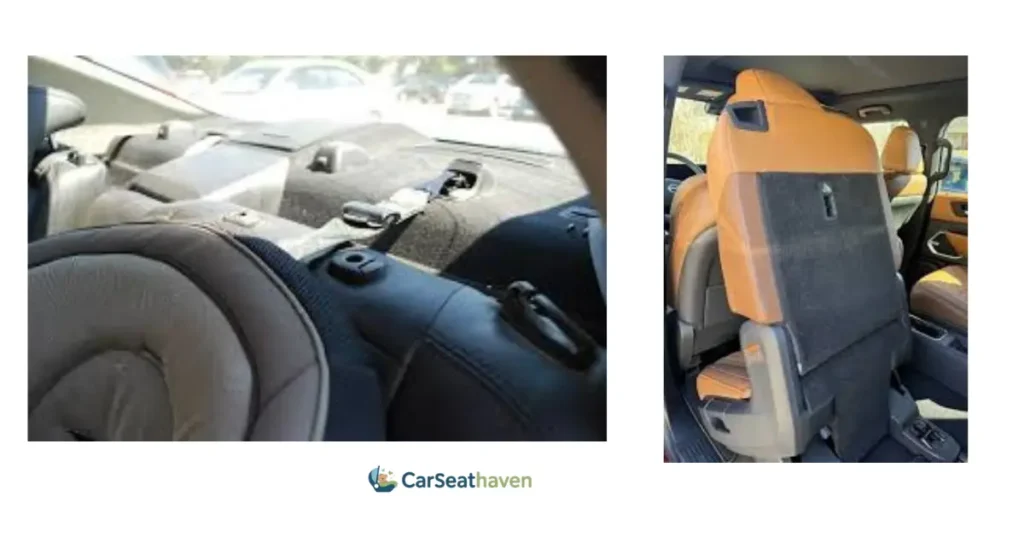
What If I am not sure this metal thing in the cargo area is a tether anchor?
If you are unsure whether a metal loop in your cargo area is a proper tether anchor, do not use it. Cargo loops are not always built or tested to the same strength standards as tether anchors, so they might not hold in a crash. If you can not find your vehicle manual online or Google is not co-operating consider ordering a copy from your dealer or eBay. That way, you can be certain your child’s car seat is installed safely.
Never improvise by attaching the tether to parts of the vehicle that aren’t designed for it, like seat brackets or trim pieces. Using only approved tether anchors ensures the car seat remains secure during sudden stops or accidents. When in doubt, always refer to official manuals or certified technicians for guidance to keep your child safe.
How do I tether my car seat in my truck? It looks really complicated!
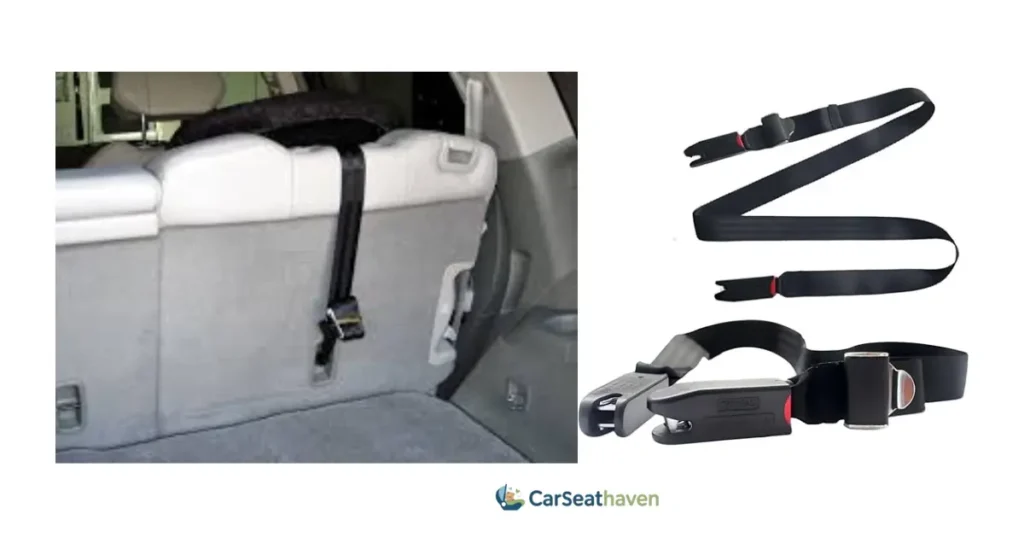
Tethering a car seat in a truck really does require consulting the truck’s owner’s manual there’s no universal method. In some extended or quad cabs, the manual will instruct you to route the tether through a loop at the top of the truck seat and then over to the loop or anchor at the adjacent seat. This is called indirect routing. The manual will also specify whether the tether should pass in front of or behind the head restraint posts.
Some trucks, like the Honda Ridgeline, have you guide the tether around a metal piece and attach it to a tether anchor on the floor near the seat or directly behind the car seat in the center position.
Other trucks require a slightly different approach: place the car seat on the vehicle seat, pull the seat back forward, connect the tether to the wall-mounted tether anchor, then reattach the seat back and complete the car seat installation.
These variations exist because federal standards do not fully dictate tether anchor design. Most trucks use indirect routing loops, but whether the tether goes in front of or behind the head restraints varies by model.
Example:
I recently worked with a 2015 Honda CR-V, and I was surprised to find the tether anchor tucked behind the back seat panel. It reminded me that every vehicle can be different, and even experienced installers should always double-check the owner’s manual for proper tether placement.
Example:
I have included photos of a 2008 Toyota Tacoma Access Cab. Even after years in this field, I learned a new tethering method just a few months ago! It’s a perfect reminder of why following the owner’s manual is such a critical part of safe installation.
Where should I look for tether anchors?
Federal regulations require that vehicles have tether anchors in at least two positions to pair with the lower anchors. Additionally, there must be one extra top tether anchor, 2making a total of three. Bigger vehicles, like minivans and three-row SUVs, might have more anchors, but that’s not guaranteed so buyers should pay attention. The exact location of tether anchors can vary by vehicle make and model, so it’s important to check your owner’s manual or look for labels and markings that indicate their position. Some anchors are easy to spot, while others may be hidden behind trim panels or under seats. Knowing where they are ensures you can safely and correctly secure a child seat.
Tether anchors can be located in a variety of spots: in the ceiling of a wagon or SUV, along the back ledge of a sedan, on the rear wall of a wagon, SUV or van, in the cargo area, on the back of a vehicle seat or even beneath the seat.
How do I tether my car seat?
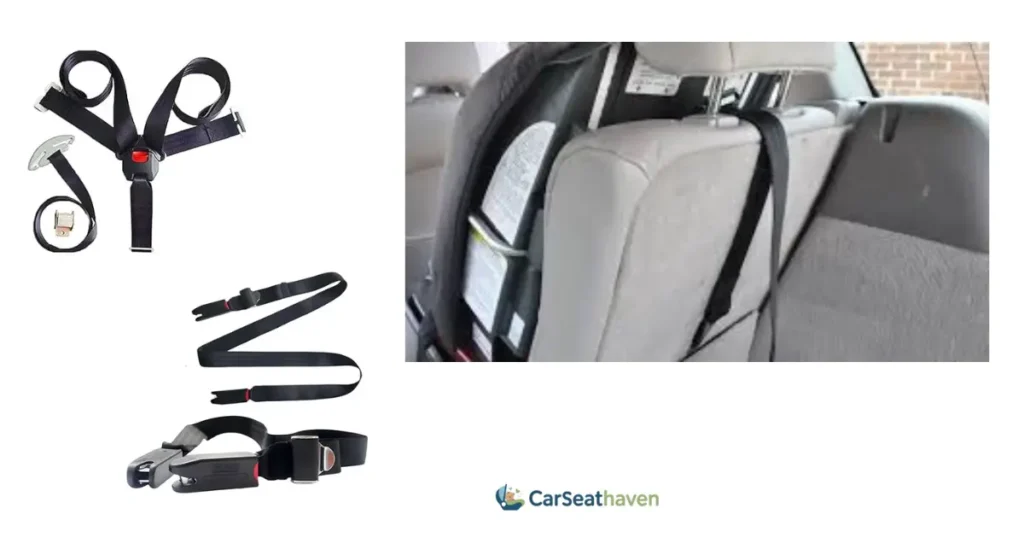
Open your vehicle’s manual to the child seat or safety section and locate your tether anchor. You will need to use the tether anchor that is directly behind the seating position where your forward-facing car seat is installed. For example, if the car seat is on the passenger side, you must use the passenger-side outboard tether anchor you cannot use the center tether anchor for that seat.
Tethers can be angled up to about 20° off-center. This allows for things like speakers in the way or gives manufacturers some flexibility in anchor placement. Truck owners, pay attention trucks are a different story.
Your manual can also guide you on how the tether should relate to the vehicle’s head restraints. Some specify the tether should go over the top of the head restraint, some say under, and others may require the head restraints to be removed entirely. Always make sure the tether is routed exactly as both your car seat and vehicle manuals recommend. Small differences in tether placement can affect how secure the seat is, so double-checking the instructions helps prevent mistakes. Following these guidelines ensures the child seat works as designed with your car’s head restraints.
If your car seat has a dual-strap tether common on Britax seats be sure to check both your car seat manual and vehicle manual. This can clarify whether the tether fits between the posts of the head restraint or if there’s a specific way it needs to be routed.
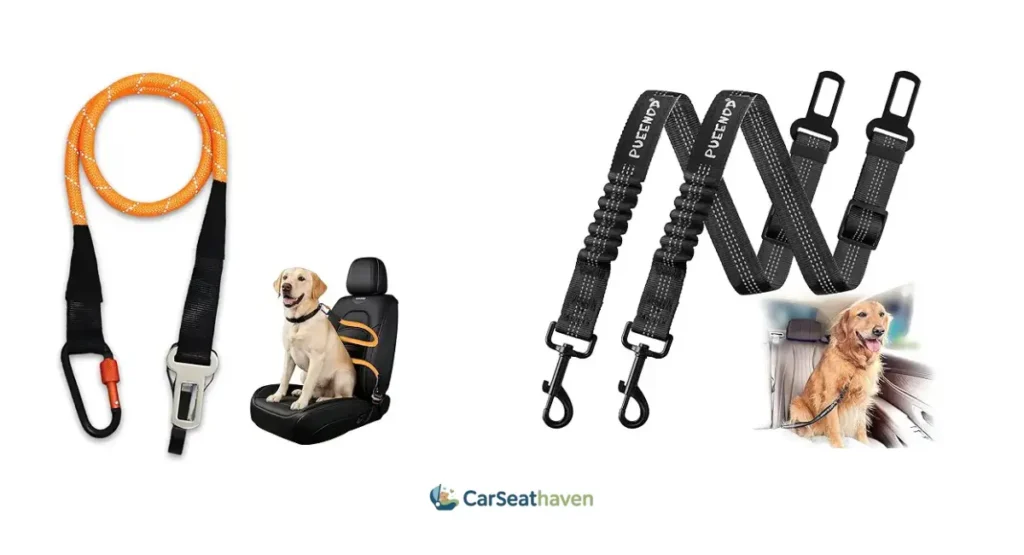
Tether use for Pets
The tether is also used for pets. Pets are very cute and handsome like babies. There for safety for pet is aso very important. So you can also use tether for pets protection. Thanks for reading and understang.
Am I required to use a tether?
No, it’s not legally required unless you are in Canada or a “proper use” state, which basically means you must use your car seat correctly. Think of it like feeding your kids healthy food: not required by law, but you do it because it’s the safe and smart choice. The same applies here. If you are using the lower LATCH connectors, you should use the top tether too, because the system works best when all parts are used. You should also always use the tether when installing a car seat with a seat belt it’s a safety feature, so why skip it?
Some car seats actually require tether use according to their instructions. This may limit where you can place them if your vehicle does not have a tether anchor, or if you remove the tether after your child reaches the car seat’s tether weight limit. When researching a car seat, it’s a good idea to check the online owner’s manual to see if tether use is mandatory, especially if you plan to install the seat in a location without a tether anchor. Even when tether use isn’t legally required, it’s always the safest choice because it reduces forward movement in a crash. Using the top tether along with the lower LATCH connectors or seat belt helps the car seat perform as designed, keeping your child more secure. Checking the car seat and vehicle manuals ensures you know when and how to use the tether correctly.
How to use of the tether in booster mode?
Some combination seats forward-facing harnessed seats that later convert into belt-positioning boosters allow the tether to be used with the lower anchors even when the seat is in booster mode. In this case, it’s not primarily for the child’s safety, but rather to protect other passengers. The LATCH system keeps the car seat secured to the vehicle during a crash so it doesn’t become a flying object that could hit the driver or other passengers. If you want to buy go to amazon and get our team will get some commission which will not from your side. Thanks
Of course, the best practice is for the child to always be buckled in whenever they’re using the seat. In real life, though at least in my family the seat belt over the booster was rarely fastened, which is why I chose a seat that allowed LATCH use even in booster mode.
Can I tether my rear-facing car seat? It seems so wobbly at the top and the tether would really secure it.
That’s a great question! Let’s begin with some basics. When checking a car seat installation, focus on the belt path the spot where the seat belt or LATCH belt passes through the car seat not the top of the seat. The farther you move away from the belt path, the more the seat can shift.
Most car seats cannot be tethered when rear-facing, though some 360 rotating seats and models with special tethers are exceptions.
Here are 18 Seats allow rear-facing tethering. You can see the table to check the seat.
| Chicco Fit360 | Clek Foonf with Q-tether | Diono Radian 3RX |
| Evenflo Revolve360 Extend and Slim | Peg Primo Viaggio Convertible | Cybex Callisto G360 and G360 Select |
| Diono Radian 3R | Safety 1st Turn and Go 360 | Nuna REVV |
| Diono Radian 3RXT | UPPAbaby Knox | Maxi-Cosi Emme 360 |
| Diono Radian 3R | Maxi-Cosi Andi 360 | Graco Turn2Me |
| Evenflo REO | Clek Fllo with Q-tether | Graco EasyTurn 360 |
Summary:
Of course, you should always tether your forward-facing car seat! Let’s aim for a 100% tether use rate. Every time you install a forward-facing seat whether using a seat belt or LATCH make sure the tether is attached. It’s that simple. If your vehicle doesn’t have a tether anchor, consider having one installed as soon as possible. And don’t forget to educate your friends and family about the importance of using the tether strap.
Credit where it’s due: the LATCH manual by the SafeRideNews team is the definitive authority on tethering and retrofitting anchors.
FAQs:
1: What is a car seat tether?
A tether is a strap that attaches the top of a forward-facing car seat to a vehicle anchor, keeping the seat stable and reducing head movement in a crash.
2: When should I use a tether?
Always use the tether whenever a child is forward-facing and harnessed, whether installed with a seat belt or LATCH.
3: Where are tether anchors located?
Tether anchors can be on the ceiling, back ledge, rear wall, cargo area, or under the seat—check your vehicle manual.
4: What if my vehicle doesn’t have a tether anchor?
Many older vehicles can be retrofitted with anchors, or you can consult a technician for safe installation.
5: Can tethers be used with booster or rear-facing seats?
Some combination seats allow tether use as a booster, and a few specialized or rotating seats allow rear-facing tethering.

Aiden is the founder and editor of CarSeatHaven. He researches NHTSA safety standards, AAP guidance, manufacturer manuals, and recall notices, and turns them into plain-language car seat guides for parents.
