

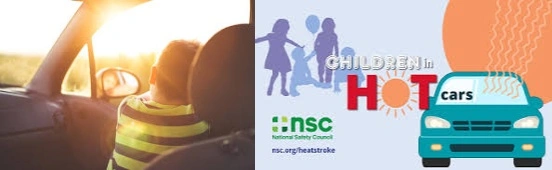
National Heatstroke Day Awareness is more than just another commemorative day on the calendar; it is, of course, a potent reminder that heat can turn deadly in minutes, particularly for children, pets and the elderly. Every year, tragedies are revealed that would and could have been prevented through education, awareness and simple habits. Heatstroke does not care about economic, occupational or lifestyle variables it happens among all types of families.
While the warmer temperatures increase the risk of heat illnesses, vehicle heatstroke is one of the most common dangers associated with rising temperatures. The main point of discussion on National Heat Stroke Awareness Day is not just to instill fear into people’s hearts, but also to empower them with the correct knowledge and techniques.
What Is National Heatstroke Day?
Every year, National Heatstroke Day is celebrated in the United States on the 1st of May. The observance-launching event of increased safety measures related to warm weather takes place with the intention of being cautious about heatstroke, especially in parked vehicles. The awareness event urges parents and caregivers to openly discuss the dangers of heat.
The day is necessary as it is among the list of the most preventable reasons why injury deaths occur among young children. Even if warnings had been given for several years, incidents still occur because of forgetting, or when habits are changed. By the promotion of National Heatstroke Day, the awareness continues because it begins with habits, not blame.
Why Heatstroke Is So Dangerous
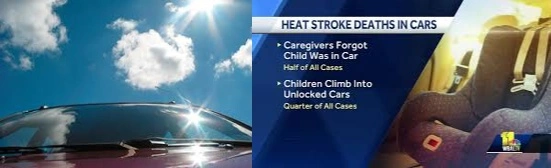
Heat stroke happens when the body fails to regulate its temperature. As body temperatures reach 104°F or higher, the body’s vital functions start to shut down. At 107°F or higher body temperatures, death can occur in a short period of time without treatment.
Children, in particular, are more susceptible due to their faster body heating compared to adults. They also sweat less, which is less effective, so it is more difficult for children to cool off. To commemorate National Heatstroke Day, it is noted that heatstroke could occur without a person realizing it, even if it is not hot outside.
How Fast Cars Heat Up: The Science Behind the Danger
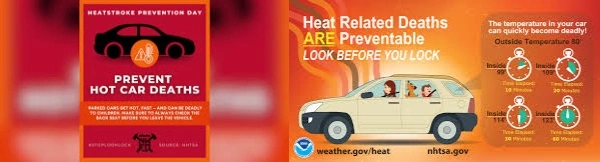
Many people do not realize how quickly a parked car can be life-threatening. Even when it is a pleasant day out, the sun’s rays enter through the windows and cause surfaces such as dashboards, seats, and steering wheels to heat up inside the car. The surfaces, in turn, emit their heat, causing the temperature to shoot up.
Well, here’s the breakdown:
| Time Parked in Sun | Approximate Interior Temperature Increase |
| 10 minutes | +18–20°F |
| 20 minutes | +28–30°F |
| 30 minutes | +35–40°F |
Breaking a window will not slow down this process appreciably. On National Heatstroke Day, safety specialists emphasize that “just a minute” can quickly lead to life-or-death conditions faster than most people realize.
Vehicular Heatstroke: How These Tragedies Happen
Heat stroke in vehicles usually happens in one of these three ways. The first involves a parent accidentally leaving a child in the back seat of a vehicle. This can occur due to a lack of prospective memory when a familiar routine alters. Stressed parents who are sleep-deprived are also at risk.
“The second kind of scenario would occur where the children get access to a car on their own. Curious young children could gain access to a car in order to get a favorite toy that is inside, or maybe they would just want to see what’s in there, and get locked inside. The third would occur where someone leaves a child in a car for a brief time, maybe believing that it’s a safe place.”
National Heat Stroke Awareness Day reminds us that no situation can ever be considered safe in regard to unattended children in a car.
You Are Not a Bad Parent: Understanding Memory Failure
One of the most significant teachings of National Heatstroke Day is this: Forgetting children does not necessarily mean someone is careless or irresponsible. It is commonly attributed to how one’s brain responds to habits and routine. Sometimes when something goes awry in terms of regular routine, one goes into autopilot.
It is for this reason that individuals often leave phones in homes or groceries in trunks over night. Knowing this removes the need to be ashamed of this phenomenon. Effective prevention must have in mind that all people are human.
Technology That Can Help Prevent Heatstroke
Current technology is very useful, but its effectiveness comes into play only if used in a consistent manner. Smart alert systems in car seats help in alerting caregivers through their phones in cases of temperature increases, children being in their seats for extended periods, and caregivers walking out of Bluetooth connectivity.
Carmakers are also introducing rear seat reminder systems. These vary from notification systems on the dashboard to sophisticated sensors and cameras. During National Heatstroke Awareness Day, it is also significant for drivers to check their vehicle settings, as some safety measures must be manually switched on.
Everyday Habits That Make a Real Difference
Some habits can prevent heatstroke very effectively. By turning these habits into habits, the need to depend upon memory will be avoided. The occasion of National Heatstroke Day is an opportune moment to practice multi-faceted precautions against heatstroke.
These are habits that experts often recommend:
- Always check the rear seat before locking your car door.
- In the back seat, place something of yours, such as a cell phone or handbag.
- Lock your cars even when in the garage
- Keep keys and remotes away from the kids.
These steps may seem simple, but the cumulative effect of these barriers of protection is immense.
Teaching Children Car Safety Early
Children can be taught from a young age that automobiles are not playgrounds. This entails educating them that it is never acceptable to enter a car alone or to hide in or inside the trunk of the car. Repetition is vital, and the child can be taught best this way.
But at the same time, children should also be instructed on what they have to do if they ever find themselves trapped. Blowing the horn constantly can bring people their way, thus saving a life. Heatstroke Awareness Day emphasizes the role of education with the involvement of both parents, as well as schools.
Don’t Forget Pets: Heatstroke Affects Them Too
Pets are as susceptible to heatstroke as children and in certain instances, even more so. The fact is that dogs and cats cannot control body temperature as well as human beings. If you leave any pet in the car for any amount of time, it can quickly result in overheating.
In commemoration of National Heatstroke Day, pet safety groups call attention to pet owners that if it is not safe for children, then it is certainly not safe for pets either. There are now laws against pet vehicular heatstroke in different states.
What To Do If You Suspect Heatstroke
Prompt treatment is necessary if heat stroke is a possibility. Call for medical assistance immediately. Meanwhile, move the person to a cooler location, if possible, and begin the process of cooling the body. Methods include removing excess clothing. Using cold, not ice-cold, water is also effective.
Do not defer medical assistance. Heatstroke is not one of those conditions that somehow Corrects itself on its own. That is the significance of National Heat Stroke Awareness Day.
Community Awareness and Shared Responsibility
Protecting children and pets from heatstroke is not just the responsibility of caregivers. The whole community has to look out for children and pets locked in cars. The instant you notice that a kid and/or pet is locked in a car, dial emergency numbers.
Nowadays, many places where childcare takes place have policies requiring parents to be notified when a child fails to appear on schedule. In commemoration of National Heatstroke Awareness Day, efforts are made to promote those organizations with communication as a priority.
Heat Safety Beyond Vehicles
As mentioned, While vehicles get prominence,heat strokes can also occur in outdoor activities, sports, or even at home. Staying hydrated and being cautious in hot weather can be important in such scenarios.
Children involved in sports are more prone due to the physical activity. One needs to keep a vigilant eye on the situation, depending on the level of physical activity. Heat Safety Awareness Day is a reminder that heat safety is relevant everywhere.
Conclusion
National Heatstroke Day isn’t about numbers it’s about lives. Each incident prevented means a child who grows up, a pet who goes home, and a family who avoids unspeakable grief. The greatest weapons we have are awareness, the power of education, and the power of building good habits.
By speaking out, leveraging technology effectively, and helping each other, we can mitigate the tragedies of heatstroke. Let the observance of National Heatstroke Day be the start of making safety second nature, not afterthought.
FAQs
1. Why is National Heat Stroke Day celebrated on May 1st?
May 1th marks the start of the warmer months in many states across the U.S., providing an excellent opportunity for the awareness drive before the intense heat of summer.
2. Can Heat Stroke occur even with a cool and cloudy sky?
Yes. Even when it is mildly warm outside, dangerous heating in parked cars may result from greenhouse effects.
3. Are rear seat reminder systems reliable?
They are useful but not completely reliable. They can be used in addition to a safety routine for enhanced safety.
4. How long does it take for symptoms of heatstroke to develop?
Symptoms may appear as quickly as 10 to 15 minutes in very cold conditions, especially in children.

